 Support us on Patreon
 PayPal
Return to Part 1: Dumpster Diving
Continued from Part 47: Before I Was Born
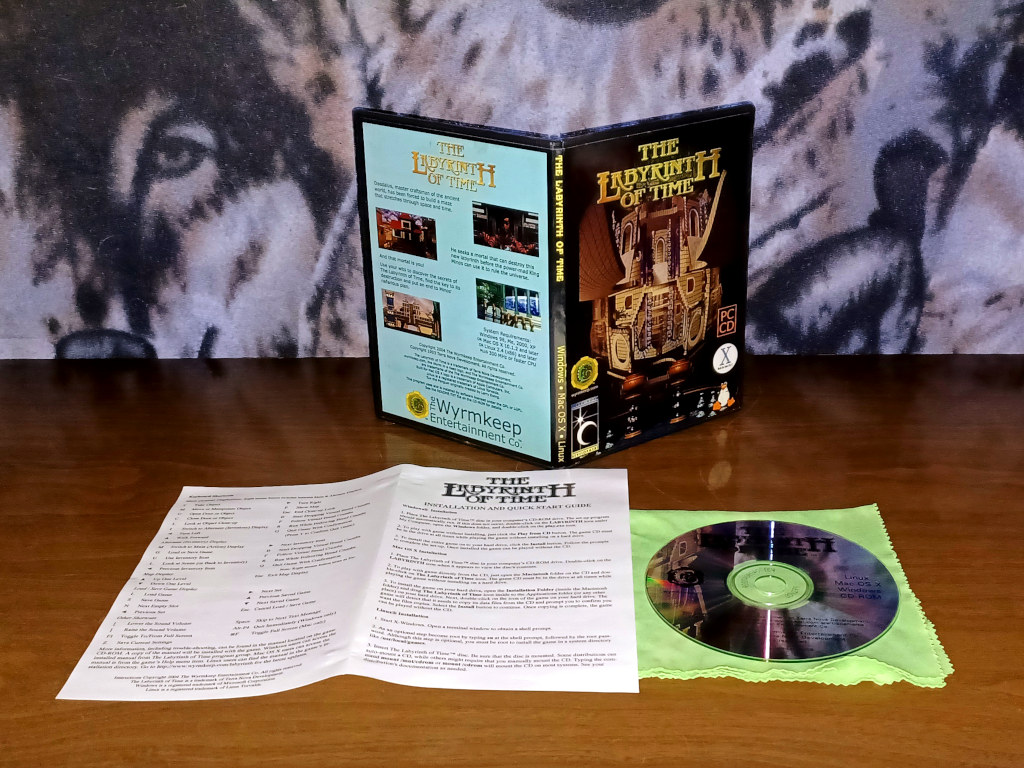
In my formative years it was accepted by most that the point and click adventure game was a dead genre. Sure, a handful were still being made, but more often than not these remained nostalgic takes hearkening back to the true heyday of the genre. Most devotees would instead stick to their old favourites, even in the face of mounting incompatibility challenges. These were issues that The Wyrmkeep Entertainment Co. would attempt to solve, starting with Inherit the Earth and The Labyrinth of Time.
First released for Linux in December 2004, both games were retooled to use the Simple DirectMedia Layer, but were otherwise kept as faithful ports of the originals for good or ill. For the The Labyrinth of Time some audio improvements were made, but the only new addition was the "breadcrumbs" navigation feature that I never felt the need to use. Being built around the multimedia capabilities offered by the arrival of CD-ROM, The Labyrinth of Time from 1993 is an arthouse first and a game second.
You can even play the game from the CD-ROM itself rather than installing it to your hard drive, although in either case I found I had to preload the libSDL-1.2.so.0 library included in the "common/lib" directory on the disc for it to launch. From here you are thrown straight into the game, with little chance to get your bearings. Vital tools I found for navigating the world included using the tab key to highlight interactable items as well as using the right mouse button to open your inventory screen.
With its age in mind I always figured I would need to consult a walkthrough, but I still gave the game an honest attempt at first; wandering through the hotel, mapping the mirror maze, and even reaching the ghost town of Revolver Springs before giving in. In the end it was the inscrutable user interface that foiled my progress, as while I did discover the drawer in the town jail which contained the brass key I required, the opened drawer then needed to be examined further to reveal the key inside.
The taboo of consulting the Adventurer's Guide now broken, I just went ahead and allowed it to lead me the rest of the way. The puzzles in the game are a means to an end, with the primary focus being to show off the 3D scenes and art assets created by Bradley W. Schenck. Playing Freaks! did show that I have an appreciation for exploring anachronistic worlds, but with only fixed images being used here to represent the four cardinal directions of any given space, I did find this harder to enjoy.
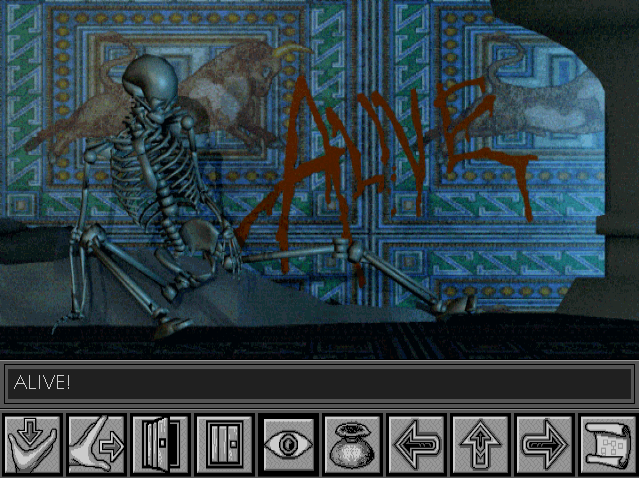
I have had some success coming back to old adventure games many years after using a walkthrough, and relying on my hazy memories to then solve them in a more organic fashion instead. Perhaps that will also be the case here, but The Labyrinth of Time does play enough nasty tricks to make this seem a false hope. There are three separate instances where the game can be left unbeatable if you use a puzzle item too early, or if you fail to acquire a certain item before proceeding elsewhere.
One of these items is even hidden behind a door in such a way as to almost ensure you will miss it, with the significance of the item not being signposted in any conspicuous way. This lack of connective tissue is a real hurdle, and is the main Achilles heel of the game. While not exactly suffering from the "moon logic" that plagued so much of the genre, The Labyrinth of Time lacks a driving purpose after Daedalus sends you on your way, with puzzle solutions holding little relation to their point of origin.
Keys are distributed at random, pulling levers will cause inexplicable events to happen elsewhere in the world, and your actions appear aimless without context clues to guide you; one event wherein the subway car becomes flattened even failed to happen to me as described. There are exceptions, including a clever conceit where you take advantage of the fact you have been taken outside the flow of time to alter historical events, but these highlights do little to overcome your initial bafflement.
None of this is helped by the smug presumption of the original developers, with them glorifying themselves in the backstory and teasing a sequel at the end. I think the game would have been better served if it was broken into discrete hubs, with more focus on the individual areas, and with the narrative being spread beyond just a handful of infodumps in a few key places. In the same vein is the soundtrack, with the music drilled into your head on an endless loop rather divided to accentuate specific spaces.
Much of The Labyrinth of Time is just straight up mazes, only serving to underline the importance of the map screen; even with this aid I still failed to comprehend the surreal maze I blundered through right before the end. The Wyrmkeep Entertainment Co. did have plans to craft its own sequels, but have done little beside updating their initial ports for sale on digital storefronts since. The adventure genre would later advance through both ScummVM and the Indie game revival, but the timing was not right.
Carrying on in Part 49: One More to Go!
Return to Part 1: Dumpster Diving





See more from me


 You can also find comments for this article on social media:



 How to setup OpenMW for modern Morrowind on Linux / SteamOS and Steam Deck
 How to install Hollow Knight: Silksong mods on Linux, SteamOS and Steam Deck