After a major update released for EndeavourOS late last year, a new refresh is out with Ganymede Neo with a big tweak for NVIDIA GPU owners.
What is EndeavourOS? A Linux distribution based on Arch-Linux. It's as close as possible to a vanilla Arch install, but makes things a lot simpler to get going. A distribution aimed at more intermediate Linux users. Compared with the major Ganymede release from last year, the Neo update is mainly updating core components along with a few tweaks to get a new download out. All part of making it the best possible install for new users.
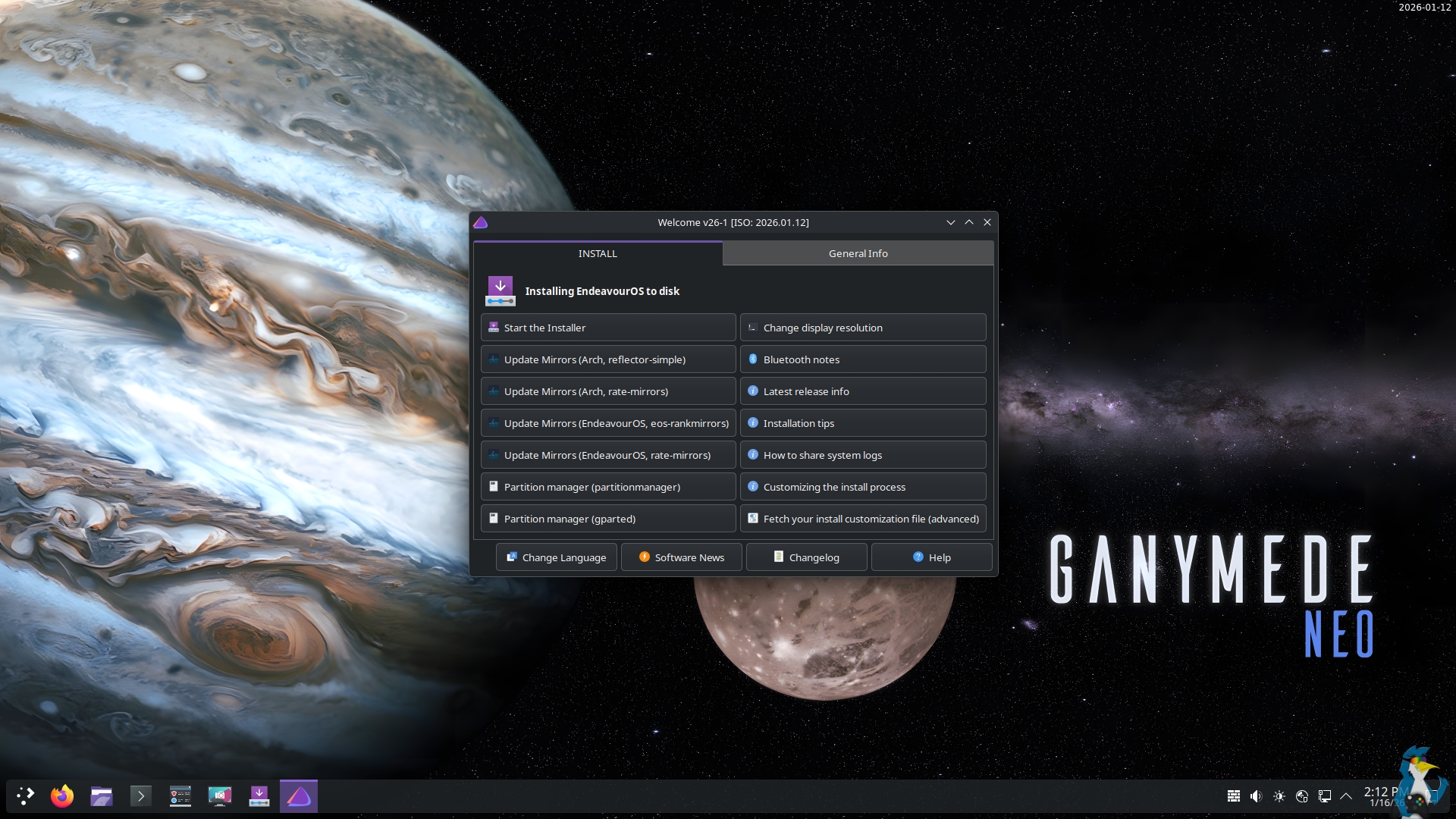
Pictured - EndeavourOS
It's now shipping with:
- Calamares 26.01.1.5-1
- Firefox 146.0.1-1
- Linux 6.18.4.arch1-1
- Mesa 1:25.3.3-2
- Xorg-server 21.1.21-1 (xorg)
- Nvidia-utils 590.48.01-2
Plus some bug fixes they noted in the release announcement:
- The long startup time issue with Calamares has been resolved.
- The package Nemo preview was removed from the default package bundle for Cinnamon and Budgie during installation due to its removal from the Arch repository.
- Starting with this release, the NVIDIA proprietary drivers have been switched to nvidia-open due to the upstream changes to NVIDIA drivers: https://archlinux.org/news. As a result, the proprietary option now only supports Turing GPUs(16xx) and later. Earlier NVIDIA GPUs are still supported using the default boot option, which will use the Nouveau open-source drivers.
Going by Valve's latest data EndeavourOS makes up around 2.12% of Linux gamers on Steam.





See more from me

 You can also find comments for this article on social media:
 Liam Squires-Hand 16 Jan 2026

Quoting: geckofish52Forgive my ignorance, but my understanding is that unlike Manjaro, which lumps Arch updates into point releases, Endeavour is basically an Arch installer. So what constitutes a new "release"?When they put out a new ISO download, with all the latest bits along with a few of their tweaks.


 Linux_Rocks 16 Jan 2026



Quoting: geckofish52Forgive my ignorance, but my understanding is that unlike Manjaro, which lumps Arch updates into point releases, Endeavour is basically an Arch installer. So what constitutes a new "release"?A new splash screen.

That said, I guess these distros are useful for Arch users who can maintain everything in the system and who don't care to manually set up their systems, although it seems to me like it creates a huge burden on the user who then has to figure out everything the distro's set up does. ...oh well, maybe I would be convinced by an Arch distro which sets up SELinux (which is what drew me back to OpenSUSE).
Quoting: tmtvlI love Arch, I keep bouncing between it and OpenSUSE Tumbleweed (I'm on TW at the moment, but I was running Arch for most of 2024 and 2025). I don't think that these 'user-friendly' Arch distros are a good idea. Arch users are really meant to understand our systems and keep up to date with the Arch announcements so we can keep things running. I realise that sounds a bit elitist, so what I mean to say is it's easy to overlook something and break something, therefore a distro which wants to make Arch accessible for users who don't have an interest in reading all the announcements and documentation should set up a testing platform to test updates before delivering them to users and maintain patches to prevent breakage. Taking ownership of AUR packages and integrating them in the distros repositories would also help avoid issues propping up.I respectfully disagree. I've been using Linux since '97 and know my way around the system quite well. But I have a full time job, a family, kids, etc. I've installed Arch in the past... been there, done that. I love Endeavour because it gives me the system I want (Arch+XFCE) without all the fuss. 5 minutes install, then add a few packages (vim, Steam, Gimp, sshfs, openrgb (to turn off all those annoying leds on some of my computers), openscad, cura, liquorix kernel and the most important of all, terminus-font which is the best terminal font ever) and its all set up. I bought a used laptop this week, it was all set in 15 minutes. And in the end, its barely any different than what I would have built from the ground with vanilla Arch. Maybe if I had built it from the ground I would have went astray and spent hours getting rid of systemd, but I don't want to spend those hours. And lately systemd has been less of a headache than in the past... anyway, if one day I absolutely need to get rid of systemd, I'd go with Gentoo over Arch.
That said, I guess these distros are useful for Arch users who can maintain everything in the system and who don't care to manually set up their systems, although it seems to me like it creates a huge burden on the user who then has to figure out everything the distro's set up does. ...oh well, maybe I would be convinced by an Arch distro which sets up SELinux (which is what drew me back to OpenSUSE).
Anyway, all of this to say that those easy-arch-install-distros are not necessarily targeted to beginners. Experienced users love them too.
Last edited by Drakker on 17 Jan 2026 at 3:01 pm UTC
 mr-victory 18 Jan 2026
Quoting: Linux_RocksI really like that desktop background!They always had sick wallpapers, you might want to check out their older wallpapers
Quoting: DrakkerA new release is usually slight tweaks to the package selection that's installed by default. They also update the Welcome app and other small things. But yeah, Endeavour is just a quick installer for Arch. In 5 minutes you have an up and running Arch system with a decent selection of pre-installed packages and a desktop manager of your choice from a short list they offer.Huge Endeavour fan here. Every device in our household for every family member has it installed (minus one daughter's high school who, for her arts and design classes, mandates an Apple laptop... Grrrrr....).
For those thinking of using it, it's a bit more than just an installer. There are some ideological tweaks that make it into the install. For example, packages to allow the DE's to auto index files for search is off by default (in at least KDE and Gnome) and the same for linking the DE up to Google services should you want to do that (which my wife wanted in her case, which is how I found out some more packages were needed). Other distros have these on by default or installed at baseline. That's the biggest difference I've found.
Just a PSA.
Last edited by iiari on 19 Jan 2026 at 9:16 pm UTC
 Patreon
 PayPal