Valve, creator of Steam, now face legal action in the UK as a lawsuit has been given the go-ahead that could result in up to £656 million in damages.
This is not technically some new legal action, it's actually the same one that was started back in 2024 from Vicki Shotbolt, the founder and CEO of Parent Zone - they're noted in the legal documents as Vicki Shotbolt Class Representative Limited ("PCR"), backed by Milberg London LLP. Shotbolt actually set up a private limited company just for this with a steamyouoweus.co.uk website.
As of the latest details from documents submitted January 26th 2026 after a hearing on October 14th 2025, the legal action has now officially been given the go-ahead as a tribunal have now been satisfied that there's enough there to be pursued.
In the unofficial summary of the new judgement prepared by the Registry of the Competition Appeal Tribunal it notes the allegations against Valve as:
- Imposing Platform Parity Obligations (“PPOs”), that prohibit publishers from selling Products through other distribution channels on better terms than the same Products are available on Steam. The PCR alleges that the PPOs are likely to cause, and have in fact caused, restrictions of competition.
- Imposing anti-steering provisions to the effect that, if a publisher wants consumers playing its Games distributed on Steam to be able to make in-game purchases, all such purchases must be made using the Steam application programming interface, and therefore Valve’s payment processing service. As a result, the payments are subject to Valve’s commission charges. Such anti-steering provisions leverage Valve’s dominant position in the Game Markets so as to enable it to secure a larger share of the Add-on Content Markets, by preventing or restricting the ability of other distribution channels to supply (including self-supply) Add-on Content for Games distributed on Steam.
- Imposing excessive commission charges which amount to an unfair price which is then passed on to consumers.
They also note that Valve directly opposed it on these grounds:
- The PCR had not put forward an adequate methodology for determining Valve’s effective commission charge, or as Valve referred to it the effective revenue share, as the PCR had failed to consider the effects of Steam Keys (the “Effective Commission Charge Issue”).
- The PCR had not put forward an adequate empirical method for determining the effect of the alleged PPOs (the “PPO Issue”) which related to a wider abuse allegation.
- The PCR’s proposed class definition was inadequate as there was no workable methodology whereby proposed class members, including a high proportion of minors, can identify themselves as being class members (the “Class Certainty Issue”).
In the full judgement page, it notes this is being done on behalf of "some 14 million UK-based consumers" with "aggregate damages" that are "provisionally estimated at up to £656 million". This is all on an opt-out basis rather than opt-in, meaning anyone this may have effected in the UK is automatically included.
On the note of minors above, this is something Valve argued about, as there wouldn't be enough evidence from minors partly due to Valve taking so little info when you create a Steam account, and it needed to take into account payment cards being used across different accounts (like parents using their card on a child's account). So who is actually included in it (the "Class Definition") was amended to:
“All Persons who, during the Class Period, made one or more payments to purchase (“Purchasers”): (a) PC Games, and/or (b) Add-on Content for PC Games, including subscription payments for PC Games and/or Add-on Content (collectively “Relevant Purchases”).
“Persons” are end-consumers, and do not include resellers or other non-retail customers. Persons include, in particular, people who purchase PC Games and/or Add-on Content for use by themselves or by people they know (such as friends or family members).
“Purchasers” include, for the avoidance of doubt: (a) where the payment was taken from a bank or credit card at the time of purchase (whether through the submission of card details or the use of digital wallet technologies such as Apple Pay, Google Pay or PayPal etc), the person whose account the money was taken from; (b) where the payment was made with pre-loaded funds on a user account (e.g. Steam Wallet, Epic Wallet etc), the user account holder; and (c) where the payment was made using a monetary gift card or voucher, the person who made the payment using that card or voucher.”
So it has been steered more directly to those who actually paid, not the Steam account holder.
We've seen this before, as there's a lawsuit also currently in progress in the USA against Valve on similar grounds. Back in 2024, the lawsuit in the USA was granted class action status but it's all still ongoing.
I've reached out to Valve press for a comment. Will update if they provide a statement.





See more from me

 You can also find comments for this article on social media:


I wish this was a case against Amazon for Kindle Unlimited, instead of Valve for Steam game pricing, but there we go.

 williamjcm 27 Jan 2026

Quoting: ArdjeAnd all because of these "protect the children" fake organizations that clearly have a second agenda, and it is not about protecting the children. [...]The "second agenda" is actually the first and only one. Children are just used as an excuse, just like how governments are using it as an excuse to implement mass surveillance on the internet through ID verification, message scanning, and other measures.
Quoting: LinasWhat a load of bull... To summarize the claim even more: I want to use Steam infrastructure, but I don't want to pay for it.Pretty much. And I wouldn't be surprised if Epic was behind the whole movement, because Tim Sweeney was the first to claim platforms charge their 30% cut *on top* of the price set by developers/publishers (even though it's not the case at all, because you don't see games be cheaper on the EGS despite the 12% cut, or on Itch.io despite the 10% cut, or become cheaper on Steam as they reach revenue milestones that make them eligible for the lower cuts).

I've always said that Valve's cut is undeniably too large. I just don't see any legal grounds to lower it - but hey, who knows.
And that their practices especially for charging with in-game purchases are double dipping in many cases is also quite clear.
I'm not too sure about the PPO stuff, I've read too many conflicting statements here.



Someone needs to tell them what the definition of insanity is.
1: Steam "price parity clause"This is only for Steam keys that are sold OUTSIDE Steam.
2: In-game purchases yadda yadda"Hey Sony, so I have this DLC for a game I bought from GOG, can I play this on PlayStation?", said nobody ever.
3: Commissions commissionsThe fee, that is... 30%...
You know... the same amount Sony and Apple also gets, yet somehow it is only Steam who is constantly put on target for it.
Lol, lmao even.
Just like someone else said above, I wouldn't be surprised if Epic was behind this, as the speaking points are more or less the same as what Timboi keeps saying.
Last edited by LupertEverett on 27 Jan 2026 at 3:41 pm UTC
Quoting: LupertEverettTrue - it is also not even remotely the point made in the lawsuit.2: In-game purchases yadda yadda"Hey Sony, so I have this DLC for a game I bought from GOG, can I play this on PlayStation?", said nobody ever.
But tearing that strawman down sure must've felt great.
Quoting: LupertEverettHmmm....3: Commissions commissionsThe fee, that is... 30%...
You know... the same amount Sony and Apple also gets, yet somehow it is only Steam who is constantly put on target for it.
Lol, lmao even.
You mean only Steam as in:
https://www.gamesindustry.biz/legal-claim-filed-against-sony-over-30-store-cut (Sony)
https://www.flatpanelshd.com/news.php?subaction=showfull&id=1751446916 (also Sony, but other country)
https://www.npr.org/2021/09/10/1023834758/apple-app-store-epic-games-fortnite-verdict
I'm quite certain there were more, but I can't be bothered to do more digging.
What was that common sense rule again, about not talking about a topic you know nothing about?
I can't quite remember.
Oh, well.
But I guess it is really surprising that we hear more about Valve on this Linux-focused website.


They got found out. This has lead to major restrictions in ways you are allowed to lobby in the EU.
But since the UK isn't part of the EU anymore, they can ignore that of course and lobbyists are free again to make those "grassroots" websites...
Do not ever think that a single steam customer is behind that site... It's paid for by multinationals.
Quoting: LupertEverettThere are several occasions - confirmed by Valve - that they told publishers they expect the same price or prefer not to sell a game.1: Steam "price parity clause"This is only for Steam keys that are sold OUTSIDE Steam.
Quoting: LupertEverettWhataboutism! If you think anyone else should be sued, then take legal actions! Besides: Apple & Google are being scrutinized, too.2: In-game purchases yadda yadda"Hey Sony, so I have this DLC for a game I bought from GOG, can I play this on PlayStation?", said nobody ever.
Quoting: LupertEverettThat's simple not correct.3: Commissions commissionsThe fee, that is... 30%...
You know... the same amount Sony and Apple also gets, yet somehow it is only Steam who is constantly put on target for it.

Quoting: drenThe amount of corporate bootlicking happening here is crazy. We are talking about a company that effectively has a monopoly on game sales, that promotes a skin gambling ecosystem that is available to minors ("loot boxes"), that for years resisted giving refunds, whos subscriber agreement attempts to prevent class action lawsuits, and who tried to monetize community made mods. Let's also not forget how shitty it was to force users onto a game, CS2, and mothball the better version, CSGO, who can't count to three (ignoring rumors), etc. As a linux gamer, I appreciate that they have made gaming on linux better, but lets not pretend that they aren't interested in getting people onto their own OS, SteamOS, so they can again increase their own margins via hardware and licensing. I think it is best to keep these corporations at an arms length at best. I love GOG because I can actually buy and own games, but they are still a corporation and corporate track records are pretty shitty these days.Except ofc that this lawsuit (and zero of the others) have anything to do with this list of issues that you have with Valve/Steam. And I am quite confident that most people who write critically about this lawsuit agrees with you that what you list are valid concerns. But as I already said, the lawsuit is not about this so therefore "we" are not defending these actions by Valve when we criticize the lawsuit.
Quoting: TheSHEEEPSeems partly reasonable to me.Still every single other shop that have taken a less cut does not provide anything comparable with the full suite that Steam offers plus that most of them are also in the red (e.g Epic is only able to afford to have their shop due to the income from Fortnite). So while 30% might be too much, no one have so far been able to actually demonstrate it in practice.
I've always said that Valve's cut is undeniably too large. I just don't see any legal grounds to lower it - but hey, who knows.
And that their practices especially for charging with in-game purchases are double dipping in many cases is also quite clear.
I'm not too sure about the PPO stuff, I've read too many conflicting statements here.
Quoting: poiuzThere are several occasions - confirmed by Valve - that they told publishers they expect the same price or prefer not to sell a game.AFAIK this have only been rumoured by Epic. But if you have any links with data then provide them.
Quoting: LupertEverettThat's simple not correct.Yet when I google it I get back that Apple takes 30% (and 15% for small publishers) and Sony takes 30%...
Last edited by F.Ultra on 27 Jan 2026 at 6:54 pm UTC
 Mountain Man 27 Jan 2026

Quoting: ShabbyXSay this fine is paid, where does the money go? I highly doubt to the consumers the suit claims to protect. Does it go to the UK government? To the people filing the suit (in which case, why do they deserve this money?)?If it's like class action lawsuits in the US, the overwhelming majority of the money is awarded to the law firm that filed the case since they're supposedly representing the injured party.
Last edited by Mountain Man on 27 Jan 2026 at 7:17 pm UTC
 Caldathras 27 Jan 2026
Quoting: TheSHEEEPI've always said that Valve's cut is undeniably too large. I just don't see any legal grounds to lower it - but hey, who knows.
Speaking from long experience in the retail industry, 30% is pretty much standard fair unless you are targeting wholesale business levels (mega corps with big box storefronts like Walmart, Home Depot, Office Depot, Best Buy, etc.). Computer hardware and livestock feed are two areas that I am aware of that operate on wholesale pricing margins. As such, I have absolutely no objections to Valve's commission structure and see no reason why they should be expected to target wholesale margins like the big box mega corps.
We have a consignment programme where I presently work. There are two takeaway points about it. While we are occasionally negotiable depending on the product, the default commission is 30% of retail (we provide shelf space, handle merchandising, collect and remit sales taxes, etc.). We also include a clause encouraging consignors to have the same retail price wherever they sell their products (we don't legally enforce it but we have reserved the option to cancel a consignment contract on these grounds). It simply benefits no one if the consignor is undercutting their own prices (it impacts their sales through us and makes it pointless to provide shelf space for their products).
Like you, I see no legal grounds to force any retailer to change their margin/commission structure. That would be tantamount to price fixing -- which is, AFAIK, illegal in most nations. If you don't like Valve's commission structure, you are free to take your business elsewhere. If you lose sales because you went with a retailer with less exposure but lower commission, the blame rests on your shoulders, not Valve's.
Last edited by Caldathras on 27 Jan 2026 at 7:39 pm UTC
Quoting: F.UltraAFAIK this have only been rumoured by Epic. But if you have any links with data then provide them.There are quotes buried in court files - I'll have to look for it myself.
Quoting: F.UltraYet when I google it I get back that Apple takes 30% (and 15% for small publishers) and Sony takes 30%...Fortnite & the App Store ring any bells? Maybe search for EU DSA?
Johnologue 27 Jan 2026
 Patreon
 PayPal
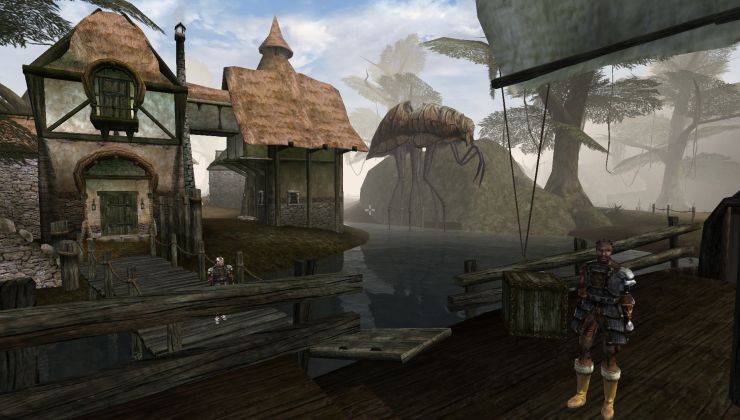 How to setup OpenMW for modern Morrowind on Linux / SteamOS and Steam Deck
 How to install Hollow Knight: Silksong mods on Linux, SteamOS and Steam Deck