While you're here, please consider supporting GamingOnLinux on:
Reward Tiers: Patreon. Plain Donations:
  PayPal.
This ensures all of our main content remains totally free for everyone! Patreon supporters can also remove all adverts and sponsors! Supporting us helps bring good, fresh content. Without your continued support, we simply could not continue!
You can find even more ways to support us on this dedicated page any time. If you already are, thank you!
Reward Tiers:
Patreon. Plain Donations: PayPal.This ensures all of our main content remains totally free for everyone! Patreon supporters can also remove all adverts and sponsors! Supporting us helps bring good, fresh content. Without your continued support, we simply could not continue!
You can find even more ways to support us on this dedicated page any time. If you already are, thank you!
Login / Register
- Steam Controller more popular than Valve expected - they're working on stock issues
- Expanded AMD HDMI 2.1 support is coming to Linux
- Discord is finally less of a nuisance to update on Linux
- Steam Controller goes out of stock as Valve get a ton of "Game Console" shipments
- Valve announce a reservation system for the new Steam Controller
- > See more over 30 days here
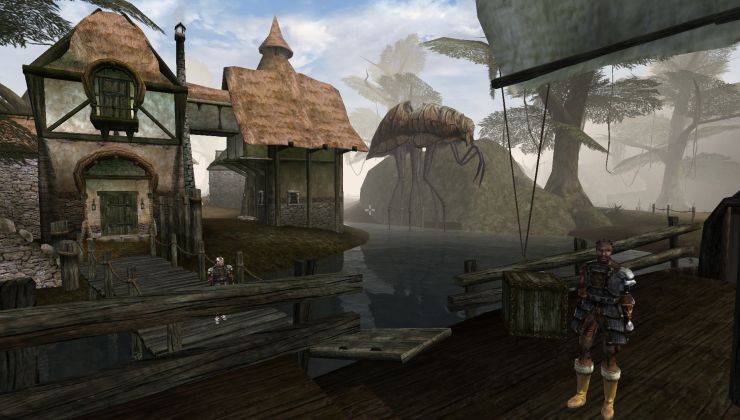 How to setup OpenMW for modern Morrowind on Linux / SteamOS and Steam Deck
 How to install Hollow Knight: Silksong mods on Linux, SteamOS and Steam Deck
Recently Updated
- Lutris alternatives
- Shmerl - The value of ecosystem.
- GustyGhost - New Desktop Screenshot Thread
- PlayingOnLinuxphone - The Great Android lockdown of 2026.
- PlayingOnLinuxphone - Feedback needed - future website updates
- Liam Dawe - See more posts
Mind you, I don't think I've seen many reports on Debian causing problems for gamers on this site. Have I just missed them? Or are these Debian users simply proficient enough to fix these problems themselves? Debian doesn't exactly appeal to people new to Linux, unless they choose it based on ideology alone.
Disclaimer: Personally I've only used Debian on servers, and prefer a "better" OOTB experience on the desktop, but--as the word experience implies--this is purely subjective.
So Debian testing offers a good balance of polish and stability while being up to date. Something like Arch introduces things way too early and you should be ready to deal with serious instability.
Ubuntu and Mint are actually more out of date than Debian testing, because they use periodic releases and they aren't rolling.
I'm using Debian stable and it works great. The debian-backports reposoritory is really helpfull to get the latest nvidia driver and other packages.
Here are some values of mine that I can think of as I write this, which Debian delivers, and makes me adore it.:
1) Stability / Security / Reliability
2) Excludes any trace of proprietary software by default AND makes proprietary software easy to install if the user desires it (so it's good for both idealism and pragmatism). I much rather go through roundabout methods of obtaining certain proprietary software that I feel I need rather than have proprietary software installed that I am not aware of, nor need. (The vrms tool is one useful tool for keeping proprietary software to a minimum.)
3) Massive repositories and beautiful package management system.
4) Multiple architectures supported, so I can carry an identical user experience on an ARM netbook, for example.
5) Apt-pinning and backports makes it much easier to keep a "99% super stable" (Debian stable repository) / "1% regular stable" (Debian stable backports and Debian testing repositories), for example. This ensures that any program that contains enough features to satisfy you can keep getting security-focused fixes, while still keeping the upgraded ones largely secure and stable. (Other branch combinations are possible, but that's my preference.)
The Debian project's decisions line up with my opinions perfectly; I have yet to disagree with a decision made by that project . . . it's an awesome project! :D I think I'm in love. :P