While you're here, please consider supporting GamingOnLinux on:
Reward Tiers: Patreon. Plain Donations:
  PayPal.
This ensures all of our main content remains totally free for everyone! Patreon supporters can also remove all adverts and sponsors! Supporting us helps bring good, fresh content. Without your continued support, we simply could not continue!
You can find even more ways to support us on this dedicated page any time. If you already are, thank you!
Reward Tiers:
Patreon. Plain Donations: PayPal.This ensures all of our main content remains totally free for everyone! Patreon supporters can also remove all adverts and sponsors! Supporting us helps bring good, fresh content. Without your continued support, we simply could not continue!
You can find even more ways to support us on this dedicated page any time. If you already are, thank you!
Login / Register
- Oh dear - ARC Raiders was logging your private Discord chats [updated]
- Many more US states are planning or already have operating system age verification laws
- Xbox "Project Helix" confirmed to run Xbox and PC games - competition for the Steam Machine
- Transport Fever 3 confirmed for Linux and macOS support
- Slay the Spire 2 is out now in Early Access with online co-op
- > See more over 30 days here
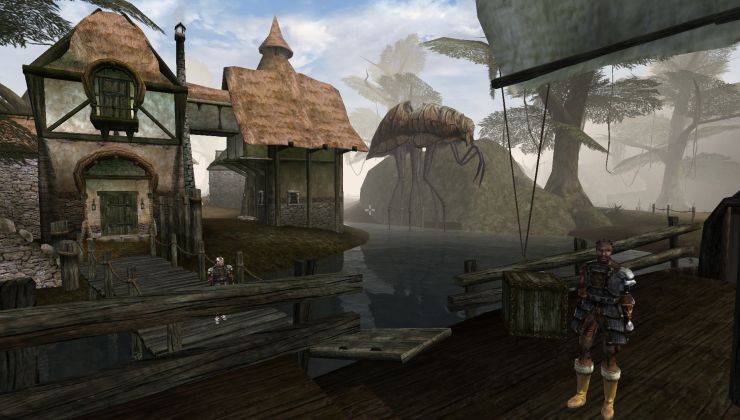 How to setup OpenMW for modern Morrowind on Linux / SteamOS and Steam Deck
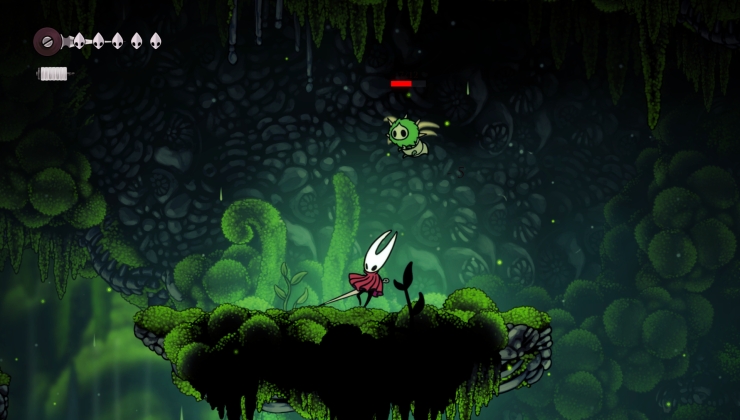 How to install Hollow Knight: Silksong mods on Linux, SteamOS and Steam Deck
Recently Updated
- Recommendations for portable monitor for Steam Deck?
- childermass - Shop Crush - Psychological Horror Thrift Sim with Literal Illusio…
- hollowlimb - Introduce Yourself!
- hollowlimb - Proton/Wine Games Locking Up
- Caldathras - recently released super fun crpg - Sector Unknown
- Jarmer - See more posts
(with the new "flat" forum, I'm not sure where to put this, but maybe category doesn't much matter any more)
Category still matters as people can go to forums directly, and it helps with searching ;)
Would be nice to have more updated kernels (Mint is on 5.3), but I do like their more restricted stance here in general, as it ensures stability.
One month ago, I made the switch from Mint + Cinnamon to Manjaro + KDE.
Maybe it's KDE and not Manjaro but I found some quirks that didn't happen with Mint + Cinnamon.
Dual screen in KDE is customizable to a high degree, so much it's too much (Per Window and per application) and I needed to configure it since its behavior at start is different from what I'm used to.
My Xbox gamepad must be unplugged and re-plugged to be recognized.
Problem with streamed videos (ie Youtube) choppy AF with no sound, so I have to reboot 2 sometimes 3 times and sometimes it works on first try.
Pamac (Manjaro package manager GUI ) got stuck many times during downloads, so back to terminal and 'sudo pacman -Syyu'.
I like having a transparent background on my terminal and each time I turn on my second screen the desktop effects are disabled and I have to 'Alt+Shift+F12' re-enable them.
No shortcut to switch from one screen to another, you have to create it.
Everything is minor, you can troubleshoot everything, it's usable but it's not as pleasant as my experience with Mint and Manjaro + Cinnamon is community driven so maybe it's not the best choice support wise.
Else, as you said, you have fresh kernels + Firmwares, latest Mesa without fiddling with PPA or compilation, and mainly the AUR.
So going back to Mint or not, I'm not sure...
i switched from kubuntu to manjaro kde and i dont see any difference at daily usage
it comes with a kernel manager like UKUU, but you dont need it, because manjaro has newer kernels since it is a rolling release (it is 5.4 atm)
you also dont need 3rd party PPAs for newer mesa, plasma, openoffice, etc, because... rolling release. makes it easier to be up to date
which mesa version does mint come with? i think it doesnt even have ACO. you have to wait til mint 20, or 3rd party ppa
some commands are different
sudo apt update / dist-upgrade is sudo pacman -Syu
but since you want beginner friendly you will use the GUI anyways
i think almost every distro is "beginner friendly". more important is the desktop environment
steam, gog and mango hud work the same
Right now I'm running Debian KDE on my laptop (used for work and studies) and Arch on my desktop and couldn't be happier.
I'm starting to lean towards the opinion, that the best distributions are the ones not based on some other distribution. For example Ubuntu is based on Debian to fit more normie user, which is great to get started with Linux, but at the same time it introduces problems and bugs not present in Debian, because it is doing things for which Debian was not designed.
Last edited by Rooster on 10 Apr 2020 at 10:25 am UTC
What's the point of switching distros, when you're already happy with the one you're using?
I used to distrohop, but that's because each distro had some deal-breaker for me.
When I found Solus, I finally settled on it and stopped distro hopping, because it's the one I'm most happy with.
If you're happy with Mint, you just keep using it, it's a fine distro.
You should only switch distros if you have a good reason for it.
Also, there's nothing like the feeling of having an old OS install (properly upgraded of course) that has everything set up the way you want it to.
I can install software just fine on Arch. No need to do a full system update.
Yes you can not do incremental updates , but you can install stuff just fine. I do it all the times. Pacman -S <package>
From Arch wiki:
https://wiki.archlinux.org/index.php/System_maintenance#Upgrading_the_system
Last edited by Rooster on 10 Apr 2020 at 10:07 pm UTC
But, those updates usually came in months later which was annoying for me. Aside from that, I also at the time needed to update to the latest NVIDIA drivers but that ment me fiddling with the terminal and I always managed to do something wrong even-though I followed a guide. I ended up with a black screen after reboot.
Another thing that frustrated me was software that was not in the main repo required me to add a PPA to install it. Adding multiple PPA's felt like I made my system 'dirty' with external sources.
So, eventually I got back to Windows. But also, eventually I got the Linux itch again, and with Proton, the time was there.
So I started looking around for a Linux distro that I could use that always was up to date and did not require re-installation. I came upon Manjaro and decided to give that a whirl.
And now here I am, one and a half years later. All that time using Manjaro and I have learned a lot about Linux.
Manjaro wins for me since I can always keep it up to date. Installing software is easy because of the fact that the AUR repo is also included in the package manager. I never had to download something myself from git and compile stuff myself.
So far, I only had one issue after a update and that was easily fixed. I myself would recommend Manjaro to beginners. I was also a beginner when I started and now I am, I guess a advanced Linux user. Still not a pro, but defo average and above.
Last edited by Sojiro84 on 12 Apr 2020 at 6:52 am UTC
Are we talking about installing a new package ? or doing an upgrade ?
From your initial post i understood you were doing a full system upgrade whenever you install a new package
Your quote
From the wiki
Also, just think about it. The issue with upgrading only one package is that it can upgrade a library also for other package, causing it to break. Then it is only logical, that same scenario can happen also when installing a new package. Therefore, doing system upgrade beforehand is required.
Last edited by Rooster on 12 Apr 2020 at 3:37 pm UTC
Although I'm no expert, I'm not a Linux newcomer by any stretch of the imagination (I dual-booted Red Hat until Ubuntu came out, then dual-booted that until Windows 8 came out, from which point I have single-booted exclusively)... But I think Linux Mint is better suited for newcomers because a lot of things "just work" or have a more logical approach (side note, I am told that Manjaro with Plasma 5 is even easier to use - but I've never used it myself, so I cannot comment on this).
For example, Linux Mint has a "Windows like" menu that many people would be familiar with, the (system) settings seem to be more logically laid out, I find that it is easier to configure my NVIDIA settings in Linux Mint and importantly, Linux Mint seems to notify me of updates / upgrades in near-real-time (unless I manually check, I have always found with Ubuntu that there is a bit of delay before it tells you of available updates / upgrades).
In saying this though, I have also found that Linux Mint seems a little less stable... For example, switching programs (Alt + Tab) or workspaces / desktops (Super / Windows key + S) frequently causes the window manager to "freeze"; Linux Mint itself is still running (you can see the menu open in the background when one presses the Super / Windows key), but the rest of the screen is "frozen" on the changing programs / changing workspaces / desktops animation.
In addition, it takes a couple of attempts to get my bluetooth headphones to maintain a "stable" connection, and one of my computers gets "stuck" on the "Linux Mint" logo when I try to shut down the computer (this is something they've changed in the 19.3 update, because it's only started doing this recently).
So yeah for me, I'll be going back to ("vanilla") Ubuntu.
This annoys me, but I'm seeing the issue less and less... I have run Linux Mint on my computers for the last 9-ish months and am yet to add a PPA, plus I'm temporarily running Ubuntu 19.10 on my tablet (until 20.04 LTS drops) and this has not yet been an issue.
In saying this, I prefer to use Snap or Flatpak where ever possible (as long as it doesn't break functionality and is officially supported), so perhaps this is why I am seeing the issue less?