While you're here, please consider supporting GamingOnLinux on:
Reward Tiers: Patreon. Plain Donations:
  PayPal.
This ensures all of our main content remains totally free for everyone! Patreon supporters can also remove all adverts and sponsors! Supporting us helps bring good, fresh content. Without your continued support, we simply could not continue!
You can find even more ways to support us on this dedicated page any time. If you already are, thank you!
Reward Tiers:
Patreon. Plain Donations: PayPal.This ensures all of our main content remains totally free for everyone! Patreon supporters can also remove all adverts and sponsors! Supporting us helps bring good, fresh content. Without your continued support, we simply could not continue!
You can find even more ways to support us on this dedicated page any time. If you already are, thank you!
Login / Register
- Valve announce a reservation system for the new Steam Controller
- VKD3D-Proton 3.0.1 brings many Linux gaming enhancements for Direct3D 12 via Vulkan
- Proton Experimental gets fixes for Rocket League, Crimson Desert, Helldivers 2 and more
- Civilization VII "Test of Time" update lands May 19, finally letting you play entirely as one civ
- Classic Eugen Systems RTS game R.U.S.E. returns with upgrades and Steam Deck support
- > See more over 30 days here
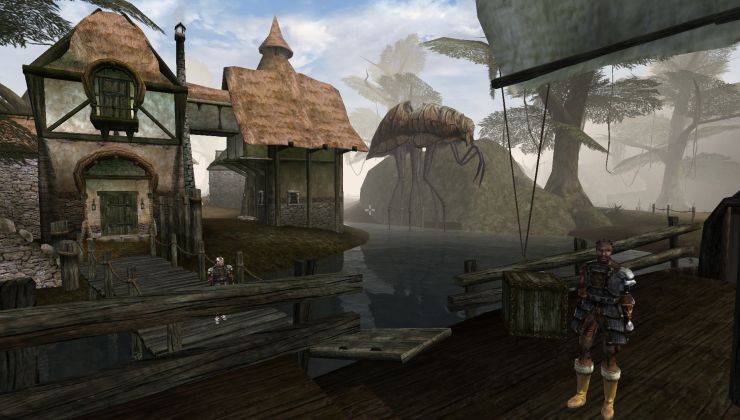 How to setup OpenMW for modern Morrowind on Linux / SteamOS and Steam Deck
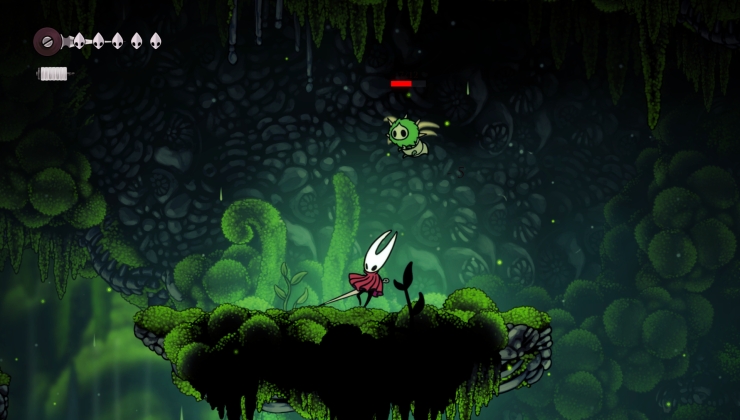 How to install Hollow Knight: Silksong mods on Linux, SteamOS and Steam Deck
- The Great Android lockdown of 2026.
- tuubi - The value of ecosystem.
- mr-victory - Terminal trick - progress indicator in the task manager…
- whizse - Lutris alternatives
- Shmerl - New Desktop Screenshot Thread
- PlayingOnLinuxphone - See more posts
My Linux PDA experiences kicked off with the Sharp Zaurus devices. I tinkered with Palm Treo smartphones, and early Symbian smartphones (e.g. Sendo X) and many more besides.
The decent Linux phones were released by Nokia - and I own the N900 and the N9 by them. The N900 runs Maemo Linux, the N9 runs Meego Linux. Steve Elop messed up Nokia company just as these Linux phones were kicking off, and they were awesome compared to Apple and Android smartphones at the time. Nokia stopped developing them further. Nokia fractured some developers who went away and formed Jolla company. Jolla releases SailfishOS Linux for some in-house mobiles, but also for a selection of Sony Xperia phones.
For SailfishOS, you can use Xperia 10, Xperia 10 ii, Xperia 10 iii, Xperia XA2 Android phones and overwrite with SailfishOS. The Xperia 10 iii is the one to go for, because more hardware (e.g. camera) works on it. Avoid the Xperia 10 v because camera doesn't work (yet) and hasn't for the past 2 years. SailfishOS has quite bad battery drain on the Xperia 10 iii (and others) because it doesn't handle idling the cellular modem as well as Android OSes do. I tested drain to be approx 4.5% battery capacity per hour, versus 1% drain for degoogled LineageOS Android. As soon as the cellular modem isn't used i.e. If you put into Flight Mode or use the phone without a SIM, the problem goes away and it can last a long time on battery.
I find SailfishOS to be fairly polished and pleasant to use, with good selection of Jolla company default Apps as well as plenty of community Linux Apps. Additionally, if you pay Jolla for the OS license (you can use the OS without a paid licence) then you get Android App support added. I find that SailfishOS with Community (Linux) Apps can handle most smartphone needs (play music, browse web, photos, image gallery, torch, document viewer, Linux console, play videos, GPS navigation, basic games, password manager, etc) WITHOUT needing Android Apps to compensate.
In terms of other Linux Mobile OSes - These are available: Droidian (Debian based), Mobian (Debian based), Ubuntu Touch (community Linux, not controlled by Ubuntu company), PostmarketOS, (SailfishOS), probably a couple more.
I particularly like Droidian, and it is very close to Daily Driver status. With Droidian you can easily enable Waydroid which gives you a convenient way to access Android Apps. Droidian gives you a convenient toggle to switch Waydroid on or off, so you can ensure pesky apps are not running without your permission. The main drawback of Droidian is the lack of a good selection of mobile Linux Apps (i.e. where SailfishOS excels). The other problem is that cellular modem idling battery drain (which affects nearly ALL Linux mobile phones). I don't want to run a phone I have to charge DAILY, when it would last 5 days on battery running LineageOS (degoogled Android).
Ubuntu Touch is pretty decent too, and you can get Waydroid running on that (and then Android Apps work too).
In each case, you need to find a suitable phone, you need to ensure that features of the phone work on your chosen OS (or you have to manage without them). For instance, Linux OS on one phone might not support the fingerprint scanner, on another phone the camera might not work, etc. I like to choose a phone which is supported by *multiple* OSes - and I have a recommendation to share:
Get a secondhand Pixel 3A phone, and you can run LineageOS, PostmarketOS, Droidian, Ubuntu Touch, e/OS, and other OSes on it. The Pixel 3A doesn't have the battery problem plaguing the Pixel 4A (and higher).
Although %1 per hour is manageable (with LTE on, right??) I'd panic over that because my regular android phone can use below %1 per hour, I'd say %1 per 2 or 3 hours with cellular on, way less with Wi-Fi on and cellular off but still with cellular signal. I'd worry the %1 per hour may became %2, %3 in a few months. Not sure how realistic my concern is.
There might be other reasons (i.e. you're still on 3G) why your phone behaves differently. Aside from comparing SailfishOS to LineageOS on the Xperia 10 iii, I have done similar battery drain tests on other phone models and practically every Linux mobile OS suffers fast battery drain on cellular compared with Android. I've done this testing multiple times on multiple different phones.
Anyway, saying all that I guess I will go away and test some more (because you can never do enough testing).
Granted, my phone use is pretty limited. The drain has obviously been a lot higher when I've been travelling and using GPS positioning and browsing the web more. Never bad enough to be a problem, but YMMV. Whether battery drain is worse than Android is not something I worry about at all, as I'll never even consider running Android on a personal device.