 Support us on Patreon
 PayPal
Latest Comments by Purple Library Guy
A French court has ruled that Valve should allow people to re-sell their digital games
20 Sep 2019 at 4:06 pm UTC Likes: 1
* I very rarely do this but I have occasionally ended up with duplicates of the same book. Of course where I live, there hardly are any used bookstores any more. Rent got too high, Amazon took over, they all died except a couple legendary ones.
20 Sep 2019 at 4:06 pm UTC Likes: 1
Quoting: ArehandoroOn Steam (and perhaps the devs) getting a chunk of resale, that's still probably less than the overhead for resales of physical goods. Consider used bookstores--people who actually have gone to used bookstores to sell them your old books* will realize that they pay diddly for them, and only partly because the thing itself is used. They pay diddly because they have to pay rent on a store and utilities and some money for themselves so they don't starve, out of the markup. Similar things are true for used clothes and other things; lots of used goods stores don't pay for the stuff at all, people just donate whatever to get it out of their way. So if Steam or whoever takes a cut of resale, that's hardly unprecedented; they're providing the infrastructure just like a used bookstore.Quoting: subNot entirely true.Quoting: SalvatosI'm not yet having a position on all this yet, tbh.Quoting: pbThat's it, I'm telling my son right now to stop dreaming of developing games. This basically legalises keyshops and now even allowing you to sell the games you're already played and finished, if it wasn't bad enough before... Piracy killed Amiga gaming, socialism will kill PC gaming?Can we maybe not be so dramatic? Some of us are old enough to remember that that’s how it was for the majority of video gaming’s existence. And books, DVDs, cars, etc. Sure it would be a disruptive change, but as long as it doesn’t open the door to duplication (piracy), the market can adapt. It might not be pretty for a while, but it won’t just die like that.
Being honest, this pure digital distribution is different to what
we had back then for games or even more for the book example.
If you sell a used book, it's used - no matter how hard you try.
Those old game boxed were usually plastic sealed and you had to open them.
From my experience the cardbox boxes suffered as did the jewel case plus the CD.
All I want to say is this: Usually a used product is not mint anymore.
It shows signs of use that is represented in the price when you resell it.
This is completely gone for digital products.
You sell something that's perfectly the same as you bought it first hand.
There is no price on the consumption of the game anymore, which is what the
developer actually wants to get paid for - and that's fair, isn't it?
It's a dilemma.
When one buys a 2nd hand book, film, album or game, does the content differ? Is the content less enjoyable because the medium it comes in isn't in mint condition? In my case, I know the answer to both questions (NO).
One might decide to pay less for the state of that format but ultimately the importance here is what you do with that content. Therefore, Valve's case isn't different to existing consumer rights and market laws. Besides, let's not forget that more often that not 2nd hand books are equally, if not more, expensive that new ones in many situations AND that 2nd hand market is completely out of companies revenues. In a platform like Steam, if 2nd hand were to be enabled, they could, and they will, still control how it works getting a chunk of every sale for them as platform and for the dev. Which I believe, it should create another topic in itself.
* I very rarely do this but I have occasionally ended up with duplicates of the same book. Of course where I live, there hardly are any used bookstores any more. Rent got too high, Amazon took over, they all died except a couple legendary ones.
A French court has ruled that Valve should allow people to re-sell their digital games
20 Sep 2019 at 3:53 pm UTC
So obviously I'm not saying we should do it like the Romans. Just saying, there could be other approaches.
20 Sep 2019 at 3:53 pm UTC
Quoting: subAlso, the argument that you can trivially copy a digital "good" and therefore must be cheaper sounds like complete non-sense to me.Still, it's not the only way to do things. In ancient Rome, the theatre was free. You're a Roman citizen in a decent-sized Roman town, the empire lays on an amphitheatre of some sort and it's your right to go and take in a show. Bread and circuses, man. Of course, there was a statue of the emperor and some stuff before the show about how awesome the emperor and the empire was. Pay for your entertainment by accepting a bit of propaganda. Sort of like the ad-supported model of the internet . . .
As if a dev/publisher puts a price tag on the binary...
Ofc, they want to get paid for the experience (per person).
It's like arguing with the ticket man to let me into the cinema for free as there are still spare seats left and the show runs anyway.
I have never faced someone complaining to pay for the "experience".
Ofc, I came across plenty that complained about cinema prices here. Fair enough.
So obviously I'm not saying we should do it like the Romans. Just saying, there could be other approaches.
A French court has ruled that Valve should allow people to re-sell their digital games
20 Sep 2019 at 3:43 pm UTC Likes: 1
(Subscription models are broken in a different way)
20 Sep 2019 at 3:43 pm UTC Likes: 1
Quoting: subThis is partly just one more sign that the whole "product" model for digital goods is pretty broken, that paying by the unit for infinitely replicatable things doesn't really work. It's the model we have, it's the model that (for better or worse) our economic system depends on, and it makes a certain sense for material, non-replicatable goods in situations of scarcity. So we naturally try to extend it to this new domain. But it's showing plenty of cracks; this is just one more.Quoting: SalvatosI'm not yet having a position on all this yet, tbh.Quoting: pbThat's it, I'm telling my son right now to stop dreaming of developing games. This basically legalises keyshops and now even allowing you to sell the games you're already played and finished, if it wasn't bad enough before... Piracy killed Amiga gaming, socialism will kill PC gaming?Can we maybe not be so dramatic? Some of us are old enough to remember that that’s how it was for the majority of video gaming’s existence. And books, DVDs, cars, etc. Sure it would be a disruptive change, but as long as it doesn’t open the door to duplication (piracy), the market can adapt. It might not be pretty for a while, but it won’t just die like that.
Being honest, this pure digital distribution is different to what
we had back then for games or even more for the book example.
If you sell a used book, it's used - no matter how hard you try.
Those old game boxed were usually plastic sealed and you had to open them.
From my experience the cardbox boxes suffered as did the jewel case plus the CD.
All I want to say is this: Usually a used product is not mint anymore.
It shows signs of use that is represented in the price when you resell it.
This is completely gone for digital products.
You sell something that's perfectly the same as you bought it first hand.
There is no price on the consumption of the game anymore, which is what the
developer actually wants to get paid for - and that's fair, isn't it?
It's a dilemma.
(Subscription models are broken in a different way)
A French court has ruled that Valve should allow people to re-sell their digital games
20 Sep 2019 at 6:49 am UTC Likes: 3
I've seen someone in the thread mention the idea of a minimum time delay before resale; that might be an acceptable compromise. Of course, most people aren't going to want to resell instantly in the first place, because they want to play their game; they didn't buy the thing just to immediately not have it any more.
20 Sep 2019 at 6:49 am UTC Likes: 3
Quoting: AnanaceI think that the major issue with this ruling is that the digital goods in question have no degradation - or logistics costs - at all. There will be absolutely no difference between a "brand new" copy of a digital game, or a "second hand" one, unless introduced artificially through some kind of copy degradation mechanic to not support resale again after X times.An interesting point. I do think there is one thing that does degrade games and most digital goods--or rather, degrade their value: Time. Old games go on sale, because people are not willing to pay as much for old games. Novelty wears off.
With no product degradation between sales, and no logistical cost (in time or money) you - as a developer - would literally have to compete with your own product in the market, as "used" copies would be bit-by-bit identical to the "new" ones which you need to sell in order to recoup development costs.
I can see this ending up much like the piracy argument which drives DRM, where games sales are going to be crucial in the first weeks of the game release, only this time backed by legal rulings. As you - again as a developer - will have to start competing with your own product - sold at a cheaper price at the exact same quality - the moment the first players finishes their copies and wants to get some money back by reselling it.
So really, the only way I could see this not causing a massive impact on game development - especially single-player and other games which are possible to "finish" - would be if artificial degradation or other resale restrictions (logistical cost) were introduced. Something to make "new" copies somehow different from "used" ones, to make sure that there's at least some reason for people to want to pay more for a "new" copy rather than a bit-perfect "used" one.
I've seen someone in the thread mention the idea of a minimum time delay before resale; that might be an acceptable compromise. Of course, most people aren't going to want to resell instantly in the first place, because they want to play their game; they didn't buy the thing just to immediately not have it any more.
A French court has ruled that Valve should allow people to re-sell their digital games
20 Sep 2019 at 6:25 am UTC Likes: 2
20 Sep 2019 at 6:25 am UTC Likes: 2
On the question of keys and, basically, cheating and such . . . I am not now nor have I ever been a fan of cryptocurrency. But this strikes me as a potential application for blockchain stuff. Not, like, mining, just the blockchain ability to verify authenticity.
A French court has ruled that Valve should allow people to re-sell their digital games
20 Sep 2019 at 6:22 am UTC
20 Sep 2019 at 6:22 am UTC
Quoting: g000hFor those thinking this will be a good thing for DRM-Free Gaming: I think the opposite - This will push all new commercial games to become purely rental titles, i.e. You can download the game for free, but you won't be able to play it without a subscription. DRM-Free games will just be for free gaming (i.e. where no money is paid for the game title). Commercial game developers won't be releasing DRM-Free any more.Until the next lawsuit. I'm not sure getting around law is quite so simple as all that.
A French court has ruled that Valve should allow people to re-sell their digital games
20 Sep 2019 at 6:10 am UTC Likes: 3
The justice one is . . . not exactly simple, but actually I think pretty simple in essence once all the froth is boiled off. And on the justice angle I think the basic point is people should own the stuff they buy. So on that front I think it's a good ruling. And I'm willing to see a certain amount of negative practical consequences to have that principle upheld. I won't go so far as to say let justice be done though the sky fall, but I don't believe in letting expedience win all the time; it tends to be a false expedience in the longer run.
The economic one is I think a lot less simple than many people here think. It's about equilibria IMO. There's a lot of talk about how devs will all go out of business because of this. But devs always go out of business, always have and always will, and any change to the rate of it caused by this will be temporary, until a new equilibrium is reached. And it may not have any impact at all. Basically, I think there's a sort of, how to put it, natural rate of developer failure. If there are few developers compared to the size of the market, then they will nearly all do well, and word will get around that game developing is a great thing to get into. Then there will be more game developers; the numbers will keep rising until the market is saturated and developers start going out of business, at which point word will get out that game developing is a lousy thing to get into. Fewer developers will enter and, with those failures, the number of developers will fall, at some point making the field less cluttered for those who remain, who will do better. Basically it all fluctuates around an equilibrium level of some number of dollars in the market per developer which represents a level of developer income and rate of developer bankruptcy that's sort of neutral in terms of how much it tempts people to get into the biz. It's probably a lower number of dollars, with higher levels of failure, than strict rationality would dictate 'cause certain people have an emotional yen to make games and people tend to be optimistic about their ability to beat the odds. Since news is not instant and it takes a while for it to sink in, even if the market stayed static there would be a lot of fluctuations around whatever the ultimate equilibrium would be. But in the real world, there are shocks to the market--it grows, it shrinks, and it does things which affect profit per sale, which works pretty much as if the market had grown or shrunk. So you never actually hit the equilibrium level and stay there. Every time there's a shock, it impacts the profit per developer, which in the end will lead to more developers entering or leaving, heading towards (and overshooting) that equilibrium level.
So, if a decision like this is a shock that drops the profit per game, effectively shrinking the number of dollars in the market, it will cause more failures, yes, but only until we reach that equilibrium number of dollars per developer again. It wouldn't be a catastrophe forever changing the landscape, just a shock equivalent to a slight shrinkage of the game market.
But I'm not sure it would even represent such a shock. People assuming it would are implicitly assuming a customer base whose purchasing operates in a way like, each customer buys a certain number of games, or something like that. This works for, say, food--you buy the groceries you need to eat; if they get more expensive you spend more money on groceries, if they get cheaper you may spend less. Even there, it's not always the case--often consumers will try to avoid spending more by buying lousier food if groceries get more expensive, and if groceries get cheaper they may even do things like go organic or get fancier things they wanted but couldn't afford. With gamers I think it's even more pronounced; most gamers don't have a set list of games they will buy, after which they will stop. Rather, they spend roughly what they can afford, or what they're willing to waste on this particular hobby, plus a bit more if they see something particularly shiny. So here's the thing: Gamer A re-sells a game to gamer B. What does gamer A do with the money? Probably buys a game. Quite likely gamer A considers the sale a reduction in the total they have spent on games, so they now have more room in their game-buying budget. I just today on a GamingOnLinux thread saw someone comment that they bought a game using the money they have from getting a refund on another game. That's how gamers think, that's I think how the gaming market works. If that's the case, something like this will have surprisingly little effect on net developer income.
20 Sep 2019 at 6:10 am UTC Likes: 3
Quoting: Avehicle7887Although the consumer might be at an advantage here, I can already see the downsides: More DRM, indie devs losing profit and even risk going out of business and DRM-Free stores would have to stop selling games to french customers otherwise they risk a serious issue. I doubt they will stop at Valve, it would be unfair otherwise.There are two issues here, justice and economics.
This is a very bad call, and it shows clearly that the people making these decisions have no clue about games and of the challenges devs face every day. They're just paper pushers who didn't think of the consequences, which outweigh the benefits here.
Even if this rule goes against me (the consumer). I don't agree with it and I don't want it.
The justice one is . . . not exactly simple, but actually I think pretty simple in essence once all the froth is boiled off. And on the justice angle I think the basic point is people should own the stuff they buy. So on that front I think it's a good ruling. And I'm willing to see a certain amount of negative practical consequences to have that principle upheld. I won't go so far as to say let justice be done though the sky fall, but I don't believe in letting expedience win all the time; it tends to be a false expedience in the longer run.
The economic one is I think a lot less simple than many people here think. It's about equilibria IMO. There's a lot of talk about how devs will all go out of business because of this. But devs always go out of business, always have and always will, and any change to the rate of it caused by this will be temporary, until a new equilibrium is reached. And it may not have any impact at all. Basically, I think there's a sort of, how to put it, natural rate of developer failure. If there are few developers compared to the size of the market, then they will nearly all do well, and word will get around that game developing is a great thing to get into. Then there will be more game developers; the numbers will keep rising until the market is saturated and developers start going out of business, at which point word will get out that game developing is a lousy thing to get into. Fewer developers will enter and, with those failures, the number of developers will fall, at some point making the field less cluttered for those who remain, who will do better. Basically it all fluctuates around an equilibrium level of some number of dollars in the market per developer which represents a level of developer income and rate of developer bankruptcy that's sort of neutral in terms of how much it tempts people to get into the biz. It's probably a lower number of dollars, with higher levels of failure, than strict rationality would dictate 'cause certain people have an emotional yen to make games and people tend to be optimistic about their ability to beat the odds. Since news is not instant and it takes a while for it to sink in, even if the market stayed static there would be a lot of fluctuations around whatever the ultimate equilibrium would be. But in the real world, there are shocks to the market--it grows, it shrinks, and it does things which affect profit per sale, which works pretty much as if the market had grown or shrunk. So you never actually hit the equilibrium level and stay there. Every time there's a shock, it impacts the profit per developer, which in the end will lead to more developers entering or leaving, heading towards (and overshooting) that equilibrium level.
So, if a decision like this is a shock that drops the profit per game, effectively shrinking the number of dollars in the market, it will cause more failures, yes, but only until we reach that equilibrium number of dollars per developer again. It wouldn't be a catastrophe forever changing the landscape, just a shock equivalent to a slight shrinkage of the game market.
But I'm not sure it would even represent such a shock. People assuming it would are implicitly assuming a customer base whose purchasing operates in a way like, each customer buys a certain number of games, or something like that. This works for, say, food--you buy the groceries you need to eat; if they get more expensive you spend more money on groceries, if they get cheaper you may spend less. Even there, it's not always the case--often consumers will try to avoid spending more by buying lousier food if groceries get more expensive, and if groceries get cheaper they may even do things like go organic or get fancier things they wanted but couldn't afford. With gamers I think it's even more pronounced; most gamers don't have a set list of games they will buy, after which they will stop. Rather, they spend roughly what they can afford, or what they're willing to waste on this particular hobby, plus a bit more if they see something particularly shiny. So here's the thing: Gamer A re-sells a game to gamer B. What does gamer A do with the money? Probably buys a game. Quite likely gamer A considers the sale a reduction in the total they have spent on games, so they now have more room in their game-buying budget. I just today on a GamingOnLinux thread saw someone comment that they bought a game using the money they have from getting a refund on another game. That's how gamers think, that's I think how the gaming market works. If that's the case, something like this will have surprisingly little effect on net developer income.
Total War Saga: TROY officially announced and it will be coming to Linux next year
20 Sep 2019 at 4:24 am UTC Likes: 1
Could be interesting to add if done right, a sort of system for doing god politics where if you curry divine favour properly you get to occasionally power up a hero, except the more you push the powerup the bigger the chance that some opposing god will get pissed off and power up an opponent hero.
20 Sep 2019 at 4:24 am UTC Likes: 1
Quoting: wvstolzingTrue. I mean, conceptually some are pretty upscale--gods frequently get involved. But they kind of have a Zeus-enforced deal that doesn't let them actually show up personally on the battlefield, so it's mostly just juicing their favoured dudes, which isn't all that visually dramatic.Quoting: TcheyToo bad it's going to be "historical", and not "mythological" with beasts, gods, etc.Given how little we currently know about the historical event, I think their 'historical' account would end up being just Homer without the supernatural bits. (Not that my memory is at all fresh on this subject, but the supernatural bits in the Iliad are nowhere as fantastical as those in the Odyssey in any case.)
Could be interesting to add if done right, a sort of system for doing god politics where if you curry divine favour properly you get to occasionally power up a hero, except the more you push the powerup the bigger the chance that some opposing god will get pissed off and power up an opponent hero.
Richard Stallman has resigned from the Free Software Foundation and MIT
19 Sep 2019 at 6:42 am UTC Likes: 4
19 Sep 2019 at 6:42 am UTC Likes: 4
Quoting: Cyba.CowboyI tend to view Epstein as a symptom of wider problems. And yeah, consider that he was doing his crap for years, getting a rep for his parties and so on, and as far as I can make out none of the attendees ever denounced him. Too much concentrated wealth and power gives those wealthy and powerful the ability to control other people, too much distance between upper classes and the rest makes those upper classes dehumanize the rest of us. The concentration is getting higher, the distance is getting larger. So Epstein types will be out there doing that kind of thing because they can, and because they don't see us as human but just something to be exploited. Consider the phrase "human resources" and think about what it actually means. Epstein individually was just the tip of the iceberg.Quoting: LungDragoWe truly live in a f*cked up world. Just like in the Orwell game. Destroy someone by publicizing a statement out of context. So easy!Slightly off-topic, but ha, you should come to Australia... "1984" is alive and well here.
2 + 2 = 5
Quoting: Purple Library GuyThe way it seems to have gone is, this stylish obviously rich woman would find these dirt poor kids and recruit them on the basis of being basically eye candy/service staff. It's not like there aren't plenty of people who do that with no sex attached. Then once they were on sites, usually distant from their homes and isolated, they'd be expected to do what the other kids were doing; Darth Epstein would be, in a more jolly way than Vader, "I am altering the deal; pray I don't alter it any further." It's not that hard to pressure most people once they're cut off and alone, let alone kids.Don't get me wrong, I'm not putting the blame back onto the victims here and whilst we will never be privvy to the full facts, I do believe that at least some of these girls were carefully "encouraged" to participate in sexual misconduct with Epstein and his buddies, if not all of them (the girls)... With so much money and power at your disposal, I suspect it would be pretty easy to nudge people in the "right" direction.
Presumably most of them didn't tell their parents just what was going down, just that they were making good (by the standards of dirt poor families) money. It's possible some parents made a stink and successfully got their kids back. It's possible some parents tried and were stonewalled, and if you're a poor person how are you going to expect it to play out if you try to get the cops to go after a billionaire? But sure, some of those parents probably sucked. Some of those parents were probably in jail. Not sure what makes that relevant though--what, it's OK if bad things happen to kids as long as they have bad parents? Predators aren't culpable, it's their victims' fault for not having better parents to defend them? I don't get it.
My point that I was saying (at least for that part of my post), is that there are some pretty valid questions which need to be asked, and people are conveniently refusing to seek answers and / or are ignore these facts in favor of the little issues - such as some geek sitting at a desk who should know better than to comment on a highly controversial topic in his position...
Regarding the "parents" thing, I think it is unfair to blanket them all as being in jail or having abandoned these kids and whatnot, though that may be the case for some of them... In saying that, as I explained to my wife, the most likely scenario is that a lot of these parents simply "turned a blind eye" in hopes of rubbing shoulders with the wealthy and the elite - it would not be the first time a parent (from any class of society) has neglected their moral and legal responsibilities in favor of such an outcome.
As a father, the thought of that makes me cringe, but sadly, it happens all the time, and the Epstein thing is not even that bad compared to what some "parents" do in the hopes of rubbing shoulders with the wealthy and the elite.
The other issue is, and this is a tricky one, is the fact that a lot of people are simply ignoring the rather serious accusations against "Prince" Andrew, Donald Trump and various others who are wealthy and / or powerful...
What makes it "tricky"?
Well, look at his suicide... The entire thing is surrounded by "facts" that just don't match up, despite the fact that he was a high-profile prisoner in one of the most "secure" prisons in America.
And the fact that everyone is completely avoiding the topic of Epstein's buddies being participants in some or all of Epstein's activities, instead focussing on the smaller issues, such as a geek / academic who was silly enough to voice some controversial opinions about an already controversial topic.
It would be unrealistic to expect anything to come out of any investigation against Epstein's long list of wealthy and powerful buddies - this stuff happens all the time (you're kidding yourself if you think the wealthy / elite don't do this all the time!) and they don't get away with it for no reason... But that doesn't mean everyone needs to ignore the fact that this sort of thing was happening.
Build and manage your very own vineyard in Terroir, now available for Linux on GOG
18 Sep 2019 at 5:17 pm UTC
18 Sep 2019 at 5:17 pm UTC
Quoting: sketchAh, I see. That does seem a tad extreme.Quoting: Purple Library GuyYour understanding or have you played the game 10+ hours like i did? As i said once, the game is by no means a simulator. There is literally no place on earth where one year it rains continously since march to november, and the next year is a year-long drought. The game is not even a simplified sim, it's just an incredibly randomical game for to give false sense of challenge.Quoting: sketchbeen playing this game, sadly is heavily unbalanced and too randomical. Roguelikes are way more fair than this game. devs are unrenponsive.Roguelikes are way more fair than agriculture. Maybe we've gotten too used to these sweet farming sims that act like crafting, where you just put input A and input B into the ground and harvest C automatically comes into existence. My understanding is it Don't Work That Way.
- Discord is about to require age verification for everyone
- JSAUX announce a charging-friendly Steam Deck travel case
- System76 plans for COSMIC include Vulkan, HDR, gaming improvements and more
- Steam Beta fixes games from large libraries on Linux / SteamOS showing as not valid on current platform
- Hollow Knight gets a patch adding 21:9 & 16:10 resolution support and more
- > See more over 30 days here
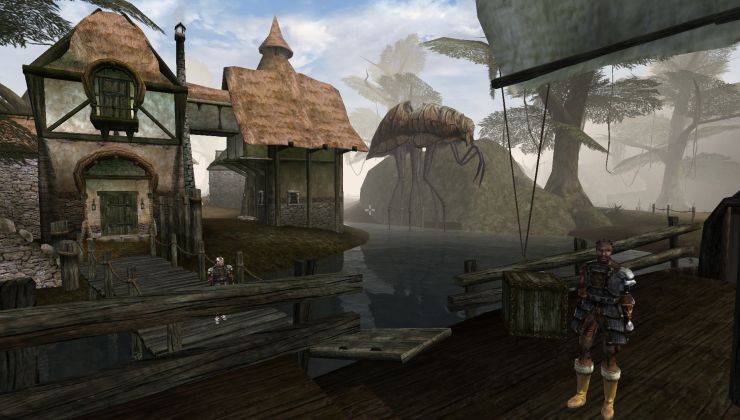 How to setup OpenMW for modern Morrowind on Linux / SteamOS and Steam Deck
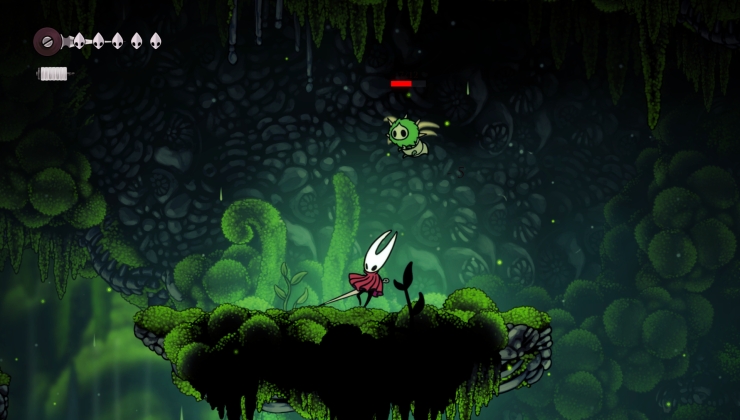 How to install Hollow Knight: Silksong mods on Linux, SteamOS and Steam Deck