 Support us on Patreon
 PayPal
Latest Comments by Purple Library Guy
Valve's digital card game Artifact releases this month with same-day Linux support
2 Nov 2018 at 6:14 pm UTC Likes: 2
But the fact is that creating a physical card game or board game does not cost the millions of bucks or require the number of bodies contributing that a computer game from a big studio does. It's a smaller thing. It's not that there's no creativity involved, it's more the difference between a short story and a large novel. Valve is a big outfit from which people tend to expect big things. Card games, relatively speaking, are small things (although the profits may be huge). I actually am not bothered by Valve doing a small thing, I think it's kind of sweet that unlike most behemoth corporations they can decide to do a small quirky thing. I hope they profit. But that does not make a card game a thing on the same scale as most other kinds of games.
2 Nov 2018 at 6:14 pm UTC Likes: 2
Quoting: KelsYou're going a bit over the top, I think. I don't believe I said anything about banged out in a weekend. But making a computer-based card game is a lot like . . . making a physical card game, or a fairly elaborate physical board game. Yes, there are a lot of art assets, yes there is a good deal of design work, yes it takes skill and/or intuition to do well.Quoting: Purple Library GuyWait, what? Sure, it doesn't have a lot of 3D models or character animation, but you're going to look at that trailer and say that it doesn't involve tonnes of design, card animations, special effects of various sorts, plus a significant amount of detailed art (a piece for every card)? That isn't nothing and isn't something you can just snap your fingers and you've got it.Quoting: KelsIt may be a fine game, but I can understand the criticism in a way. A card game requires very little graphics, no story, hardly any setting et cetera. If that requires four years of work, there is a certain sense of "The mountain laboured, and brought forth a mouse."Quoting: subSo sad, all that Valve came up with after all these years is a card game. :/And the upcoming In the Valley of Gods that Campo Santos is working on. And multiple other game projects that have been mentioned but haven't been officially announced yet.
I am mystified by the implication that a card game is somehow "lesser" than other kinds of games. Seems kind of insulting to the people who enjoy playing them, and the people who put work (in this case, four years of work) into making them.
Not to mention, card games involve a lot of work to design and balance the mechanics, with significant hours of playtesting to back that up. And I doubt there's less programming involved than most other sorts of games.
But sure, this looks like something a team of three banged out in a weekend. Sounds legit.
But the fact is that creating a physical card game or board game does not cost the millions of bucks or require the number of bodies contributing that a computer game from a big studio does. It's a smaller thing. It's not that there's no creativity involved, it's more the difference between a short story and a large novel. Valve is a big outfit from which people tend to expect big things. Card games, relatively speaking, are small things (although the profits may be huge). I actually am not bothered by Valve doing a small thing, I think it's kind of sweet that unlike most behemoth corporations they can decide to do a small quirky thing. I hope they profit. But that does not make a card game a thing on the same scale as most other kinds of games.
Valve's digital card game Artifact releases this month with same-day Linux support
2 Nov 2018 at 4:19 pm UTC
2 Nov 2018 at 4:19 pm UTC
Quoting: KelsIt may be a fine game, but I can understand the criticism in a way. A card game requires very little graphics, no story, hardly any setting et cetera. If that requires four years of work, there is a certain sense of "The mountain laboured, and brought forth a mouse."Quoting: subSo sad, all that Valve came up with after all these years is a card game. :/And the upcoming In the Valley of Gods that Campo Santos is working on. And multiple other game projects that have been mentioned but haven't been officially announced yet.
I am mystified by the implication that a card game is somehow "lesser" than other kinds of games. Seems kind of insulting to the people who enjoy playing them, and the people who put work (in this case, four years of work) into making them.
Open source cross-platform event-driven game engine 'GDevelop' now on itch, progressing well
2 Nov 2018 at 3:44 pm UTC Likes: 1
1) A large family of distros using apt with a graphical front end, whether Synaptic or something called "Software manager" or something
2) Red Hat
3) A smaller family of distros using whatever Arch does
That isn't a whole lot really.
But I'm not sure it's relevant. Games are different from other stuff, package management wise. Culturally, and because most Linux games are closed source and cross-platform, whereas most other Linux software is open source and often Linux-only, or even if cross-platform dominated by its Linux use. This game engine is open source, and no doubt the developers have a fondness for Linux because Linux is the centre of gravity of open source stuff, but it probably isn't primarily for Linux users. So its main method for being acquired isn't going to be through Linux distros, it's going to be through portals that Windows and maybe Mac people use, and because it's a game-related thing, that will be a game portal.
Long story short: Normal Linux software comes from your distro's software manager thingie, game stuff comes from Steam or GoG or Itch. There is nothing to be upset about here.
2 Nov 2018 at 3:44 pm UTC Likes: 1
Quoting: elmapul" There's something satisfying about download an open source game engine using an open source downloads app…"Maybe I just haven't experimented much, but these days isn't there basically
isnt that what package managers suppose to do...
sigh.
yeah, looks like the fragmentation leads yet again to people reinventing the whell, because its too hard to support all distros otherwise.
steam became the norm, since we were busy competing instead of cooperating
1) A large family of distros using apt with a graphical front end, whether Synaptic or something called "Software manager" or something
2) Red Hat
3) A smaller family of distros using whatever Arch does
That isn't a whole lot really.
But I'm not sure it's relevant. Games are different from other stuff, package management wise. Culturally, and because most Linux games are closed source and cross-platform, whereas most other Linux software is open source and often Linux-only, or even if cross-platform dominated by its Linux use. This game engine is open source, and no doubt the developers have a fondness for Linux because Linux is the centre of gravity of open source stuff, but it probably isn't primarily for Linux users. So its main method for being acquired isn't going to be through Linux distros, it's going to be through portals that Windows and maybe Mac people use, and because it's a game-related thing, that will be a game portal.
Long story short: Normal Linux software comes from your distro's software manager thingie, game stuff comes from Steam or GoG or Itch. There is nothing to be upset about here.
EA's experimental Halcyon game engine has Vulkan and Linux support
1 Nov 2018 at 11:44 pm UTC
But there's nothing conceptually to stop capitalism from operating without anything you could really call markets at all; one good contemporary example is the US military procurement system, where capitalists invest, make huge profits, and reinvest the profits to grow their firms, but do not compete or do anything that could really be considered "selling" in a "market". It's still capitalism, quite pure capitalism--that it's not a form most people like doesn't make it any less capitalist.
The same operates contrariwise--socialism is not typically associated with markets, but the basic concept says nothing about them one way or another--rather, it is associated with ownership of the means of production, the firm, by workers, the public, or the state rather than by private capital-owning individuals. In theory even the state-owned kind could involve multiple state-owned firms in any given industry, competing to sell their goods in markets. Variants where firms are mainly owned by the firm's workers assume markets more often than not. I'm on the fence about the impact of markets in non-capitalist systems, personally.
1 Nov 2018 at 11:44 pm UTC
Quoting: PatolaHmmm . . . the idea that capitalism as such is particularly associated with free markets or competition or, indeed, necessarily markets at all, is a bit of a misconception. The two things have often gone together and so they're often treated as the same thing analytically, but they're not. Capitalism is about capital, and the investment of capital to make a profit, which can then be reinvested. It is believed by many that competition among firms and/or the existence of fairly open markets can force capitalism to behave fairly efficiently rather than extracting tons of rent, but that's a modifier added on top, and at that one that the capitalists themselves must inevitably oppose since their objective is, and is supposed to be, maximizing profit, including rent.Quoting: Purple Library GuyEconomic system? Sort of. More specifically, it's the curse of the Intellectual "Property", which by itself is anti-competitive and [url="https://mises.org/library/against-intellectual-property-0"]anti-capitalist[/url]. Patents, copyrights, trademarks, DRM and the likes, that's what leads companies down this path...Quoting: DuncBoth EA and Activision (and many more) . . . It's almost as if there were some sort of economic system pushing people to go that way.Quoting: DJVikingFor them it is all about the money.That's the sad part. The original intention of Electronic Arts (and the name was carefully chosen) was to acknowledge and foster the creativity of its developers, at a time when even admitting there were real people making videogames was a rarity*. Modern EA is basically the diametric opposite of what Hawkins set it up to be.
*Of course, the founding of Activision is a similar story. And it went the same way.
But there's nothing conceptually to stop capitalism from operating without anything you could really call markets at all; one good contemporary example is the US military procurement system, where capitalists invest, make huge profits, and reinvest the profits to grow their firms, but do not compete or do anything that could really be considered "selling" in a "market". It's still capitalism, quite pure capitalism--that it's not a form most people like doesn't make it any less capitalist.
The same operates contrariwise--socialism is not typically associated with markets, but the basic concept says nothing about them one way or another--rather, it is associated with ownership of the means of production, the firm, by workers, the public, or the state rather than by private capital-owning individuals. In theory even the state-owned kind could involve multiple state-owned firms in any given industry, competing to sell their goods in markets. Variants where firms are mainly owned by the firm's workers assume markets more often than not. I'm on the fence about the impact of markets in non-capitalist systems, personally.
Steam Play thoughts: A Valve game streaming service
1 Nov 2018 at 9:20 pm UTC Likes: 1
1 Nov 2018 at 9:20 pm UTC Likes: 1
I realize the two of you are arguing and yet I'm liking you both. But what can I say, you're both thoughtful and cogent.
I take the force of the bus analogy . . . but on the other hand, routinely playing games via cloudy stuff means loads of data going to and fro again, and again, and again; it seems plausible that this would be a serious power-use overhead. It wouldn't be the first time a new computing use turned out to hog a ton of power--look at cryptocurrencies.
I take the force of the bus analogy . . . but on the other hand, routinely playing games via cloudy stuff means loads of data going to and fro again, and again, and again; it seems plausible that this would be a serious power-use overhead. It wouldn't be the first time a new computing use turned out to hog a ton of power--look at cryptocurrencies.
System76 reveal the Thelio, their new custom-built Linux desktop with three versions
1 Nov 2018 at 5:15 pm UTC Likes: 5
1 Nov 2018 at 5:15 pm UTC Likes: 5
Quoting: tmtvlI mean, it's ugly as sin, so if I bought one I'd have to buy a proper case as well...Most computer cases are ugly as sin. Just wondering--are you saying it's ugly because of the woodgrain or despite it? Personally, I really think it's past time design in computers got over the whole "We're so hypermodern and futuristic" thing, so the woodgrain is kind of welcome.
...but I so want a Sys76 with an AMD GPU.
Steam Play thoughts: A Valve game streaming service
1 Nov 2018 at 4:57 pm UTC Likes: 2
If I buy a game, I also own a copy. I paid money for that copy and the situation was framed as "buying" it, so it is mine. The fact that the copy is digital does not in itself change this. It does make certain legal uses impractical, or their legality difficult to verify, since it can be hard to distinguish between moving a file and copying it, and it does make it possible for the seller to include some practical barriers (such as DRM) to actually treating it as your property. But none of this makes a thing you bought not a thing you legally own.
1 Nov 2018 at 4:57 pm UTC Likes: 2
Quoting: beniwtvI think you are having a fundamental misunderstanding, based perhaps on the currency of the deliberately misleading term "intellectual property". Let's take it away from digital for a second, because the lack of a physical thing tends to confuse people. If I buy a book, like go into a bookstore, pick up a paperback, give a store clerk some money in return for the book and leave the store with the book, I own the book. I can do almost anything I want with the book; I can shred it, I can lend it to a friend and so on. I cannot legally bludgeon someone to death with it, but that isn't illegal because I don't own the book, it is illegal because it's murder. Another thing I can't do is publish it. That is not because I don't own that book, the one I paid money for, it is because just as murdering someone violates criminal law, violating an author's copyright violates copyright law. You could say the author in some sense "owns" "the work", but the author does not own the copy I bought. If the author showed up on my doorstep and wanted my copy, I could say no. If they took it, that would be theft, theft of my property. Note that if I published the book that would not be theft, it would be violation of copyright.Quoting: Purple Library GuyI disagree. What you don't own is the copyright. What FOSS software licenses license, set conditions on (or rather, mainly explicitly remove default conditions from), is the copyright. When you buy a game, a copy of the game IS your personal property. You do not hold the copyright so you don't have a right to copy it.But that's exactly what is said! :)
It's true that software companies have been trying hard to make the situation ambiguous and fuzz the law with their EULAs and so forth, but in most countries if it came down to a court case it would turn out that the purchaser of a thing owns it, even if it's a digital thing.
You don't own the copyright, you don't own the work. You may own the physical copy the work is on though, but that still does not make you own the work. You own a license to use the work (described in the license / EULA).
And FOSS licenses do not remove copyright. They just make some exemptions to it, see:
https://www.gnu.org/licenses/gpl-howto.en.html [External Link]
Copyright isn't just about "copying" the work.
If I buy a game, I also own a copy. I paid money for that copy and the situation was framed as "buying" it, so it is mine. The fact that the copy is digital does not in itself change this. It does make certain legal uses impractical, or their legality difficult to verify, since it can be hard to distinguish between moving a file and copying it, and it does make it possible for the seller to include some practical barriers (such as DRM) to actually treating it as your property. But none of this makes a thing you bought not a thing you legally own.
Steam Play thoughts: A Valve game streaming service
1 Nov 2018 at 4:33 pm UTC
A cheap streaming flat rate for all games might be attractive to many consumers, but how do the game companies make money? What's their incentive to hand the rights to do this over for what would have to be a pittance? I don't think it would be practical.
1 Nov 2018 at 4:33 pm UTC
Quoting: JuliusFirst, a cheap streaming flat rate for all games does not seem to be on offer. Rather, what we're discussing is you buy a game, and then you access it via the "cloud" instead of actually downloading it, and presumably you pay a subscription fee for that because hosting costs money. Second, those millions of people you are pointing to are precisely the people who are likely to have either lousy internet because they're in countries where the internet infrastructure is lousy, or lousy internet because their internet providers are predatory and they can't afford a good plan and so they have usage caps which would be crippling for such a service.Quoting: GuestCloud gaming will never become a thing. It's just like VR. When people have thousands of dollars worth of computers, people won't tolerate latency, and fiber is not really a reality even in the oh-so advanced North America and Europe.Cloud gaming is mainly a drive to expand the market to the millions of people out there who either can't effort a gaming PC, or decided since they don't play very often that it is not worth it to buy a fast enough PC. For both groups a cheap streaming flatrate for games that works "good enough" is definitely interesting.
A cheap streaming flat rate for all games might be attractive to many consumers, but how do the game companies make money? What's their incentive to hand the rights to do this over for what would have to be a pittance? I don't think it would be practical.
Steam Play thoughts: A Valve game streaming service
1 Nov 2018 at 4:18 pm UTC Likes: 4
It's true that software companies have been trying hard to make the situation ambiguous and fuzz the law with their EULAs and so forth, but in most countries if it came down to a court case it would turn out that the purchaser of a thing owns it, even if it's a digital thing.
1 Nov 2018 at 4:18 pm UTC Likes: 4
Quoting: beniwtvI disagree. What you don't own is the copyright. What FOSS software licenses license, set conditions on (or rather, mainly explicitly remove default conditions from), is the copyright. When you buy a game, a copy of the game IS your personal property. You do not hold the copyright so you don't have a right to copy it.Quoting: NanobangI'm no fan of "the" cloud in general as it continues the trend of further eroding control of what otherwise would be one's personal property.Just quickly want to chime in here: Games/software are not your personal property. You may own a physical medium the game/software is on though, which is your property. But you still need a license to use that copy.
So, games and software are licensed. Even FOSS software. Otherwise, you would own the right to them, which you do not.
I get what you wanted to say here, though. And I agree, when owning a physical copy without DRM probably nobody is gonna bother you in the future, to take it away or prevent you from playing it.
It's true that software companies have been trying hard to make the situation ambiguous and fuzz the law with their EULAs and so forth, but in most countries if it came down to a court case it would turn out that the purchaser of a thing owns it, even if it's a digital thing.
Steam Play thoughts: A Valve game streaming service
1 Nov 2018 at 4:05 pm UTC Likes: 2
1 Nov 2018 at 4:05 pm UTC Likes: 2
On one hand, I find Liam's speculation plausible. Valve might indeed have some ideas in this direction.
On the other, like many here, for reasons they have described, I am not personally wild about the idea of playing games that are "in the cloud" instead of on my computer.
On the gripping hand, I don't think streaming games is the future, at least not the very near future. People have pointed out that in many places broadband is not so broad--and frankly, the big provider companies mostly don't seem interested in investing a bunch of money to improve this. They're all just extracting profits from networks (phone, cable TV) that pre-existed the internet. Even where it's good, hardcore gamers are paranoid about latency. Some people do have concerns about the privacy and "ownership" aspects of the cloud. But above all, people are cheap; we've seen over and over and over again how software companies are just creaming their pants at the ideas of software as a service so they can charge ongoing subscription fees, and we've seen over and over and over again their dreams of endless gravy trains die as they find out people just aren't willing to pay.
On the other, like many here, for reasons they have described, I am not personally wild about the idea of playing games that are "in the cloud" instead of on my computer.
On the gripping hand, I don't think streaming games is the future, at least not the very near future. People have pointed out that in many places broadband is not so broad--and frankly, the big provider companies mostly don't seem interested in investing a bunch of money to improve this. They're all just extracting profits from networks (phone, cable TV) that pre-existed the internet. Even where it's good, hardcore gamers are paranoid about latency. Some people do have concerns about the privacy and "ownership" aspects of the cloud. But above all, people are cheap; we've seen over and over and over again how software companies are just creaming their pants at the ideas of software as a service so they can charge ongoing subscription fees, and we've seen over and over and over again their dreams of endless gravy trains die as they find out people just aren't willing to pay.
- Wine 11.6 is an exciting release to make modding Windows games on Linux simpler
- Valve dev fixes up VRAM management on AMD GPUs to improve performance
- Bazzite Linux gets some major upgrades for the April 2026 Update
- Godot gets a funding boost from Slay the Spire 2 devs Mega Crit
- Legendary, the free and open source Epic Games Launcher, has moved to a new organisation
- > See more over 30 days here
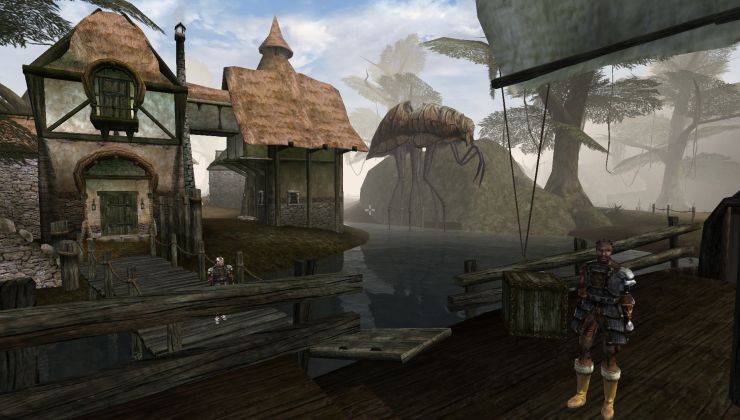 How to setup OpenMW for modern Morrowind on Linux / SteamOS and Steam Deck
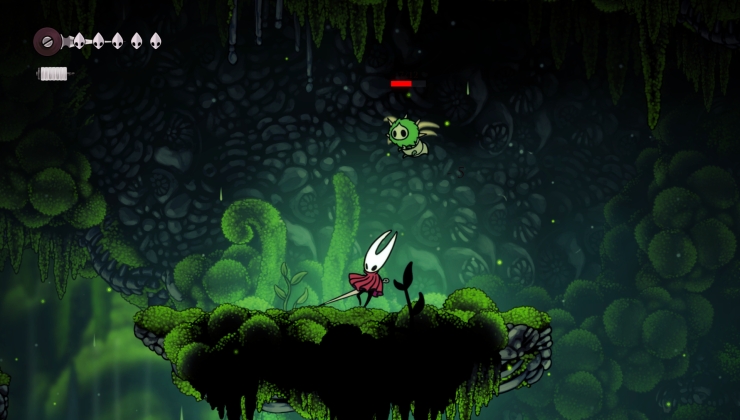 How to install Hollow Knight: Silksong mods on Linux, SteamOS and Steam Deck
- Proton/Wine Games Locking Up
- tuubi - Away all of next week
- Ehvis - The Great Android lockdown of 2026.
- Linux_Rocks - Lutris alternatives
- Caldathras - What Multiplayer Shooters are yall playing?
- Strigi - See more posts