 Support us on Patreon
 PayPal
Latest Comments by Purple Library Guy
Obsidian Entertainment and inXile Entertainment have officially joined Microsoft
11 Nov 2018 at 2:44 pm UTC Likes: 6
11 Nov 2018 at 2:44 pm UTC Likes: 6
Quoting: JiskinIt's funny how some people reacts to this news: "I planned to buy their games but as Linux support might be dropped, I won't.". This way you reduce the Linux market share and you give another excuse to drop it.You are mistaken. First, MS don't need an excuse. Second, it was pointed out earlier in the comments that "exclusives" and such was right in their press release. Third, any given person is only going to spend so much on games, so no, such a decision will not reduce overall Linux market share. If they don't spend on games owned by Microsoft, they will likely spend more on games not owned by Microsoft. There's plenty of Linux games to buy.
Book of Demons no longer getting a native Linux port, developer plans on 'supporting' Steam Play (updated)
10 Nov 2018 at 11:20 pm UTC
Also of course incompatibilities have gotten significantly worse since Windows 7. But Microsoft used to work hard on making sure old stuff still ran.
10 Nov 2018 at 11:20 pm UTC
Quoting: GuestThis is true enough but not really a counterexample. Wine is specifically designed to operate as old versions of Windows. Windows could be better at running old Windows programs than Linux is at running old Linux programs, and yet Wine could be better still. And of course it traditionally isn't as much of a problem on Linux because active parts of the open source software ecosystem get maintained and updated along with the OS, so there is very little "old" software. But with games and other closed things, it's a bit different; maybe we need a "Wine" for running old Linux software.Quoting: BotonoskiThat is not very true, many counterexamples have been given - i think even on GoL - where some people play games in wine because it runs better in it than on windows.Quoting: GuestWhat gives me the impression that even Debian is on the bleeding edge is, well, currently playing a decade old native linux game on my current system is rather difficult, certainly possible, but dealing with a web of older dependencies and getting those installed without breaking my system has proven before to be quite the headache, even moreso than compiling a game from source code.Quoting: BotonoskiLinux is sort of on the bleeding edge, always changing and a bunch of experimentation going on. Perhaps when Linux has a larger market share and one particular distro rises to the occasion the platform will be more stable and easier for developers to support. Though if that were to occur I think Linux would ultimately be worse off as it probably be slower to progress in performance and design to maintain legacy support and whatnot.I don't really agree with this sentiment, you can pretty much support 99% of bigger distro users by testing on debian and fedora/opensuse.
Of these Debian, for example, is not "bleeding edge" at all. If you target stable, you get lots of years of support, and at least 3 years between the next distro. I don't think that's more bleeding edge than windows versions. I think this view that it is "bleeding edge" - at least when it comes to gaming - is because much of the work on modern ogl drivers were done much later than on windows.
Also, indies and big studios also like the bleeding edge: i remember back when i used to play on windows, the new games would always tell you to not forget to upgrade the graphics driver.
Now compare that to Windows where I'm able to whip out a game from 1999 and get it running on Windows 7 with zero hassle most of the time.
From this I get the impression that Linux is a bit quicker in pruning out old code compared to Windows, this can be rather inconvenient but it's probably more secure and efficient.
Also of course incompatibilities have gotten significantly worse since Windows 7. But Microsoft used to work hard on making sure old stuff still ran.
Lutris game manager has another release out adding more spit and polish
7 Nov 2018 at 4:18 pm UTC Likes: 7
7 Nov 2018 at 4:18 pm UTC Likes: 7
Quoting: GuestNo normal games, just odd ones? A person of eccentric taste. :DQuoting: GuestI have about 100 odd games installed on steamQuoting: GuestI enabled sync with steam once a long time ago and my Lutris library is now populated with about 600+ games. The only way to delete them seems to be one at a time via the web interface or the client. There doesn't seem to be a way to mass delete games in your library :/You could always just set it to show installed only (ctrl+H). or do you actually have 600 games installed?
Re-Legion, the cyberpunk-inspired strategy game delayed until next year with a new trailer
7 Nov 2018 at 12:23 am UTC Likes: 1
7 Nov 2018 at 12:23 am UTC Likes: 1
Quoting: razing32Looks promising.Cult leader: "Hey, work with me, baby, work with me! Three days ago these guys were atheist punks on the street. All I could do to come up with spiffy new threads, you know what I'm saying?"
Only issue i have the factions looks very samey. Like they only changed the color palette.
Hope they give a bit more variety to the cults and make them customizable.
Meltys Quest, a completely uncensored 2D RPG full of sex is now available on Linux
6 Nov 2018 at 11:11 am UTC Likes: 2
6 Nov 2018 at 11:11 am UTC Likes: 2
Quoting: GuestBloody Vikings!We've got sex, sex, sex, sex, sex, sex, baked beans, sex, sex, sex and sex.I'll have the sex, please.
The Steam for Linux limited beta was six years ago tomorrow, where's the cake?
6 Nov 2018 at 10:59 am UTC
6 Nov 2018 at 10:59 am UTC
Quoting: g000hI'm also really happy with modern Linux package management. What with the gui front ends, it's changed my habits. Used to be, when I installed a new distro/new version, I would set aside a chunk of time to get all the software I probably needed installed and running and make sure it showed up on menus or I had an icon somewhere to find it with, so I wouldn't have to faff around when I actually needed it. Now I don't bother. If I need something, I'll look it up in the software manager and click "install".Quoting: GoboYou want a cake? You know the drill!Ah. The "good old days" of Linux - compiling your own stuff. Sure, you can still do it now, but most distributions give you awesome package management instead.
I haven't used "make clean ; make menuconfig ; make dep ; make bzImage ; make modules ; make modules_install ; make install" for a long time.
I'm generally so, so happy with the Debian package management. Considerably less irritating than Windows updates.
And now: Steam client with Steam Play/Proton/WINE technology which gives us the opportunity to play games which will never make their way directly onto Linux, with no need to tweak WINE - Just launch the installer and play.
Happy Birthday, Steam client for Linux :)
The Steam for Linux limited beta was six years ago tomorrow, where's the cake?
6 Nov 2018 at 10:54 am UTC
I still have a couple of those old Loki ports . . . been a while since I tried to get them to run. Last time it was tricky, but do-able, although I wasn't getting sound. Alpha Centauri's still the best in its genre . . .
6 Nov 2018 at 10:54 am UTC
Quoting: GamewizardNot so much "hopped on" as "hooked up a powerful locomotive".Quoting: TuxeeI can remember when I got the first "professional grade" games with the first Humble Bundle in 2010.I never really got to experiences that as I used to own several of the Loki releases, so I watched they dream die and the be resurrected when that first Humble Bundle happened. Glad Valve hoped on the Linux train six years ago.
I still have a couple of those old Loki ports . . . been a while since I tried to get them to run. Last time it was tricky, but do-able, although I wasn't getting sound. Alpha Centauri's still the best in its genre . . .
Re-Legion, the cyberpunk-inspired strategy game delayed until next year with a new trailer
6 Nov 2018 at 10:48 am UTC
6 Nov 2018 at 10:48 am UTC
Very stylish.
Open source cross-platform event-driven game engine 'GDevelop' now on itch, progressing well
4 Nov 2018 at 7:12 am UTC
4 Nov 2018 at 7:12 am UTC
Quoting: elmapulI'm not clear what point you're making.Quoting: Purple Library Guy1) A large family of distros using apt with a graphical front end, whether Synaptic or something called "Software manager" or somethingQuoting: elmapul" There's something satisfying about download an open source game engine using an open source downloads app…"Maybe I just haven't experimented much, but these days isn't there basically
isnt that what package managers suppose to do...
sigh.
yeah, looks like the fragmentation leads yet again to people reinventing the whell, because its too hard to support all distros otherwise.
steam became the norm, since we were busy competing instead of cooperating
1) A large family of distros using apt with a graphical front end, whether Synaptic or something called "Software manager" or something
2) Red Hat
3) A smaller family of distros using whatever Arch does
That isn't a whole lot really.
But I'm not sure it's relevant. Games are different from other stuff, package management wise. Culturally, and because most Linux games are closed source and cross-platform, whereas most other Linux software is open source and often Linux-only, or even if cross-platform dominated by its Linux use. This game engine is open source, and no doubt the developers have a fondness for Linux because Linux is the centre of gravity of open source stuff, but it probably isn't primarily for Linux users. So its main method for being acquired isn't going to be through Linux distros, it's going to be through portals that Windows and maybe Mac people use, and because it's a game-related thing, that will be a game portal.
Long story short: Normal Linux software comes from your distro's software manager thingie, game stuff comes from Steam or GoG or Itch. There is nothing to be upset about here.
out dated softwares, with an outdated list of what is avaliable for linux.
"This game engine is open source, and no doubt the developers have a fondness for Linux because Linux is the centre of gravity of open source stuff"
that explains why construct didnt had an version for linux? sigh
"There is nothing to be upset about here."
except that canonical made 0 dollars on their store, and now they dont care about the desktop anymore, the ones who do is valve.
EA's experimental Halcyon game engine has Vulkan and Linux support
4 Nov 2018 at 6:52 am UTC Likes: 3
But in fact, everybody and their mother are told the exact opposite of (wot you said), and all the media is owned by people in whose interests it is to make sure everyone thinks the opposite of (wot you said). There is a quiet but quite substantial system of subsidies and library gifting dedicated to spreading the works of Ayn Rand, for instance. On the other hand, nobody with money has an interest in promoting anticapitalist ideas. Given that, it's really quite surprising they are as widespread as they are. There are many persuasive arguments in favour of capitalism, or against its critics, but the idea that poor baby capitalism is just overwhelmed by the universality of anticapitalist propaganda which somehow by magic totally controls the message, is not one of them.
I won't take on all those points because it's a really wide-ranging discussion. However, I'd like to make a little note about coercion. Capitalism in England, which is generally taken to be pretty much the first place capitalism took hold, operated to a fair extent by coercion from the very beginning. At the time, there were a whole lot of small farmers who individually had (mostly not owned, but rented from upper class landowners over generations) slightly less land than needed to get by--however, they had access to common land, including both fields for grazing and forests for hunting, firewood, gathering of herbs, mushrooms and so forth. Combine their own land with the commons, and these small farmers could subsist reasonably well. They tended to aim for self-sufficiency but mostly sold some surplus food as cash crops with which to get those things they could not produce themselves. But at the time, there was a new class of people rising who were making money by running workshops where people worked for pay. You have to realize this was a mostly new thing in the world--made goods were up to then created by self-employed craftsmen in guilds, their help mainly apprentices who worked for keep, a little money now and then to go to the market, and the expectation of someday becoming independent craftsmen themselves. Or just by ordinary folk for their own use.
Also new were colonies--places like Jamaica with plantations where slaves laboured to produce raw materials; England had these raw materials coming in, and there was money to be made doing stuff with them. Hence these new workshops. This was not all about technology--Adam Smith's famous "pin factory" example didn't include any new technology, the point was about division of labour.
But these workshop owners had a problem: They couldn't get enough people to work in them. Few people wanted to become entirely dependent on an unreliable--and low--money wage. They had a better deal going--the small farmers had their independent and fairly reliable self-sufficiency and were their own bosses, while to the craftspeople becoming an employee was a simple demotion. So the workshop owners, proto-capitalists you might say, got together with the big landowners and the politicians (all the same people really) and passed various laws to change the status of land; the core of it was called the "enclosure" laws. These amputated the common land. The common fields were handed over to big landowners to do more modern-style farming or to put sheep on or such; the forests were barred from common use and draconian anti-poaching laws were enacted to stop anyone from trying. Rents were raised, various means were used to shrink the small-farmers' plots of land. The result, the planned result, was thousands upon thousands of ex-farmers thrown off their land and made destitute. Harsh laws about vagrancy were enacted as well, to make it harder to just sort of bum around. The whole concept of police started to exist around this time.
Suddenly, there were lots and lots of desperate people willing to do anything to eat, and the workshop owners had a supply of cheap because desperate wage labourers. And that is how capitalism and wage labour began: Slaves overseas providing much of the raw materials, wage labour provided by people deliberately thrown into destitution so they would have no choice.
Now that said, capitalism was clearly dynamic. It reinvested surpluses, created economic growth, drove (and shaped) technological progress, prompted huge population increase. It represented a truly massive break with older systems. It could be strongly, if perhaps uncomfortably, argued that this made it worth a lot of coercion, suffering, and death, at least unless and until something better showed up. But non-coercive? Not so much.
4 Nov 2018 at 6:52 am UTC Likes: 3
Quoting: PatolaYeah, everybody and their mother are told that capitalism is a monster which threatens the planet, rewards malignant greed and leads to big corporations ruling over the individual and lazy gamblers gaming with money at the stock market.You do realize I didn't say anything about any of that stuff, right? I would like to be quite clear that I was making analytical comments, not ethical or normative comments. I never said capitalism was bad, or socialism was good, or markets were either good or bad. I was just commenting on the relationships between them, which are not what a lot of people think they are.
But in fact, everybody and their mother are told the exact opposite of (wot you said), and all the media is owned by people in whose interests it is to make sure everyone thinks the opposite of (wot you said). There is a quiet but quite substantial system of subsidies and library gifting dedicated to spreading the works of Ayn Rand, for instance. On the other hand, nobody with money has an interest in promoting anticapitalist ideas. Given that, it's really quite surprising they are as widespread as they are. There are many persuasive arguments in favour of capitalism, or against its critics, but the idea that poor baby capitalism is just overwhelmed by the universality of anticapitalist propaganda which somehow by magic totally controls the message, is not one of them.
Quoting: PatolaNothing could be further from the truth. The stock market is a market of risks vs. rewards which offsets investments which otherwise wouldn't be given money to succeed, so it leads to production of riches, of real value. Also, capitalism is a [url="https://wiki.mises.org/wiki/Capitalism"]system of voluntary trade[/url], there is no cohercion if we're talking about the same thing. And finally, "intellectual" property cannot be part of capitalism because it is based in private property, which conceptually depends on the scarcity (or rivalry) of the good -- non-scarce goods cannot be property.I have seen all of these assertions before, many times. I have seen many refutations of them, and counterarguments for them and so on. On balance, I do not find any of these assertions convincing. Oh, except the "intellectual property" point--I quite agree that "intellectual property" is not in fact property and that it is warped to treat it as such. To me, however, the very fact that the term has been universally agreed on and pushed with such vigour in unison by so many of the wealthy and powerful of the world, and economists have generally fallen in line, suggests that actually existing capitalism has little in common with the apologetics for it that masquerade as theories.
I won't take on all those points because it's a really wide-ranging discussion. However, I'd like to make a little note about coercion. Capitalism in England, which is generally taken to be pretty much the first place capitalism took hold, operated to a fair extent by coercion from the very beginning. At the time, there were a whole lot of small farmers who individually had (mostly not owned, but rented from upper class landowners over generations) slightly less land than needed to get by--however, they had access to common land, including both fields for grazing and forests for hunting, firewood, gathering of herbs, mushrooms and so forth. Combine their own land with the commons, and these small farmers could subsist reasonably well. They tended to aim for self-sufficiency but mostly sold some surplus food as cash crops with which to get those things they could not produce themselves. But at the time, there was a new class of people rising who were making money by running workshops where people worked for pay. You have to realize this was a mostly new thing in the world--made goods were up to then created by self-employed craftsmen in guilds, their help mainly apprentices who worked for keep, a little money now and then to go to the market, and the expectation of someday becoming independent craftsmen themselves. Or just by ordinary folk for their own use.
Also new were colonies--places like Jamaica with plantations where slaves laboured to produce raw materials; England had these raw materials coming in, and there was money to be made doing stuff with them. Hence these new workshops. This was not all about technology--Adam Smith's famous "pin factory" example didn't include any new technology, the point was about division of labour.
But these workshop owners had a problem: They couldn't get enough people to work in them. Few people wanted to become entirely dependent on an unreliable--and low--money wage. They had a better deal going--the small farmers had their independent and fairly reliable self-sufficiency and were their own bosses, while to the craftspeople becoming an employee was a simple demotion. So the workshop owners, proto-capitalists you might say, got together with the big landowners and the politicians (all the same people really) and passed various laws to change the status of land; the core of it was called the "enclosure" laws. These amputated the common land. The common fields were handed over to big landowners to do more modern-style farming or to put sheep on or such; the forests were barred from common use and draconian anti-poaching laws were enacted to stop anyone from trying. Rents were raised, various means were used to shrink the small-farmers' plots of land. The result, the planned result, was thousands upon thousands of ex-farmers thrown off their land and made destitute. Harsh laws about vagrancy were enacted as well, to make it harder to just sort of bum around. The whole concept of police started to exist around this time.
Suddenly, there were lots and lots of desperate people willing to do anything to eat, and the workshop owners had a supply of cheap because desperate wage labourers. And that is how capitalism and wage labour began: Slaves overseas providing much of the raw materials, wage labour provided by people deliberately thrown into destitution so they would have no choice.
Now that said, capitalism was clearly dynamic. It reinvested surpluses, created economic growth, drove (and shaped) technological progress, prompted huge population increase. It represented a truly massive break with older systems. It could be strongly, if perhaps uncomfortably, argued that this made it worth a lot of coercion, suffering, and death, at least unless and until something better showed up. But non-coercive? Not so much.
- Wine 11.6 is an exciting release to make modding Windows games on Linux simpler
- Legendary, the free and open source Epic Games Launcher, has moved to a new organisation
- Valve dev fixes up VRAM management on AMD GPUs to improve performance
- Bazzite Linux gets some major upgrades for the April 2026 Update
- Godot gets a funding boost from Slay the Spire 2 devs Mega Crit
- > See more over 30 days here
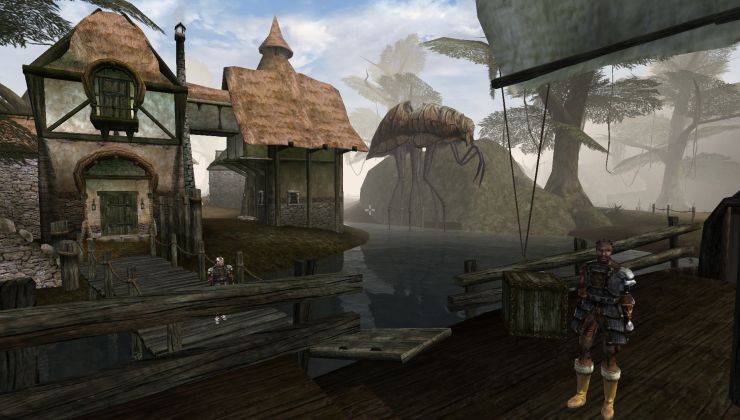 How to setup OpenMW for modern Morrowind on Linux / SteamOS and Steam Deck
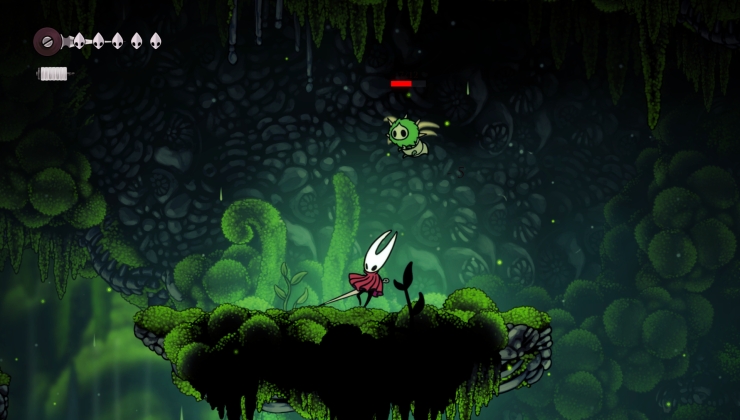 How to install Hollow Knight: Silksong mods on Linux, SteamOS and Steam Deck
- Proton/Wine Games Locking Up
- tuubi - Away all of next week
- Ehvis - The Great Android lockdown of 2026.
- Linux_Rocks - Lutris alternatives
- Caldathras - What Multiplayer Shooters are yall playing?
- Strigi - See more posts