Latest Comments by F.Ultra
To celebrate the 50th anniversary of the Apollo 11 moon landing, Steam has a sale on
19 Jul 2019 at 12:33 am UTC Likes: 5
https://authors.library.caltech.edu/5456/1/hrst.mit.edu/hrs/apollo/public/visual3.htm [External Link]
And here is the source code, it was all written and edited on paper:
19 Jul 2019 at 12:33 am UTC Likes: 5
Quoting: chancho_zombieThe most interesting stuff for us technology enthusiasts is that the Apollo 11 set the basis for the first computers [External Link] by today standards it's more like a calculator, but nevertheless it was one of the first microchips.And the ROM was Core Rope Memory, aka they had old ladies knitting 1:s and 0:s with magnetic rope which NASA jokingly called LOL (Little Old Lady) Memory :)
I wonder if it is possible to run Linux on it.:D
the RAM memory is not even bits it's 2048 words.^_^ I don't know it's even slim for damn small linux.
https://authors.library.caltech.edu/5456/1/hrst.mit.edu/hrs/apollo/public/visual3.htm [External Link]
And here is the source code, it was all written and edited on paper:
To celebrate the 50th anniversary of the Apollo 11 moon landing, Steam has a sale on
19 Jul 2019 at 12:29 am UTC Likes: 1
19 Jul 2019 at 12:29 am UTC Likes: 1
Quoting: chancho_zombieDon't tell the French :-)Quoting: Purple Library Guythe Russians got it all wrong we are not going to conquer the universe sending dogs and space monkeys.:DQuoting: F.UltraThe Russians landed a rocket (Luna 2) on the Moon in 1959.With people in it?
Animals had been used in aeronautic exploration since 1783 when the Montgolfier brothers sent a sheep, a duck, and a rooster aloft in a hot air balloon to see if ground-dwelling animals can survive
To celebrate the 50th anniversary of the Apollo 11 moon landing, Steam has a sale on
19 Jul 2019 at 12:08 am UTC
Soon SpaceX will build the Falcon Super Heavy which will have capacity to send crews to both the Moon and Mars so there are still interesting times ahead!
19 Jul 2019 at 12:08 am UTC
Quoting: Purple Library GuyYou might think that Apollo 11 would not have been the first manned Moon landing if that where the case ;). I was referring to your "I don't know if the Russians might still have some rockets hanging around they could strap together and send to the moon--they never actually did that" since the Russians actually did send a rocket to the Moon (and did so several times).Quoting: F.UltraThe Russians landed a rocket (Luna 2) on the Moon in 1959.With people in it?
Soon SpaceX will build the Falcon Super Heavy which will have capacity to send crews to both the Moon and Mars so there are still interesting times ahead!
To celebrate the 50th anniversary of the Apollo 11 moon landing, Steam has a sale on
18 Jul 2019 at 11:15 pm UTC Likes: 1
I think you are a bit American-centric there ;)
edit: and SpaceX launced a Israeli funded lunar lander in February 2019 so the Falcon 9 have the capacity to at least send unmanned space crafts to the Moon.
Long list of landings: https://en.wikipedia.org/wiki/Moon_landing [External Link]
18 Jul 2019 at 11:15 pm UTC Likes: 1
Quoting: Purple Library GuyOne of my first memories is sitting in a pleasantly dim living room watching a little black and white TV set showing men in spacesuits walking and jumping on the moon for the first time.The Russians landed a rocket (Luna 2) on the Moon in 1959. China landed on the far side of the Moon in January this very year and had previously landed a rover on the Moon in 2013.
Odd to realize that we couldn't do it today. Well, we could, but we'd have to first spend years and billions of dollars to develop and build new Saturn V equivalents. There is a capacity we had in 1969 that doesn't currently exist because we let it lapse.
(Edited to add: That's an odd "we", now that I think about it. I'm Canadian, and we never had the capacity, only the Americans did; while if I go worldwide, I don't know if the Russians might still have some rockets hanging around they could strap together and send to the moon--they never actually did that, but I wouldn't be surprised if an Energia booster could have done it. But perhaps the main spacefaring country had the capacity and lost it)
I think you are a bit American-centric there ;)
edit: and SpaceX launced a Israeli funded lunar lander in February 2019 so the Falcon 9 have the capacity to at least send unmanned space crafts to the Moon.
Long list of landings: https://en.wikipedia.org/wiki/Moon_landing [External Link]
OpenHMD version 0.3.0 is out, almost three years after the last version
13 Jul 2019 at 2:03 pm UTC Likes: 6
13 Jul 2019 at 2:03 pm UTC Likes: 6
I like their humour. Naming the release "Djungelvrål" (Roar of the Jungle) after the Swedish candy:
It's that extremely salty liquorice that few people outside of Scandinavia enjoys :-)
It's that extremely salty liquorice that few people outside of Scandinavia enjoys :-)
Seems that the Linux version of Supraland will not be heading to GOG (updated)
12 Jul 2019 at 10:25 am UTC Likes: 4
What the Steam TOS defines is that Valve have no legal liability to provide you with copies of the games that you have bought on Steam after your account have been terminated (as well as defining terms at which Valve can terminate your account), not weather you are allowed or not allowed to use the games after the account have terminated. And this is the DRM part of it all, DRM puts a technical limit on how you can use a piece of software and not a legal one.
Remember that when e.g BSA (The Business Software Alliance [basically Adobe and Microsoft]) gets money from businesses that use pirated copies of Microsoft and/or Adobe products they do this by extortion (i.e pay us money or we will publicly shame your company for using pirated software) and not by suing in court. Filesharers gets sued in court since they perform distribution of the software which is covered by copyright.
12 Jul 2019 at 10:25 am UTC Likes: 4
Quoting: ShmerlYou are both going at this backwards. Valve does not hold the copyright to any of the games on Steam except their own. Further copyright does not cover usage (making backups however is a copy so that is covered) so no party here Valve nor the correct copyright holder (the game publisher) can sue you for copyright violation for playing a game.Quoting: x_wingLets stop playing this game of "what if" and "what I understand" and lets go for the facts:Indeed, I see no point in further refuting your wrong claims that contradict the TOS which says you need Steam account to be allowed to use their games. You can show me the source which says that Steam allows you doing backups and using them without Steam account. Or otherwise let's move on to other topics, because I'm not going to agree with you.
What the Steam TOS defines is that Valve have no legal liability to provide you with copies of the games that you have bought on Steam after your account have been terminated (as well as defining terms at which Valve can terminate your account), not weather you are allowed or not allowed to use the games after the account have terminated. And this is the DRM part of it all, DRM puts a technical limit on how you can use a piece of software and not a legal one.
Remember that when e.g BSA (The Business Software Alliance [basically Adobe and Microsoft]) gets money from businesses that use pirated copies of Microsoft and/or Adobe products they do this by extortion (i.e pay us money or we will publicly shame your company for using pirated software) and not by suing in court. Filesharers gets sued in court since they perform distribution of the software which is covered by copyright.
Seems that the Linux version of Supraland will not be heading to GOG (updated)
11 Jul 2019 at 12:22 pm UTC Likes: 3
Actually the exact same thing should possibly be attached to the DRM games that Valve sells through Steam, even though they claim that you only license the game and not own it in their TOS they still don't hold the copyright to the game (only the publisher does) so their legal reach should not extend more than that they can terminate your account due to you violating the TOS. This however might play differently depending upon which country you live in and can ultimately only be solved once such a case is ever brought to court.
AKA if you terminate your Steam account and still play say Mass Effect 2 then only EA can bring you to court for violating copyright, not Valve.
11 Jul 2019 at 12:22 pm UTC Likes: 3
Quoting: GuestValve would have a very hard hard time arguing in court that you violate any laws by using a DRM-free game without a Steam account since Valve does not hold the copyright to said game. AFAIK all they could do is see this as you violating the TOS and thus they are eligible to terminate your Steam account which is moot considering the basis of the question.Quoting: TheSHEEEPYour argument is based on an eventuality that will simply never happen. You think police will kick down your door and arrest you for using a copy of a game you bought some time ago, but no longer "own"? Come on!What will never happen? That you close your account? That it gets closed? May be.
I'm just talking about legality issues. Some people care about that. You obviously not. That's your thing. It doesn't make my argument invalid, Steam is restricting the use of the software after having 'sold' it. This is DRM. You can ignore it, but neither deny it nor force others to accept it.
Actually the exact same thing should possibly be attached to the DRM games that Valve sells through Steam, even though they claim that you only license the game and not own it in their TOS they still don't hold the copyright to the game (only the publisher does) so their legal reach should not extend more than that they can terminate your account due to you violating the TOS. This however might play differently depending upon which country you live in and can ultimately only be solved once such a case is ever brought to court.
AKA if you terminate your Steam account and still play say Mass Effect 2 then only EA can bring you to court for violating copyright, not Valve.
Key reseller G2A is back in the spotlight again, as a petition is up to ask them to stop selling indie games
9 Jul 2019 at 12:33 am UTC Likes: 4
edit: some research shows that we indeed had NES rentals as early as 1987 in Sweden but this must have been in major cities only, I never saw one on the villages where I grew up.
edit2: seams to have been later than 1987, the company that did this was launched in 1987 but they only rented so called video boxes (VHS players) initially so I have no year of when they launched their NES rental business.
9 Jul 2019 at 12:33 am UTC Likes: 4
Quoting: Comandante ÑoñardoNot back in the 80ies and early 90ies where I live (there might have been some NES games for rent in the later part of the 90ies in larger cities at the video stores however). Today however you can borrow PS2-4, XB360-One, Wii, WiiU, GameCube, DS and Switch games at our local library for free.Quoting: F.UltraBut, remember that in the 90's it wasn't necessary to buy the games for to play them. We were able to RENT games for consoles like Sega Genesis, SNES and playstation Cd's, etc..Quoting: EikeIf you where lucky back then you could afford one game per year, so the many hours we spent as kids looking at the backsides of games in the store so not to end up with the shitty game for the whole next year. O boy have the times changed, and then there are plenty of people crying all over the steam forums that 9$ for a game is a rip-off... Sometimes the old grumpy me wants to smack those kids on the head and tell them to get off my lawn!Quoting: GuestThe video game market is broken as shit. You have publishers gouging money from gamers everywhere you turn, so people turn to other sources in order to buy games for less. Its been happening for decades. Remember when copied games were sold in the market for a fraction of the retail price?(Not talking lootboxes and nonsense into account here..)
In my humble opionion, most games are way too cheap.
In the 90ies, a game usually costed 100 german marks.
With inflation, this translated to 83 euros / 93 dollars.
Back then a game was made by, dunno, a handful or two of people?
Nowadays, even productions by hundreds of people cannot ask for 90 dollars.
And productions by a handful of people are often condemned if they take more than 20 dollars...
And We were able to rent games for computers with MSDOS, totally DRMFREE in Cd's, or even Floppy disks.
I miss that freedom!
edit: some research shows that we indeed had NES rentals as early as 1987 in Sweden but this must have been in major cities only, I never saw one on the villages where I grew up.
edit2: seams to have been later than 1987, the company that did this was launched in 1987 but they only rented so called video boxes (VHS players) initially so I have no year of when they launched their NES rental business.
Key reseller G2A is back in the spotlight again, as a petition is up to ask them to stop selling indie games
8 Jul 2019 at 6:22 pm UTC Likes: 9
8 Jul 2019 at 6:22 pm UTC Likes: 9
Quoting: EikeIf you where lucky back then you could afford one game per year, so the many hours we spent as kids looking at the backsides of games in the store so not to end up with the shitty game for the whole next year. O boy have the times changed, and then there are plenty of people crying all over the steam forums that 9$ for a game is a rip-off... Sometimes the old grumpy me wants to smack those kids on the head and tell them to get off my lawn!Quoting: GuestThe video game market is broken as shit. You have publishers gouging money from gamers everywhere you turn, so people turn to other sources in order to buy games for less. Its been happening for decades. Remember when copied games were sold in the market for a fraction of the retail price?(Not talking lootboxes and nonsense into account here..)
In my humble opionion, most games are way too cheap.
In the 90ies, a game usually costed 100 german marks.
With inflation, this translated to 83 euros / 93 dollars.
Back then a game was made by, dunno, a handful or two of people?
Nowadays, even productions by hundreds of people cannot ask for 90 dollars.
And productions by a handful of people are often condemned if they take more than 20 dollars...
Debian 10 "Buster" has finally been released
8 Jul 2019 at 6:12 pm UTC
8 Jul 2019 at 6:12 pm UTC
Quoting: PatolaAFAIK you setup LVM in the Ubuntu Installer via the partition utility. At least you do in the advanced installer.Quoting: Purple Library GuyWhat you cite is not an argument for partitioning, but rather for the use of LVM.Quoting: F.UltraAgreed. Although I do have one minor peeve about that Ubuntu (and Mint) installer nonetheless. As a pretty basic user, I still tend to need to muck with the partitioning. Why? Because even the most basic user would be well advised to put their /home on a separate partition from the / with the actual OS. Eventually you're gonna update or reinstall or try a different distro or something, and when you do your life will be so much easier if your actual data you care about is on a separate partition from the one that's gonna get formatted. Sure, you should do a backup anyway, but having those two partitions is basic. But do they have that as an option, or even the default? They do not. If you want that you have to go into the full partitioning thingie and worry about swap and a little boot space and crap like that. Grumble mutter whine bitch.Quoting: GuestBecause the average used does not use whatever advanced setting that you are using that are causing those crashes. They will simply click "next" all the way. And once they have done so they will have a fully working desktop, and if they need further customization or changes then the Internet is full of blogs and nice looking guides for how to do this in Ubuntu.Quoting: fagnerlnI don't see where people get the impression that Ubuntu is more 'user friendly'. Nothing says that better than their python based installer that regularly crashes at the partitioning step with a bunch of exceptions that are surely easier to read for the average user than plain language.Quoting: ThormackThe new Steam officially supported distro just launched.Nah, I don't think so.
Awesome.
(Just a speculation, for now...)
There's a lot things to do after the installation. IMO they will support a more friendly distro, preferably with a corporation behind, like OpenSUSE or Fedora
Maybe they create a new distro for desktop use based on Debian.
That is why.
(I swear I have a recollection of Mandriva having that option available in its installer in the old days)
And frankly I don't know why anyone would partition any linux installation today (except for sharing a drive with Microsoft crapware, of course). It seems to me that this should have been abandoned in the nineties, when I fully switched to using LVM on every installation.
- Valve announce a reservation system for the new Steam Controller
- Civilization VII "Test of Time" update lands May 19, finally letting you play entirely as one civ
- Proton Experimental gets fixes for Rocket League, Crimson Desert, Helldivers 2 and more
- Linux security flaws Dirty Frag and Copy Fail are a good reminder to stay up to date
- SteamOS 3.8.4 Beta brings further Steam Machine support and fixes for experimental nested desktop mode
- > See more over 30 days here
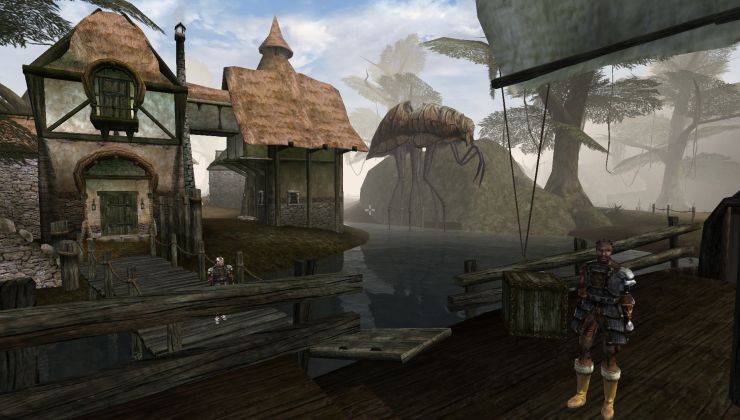 How to setup OpenMW for modern Morrowind on Linux / SteamOS and Steam Deck
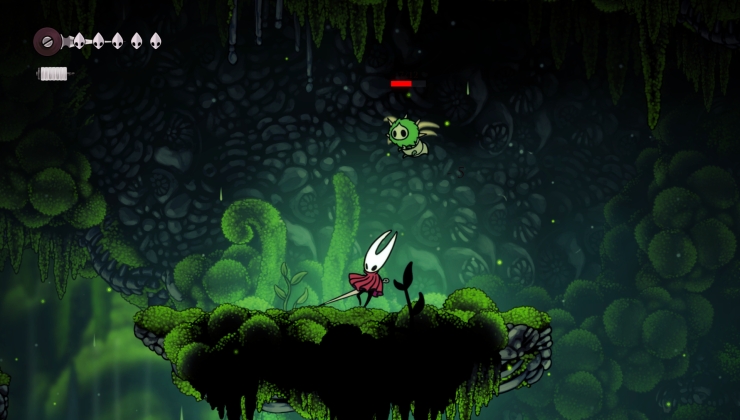 How to install Hollow Knight: Silksong mods on Linux, SteamOS and Steam Deck
- The Great Android lockdown of 2026.
- mr-victory - What's bad about generative AI on the Internet and beyond, exactl…
- GustyGhost - The value of ecosystem.
- LoudTechie - Lutris alternatives
- Tulon - Terminal trick - progress indicator in the task manager…
- Shmerl - See more posts
Source: timedotcom.files.wordpress.com
View cookie preferences.
Accept & Show Accept All & Don't show this again Direct Link