Latest Comments by F.Ultra
Valve announces new networking APIs for developers and Steam Link Anywhere
15 Mar 2019 at 5:18 pm UTC Likes: 1
15 Mar 2019 at 5:18 pm UTC Likes: 1
Quoting: ShmerlI assume here that it's part of the 30% cut so if they would open this to any one then a dev who only publishes on GOG or the Epic store would utilize these nodes for free. Not that this would be a bad thing but I understand if Valve is not interested in it.Quoting: F.UltraWell the problem is that some one have to pony up the servers/nodes necessary and apparently Valve have no interest in providing free such machines for their competition (wonder why).If they are paid for the service by developers, it shouldn't matter.
DXVK 1.0.1 is out for Vulkan-based D3D11 and D3D10 with Wine
15 Mar 2019 at 9:27 am UTC
15 Mar 2019 at 9:27 am UTC
Quoting: YoRHa-2BI think that people are just worried about the bus factor here (while honestly being worried for you). Could be far worse, I once had a CEO that told me that I was a liability to the company due to my competency "everything would go to hell if you left or where hit by a car so I see you as a liability". Yes I left some what close in time after that and yes that company does not exists any more.Quoting: PatolaSo, Philip is better now?Yes, but that's not really what should be discussed here.
Valve announces new networking APIs for developers and Steam Link Anywhere
15 Mar 2019 at 9:22 am UTC Likes: 5
I agree with you that this adds to the Steam lock-in but I find it hard to criticise when #1 the libraries themself are open source, #2 the service is not forced upon you as a developer and #3 any other store/service provider could step up and provide an equal service at any time.
Now other stores might not want to provide this since it would be following Valve but since these networks libs are open source and the NAT traversal functionality happens automatically as soon as your application links with the SteamWorks version any one should be able to add similar functionality. However as I said I don't think that say GOG would want to provide a steamxx.lib for their users, nor tell them to use this SteamNetwork library.
15 Mar 2019 at 9:22 am UTC Likes: 5
Quoting: ShmerlSure, developers decide, but if they do want NAT traversal, they can't use Steam one without being tied to Steam. At least now.Well the problem is that some one have to pony up the servers/nodes necessary and apparently Valve have no interest in providing free such machines for their competition (wonder why).
I agree with you that this adds to the Steam lock-in but I find it hard to criticise when #1 the libraries themself are open source, #2 the service is not forced upon you as a developer and #3 any other store/service provider could step up and provide an equal service at any time.
Now other stores might not want to provide this since it would be following Valve but since these networks libs are open source and the NAT traversal functionality happens automatically as soon as your application links with the SteamWorks version any one should be able to add similar functionality. However as I said I don't think that say GOG would want to provide a steamxx.lib for their users, nor tell them to use this SteamNetwork library.
Put on your headband and enter the internet of dreams, Hypnospace Outlaw is out
14 Mar 2019 at 4:31 pm UTC Likes: 2
14 Mar 2019 at 4:31 pm UTC Likes: 2
Quoting: razing32All i recall was looking up pictures for school essays.Cannot honestly say that the pictures I downloaded back then was for school essays :whistle::wink:
A new Steam Beta is up with Vulkan pipeline dumping and collection along with Steam Play improvements
7 Mar 2019 at 7:30 pm UTC
So doing the simple obvious check that you posted would make the checksum still be wrong on the local side which means that the client will perform needless checks on the steam servers which valve wants to avoid in order to lessen the load (imagine the load generated when several million people launch steam for the day). And this checksum is probably messed up due to proton for some reason.
As I said however just 100% guesswork here from how I would imagine a situation like this arising when building a distribution system like steam.
7 Mar 2019 at 7:30 pm UTC
Quoting: EikeI wonder how hard it can possibly be to fix this 0 byte update bug.Doing a wild guess here but I assume that one major problem is that the checksum of the files on the steam server somehow differs from what the one on the local machine which triggers a download and then it somehow finds out via some other means that all of the files in the package are unchanged so the download size gets to be 0 but that it still needs to do that last step where it's queued up in order for it to change the checksum on the local files.
I imagine something along the lines...
int updateSize = steamServer.calcUpdateSize();

if (updateSize <= 0) return false;
(Obviously, if it would be that easy, Valve would have solved it in the first attempt.)
So doing the simple obvious check that you posted would make the checksum still be wrong on the local side which means that the client will perform needless checks on the steam servers which valve wants to avoid in order to lessen the load (imagine the load generated when several million people launch steam for the day). And this checksum is probably messed up due to proton for some reason.
As I said however just 100% guesswork here from how I would imagine a situation like this arising when building a distribution system like steam.
The developer of BYTEPATH has shared some sales data including how Linux sales went
28 Feb 2019 at 7:36 pm UTC Likes: 2
28 Feb 2019 at 7:36 pm UTC Likes: 2
Quoting: Purple Library GuySame here, got it pre-installed on a machine from Compaq (yes Compaq soled machines with Linux pre-installed for a while) back in 2001/2002 I think it was which my wife used as her main machine for several years before the hardware broke down.Quoting: F.UltraI used to use it. In its heyday, it was the best desktop Linux there was, hands down.Quoting: Purple Library GuyLinux is quite vibrant in France (they even had their own distribution, Mandrake, back in the day)Quoting: SpykerI think we need the equivalent of GamingOnLinux in French, to spread the word about Linux gaming here in France (u_u)According to this, France is a total hotbed of Linux use--nearly 13% of sales! We're talking like double the level of the Anglosphere.
Also to a lesser extent Brazil and Russia. Although of course this is a pretty small sample.
The developer of BYTEPATH has shared some sales data including how Linux sales went
26 Feb 2019 at 8:55 am UTC Likes: 1
26 Feb 2019 at 8:55 am UTC Likes: 1
Quoting: Purple Library GuyLinux is quite vibrant in France (they even had their own distribution, Mandrake, back in the day), Germany (SUSE) and Scandinavia (Linus heritage after all) (I wonder what the sale stats for Scandinavia for this game is) and I remember that Brazil had some big projects for requiring Open Source for government systems a few years ago.Quoting: SpykerI think we need the equivalent of GamingOnLinux in French, to spread the word about Linux gaming here in France (u_u)According to this, France is a total hotbed of Linux use--nearly 13% of sales! We're talking like double the level of the Anglosphere.
Also to a lesser extent Brazil and Russia. Although of course this is a pretty small sample.
The war of the PC stores is getting ugly, as Metro Exodus becomes a timed Epic Store exclusive
29 Jan 2019 at 9:28 pm UTC Likes: 3
29 Jan 2019 at 9:28 pm UTC Likes: 3
Quoting: TobyGornowJust want to add that you were forced to create a Steam account in order to play CS and Half-life when you bought the Orange Box. For me Epic is just giving Valve a taste of his own medicine.And the exact equivalent of that would be if Epic would only sell Fortnite on the Epic Store, something that few if any here complain about.
How pissed I was at the time but little by little, I was buying less physical copy from my brick & mortar retailer (Bankrupt today) and now I have more than 400 titles in my library just because it was cheaper. Did I do that alone ? Don't think so...
It's evolution of the market, maybe Valve has been too greedy, the new player is strong and full of arguments, who will survive ?
The war of the PC stores is getting ugly, as Metro Exodus becomes a timed Epic Store exclusive
29 Jan 2019 at 9:27 pm UTC
29 Jan 2019 at 9:27 pm UTC
Quoting: tonRWait... WHAT?!! Subsidiary got more power than Parent company?!The answer is right there in your quote, "sister company", not "daughter company". Looking at the Wikipedia page for Koch Media we see this:
Man, this is from 'Linux-friendly' company (or corporation?).
THQNordic tweet [External Link]
ADD Quote:
The decision to publish Metro Exodus as a timed Epic Store exclusive was made entirely on Koch Media’s side as Metro is their intellectual property. They are a sister company of THQ Nordic (Vienna), which is the reason why we can and will not comment on this matter. We do not want to categorically exclude the possibility of timed exclusives for any of our games in the future, but speaking in the here and now, we definitely want to have the players choose the platform of their liking and make our portfolio available to as many outlets as possible.
On 14 February 2018, THQ Nordic announced the acquisition of Koch Media for 121 million EUR. Koch Media continues to operate as its own, separate subsidiary of THQ Nordic, and there are no plans to restructure following the acquisition, nor any cost saving measures on the horizon.[So apparently as part of the deal to buy Koch, THQ Nordic signed some form of independence clause.
Valve have detailed some changes coming to Steam in an overview post
19 Jan 2019 at 2:49 am UTC
19 Jan 2019 at 2:49 am UTC
Quoting: constAnd the really sad part is that remove that excuse and they would find some other reason for not supporting Linux.Quoting: MohandevirThe sad part is that they take the "we want to add all those features" part as an excuse to not support linux.Quoting: eldakingValve has its many flaws (their hands-off approach to curation or their subpar treatment of indies for example). But they are still so far ahead of the competition it's just hard not to support Steam.Yep! And when you read the complete post... It's quite shocking (unfair? Surprising?) when people say that Valve takes a 30% cut without doing anything... I don't see Epic offering an equivalent infrastructure now and not before a long, long time...
Edit: I hoped we would get news about new hardware, but Valve being Valve, we still may have surprises. :)
- Valve announce a reservation system for the new Steam Controller
- Civilization VII "Test of Time" update lands May 19, finally letting you play entirely as one civ
- Proton Experimental gets fixes for Rocket League, Crimson Desert, Helldivers 2 and more
- Linux security flaws Dirty Frag and Copy Fail are a good reminder to stay up to date
- SteamOS 3.8.4 Beta brings further Steam Machine support and fixes for experimental nested desktop mode
- > See more over 30 days here
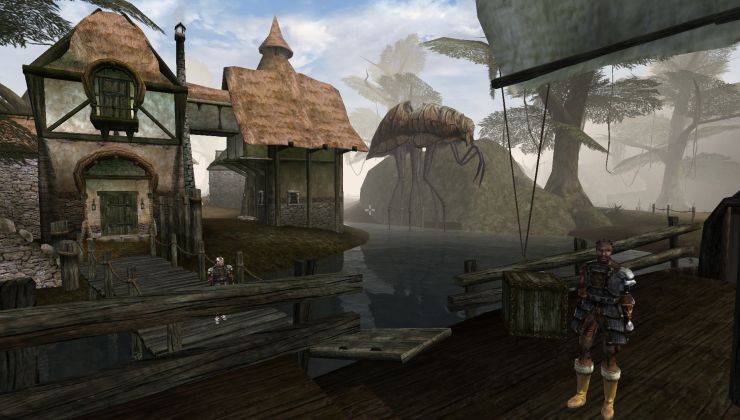 How to setup OpenMW for modern Morrowind on Linux / SteamOS and Steam Deck
 How to install Hollow Knight: Silksong mods on Linux, SteamOS and Steam Deck
- What's bad about generative AI on the Internet and beyond, exactl…
- LoudTechie - The value of ecosystem.
- LoudTechie - Lutris alternatives
- Tulon - The Great Android lockdown of 2026.
- mr-victory - Terminal trick - progress indicator in the task manager…
- Shmerl - See more posts