 Support us on Patreon
 PayPal
Here is your up to date list of what distro you should be picking if you want to start gaming on Linux in 2026. The latest edition of you telling me I'm wrong.
Back in the 2025 edition of the article I suggested Kubuntu, and while it worked reasonably well overall it feels a bit like an unloved child. I used it for a long time and was mostly happy with it, but times change and so does the Linux and open source world.
Despite what you read elsewhere - you don't need to go with the latest random "gaming" distribution. The best thing to do is to stick with the crowd, and go with the bigger more well-known distributions. Most "gaming" distributions just throw a few random tweaks and a new theme on top of something else, they can usually just be ignored. Don't fall for their hype. There are literally 100s of Linux distributions, so GamingOnLinux is here to help you just cut through all that noise.
Desktop
My overall recommendation for 2026 on desktop? Fedora KDE. Fedora is generally a lot more up to date than Ubuntu / Kubuntu while not being constantly bleeding-edge like Arch Linux, and apart from an unfortunate snafu with a Mesa driver update, it has been one of the most pleasant and stable experiences I've ever had in all my years running Linux. With Fedora KDE also now promoted to a front-row seat too, it has never been a better time for it.
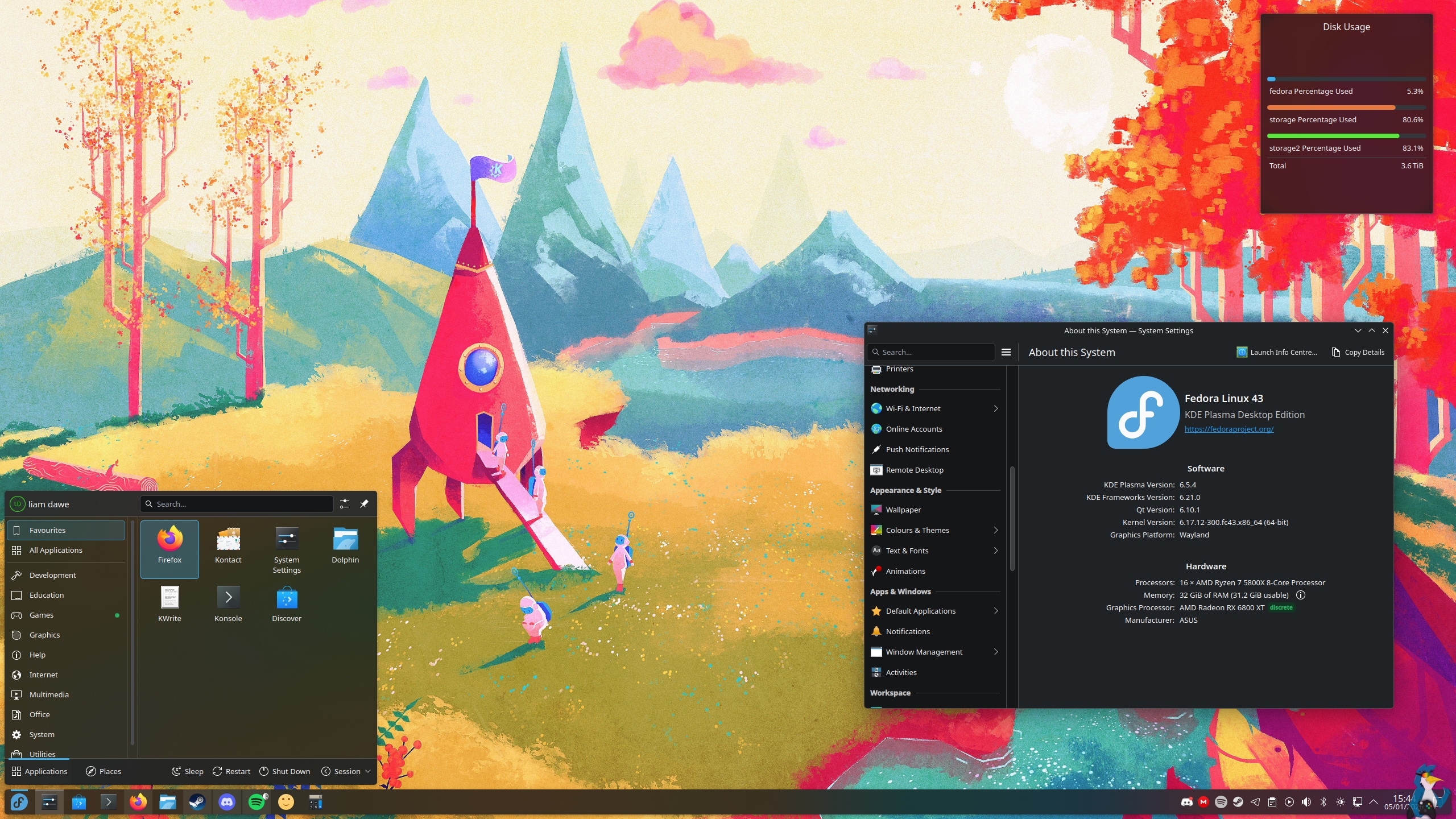
You don't get the multiple-year long-term support that you do from the likes of Ubuntu, so you need to jump between Fedora versions more often but that's not exactly a bad thing. Fedora is a lot more leading-edge with updates, and for gaming with system updates that's actually quite a nice bonus.
Fedora do a new release around every 6 months, with ongoing updates to each release for around 13 months. So realistically, you can do a major upgrade only once a year and be done with it.
An annoying downside to Fedora — Installing NVIDIA GPU drivers on Fedora still needs more steps than it should. Hopefully with the rise of better open source drivers for NVIDIA eventually this will be a thing of the past. That, or the Fedora team just make it easier out of the box. Not a huge downside though, with the right instructions for GPU driver updates you can be done in a couple of minutes.
Handhelds and TV PCs
An addition for this year is the Handheld and TV PCs suggestion, because it's a rapidly growing segment of the market. With the Steam Deck, Legion Go, ROG Ally and many more. That and small form factor PCs for hooking up to your TV - there's need for something a bit different here. You want an experience that's good with controllers.
For all of you, I will definitely suggest you go with Bazzite. It works very similarly to Valve's own SteamOS including booting into Steam Big Picture Mode, but comes with various tweaks and tools to make the experience great across many different devices. It's also updated a lot faster than SteamOS, so fixes and improvements for newer handhelds comes a lot sooner.
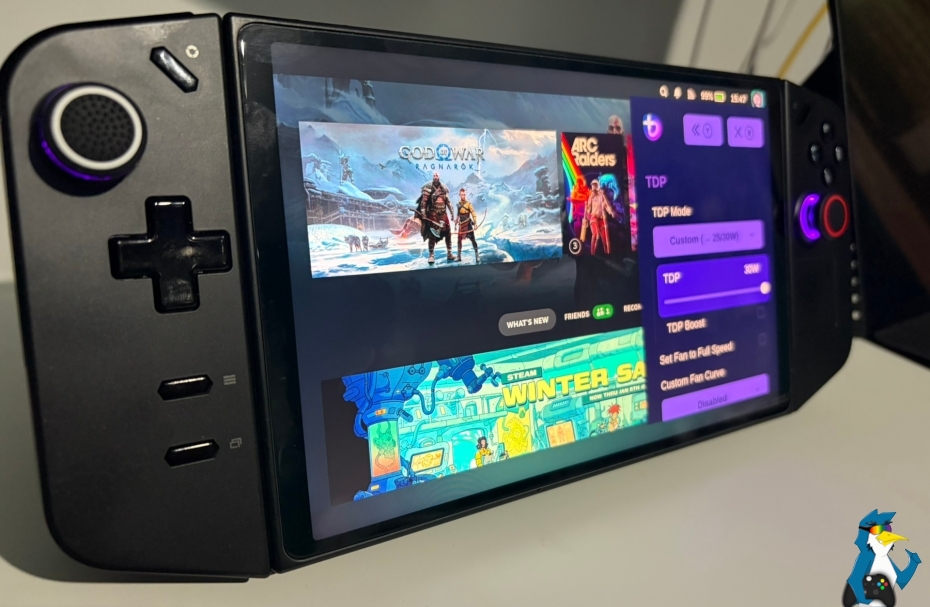
You still get a full desktop mode with KDE Plasma too for all your work, web browsing and other uses. Bazzite has been growing nicely through 2025 and I fully expect 2026 to be an even bigger year for it.
I've been using Bazzite on my Lenovo Legion Go with the Z1 Extreme processor and it has been overall really great. Bazzite is a wonderful replacement for Windows on handhelds.
If you need help and support for Linux and Steam Deck gaming, you can try asking in our Discord. Don't forget to follow me on Bluesky and Mastodon too while you're at it.
Don't agree with me? Am I so wrong that you just have to do something about it? Leave a comment below.





See more from me



 You can also find comments for this article on social media:

Last edited by Stella on 5 Jan 2026 at 4:19 pm UTC
 Kimyrielle 5 Jan 2026


I'm curious if you've tried running any of the three in recent years. You might actually enjoy using them if you gave them a shot.


Currently on Cachy and Garuda (they're both Arch-based), and they're both awesome for gaming, but it's only a matter of time before an update spoils my fun. I don't have the patience to read a forum to know whether an update will brick my PC, so this time around I'm relying on BTRFS and snapper to roll me back when the breakage inevitably happens!
Time will tell if this a reasonable approach.
 Liam Dawe 5 Jan 2026

Quoting: CarollyHonest question for you, why is it that year after year you stick your nose up in the air over great distros like Nobara, CachyOS, and PikaOS, in favour of large corporate-backed projects? Any of them are excellent distros for gaming and more than just "a few tweaks and a new theme" (and generally they make it very easy to install Nvidia drivers - Nobara and Pika even offer ISOs with the Nvidia drivers preloaded!)Because there is usually little point in them outside of niche use cases for people far beyond power users that care about random library optimisations. Most of them do tweaks that 99% of people just don't need. I've also been burned in the past by these fringe distros having all sorts of issues, or just vanishing on you. It's better for normies to stick to the bigger lot, because they're tried and tested with good support overall.
I'm curious if you've tried running any of the three in recent years. You might actually enjoy using them if you gave them a shot.


An annoying downside to Fedora — Installing NVIDIA GPU drivers on Fedora still needs more steps than it should.Given that most people in need of a "which distro to pick" article are going to be on Nvidia, that's reason enough to not pick Fedora.
An annoying downside to Fedora — Installing NVIDIA GPU drivers on Fedora still needs more steps than it should.Didn't Fedora fix/bring back the one click nvidia driver installer in the last version? I think I've read that. I only ever used atomic fedora so that wouldn't apply to me anyway but on Workstation it's true iirc



I haven’t used ubuntu based for a long time now but I’m sure they are still great for gaming too.
Going to put endevouros on my ancient laptop, that comes out once in a blue moon to troubleshoot broadband problems, but my main machine is arch of-course :)
But they are always fast and efficient when they have to setup their patreon...

[Aurora](https://getaurora.dev), [Bluefin](https://projectbluefin.io) or [Bazzite](https://bazzite.gg). All are great.
Last edited by AsciiWolf on 5 Jan 2026 at 5:20 pm UTC
I would not switch to another distro given the time investment required, and I'm just glad I started with Fedora early on. It basically has everything I need: Server, desktop, gaming. It may require some tweaking but that's what is expected to get bleeding-edge features with acceptable stability. It has full coverage of software packages and repos I need for my everyday use, including gaming.
Quoting: ExplosiveDiarrhea¨gaming optimized distros" are the dumbest thing ever, hobby projects that do not contribute anything upstream and do not teach their users anything.Fair point.
But they are always fast and efficient when they have to setup their patreon...
My counter-point is Nobara: the freshness of Fedora, nvidia drivers preinstalled (so the largest Fedora roadbump removed), and you cannot find another distro which contributes to Linux gaming more than what Glorious Eggroll does with Proton-GE and umu.
Unless you're Valve, of course.
If you have a relatively stable base distro, let's say Ubuntu (there's arguments to be had there too…), why bother switching to a different one that might or might not be based on your base, just because some stuff is preinstalled?
I get the "it's more streamlined" argument for some pieces of software, but as far as distribution goes, my main goal is pick one on which I can do whatever. When I hear "this is preinstalled on this distro" or "that is pre-configure on that distro", all I hear is that you could just run a script (let's make it a graphic-based executable that you one-click download somewhere…) to get to the same state, plus keeping your known base under it. Plus plus keeping whatever support you provide to open source projects and services less spread out.
When a friend came to me about PopOS telling me "now I can switch between the integrated GPU or the Nvidia one in one click!" I put my ubuntu laptop in his face, clicked on "nvidia-prime" in the menu, where I had that exact same feature.
Sorry, sorry, I'm rambling. But I'm quite annoyed at the plethora of "new distro" that are basically another one in a trench coat with a pretty hat. That's spreading resources, and large open source software are not exactly rolling in free resources, as far as I know.
Last edited by Cley_Faye on 5 Jan 2026 at 5:57 pm UTC
 clatterfordslim 5 Jan 2026
Don't agree with me? Am I so wrong that you just have to do something about it? Leave a comment below.EndeavourOS KDE (or maybe Garuda? I love their browser.) with BTRFS snapshots, on the edge with almost no risk; without being on the edge you won't be getting the quick raytracing/performance improvements until potentially 6 months later. :P
That's enough said, clearly, I win.
Quoting: ExplosiveDiarrhea¨gaming optimized distros" are the dumbest thing ever, hobby projects that do not contribute anything upstream and do not teach their users anything.Because nobody at all uses Proton-GE patches or Cachy kernel optimizations amirite?
But they are always fast and efficient when they have to setup their patreon...
Quoting: CarollyCachyOS is pretty neat. It handles full-disk encryption really nicely (Endeavour offered it, but it was super-slow to unlock the disk), and it has an app that installs things like Snapper and can update your system, or mirrors. I've been pretty impressed by it so far.Quoting: ExplosiveDiarrhea¨gaming optimized distros" are the dumbest thing ever, hobby projects that do not contribute anything upstream and do not teach their users anything.Because nobody at all uses Proton-GE patches or Cachy kernel optimizations amirite?
But they are always fast and efficient when they have to setup their patreon...
Meanwhile, Garuda has a nice feature to install chaotic-AUR, so you get the benefits of the AUR without having to wait around for compiling to happen.
Obviously, if you know what you're doing with Linux, you can probably do everything these distros do on any base. But since I'm not that savvy (despite two decades on Linux), I appreciate these distros for what they offer.
Caldathras 5 Jan 2026
I tried rolling / semi-rolling distros for a while. The constant updates kept destabilizing my game installs. I finally got frustrated and decided to give my daily driver distro a try as a gaming O/S. The only thing I changed was the desktop environment. I went with XFCE instead of Cinnamon. I have been quite happy with the stability I've gained.
Tried Fedora once. It was just too unfamiliar an environment for me, despite the intuitiveness of KDE Plasma.
 How to setup OpenMW for modern Morrowind on Linux / SteamOS and Steam Deck
 How to install Hollow Knight: Silksong mods on Linux, SteamOS and Steam Deck