 Support us on Patreon
 PayPal
Latest Comments by alex_stargazer
Google plans their own version of Wine to run Windows games on Stadia
10 Mar 2022 at 7:13 pm UTC Likes: 1
10 Mar 2022 at 7:13 pm UTC Likes: 1
Google hasn’t a hope in hell of making their own Windows-on-Linux API translation layer that’s better than Wine. We’re talking about a project that’s been in development for 20 years, has over a million lines of code, and is funded by Valve. If this is their ace in the hole, we might as well stop talking about Stadia because it’s obviously dead in the water.
Two years on, Stadia seems to have no direction left
22 Nov 2021 at 9:46 pm UTC
22 Nov 2021 at 9:46 pm UTC
Quoting: GuestThe sad thing is that Stadia still runs rings around the competition in terms of the technology and performance of the games. The UX is so much better than Geforce Now and Xbox Cloud Gaming too. The competition just wins on the games available.Not buying it. Nothing stopped Google from offering Proton compatibility with Windows games in the same way Valve is doing. Let’s also not forget that the latency and image quality side of the equation is very much to do with Linux itself – it’s not a coincidence that competing services, which use Windows, have more problems keeping latency low.
I actually think what held it back from attracting game publishers is linux and vulkan. It probably would have had a better time attracting big publishers with a Windows based solution since the effort of putting games on the service would have been lower. I expect to get a lot of flak from linux stans for that opinion but it needs saying.
System76 patches APT for Pop!_OS to prevent users breaking their systems
10 Nov 2021 at 9:56 pm UTC Likes: 2
10 Nov 2021 at 9:56 pm UTC Likes: 2
Pop OS must have hundreds of thousands of users—no, scratch that, it likely has over a million users. The number of users who brick their desktop environment by installing Steam must be very small, otherwise the forums, support channels, Github etc. would be chock-full of complaints. So this is literally a 1/100,000 bug and not representative of Pop (or other Linux distros) at all. Seriously, I’ve been using Linux for the better part of 10 years, and never once has installing a package uninstalled my entire desktop environment. Shit, even obscure PPAs and AUR packages didn’t brick my system (a `ppa-purge` always fixed it).
I understand that the only reason this happened is because Linus didn’t update the fresh install and there was something wrong with Launchpad that day.
I understand that the only reason this happened is because Linus didn’t update the fresh install and there was something wrong with Launchpad that day.
The Valve Steam Deck, lots of excitement and plenty to think about for Linux gaming
8 Aug 2021 at 12:16 pm UTC
Five, ten years in the future though, who knows? Ten years ago we didn’t even have the Steam client on Linux. Proton was only released two years ago. If Valve gets Proton working with 90% of games next year, it’s not a stretch to assume they could optimise qemu and release an ARM-based Deck 2.0 or Deck 3.0. Rosetta shows that it is possible to translate x86 code into ARM code with only a small performance penalty.
8 Aug 2021 at 12:16 pm UTC
Quoting: peta77Oh I agree, the chances of it working are quite low, which is exactly why Valve went with an x86 processor even if battery life is going to be slightly worse. I was responding to MayeuIC’s suggestion that they make some sort of x86/ARM hybrid, which in my opinion is even less likely to work.Quoting: alex_stargazerWell of course one can put a lot effort in getting the thing to run even 100 hours on a single battery load, but considering the trade off in performance, the games you'd be able to play won't create a relevant demand for the hardware. Or, yes, create a hyper specialized (binary incompatible) hardware which can do phantastic things in some situations... in theory! The probability that it will be 100% compatible (or enough to be relevant to gamers) with a huge amount of games that were written for a different platform is quite low. Optimizing the software has it's limits also.Quoting: MayeulCYeah, good luck getting that Frankenstein PC to even boot, much less play Windows games. A more viable approach would be to run a pure ARM system and translate x86 machine code into ARM machine code. Apple does this with Rosetta, and Linux has qemu. If the software improves—it’s quite slow right now, but Valve is a multibillion dollar a year company, so they have the resources to work on it—we could see the Steam Deck 2.0 run on an ARM processor.Will you be buying one?I think, yes. I'm in the market for a new laptop since the one I currently have dates back to 2008 (excluding pro. laptop).
Hook up an external keyboard, and this should be enough for doing some sysadmin on the go. Dock it up, and you have a home computer.
I wish they made the form-factor more modular (upgradeable motherboard? Storage?). I might wait for a teardown to see if the nvme drive is user-replaceable. (edit: they explicitly say in a FAQ video that HW will not be upgradeable). I wonder if it will be natively compatible with Steam Controllers and xbox controllers, or require bluetooth (the latter I guess).
Now, I'm a bit disappointed that it's a standard PC. That's fine, mind you, but I would have liked something a bit more battery-optimized, like an ARM+x86 coprocessor (for instance, only half of the cores are 32bit-capable on latest ARM chips), or a big.little x86 like Intel is working on, (while running the kernel on both might be hard, a x86 coprocessor could assist with "emulating" games for x86). Of course, that would require quite a bit of effort and engineering, and maybe revisit FatELF, possibly with some LLVM target to create "battery-optimized" games (that target a more efficient arch)?
So going in that direction is more like trying to make sure that thing will fail right from the start.
Five, ten years in the future though, who knows? Ten years ago we didn’t even have the Steam client on Linux. Proton was only released two years ago. If Valve gets Proton working with 90% of games next year, it’s not a stretch to assume they could optimise qemu and release an ARM-based Deck 2.0 or Deck 3.0. Rosetta shows that it is possible to translate x86 code into ARM code with only a small performance penalty.
The Valve Steam Deck, lots of excitement and plenty to think about for Linux gaming
7 Aug 2021 at 2:40 pm UTC
7 Aug 2021 at 2:40 pm UTC
Quoting: MayeulCYeah, good luck getting that Frankenstein PC to even boot, much less play Windows games. A more viable approach would be to run a pure ARM system and translate x86 machine code into ARM machine code. Apple does this with Rosetta, and Linux has qemu. If the software improves—it’s quite slow right now, but Valve is a multibillion dollar a year company, so they have the resources to work on it—we could see the Steam Deck 2.0 run on an ARM processor.Will you be buying one?I think, yes. I'm in the market for a new laptop since the one I currently have dates back to 2008 (excluding pro. laptop).
Hook up an external keyboard, and this should be enough for doing some sysadmin on the go. Dock it up, and you have a home computer.
I wish they made the form-factor more modular (upgradeable motherboard? Storage?). I might wait for a teardown to see if the nvme drive is user-replaceable. (edit: they explicitly say in a FAQ video that HW will not be upgradeable). I wonder if it will be natively compatible with Steam Controllers and xbox controllers, or require bluetooth (the latter I guess).
Now, I'm a bit disappointed that it's a standard PC. That's fine, mind you, but I would have liked something a bit more battery-optimized, like an ARM+x86 coprocessor (for instance, only half of the cores are 32bit-capable on latest ARM chips), or a big.little x86 like Intel is working on, (while running the kernel on both might be hard, a x86 coprocessor could assist with "emulating" games for x86). Of course, that would require quite a bit of effort and engineering, and maybe revisit FatELF, possibly with some LLVM target to create "battery-optimized" games (that target a more efficient arch)?
- Discord is about to require age verification for everyone
- KDE Linux gets performance improvements, new default apps and goes all-in on Flatpak
- New Proton Experimental update adds controller support to more launchers on Linux / SteamOS
- Prefixer is a modern alternative to Protontricks that's faster and simpler
- GE-Proton 10-30 released with fixes for Arknights Endfield and the EA app
- > See more over 30 days here
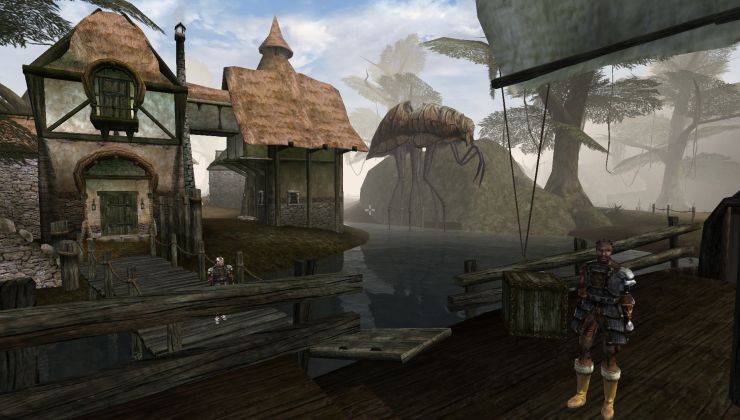 How to setup OpenMW for modern Morrowind on Linux / SteamOS and Steam Deck
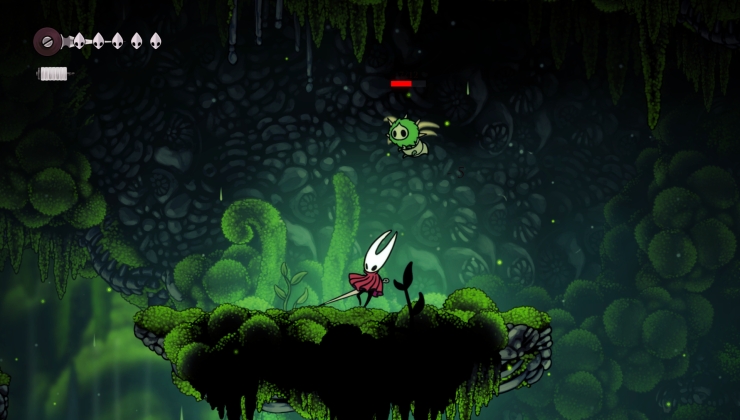 How to install Hollow Knight: Silksong mods on Linux, SteamOS and Steam Deck