 Support us on Patreon
 PayPal
Latest Comments by Purple Library Guy
Ubisoft think gamers need to get comfortable with not owning games
17 Jan 2024 at 3:09 am UTC Likes: 9
17 Jan 2024 at 3:09 am UTC Likes: 9
You know, I understand all the back and forth and the "yes, but" and the "advantages" and all that, and in the end my reaction to Ubisoft on this is still just "Fuck you."
X.Org and Xwayland get new releases due to security issues
16 Jan 2024 at 7:02 pm UTC Likes: 4
16 Jan 2024 at 7:02 pm UTC Likes: 4
Quoting: bekoOhhh, now I get it! He meant "the social media platform formerly known as Twitter"!Quoting: eridanired123Same. In fact it only clicked after reading your comment. What a mess :dizzy:Quoting: slaapliedjeThis should be posted on X and break everyone's brain. :PIt took me a minute to realize how posting anything to a window system made any sense.:huh:
Framework email customers for data breach from accounting partner getting phished
16 Jan 2024 at 4:03 pm UTC Likes: 3
16 Jan 2024 at 4:03 pm UTC Likes: 3
Are we sure this is a real email from Framework? What if it's a phishing email? "Your account has been compromised. Click here and then enter a bunch of information to set things right . . ." :grin:
SMITE 2 announced with Steam Deck support from Titan Forge and Hi-Rez Studios
15 Jan 2024 at 10:29 pm UTC Likes: 1
15 Jan 2024 at 10:29 pm UTC Likes: 1
Quoting: pleasereadthemanualAvoid doing weird-ass shit when I develop the game?Since they're testing on Steam Deck, no doubt it will work just fine on desktop Linux too with Proton.I'm still curious how this process actually works. Let's imagine I'm a game dev, and I've committed to supporting Linux with Proton. Alright, what do I do?
GodotOS is a fun showcase of Godot Engine with a fake operating system interface
15 Jan 2024 at 5:44 pm UTC Likes: 6
15 Jan 2024 at 5:44 pm UTC Likes: 6
Looks like a daily driver to me! :grin:
OpenAI say it would be 'impossible' to train AI without pinching copyrighted works
15 Jan 2024 at 5:37 pm UTC Likes: 1
As usual, the real corporate rationale is "Whatever makes us money is OK, whatever might reduce our money is not!"
15 Jan 2024 at 5:37 pm UTC Likes: 1
Quoting: BlackBloodRumOne thing that occurred to me, they are claiming this, according to the article.Hee!
it would be impossible to train today’s leading AI models without using copyrighted materials. Limiting training data to public domain books and drawings created more than a century ago might yield an interesting experiment, but would not provide AI systems that meet the needs of today’s citizens.Okay. So then, in their terms of service, under "Using Our Services", source:
https://openai.com/policies/terms-of-use [External Link]
It states, and I quote:
What You Cannot Do. You may not use our Services for any illegal, harmful, or abusive activity. For example, you may not:Don't you think, it's a little amusing they are claiming that you need to "copy" others to create "AI". While at the same time, trying to strictly forbid anyone else from doing the same? :huh:
- Use our Services in a way that infringes, misappropriates or violates anyone’s rights.
- Modify, copy, lease, sell or distribute any of our Services.
- Attempt to or assist anyone to reverse engineer, decompile or discover the source code or underlying components of our Services, including our models, algorithms, or systems (except to the extent this restriction is prohibited by applicable law).
- Automatically or programmatically extract data or Output (defined below).
- Represent that Output was human-generated when it was not.
- Interfere with or disrupt our Services, including circumvent any rate limits or restrictions or bypass any protective measures or safety mitigations we put on our Services.
- Use Output to develop models that compete with OpenAI.
As usual, the real corporate rationale is "Whatever makes us money is OK, whatever might reduce our money is not!"
Linux Mint 21.3 released with Cinnamon 6.0 and experimental Wayland support
12 Jan 2024 at 10:54 pm UTC Likes: 3
12 Jan 2024 at 10:54 pm UTC Likes: 3
Quoting: DorritI hope Mint will chose a more colourful/lighter default wallpaper soon.I don't care at all because I always change my wallpaper to some cool place I've been on vacation.
Toaplan Arcade Shoot 'Em Up Collection Vol. 3 announced
12 Jan 2024 at 6:24 am UTC Likes: 2
12 Jan 2024 at 6:24 am UTC Likes: 2
Quoting: NodI played a bit of those, but my favourite at the arcade was that boxing thing, I think it was called Punch Out. Totally different from most of the arcade stuff, and the great thing was--I didn't suck at it! I could squeeze quite a bit of time out of a single quarter. Things like Raiden or Truxton I was lucky to last a minute.Quoting: PenglingI've really been digging into some shooters this last week, enough so to finally have a preference for vertical ones*, so I may well end up picking up Tiger Heli, from this selection. :grin:My favorites at the arcades were Xevious, 1942, Slap Fight, Sky Shark, Twin Cobra, 1943, Truxton, Twin Hawk and Raiden. When the arcades changed the price from 20c to 40c I just stopped playing.
Valve announces new rules for games with AI Content on Steam
12 Jan 2024 at 1:04 am UTC Likes: 2
12 Jan 2024 at 1:04 am UTC Likes: 2
Quoting: CybolicMaybe I'm just vain. My position is that, since "AI" make stodgy mediocre text themselves, their advice on how to write would tend to adjust my writing towards stodgy and mediocre. And since on my own I am of course totally awesome, I really don't like the idea of being regressed towards the mean. So, confronted with the idea of people checking their prose with an AI, my instinctive reaction is "Where's your pride?!" But I guess people's mileage varies.Quoting: Purple Library GuyThey do, to a degree. It's all about using the tech for what it actually is. If the "AI" says that the tone is "this" and the themes are "that", then there's a pretty good chance that the text as it least similar to other pieces of text that have been classified as such by actual human beings. They're fancy pattern recognition engines, and when used as such, I don't see any issue with them.Quoting: CybolicI'm for the idea, but the language of "content [...] created with the help of AI tools" might cause issues.Really? People trust the feedback of those things? On stuff like themes? That's, um, the word that keeps coming to my head is "pathetic".
A popular method of using (what's commonly called) AI is for sketching out ideas and getting rapid feedback on them. If for example, a writer puts in a page worth of text and asks the AI to give its feedback on, say, the themes or tone of the text
Mind you, that's a completely different use-case from just using "AI" output as (or close to) the final product, which I presume is what this labelling is meant for.
MSI officially announced the Claw A1M handheld with Intel
11 Jan 2024 at 11:10 pm UTC Likes: 1
11 Jan 2024 at 11:10 pm UTC Likes: 1
Quoting: LoudTechieSomething to keep in mind is that not all corporations are software corporations, and many of those non-software corporations have employees who can code. Those corporations don't have the same conflict--the only reason they have for sometimes not liking FOSS is instinct. But fundamentally, they only gain from FOSS, and this is probably a key reason for FOSS success.Quoting: elmapulAlthough Grigi isn't fully wrong it's deeper than that and management isn't the only issue.Quoting: LoudTechieThere're multiple markets build around minimizing open platform risks. From copyleft compliance firms, to adblock detection, to hardware ip security development, to security audit firms.i kinda of understand what you said, but can you explain it a bit more?
Microsoft learned the hard way and nowadays plays the game quite well.
Google has spend its entire existence in the danger zone.
Apple uses a hardline approach, which limits their choices and still results in clashes from time to time.
Nintendo seems to have accepted it as a form of rot.
Sony actively fights it, with varying levels of success.
Hardware developers play from a position of strength and still Nividia flinches every major Nouveau update.
Gaming vendors hide behind Microsoft.
to be more specific the specific relationship between companies and foss.
At first I'm going to be a little bit generalizing, but I promise the point will be clear.
Further on I will give a little bit more refinement.
Foss and companies like each other, because they provide each other with tools to achieve their goals.
Foss and companies don't like each other, because they actively fight each other when their goals don't match.
Foss wants computers to be a sandbox where everyone can play as long as they don't actively hurt each other.
Companies want to be so much better than the others at working with computers that people are going to pay them to do the things they do well.
In the basic this isn't a problem, but in practice they sometimes clash.
For example:
When 5 billion people are all active with computers there is a serious chance that there is someone else who might be just as good or just slightly worse at what you do with computers.
That's a problem for the companies, because if that is the case they are suddenly in a race to the bottom with that someone else.
They would prefer it if some things with computers required a very limited resource they possessed, so doing way better than everybody else became easy, which often leads them to walling off parts of the sandbox.
The Foss people don't like walling off parts of the sandbox and actively sabotage it.
The risk of getting sabotaged is scary for companies.
Companies mitigate such risks often by paying outside companies who are specialized in mitigating these risks.
Refinement:
There're actually a few quite anti-cooperate voices within the Foss community and anti-foss voices within cooperate and those tend to spark smaller conflicts of their own. Internal and external.
I'm right now splitting over the lines of Foss and cooperate, because that is what the question was, but it's obviously an arbitrary line.
With this information why did I argue that "they've a basic and grounded proprietary cooperate fear of open platforms".
First I specifically defined "proprietary" cooperate.
Proprietary is a foss slur for non/anti-foss. I used it to separate cooperate in those that wall off parts of the sandbox and those that don't.
Second I called their fear grounded for the aggressive stance some of the foss people have taken towards those walling off parts of the sandbox.
After that I presented some examples of proprietary companies and how they dealt with this.
- Oh dear - ARC Raiders was logging your private Discord chats [updated]
- Ubuntu and Fedora devs comment on California's new Digital Age Assurance Act
- Many more US states are planning or already have operating system age verification laws
- EA Javelin Anticheat job listing mentions future support for Linux and Proton
- Bazzite gets a big update with KDE Plasma 6.6, Mesa 26.0.1 and more
- > See more over 30 days here
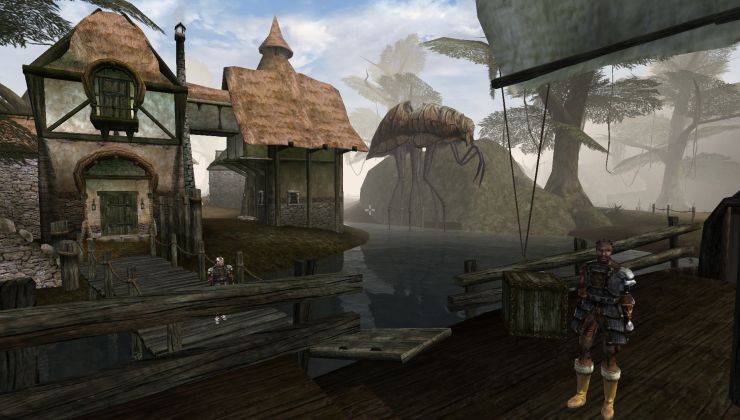 How to setup OpenMW for modern Morrowind on Linux / SteamOS and Steam Deck
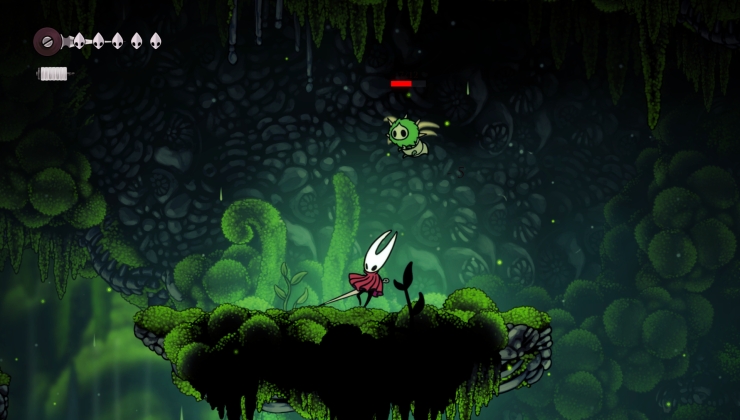 How to install Hollow Knight: Silksong mods on Linux, SteamOS and Steam Deck
Recently Updated