 Support us on Patreon
 PayPal
Latest Comments by Purple Library Guy
The latest update and brand new trailer for 'Vintage Story' look fantastic
18 Feb 2020 at 11:55 pm UTC
18 Feb 2020 at 11:55 pm UTC
Quoting: SpirimintIt works via Mono.I'm afraid that misses the pun.
The latest update and brand new trailer for 'Vintage Story' look fantastic
18 Feb 2020 at 3:23 pm UTC Likes: 1
18 Feb 2020 at 3:23 pm UTC Likes: 1
It's called "Vintage" story, so the obvious question is, does it run on Wine?
Urban turn-based tactics arrives on Linux with Black Powder Red Earth
15 Feb 2020 at 8:34 pm UTC Likes: 1
(The IMF and World Bank are interesting institutions, in that they both fairly often put out well researched papers about how to do economic development in third world countries which say that the IMF/World Bank approach is counterproductive and should be changed, and then they continue enforcing the exact same approach)
15 Feb 2020 at 8:34 pm UTC Likes: 1
Quoting: razing32I'm afraid this is going to be disappointing: I've read a few articles on the topic, and they describe this as a widespread process happening across many parts of the third world. It tends to go with the sort of liberalization of foreign investment and elimination of public sector supports for agriculture that are generally mandated by the IMF and World Bank. But I fear I don't have them at my fingertips, so add as many grains of salt as you feel reasonable.Quoting: Purple Library GuySo for instance, you see claims that lots of people in the third world who used to be poor no longer are, because they were not before, and are now, making more than $2/day. Generally not much more. The problem is that a whole lot of those people used to be subsistence farmers, who didn't really make any money but could feed and clothe themselves, who were then thrown off their little plots of land by the wonders of foreign direct investment by agribusinesses combined with corrupt local authorities. Then they had to move to some horrible slum with no access to clean water and find some way to earn money, and are now half-starved, dirty and disease-ridden on $2.50 a day. So according to the statistics, they've been "raised out of poverty", but in fact they're far worse off than they were. This is a major reason third world cities are ballooning in size--so many farmers thrown off their land so that foreigners can raise export crops. It's a horror story that gets dressed up as a success story, and there are many more, along with a lot of cherry-picking and massaging of statistics.Curios about this .
Dol you have any source to back this up as something happening globally in all third world countries ?
Or is this a specific example in a country you know/live in ?
(The IMF and World Bank are interesting institutions, in that they both fairly often put out well researched papers about how to do economic development in third world countries which say that the IMF/World Bank approach is counterproductive and should be changed, and then they continue enforcing the exact same approach)
Urban turn-based tactics arrives on Linux with Black Powder Red Earth
15 Feb 2020 at 8:25 pm UTC
15 Feb 2020 at 8:25 pm UTC
Quoting: 14I said "all else being equal". I was actually specifically trying not to get into an analysis of what exactly is wrong, only establishing that it's reasonable to have such an analysis in the first place. But sure. Clearly, all else must not be equal. (wall of text follows)Quoting: Purple Library GuyThere are things about the world which are improving. Computer games keep getting better . . . all else being equal, I believe higher technology tends to make things better. It certainly makes people more productive. In fact, with the degree to which technology and productivity have improved over the last 50 years, if all else was equal, if the system was merely holding other elements the same, there would be no faintest shadow of doubt that everyone's lives were way better. If one member of a household with a middle-income full time job could keep a nuclear family in a middle class lifestyle then, it should take maybe one 20-hour-a-week job to do the same now. Instead it takes two full time jobs, sometimes more, and the resulting lifestyle is less secure. Something wrong with the picture.I can't follow this paragraph. You begin saying that technology makes things better and productivity has improved. But then you point out how dual income in a nuclear family is almost a requirement to maintain a middle-class lifestyle these days. Was there supposed to be a big however or something before you exemplified the higher costs of living? Was it tongue in cheek, possibly saying that there is something wrong with the outcome of higher productivity since it hasn't equated to higher standards of living?
Spoiler, click me
My specific diagnosis which tends to be confirmed the more I read, is that what is not equal is that more and more surplus is vacuumed towards the top. Every year fewer and fewer people own more and more of the wealth; Oxfam does about the most prominent report about this, and it's disquieting to look at a few of those reports in succession--every year they report some bizarrely small number of people whose wealth is equal to the wealth of the bottom half of people in the world, and then next year that number is even bizarrely smaller.
This is a very strong tendency in our economic system. It can be interrupted and temporarily reversed by major social upheavals, such as the massive unrest of the Great Depression, but in times of relative status quo the wealthiest use their power to gradually re-rig things to favour them more and more, so that the gains from such things as technological improvements are not distributed across the whole population but go almost entirely to the wealthiest--mainly such people as large shareholders and other owners of firms, but also big landowners and so on.
Now, it's easy to look at the specific billionaires involved and conclude that this has something to do with people being greedy, venal and crooked, but that would be a mistake. It goes back to the basic nature, in fact the basic strengths, of capitalism. The point of capitalism is for private individuals to invest in things which make a profit, so that they end up with more capital to invest, to produce more, to make bigger profits and so on. Capitalists are supposed to maximize returns; this is how economic activity is grown. The hope is that all this maximizing of returns to investment involves something productive and useful being done, so the results will be positive. Unfortunately, there are problems; I'll mention two really big ones.
First, a sort of collective action problem for capitalists, where each maximizes returns by minimizing pay to the workforce, but each depends on the buying power of all the other capitalists' workforce. So each capitalist may be busily increasing production by paring down what they spend on labour (among other costs) and reinvesting the profits, and the increased production from that individual firm may be growing the economy, and that might seem to compensate for those workers getting less money. The problem is, it's the workers that are expected to buy the products, and if all the other firm owners are doing the same thing, collective demand will stagnate and choke off economic growth overall. That's one reason overall growth since the Reagan/Thatcher shift has averaged lower. But individual capitalists can't just say, well, I'll pay my workers better and take a short term hit to profits so people will be able to buy products, because a competitor who does not do that will make higher profits or be able to undersell him. Any firm that learns the meaning of the word "enough" will be out-competed by firms which do not. So as demand stagnates, firms will just keep doubling down on minimizing labour costs, squeezing the workforce further.
(For some time now, we've been creating demand without higher wages by increasing debt, but that has limits and causes a host of problems)
The second is that the whole idea of beneficial capitalism assumes a sort of given playing field, but in reality one of the major concerns of the wealthy is to rig the playing field. Modern economics normally assumes that politics and economics are separate, but in an era where legislation is often written by corporate lobbyists and passed by legislatures without a comma of alteration, that is clearly not the case. If you have a structure in which the goal, and the way to gain power, is maximization of profits, and so the people with the wealth and power got there by an ethos of profit maximization by any means, inevitably many of them will figure out that getting those profits by effortful processes of developing, producing and marketing products is kind of doing it the hard way. Investing in the creation of tax loopholes, legalizing externalities (basically saving money by unloading "bads" on the general public, whether by lax safety, environmental destruction or whatever), the enabling of financial maneuvers that under different rulesets might be considered fraud, or such giveaways as Quantitative Easing . . . the money spent buying policies where the state one way or another effectively gives public goods to the private wealthy often has far higher returns than normal productive capitalist endeavours. But it comes from the same basic set of goals and motivations; in both cases you're investing money (in campaign finance, PR firms, lobbyists etc) to gain a return on investment. So it's not froth on top of the system, it is built deeply into it. You can see this same sort of thing in operation from before Adam Smith's time; the very availability of a workforce for factory employment in the early industrial revolution was created by such things as the Enclosures, legal maneuvers taking land away from small farmers so that they were left with no means of support, combined with a massive increase in draconian heavily-enforced anti-vagrancy, anti-poaching and so forth laws. The class of people who ended up working in factories was created by legal interventions heavily lobbied for by the wealthy people who needed an expanded workforce. Now one could argue that whether created by a rigging of the playing field or not, the results of the industrial revolution were a dynamic unleashing of production so it's OK. Leaving aside some of the problems back then, the problem nowadays is that they can't say "enough"--as I've said, it's structurally impossible. So as with normal production and the tendency to never stop trying to squeeze wages and other expenses, those rigging the legal structure can never say "Good enough, we've got big advantages over the proles let's leave it at that"; if some of them do, others will come along who don't. Thus for as long as there are no major upheavals, the very structure of society will continue to get shifted by those with the power to shift it.
Between those two problems (and a number of others), at any given time, one might be able to say "Well, this is more or less OK (for me at least); and if things stay like this and technology keeps improving boats will get lifted"--but things can't stay like this, the tweaks, the progressive unbalancing, will continue because those doing the tweaking have no stopping point. So things will keep getting more unequal until either the majority put their foot down or there is a major economic crisis. Even then, if we just recalibrate a la New Deal, leaving the wealth and power at the top diminished but fundamentally in the same structural position, they will just start up where they left off, bringing us to another peak of inequality and instability a few decades down the road. Unless civilization falls due to global warming.
This is a very strong tendency in our economic system. It can be interrupted and temporarily reversed by major social upheavals, such as the massive unrest of the Great Depression, but in times of relative status quo the wealthiest use their power to gradually re-rig things to favour them more and more, so that the gains from such things as technological improvements are not distributed across the whole population but go almost entirely to the wealthiest--mainly such people as large shareholders and other owners of firms, but also big landowners and so on.
Now, it's easy to look at the specific billionaires involved and conclude that this has something to do with people being greedy, venal and crooked, but that would be a mistake. It goes back to the basic nature, in fact the basic strengths, of capitalism. The point of capitalism is for private individuals to invest in things which make a profit, so that they end up with more capital to invest, to produce more, to make bigger profits and so on. Capitalists are supposed to maximize returns; this is how economic activity is grown. The hope is that all this maximizing of returns to investment involves something productive and useful being done, so the results will be positive. Unfortunately, there are problems; I'll mention two really big ones.
First, a sort of collective action problem for capitalists, where each maximizes returns by minimizing pay to the workforce, but each depends on the buying power of all the other capitalists' workforce. So each capitalist may be busily increasing production by paring down what they spend on labour (among other costs) and reinvesting the profits, and the increased production from that individual firm may be growing the economy, and that might seem to compensate for those workers getting less money. The problem is, it's the workers that are expected to buy the products, and if all the other firm owners are doing the same thing, collective demand will stagnate and choke off economic growth overall. That's one reason overall growth since the Reagan/Thatcher shift has averaged lower. But individual capitalists can't just say, well, I'll pay my workers better and take a short term hit to profits so people will be able to buy products, because a competitor who does not do that will make higher profits or be able to undersell him. Any firm that learns the meaning of the word "enough" will be out-competed by firms which do not. So as demand stagnates, firms will just keep doubling down on minimizing labour costs, squeezing the workforce further.
(For some time now, we've been creating demand without higher wages by increasing debt, but that has limits and causes a host of problems)
The second is that the whole idea of beneficial capitalism assumes a sort of given playing field, but in reality one of the major concerns of the wealthy is to rig the playing field. Modern economics normally assumes that politics and economics are separate, but in an era where legislation is often written by corporate lobbyists and passed by legislatures without a comma of alteration, that is clearly not the case. If you have a structure in which the goal, and the way to gain power, is maximization of profits, and so the people with the wealth and power got there by an ethos of profit maximization by any means, inevitably many of them will figure out that getting those profits by effortful processes of developing, producing and marketing products is kind of doing it the hard way. Investing in the creation of tax loopholes, legalizing externalities (basically saving money by unloading "bads" on the general public, whether by lax safety, environmental destruction or whatever), the enabling of financial maneuvers that under different rulesets might be considered fraud, or such giveaways as Quantitative Easing . . . the money spent buying policies where the state one way or another effectively gives public goods to the private wealthy often has far higher returns than normal productive capitalist endeavours. But it comes from the same basic set of goals and motivations; in both cases you're investing money (in campaign finance, PR firms, lobbyists etc) to gain a return on investment. So it's not froth on top of the system, it is built deeply into it. You can see this same sort of thing in operation from before Adam Smith's time; the very availability of a workforce for factory employment in the early industrial revolution was created by such things as the Enclosures, legal maneuvers taking land away from small farmers so that they were left with no means of support, combined with a massive increase in draconian heavily-enforced anti-vagrancy, anti-poaching and so forth laws. The class of people who ended up working in factories was created by legal interventions heavily lobbied for by the wealthy people who needed an expanded workforce. Now one could argue that whether created by a rigging of the playing field or not, the results of the industrial revolution were a dynamic unleashing of production so it's OK. Leaving aside some of the problems back then, the problem nowadays is that they can't say "enough"--as I've said, it's structurally impossible. So as with normal production and the tendency to never stop trying to squeeze wages and other expenses, those rigging the legal structure can never say "Good enough, we've got big advantages over the proles let's leave it at that"; if some of them do, others will come along who don't. Thus for as long as there are no major upheavals, the very structure of society will continue to get shifted by those with the power to shift it.
Between those two problems (and a number of others), at any given time, one might be able to say "Well, this is more or less OK (for me at least); and if things stay like this and technology keeps improving boats will get lifted"--but things can't stay like this, the tweaks, the progressive unbalancing, will continue because those doing the tweaking have no stopping point. So things will keep getting more unequal until either the majority put their foot down or there is a major economic crisis. Even then, if we just recalibrate a la New Deal, leaving the wealth and power at the top diminished but fundamentally in the same structural position, they will just start up where they left off, bringing us to another peak of inequality and instability a few decades down the road. Unless civilization falls due to global warming.
Urban turn-based tactics arrives on Linux with Black Powder Red Earth
15 Feb 2020 at 12:45 pm UTC Likes: 2
But say we do want to go there, decide who's right or wrong by who has more cognitive bias. Pessimism is far from the only cognitive bias or deficit people are prone to; it would be easy enough to talk about conformity pressures and various other factors which tend to suppress alternative opinions, or simply make them hard to access. Seems to me it would be at least as easy to make a case that most people who are not radical are that way because of cognitive biases or information deficits. But I still don't think it's a good approach. It's a kind of ad hominem argument, with all the problems that entails; the real question isn't who's got cognitive problems, the question is who is right, and that can only be decided based on the facts, not the arguers.
Similarly, the guy represents radicals as all being violent (and therefore probably wrong). But first of all, he seems to be extrapolating from his personal sample, which as I suggested before does not seem remotely representative. He hung around with jerks who were radicals, therefore all radicals are jerks, seems to be the reasoning. Reminds me of a terrible book called "The Elfish Gene" by a guy who used to play D&D; he spends most of the book talking about what total little scuzzbuckets he and his teenage friends were, and sneeringly extrapolates their characteristics to the whole gaming world, and I'm like, no, you just hung out with some total pissants, that's not the rest of the gaming world's fault. And on the other side of the coin, could we not pretend that violence is somehow this unique quality possessed by radicals, like nobody defending the status quo is violent? Say, why did they have to start this thing called "Black Lives Matter" again? Oh, yeah, it's because blacks are constantly being murdered by the representatives of the status quo in a manner reminiscent of old fashioned lynching, which was again, a practice of terrorism by defenders of the status quo. History has a lot more violence by authorities than those protesting them, although this may just be because they have greater capacity for violence rather than greater appetite for it.
The guy does quickly handwave a couple of claims that the victims of the "pessimistic" cognitive deficit are simply wrong, that things are in fact continuously improving and thus the only reason people could think otherwise is this "pessimism" complex. I think he is mistaken; I've seen more detailed presentations of that sort of claim, and I've seen counterarguments, and I don't think the Panglossian types' arguments hold up.
So for instance, you see claims that lots of people in the third world who used to be poor no longer are, because they were not before, and are now, making more than $2/day. Generally not much more. The problem is that a whole lot of those people used to be subsistence farmers, who didn't really make any money but could feed and clothe themselves, who were then thrown off their little plots of land by the wonders of foreign direct investment by agribusinesses combined with corrupt local authorities. Then they had to move to some horrible slum with no access to clean water and find some way to earn money, and are now half-starved, dirty and disease-ridden on $2.50 a day. So according to the statistics, they've been "raised out of poverty", but in fact they're far worse off than they were. This is a major reason third world cities are ballooning in size--so many farmers thrown off their land so that foreigners can raise export crops. It's a horror story that gets dressed up as a success story, and there are many more, along with a lot of cherry-picking and massaging of statistics.
There are things about the world which are improving. Computer games keep getting better . . . all else being equal, I believe higher technology tends to make things better. It certainly makes people more productive. In fact, with the degree to which technology and productivity have improved over the last 50 years, if all else was equal, if the system was merely holding other elements the same, there would be no faintest shadow of doubt that everyone's lives were way better. If one member of a household with a middle-income full time job could keep a nuclear family in a middle class lifestyle then, it should take maybe one 20-hour-a-week job to do the same now. Instead it takes two full time jobs, sometimes more, and the resulting lifestyle is less secure. Something wrong with the picture.
Of course, seeing that something is wrong does not in itself get you far--and again, this guy's friends seem to have pretty much stopped there: Status quo is bad, smash it, something something, utopia! A good radical has a solid explanation for why there is something wrong with the picture, which can then lead to some sort of prescription of how things should be done differently. Bottom line, the dude who wrote this article was a lousy radical when he was a radical, the type who make violent splinter cells rather than the type who build movements, and if he confined himself to saying don't be his kind of radical I would be behind that. But it's a lot easier to say the whole concept is wrong and that was your problem, than to admit to yourself that you were just doing it wrong.
15 Feb 2020 at 12:45 pm UTC Likes: 2
Quoting: 14Sure, but it's an angle which says "It doesn't really matter what the facts are, certain cognitive problems exist, therefore we can presume that anyone complaining is merely the victim of those problems". I frankly think that's a cop-out. Rephrased a bit more bluntly, it says anyone who disagrees with the status quo can be presumed to be doing so because they are crazy (and therefore there is no need to evaluate the specifics of the disagreement). That's pretty much what the Soviets said, which is why dissenters were often stuffed in asylums rather than jail. Interestingly, the DSM V now defines rebellion against authority as a mental illness; "Oppositional defiant disorder". So yeah, I think that approach is pretty bankrupt and also a dangerous road to go down. I see something like that and I think if that person had something valid to say, they'd be saying it.Quoting: Purple Library GuyDoesn't seem like, either then or now, he had any very solid ideas about how things actually work; the article basically is his account of deciding to accept the black box of political economy as a black box with faith, rather than pessimism, ruling his relationship to it.(Emphasis added)
It seems to me, based on his credentials, that he has pursued understanding in those areas at least. You can't quite write a whole chapter or "about the author" piece for every Internet publication and expect to get much readership. I say he chose an angle and wrote to it.
But say we do want to go there, decide who's right or wrong by who has more cognitive bias. Pessimism is far from the only cognitive bias or deficit people are prone to; it would be easy enough to talk about conformity pressures and various other factors which tend to suppress alternative opinions, or simply make them hard to access. Seems to me it would be at least as easy to make a case that most people who are not radical are that way because of cognitive biases or information deficits. But I still don't think it's a good approach. It's a kind of ad hominem argument, with all the problems that entails; the real question isn't who's got cognitive problems, the question is who is right, and that can only be decided based on the facts, not the arguers.
Similarly, the guy represents radicals as all being violent (and therefore probably wrong). But first of all, he seems to be extrapolating from his personal sample, which as I suggested before does not seem remotely representative. He hung around with jerks who were radicals, therefore all radicals are jerks, seems to be the reasoning. Reminds me of a terrible book called "The Elfish Gene" by a guy who used to play D&D; he spends most of the book talking about what total little scuzzbuckets he and his teenage friends were, and sneeringly extrapolates their characteristics to the whole gaming world, and I'm like, no, you just hung out with some total pissants, that's not the rest of the gaming world's fault. And on the other side of the coin, could we not pretend that violence is somehow this unique quality possessed by radicals, like nobody defending the status quo is violent? Say, why did they have to start this thing called "Black Lives Matter" again? Oh, yeah, it's because blacks are constantly being murdered by the representatives of the status quo in a manner reminiscent of old fashioned lynching, which was again, a practice of terrorism by defenders of the status quo. History has a lot more violence by authorities than those protesting them, although this may just be because they have greater capacity for violence rather than greater appetite for it.
The guy does quickly handwave a couple of claims that the victims of the "pessimistic" cognitive deficit are simply wrong, that things are in fact continuously improving and thus the only reason people could think otherwise is this "pessimism" complex. I think he is mistaken; I've seen more detailed presentations of that sort of claim, and I've seen counterarguments, and I don't think the Panglossian types' arguments hold up.
So for instance, you see claims that lots of people in the third world who used to be poor no longer are, because they were not before, and are now, making more than $2/day. Generally not much more. The problem is that a whole lot of those people used to be subsistence farmers, who didn't really make any money but could feed and clothe themselves, who were then thrown off their little plots of land by the wonders of foreign direct investment by agribusinesses combined with corrupt local authorities. Then they had to move to some horrible slum with no access to clean water and find some way to earn money, and are now half-starved, dirty and disease-ridden on $2.50 a day. So according to the statistics, they've been "raised out of poverty", but in fact they're far worse off than they were. This is a major reason third world cities are ballooning in size--so many farmers thrown off their land so that foreigners can raise export crops. It's a horror story that gets dressed up as a success story, and there are many more, along with a lot of cherry-picking and massaging of statistics.
There are things about the world which are improving. Computer games keep getting better . . . all else being equal, I believe higher technology tends to make things better. It certainly makes people more productive. In fact, with the degree to which technology and productivity have improved over the last 50 years, if all else was equal, if the system was merely holding other elements the same, there would be no faintest shadow of doubt that everyone's lives were way better. If one member of a household with a middle-income full time job could keep a nuclear family in a middle class lifestyle then, it should take maybe one 20-hour-a-week job to do the same now. Instead it takes two full time jobs, sometimes more, and the resulting lifestyle is less secure. Something wrong with the picture.
Of course, seeing that something is wrong does not in itself get you far--and again, this guy's friends seem to have pretty much stopped there: Status quo is bad, smash it, something something, utopia! A good radical has a solid explanation for why there is something wrong with the picture, which can then lead to some sort of prescription of how things should be done differently. Bottom line, the dude who wrote this article was a lousy radical when he was a radical, the type who make violent splinter cells rather than the type who build movements, and if he confined himself to saying don't be his kind of radical I would be behind that. But it's a lot easier to say the whole concept is wrong and that was your problem, than to admit to yourself that you were just doing it wrong.
Serious Sam Collection & Panzer Dragoon announced for Stadia plus some timed exclusives
15 Feb 2020 at 11:25 am UTC
15 Feb 2020 at 11:25 am UTC
Quoting: orochi_kyoLag will be always there no matter if you have 1GB download/ upload of the internet.Well, if you're in a place with last-mile fiber and otherwise good internet infrastructure you could come pretty close. Plus, Google's strength for this is, it has servers bloody everywhere so the distance won't be that far. So it should work great in South Korea. Not sure about anywhere else.
You cant defy physics thinking your Internet speed will be ignoring the fact you are playing in a computer that is in another city, country or even continent.
Urban turn-based tactics arrives on Linux with Black Powder Red Earth
15 Feb 2020 at 11:10 am UTC
Now I'd have to agree that if you want to get down and detailed, Middle Eastern dictatorial oil states are not precisely fascist . . . but, they're awfully similar in a lot of ways. That is, they're dictatorial, they're capitalist, they fuse commercial interests with the interests of the ruler and state, they're oppressive, they often have significant religious components and maintain stability by persecuting internal and/or external enemies. There are differences--as hereditary monarchies they tend not to be based on leadership personality cults, although once installed the leaders may attempt to create such. But still, the characteristics are similar enough that I wouldn't really want to cavil too much over someone casually designating such a state "fascist" as a shorthand explanation for why they're not wild about them as a game faction.
15 Feb 2020 at 11:10 am UTC
Quoting: 14Do you know of any dictatorial oil states which are not capitalist? How is that a controversial designation?Quoting: Purple Library GuyThis is described as a "dictatorship". Should he rethink his direct connection of fascism and (dictatorship + capitalism)? I mean, if you consider there to be no real difference between capitalist states that are and aren't dictatorships, well, despite my cynicism about current representative forms of democracy, I'd still want to see a case made before I bought it.I guess I don't see where fascism and capitalism came out of the game description or video.
Now I'd have to agree that if you want to get down and detailed, Middle Eastern dictatorial oil states are not precisely fascist . . . but, they're awfully similar in a lot of ways. That is, they're dictatorial, they're capitalist, they fuse commercial interests with the interests of the ruler and state, they're oppressive, they often have significant religious components and maintain stability by persecuting internal and/or external enemies. There are differences--as hereditary monarchies they tend not to be based on leadership personality cults, although once installed the leaders may attempt to create such. But still, the characteristics are similar enough that I wouldn't really want to cavil too much over someone casually designating such a state "fascist" as a shorthand explanation for why they're not wild about them as a game faction.
Serious Sam Collection & Panzer Dragoon announced for Stadia plus some timed exclusives
14 Feb 2020 at 10:06 pm UTC
I have doubts it will work, but I presume that's the idea--you don't have to do a hard cutover.
14 Feb 2020 at 10:06 pm UTC
Quoting: mylkaWell, they don't have to use Stadia exclusively. I think the idea is, people would use Stadia for Stadia exclusives because they have no choice, and maybe increasingly for a few other games as games are added, and they'd still use Steam the rest of the time. Gradually over time Google would hope for the Stadia libraries to grow and maybe for people to spend more time with Stadia games because of, say, the convenience of being able to continue the same game from different locations or something (although I suppose cloud saves on Steam would get you that anyway), and thus over a few years for people's libraries of Stadia games to gradually supplant other ones.Quoting: melkemindI hope Google learns from Nvidia and starts offering a away to play games you already have in your Steam/GOG libraries rather than having to buy online-only versions of those games.they have to, or else i dont see a reason why anyone should use stadia
I have doubts it will work, but I presume that's the idea--you don't have to do a hard cutover.
and nvidia has to support more platforms, or put it into a browserYet. There are no ads yet. For how many years were there no ads in Youtube videos?
i still wonder how they can offer it for free. there are no ads.
Space Impossible has a huge new release out for you to get building a starship
14 Feb 2020 at 10:00 pm UTC
14 Feb 2020 at 10:00 pm UTC
I don't really mind pixel style as a rule, but that is so chunky it hurts my eyes.
Urban turn-based tactics arrives on Linux with Black Powder Red Earth
14 Feb 2020 at 9:42 pm UTC Likes: 2
As to that article . . . yeah, it's not badly written. And sure, there are radicals who are like what he describes; in the big Seattle anti-WTO demonstrations with tens of thousands of protestors, probably only thousands were what you could really call "radical"--and of those thousands, why I'm sure at least several dozen were Black Bloc morons. So it sounds to me like the author recalls being a Black Bloc moron, a "Weathermen" type, and because such groups are quite insular, was under the impression that that was what being "radical" inherently is. So no doubt the article is sincere, and it's talking about a real phenomenon. Just, not a very important one.
And I'm not sure he's that much less gullible now that he's discovered the wonders of the status quo than he was when he was the most gullible kind of radical. He'd picked a couple of tracts to be influenced by and ignored everything else, and now he's picked a couple of different ones. Doesn't seem like, either then or now, he had any very solid ideas about how things actually work; the article basically is his account of deciding to accept the black box of political economy as a black box with faith, rather than pessimism, ruling his relationship to it. Which really goes beyond an abjuration of radicalism to an abdication of citizenship--his position basically implies that one shouldn't have political opinions other than "Whatever is, is right".
14 Feb 2020 at 9:42 pm UTC Likes: 2
Quoting: 14I'd also rethink your direct connection of fascism and capitalism. Maybe give this well-written article [External Link] a read.This is described as a "dictatorship". Should he rethink his direct connection of fascism and (dictatorship + capitalism)? I mean, if you consider there to be no real difference between capitalist states that are and aren't dictatorships, well, despite my cynicism about current representative forms of democracy, I'd still want to see a case made before I bought it.
As to that article . . . yeah, it's not badly written. And sure, there are radicals who are like what he describes; in the big Seattle anti-WTO demonstrations with tens of thousands of protestors, probably only thousands were what you could really call "radical"--and of those thousands, why I'm sure at least several dozen were Black Bloc morons. So it sounds to me like the author recalls being a Black Bloc moron, a "Weathermen" type, and because such groups are quite insular, was under the impression that that was what being "radical" inherently is. So no doubt the article is sincere, and it's talking about a real phenomenon. Just, not a very important one.
And I'm not sure he's that much less gullible now that he's discovered the wonders of the status quo than he was when he was the most gullible kind of radical. He'd picked a couple of tracts to be influenced by and ignored everything else, and now he's picked a couple of different ones. Doesn't seem like, either then or now, he had any very solid ideas about how things actually work; the article basically is his account of deciding to accept the black box of political economy as a black box with faith, rather than pessimism, ruling his relationship to it. Which really goes beyond an abjuration of radicalism to an abdication of citizenship--his position basically implies that one shouldn't have political opinions other than "Whatever is, is right".
- Discord is about to require age verification for everyone
- KDE Linux gets performance improvements, new default apps and goes all-in on Flatpak
- New Proton Experimental update adds controller support to more launchers on Linux / SteamOS
- Prefixer is a modern alternative to Protontricks that's faster and simpler
- GE-Proton 10-30 released with fixes for Arknights Endfield and the EA app
- > See more over 30 days here
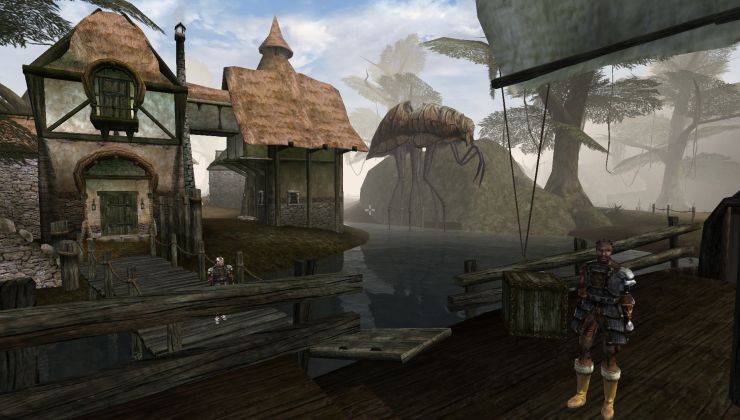 How to setup OpenMW for modern Morrowind on Linux / SteamOS and Steam Deck
 How to install Hollow Knight: Silksong mods on Linux, SteamOS and Steam Deck