 Support us on Patreon
 PayPal
Latest Comments by Purple Library Guy
The former Paradox Interactive CEO thinks "platform holders" 30% cut is "outrageous"
2 Jul 2019 at 10:27 pm UTC Likes: 1
2 Jul 2019 at 10:27 pm UTC Likes: 1
Quoting: BeamboomProbably monnef meant the recent policy shift where games (or maybe developers) that sell a little pay 30% while games that sell quite a bit pay 25% and games that sell big league numbers pay 20%.Quoting: monnefWhy indie games should be paying more, in relative numbers, than big publishers?If you talk about the fee on publishing the game, I dare say that $100 shouldn't be much for anyone. If you're semi-serious about putting your game out there on a an as massive market as Steam, I'd say it's pretty much nothing.
I think that particular part is a good idea, to keep the absolute worst out of the store.
The former Paradox Interactive CEO thinks "platform holders" 30% cut is "outrageous"
2 Jul 2019 at 9:15 pm UTC Likes: 1
2 Jul 2019 at 9:15 pm UTC Likes: 1
Quoting: F.UltraJust because being a hypocrite is solidly in your best interests does not make it stop being hypocrisy.Quoting: TuxeeI would more say that he is speaking from the viewpoint of his own company, it's of course in Paradox best interest to keep their own prices as high as possible while having to pay as little as possible to others like Valve. That is hardly being a hypocrite.What are your thoughts?That Wester is either an idiot or a hypocrite. I'd go for the latter.
The former Paradox Interactive CEO thinks "platform holders" 30% cut is "outrageous"
2 Jul 2019 at 9:02 pm UTC Likes: 2
2 Jul 2019 at 9:02 pm UTC Likes: 2
The problem here is that this is a question about facts, and we don't as far as I know have most of them. I don't know how much Steam's infrastructure and features cost. It's clearly false for Wester to say "This doesn't cost anything." I'm even sure it costs pretty big bucks. But there's a lot of room between "not anything" and "30% of all games sold". I don't think most of us have a clue if what they do really justifies the revenue or not.
Steam's top releases of May show why Steam Play is needed for Linux
2 Jul 2019 at 5:23 pm UTC Likes: 2
So as long as we're relying on Proton, Linux will be a second class gaming OS.
And then there is, as Linuxwarper mentioned, the ecosystem. If people are making Linux games, they are using libraries and middleware that run on Linux, probably cross-platform, so such libraries will gain prominence/marketshare. If those libraries and middleware running on Linux are open source, they may be helping to improve them. If people are making Windows games, they are likely using libraries and middleware that are not cross-platform. And these libraries and middleware may well represent more of a "moving target" than Windows itself; near as I can figure half the problem with Wine has never been Windows itself, it's all the dang .dlls.
So yeah, I think it matters. Proton will not still be a solution for a Linux that gains a stack of market share. It's a convenience today, and hopefully a bridge to a better situation tomorrow, and it seems to be very well written and I have tons of respect for the people who wrote the code, but it's not the ideal.
2 Jul 2019 at 5:23 pm UTC Likes: 2
Quoting: BeamboomMind you, that is a rather big if. "Experience very little difference" I'll buy. But in theory, all else being equal, Proton has to lose a bit of efficiency compared to a native version, not so? And targets will move--not so much existing games, which will probably keep working on Steamplay at least as well as native Linux games. But new games will keep on doing new things, relying on new Windows-only middleware that it will take time for Proton to get working. So for a Linux relying on Proton, there will always be the risk of delays--or even complete failure to get something running--even if we gain market share that would otherwise guarantee same-day releases.Quoting: LinuxwarperWhen and if that time ever comes, "No Tux No Buck" will be as meaningful response as it ever can be.... But why? Why does it matter, if Proton provides a 100% working out of the box experience on par with a native build?
If you experience no difference?
So as long as we're relying on Proton, Linux will be a second class gaming OS.
And then there is, as Linuxwarper mentioned, the ecosystem. If people are making Linux games, they are using libraries and middleware that run on Linux, probably cross-platform, so such libraries will gain prominence/marketshare. If those libraries and middleware running on Linux are open source, they may be helping to improve them. If people are making Windows games, they are likely using libraries and middleware that are not cross-platform. And these libraries and middleware may well represent more of a "moving target" than Windows itself; near as I can figure half the problem with Wine has never been Windows itself, it's all the dang .dlls.
So yeah, I think it matters. Proton will not still be a solution for a Linux that gains a stack of market share. It's a convenience today, and hopefully a bridge to a better situation tomorrow, and it seems to be very well written and I have tons of respect for the people who wrote the code, but it's not the ideal.
Paradox Interactive on Linux support, it's being done on a "case by case basis"
2 Jul 2019 at 4:34 pm UTC
I think we've tended to stop thinking about it over time because there's nothing anyone can do about it so it's depressing.
2 Jul 2019 at 4:34 pm UTC
Quoting: ChronariusThis really is the basic problem. Years ago, Linux people talked about this issue all. the. time.Quoting: subBut we're losing momentum.The biggest problem is that you still don't get Linux Computers in the stores. They are just not there, and an "avarage joe" has no reasons to reinstall it's PC which comes preinstalled with Windows!
And it doesn't feel right currently.
I think we've tended to stop thinking about it over time because there's nothing anyone can do about it so it's depressing.
A look over the ProtonDB reports for June 2019, over 5.5K games reported to work with Steam Play
2 Jul 2019 at 7:23 am UTC Likes: 2
Sure, if you're an advanced user doing tricky things you might have reason to use other ways that are complicated--but then user friendly is no longer your primary measuring stick anyway.
2 Jul 2019 at 7:23 am UTC Likes: 2
Quoting: gradyvuckovicI'm with you on everything except app distribution. Maybe it's just that I have a simple use case, but for me there are two sources of applications on Linux: The distribution's "software centre" thingie, and Steam. Steam for (non-open source) games, software centre for everything else; I've never had a use for a closed source application that wasn't a game, and it's been years since I had a reason to try installing something that wasn't in the software centre. So out of those two, Steam is identical to what Windows people use, and the software centre is way easier than what Windows people do. Far as I'm concerned, advantage: Linux on that one.Quoting: KimyrielleI would be super scared about the state of Linux gaming without Steam Play. Let's be honest, our platform isn't gaining any momentum whatsoever. We're still stuck at the same 1% market share we had before Linux gaming became a thing. And not only has no further major publisher entered the Linux market in years, we're reading more and more developer comments about Linux not being worth it and them questioning further releases for it. I get the idea that it's not a perfect solution and native ports would be preferable, but at least this way we can play these AAA games that nobody seems to port to Linux. Call me happy!My thoughts on some possible reasons why:
- The UX of many distros is still very poor. If a brand new convert from Windows picks something like Arch for their first Linux distro, they're going to have a bad time and ask "why the hell would anyone even bother with this?". And by UX, I don't mean just the UIs, although a bad UI is of course included in a bad UX. But also the websites of many distros are poor, there's often poor documentation, and not a lot of beginner friendly content, like videos on how to perform common tasks. New users are often left to just 'figure stuff out' for themselves, and while some Linux users may like that, it would definitely be turning off new users.
- App distribution on Linux is still a bit of a mess. Just look at the length of the 'download' page for Lutris. [External Link] For Windows that page would just be a single button, 'Download', and hence it wouldn't even be a separate page, just a button on the homepage. We can't seem to nail down what method to make the primary focus of app distribution and often devolve back to just terminal command instructions for each distro. I'd like to see a survey targeting a wide number of people that asks the question, "What is your preferred means of application distribution?", and see if we can pick one, then focus entirely on making all applications available via that means, and integrating it well into every distro. If that's flatpak then focus on flatpak, if it's appimage, then focus on appimage. We just need to pick something and make it happen, and whatever we pick needs to be something other than entering terminal commands like a programmer adding dependencies to a project.
- Even if Proton became perfect tomorrow, it would still take years for us to reach even 5%, because people are hesitant to change something when it works and often completely unaware of Linux's existence or anything happening on Linux. People often take a 'if it aint broke don't fix it' approach to PCs, so the only time to grab a potential Windows user and bring them over to the dark side is when something breaks on their PC, or when they hate the next version of Windows. I don't know how we advertise Linux without becoming 'annoying' but that's something worth tackling.
- Even if Proton became 'perfect' tomorrow, and could run every Windows game flawlessly, there's still one more issue Linux faces: All that achieves is making Linux on par with Windows in terms of number of available games, that still doesn't make Linux superior to Windows for gaming. To the typical user who doesn't care about Linux, what reason do they have to switch to Linux? Linux will need to become 'superior' to Windows for a large number of users first before we get huge numbers of converts.
- There's also still a lot of hardware support issues when it comes to gaming. We got the basics now of course, when it comes to supporting GPUs and such, but stuff like gaming mice/keyboards, customising RGBs, etc, we still don't have many nice solutions for that stuff.
That said, we have gained a little bit of traction recently, and there are always going to be a number of people who will be keen to switch away from Windows even despite everything I've said up there. I think there's lots of reasons to be positive, but we still face a lot of challenges.
Sure, if you're an advanced user doing tricky things you might have reason to use other ways that are complicated--but then user friendly is no longer your primary measuring stick anyway.
Paradox Interactive on Linux support, it's being done on a "case by case basis"
1 Jul 2019 at 8:34 pm UTC Likes: 2
It has never occurred to me to go find an executable file if I want a desktop shortcut--I right-click the menu entry or drag it from the menu entry to (the desktop, my toolbar). But yeah, I suppose that would be a good feature. And I do kind of like the idea of USB formatting from the file browser.
For the rest, I work on Windows at work and Linux at home, and I don't notice much difference. There's plenty of stuff on Windows I need to hunt through menus for. The biggest difference I notice is that on a Linux using Mate, if I plug in a USB (which I generally do because I want to use it for something) it automatically brings up a file manager window with the contents of the USB and puts an icon for the USB on my desktop, so I can do something with it immediately. On Windows, nothing much happens except usually it gives me a message falsely claiming there's something wrong with my USB and I should let Windows "fix" it; experience tells me that if I fail to ignore this message, if I let Windows try to fix my USB, it will get screwed up. So then to actually do anything with the USB I plugged in I end up clicking on some random folder to bring up a file manager window so I can scroll down among the many drives and things we have at work until I find the USB and click on it. This happens a lot more often than formatting a USB or changing my screen settings. Overall, ease-of-use-wise, I'll take Mint over Windows . . . and that's despite the fact that at work, all the management of the OS is being done by our mostly competent Systems people (so I can ignore update issues and such), whereas on Linux I'm doing it, and I am in no way a mostly competent Systems person.
1 Jul 2019 at 8:34 pm UTC Likes: 2
Quoting: orochi_kyoWell there's your problem, innit? Use a non-low-resource-consumption Linux distro if you want ease of use. Lots of people are into XFCE and such, but they're more bare-bones and that's how it is.Quoting: subBut we're losing momentum.A thing most Linux users are ignoring mostly on purpose, but Linux is not going nowhere, until the casual user may use a Linux distro as they do use Windows, with details like right-clicking on an executable file and creating a desktop shortcut or right clicking your desktop and accessing your monitor settings or formatting a Usb drive from the file browser, everything with a single click.
And it doesn't feel right currently.
I love my low resource consumption Linux distro but
It has never occurred to me to go find an executable file if I want a desktop shortcut--I right-click the menu entry or drag it from the menu entry to (the desktop, my toolbar). But yeah, I suppose that would be a good feature. And I do kind of like the idea of USB formatting from the file browser.
For the rest, I work on Windows at work and Linux at home, and I don't notice much difference. There's plenty of stuff on Windows I need to hunt through menus for. The biggest difference I notice is that on a Linux using Mate, if I plug in a USB (which I generally do because I want to use it for something) it automatically brings up a file manager window with the contents of the USB and puts an icon for the USB on my desktop, so I can do something with it immediately. On Windows, nothing much happens except usually it gives me a message falsely claiming there's something wrong with my USB and I should let Windows "fix" it; experience tells me that if I fail to ignore this message, if I let Windows try to fix my USB, it will get screwed up. So then to actually do anything with the USB I plugged in I end up clicking on some random folder to bring up a file manager window so I can scroll down among the many drives and things we have at work until I find the USB and click on it. This happens a lot more often than formatting a USB or changing my screen settings. Overall, ease-of-use-wise, I'll take Mint over Windows . . . and that's despite the fact that at work, all the management of the OS is being done by our mostly competent Systems people (so I can ignore update issues and such), whereas on Linux I'm doing it, and I am in no way a mostly competent Systems person.
A look over the ProtonDB reports for June 2019, over 5.5K games reported to work with Steam Play
1 Jul 2019 at 6:42 pm UTC Likes: 4
1 Jul 2019 at 6:42 pm UTC Likes: 4
"The recent release of My Friend Pedro" sounds like you know a dude who was in jail. :wink:
Valve looking to drop support for Ubuntu 19.10 and up due to Canonical's 32bit decision (updated)
30 Jun 2019 at 8:01 pm UTC Likes: 1
30 Jun 2019 at 8:01 pm UTC Likes: 1
Quoting: slaapliedjeIt's also gotten a LOT better than it used to be, some things are just simply 'pacman -S gnome' and you get gnome. I think it takes me about 20 minutes to do a net install of Debian, and maybe another 10m after that of configuring it how I like it. Arch takes maybe an hour for both. Though with Arch, you should have a phone or some other device to read wikis while installing :)
Quoting: ScooptaThe Debian installer bugs me. It doesn't let me setup my system the way I want. It has a habit of telling me the thing I'm trying to do won't work and that I can't do it when I can. I just don't use it anymore, I have a Debian disk with debootstrap on it and I just install Debian the same way most people do Arch. It lets me get Sid right from the start and it doesn't get in my way. It's also not terribly difficult if you're familiar enough with Linux.While I'm sure those scenarios are fine for you guys and you get a great system out of it and all that, you can see why Valve wouldn't be wanting to put their muscle behind advising the general gaming public to go with that, right?
Steam's top releases of May show why Steam Play is needed for Linux
30 Jun 2019 at 7:48 pm UTC
30 Jun 2019 at 7:48 pm UTC
Quoting: ShmerlI think this affects bigger markets too. Didn't some developers complain, that the market is overcrowded even on Windows, and it's harder to make profits because of tons and tons of games coming out? In the smaller market this issue is just more pronounced and you can more easily see all the shifts, but it affects all in general.Seems reasonable; as long as there's a good prospect of making money creating games, people will make more games. Presumably there's an equilibrium point where it's just un/profitable enough for as many people to start doing it as quit doing it.
- GOG did an AMA and here's some highlights - like how they'll continue using generative AI
- Discord is about to require age verification for everyone
- PlayStation Publishing reveal Horizon Hunters Gathering, Guerrilla's new co-op action game
- JSAUX announce a charging-friendly Steam Deck travel case
- System76 plans for COSMIC include Vulkan, HDR, gaming improvements and more
- > See more over 30 days here
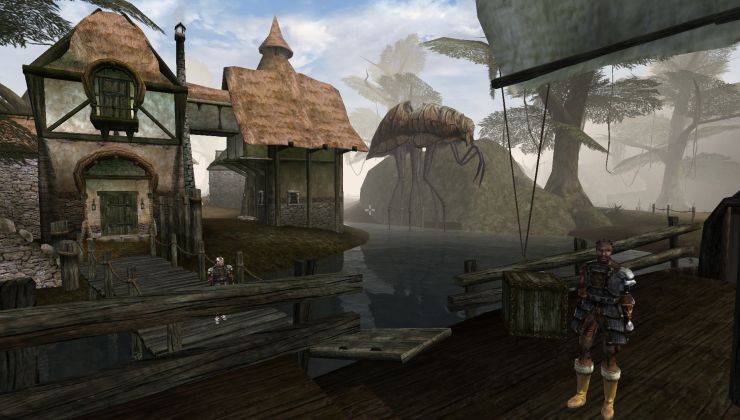 How to setup OpenMW for modern Morrowind on Linux / SteamOS and Steam Deck
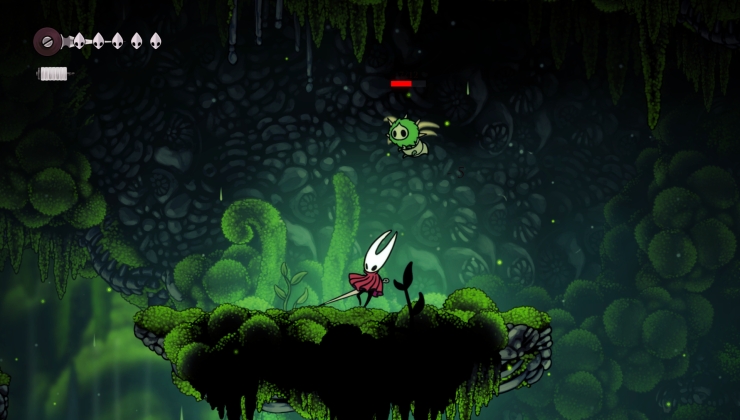 How to install Hollow Knight: Silksong mods on Linux, SteamOS and Steam Deck