 Support us on Patreon
 PayPal
Latest Comments by Purple Library Guy
Steam's top releases of May show why Steam Play is needed for Linux
30 Jun 2019 at 7:44 pm UTC
30 Jun 2019 at 7:44 pm UTC
Quoting: GuestOf course that concept of opportunity costs assumes that it's not workable to simply hire more people to do an additional project if it's going to be profitable. That's probably a reasonable assumption actually--mythical man month and all that, by the time you get additional hires up to speed it might not be profitable any more. But what it does point to is the role of specialist porters like Feral, people already expert at what you want done who can make it happen profitably without taking up your own developers' time.Quoting: LinuxwarperWithout choosing sides (I haven't dug enough into evidence, data sets, etc, myself yet to make a judgement), quite often there's also the case that supporting GNU/Linux might be profitable, but not quite as profitable as putting that same investment back into the original platform, or to a console, or better marketing.Quoting: GuestUh no, the AAA games we have on Linux were not for charity or good will, we have proof that the work done releasing for and supporting Linux was compensated for.Fact is if Linux was profitable for triple A and indie AAA (as Ninja Theory calls it), then we would see more than two AAA games for Linux at E3. One of them, the Borderlands DLC isn't even confirmed, I just included it just because Liam implied it would come because of Aspyr. So tell me again if Linux is profitable:
where is Ashes of Singularity. It's been two years. Where is Doom 2016? The port is basically done. Do you really believe those in charge of Doom would not port it to Linux if they could make more money?
Just because Linux has AAA games it does not prove that it's sustainable business as a whole. The sooner you realize that the sooner Linux gaming will be better because of it.
Quoting: Purple Library GuyThe rest of what he said is pretty frightening though. He seems quite definite that Linux gaming is shrinking over time. This over a time period when on a technical level, near as I can figure out Linux has been significantly improving as a gaming platform.It seems quite evident to me. With some exceptions and indies Linux isn't profitable.
We may need Proton, and Stadia I guess, more than I thought.
Quoting: Purple Library GuyI'd certainly love to see that Windows 7--> Linux migration scenario materialize. But I've seen a couple of other "This MS screw-up should drive people our way" events that never worked out, so I dunno. Time will tell.I think for that to be effective couple things needs to be in order: anti cheat (EAC and BattleEye), even more driver improvements and gamers on Linux doing free ad campaign for Linux.
Steam's top releases of May show why Steam Play is needed for Linux
30 Jun 2019 at 6:15 pm UTC Likes: 1
30 Jun 2019 at 6:15 pm UTC Likes: 1
Quoting: ShmerlThis of course ends at a certain point. We seem to be at around 25% of games being made/ported to Linux. So if we double our numbers, the equivalent balance point is around 50%, and if we get past 4% the balance point would be at 100% of games. That doesn't mean we'd actually get all the games at 4%, Apple doesn't and they're higher, just that if we did, they'd sell the same as 25% do now. What we'd get is somewhat more games, including more games higher up the expense/marketing slope, and each game selling somewhat more Linux units. But what I'm saying is that above a certain percentage of Linux users, you can no longer get a dilution effect where more games spread the increased sales between them, because we get to "nearly all the games" way before we get to "nearly all the users".Quoting: BeamboomThere's a lot of talk about market share here. Lots of assumptions and theories. But if there's one thing we DO know, is that the fact that Steam has been on Linux for several years now, and the Linux user base has been, for all practical purposes, completely stationary. Hasn't moved in any significant rate at all.Total number of Linux gamers affects sales, not market share. From what I've seen, total number of Linux gamers has been growing, year after year. I explained the idea above though. As with classic supply and demand, potential profits depend on both. If there are too many games per certain amount of gamers, profits will go down for developers, even if amount of gamers is growing. So market will balance naturally by lowering the number of produced games. It's not a sign of anything negative.
Steam's top releases of May show why Steam Play is needed for Linux
30 Jun 2019 at 6:07 pm UTC Likes: 4
See, this is the assumption I question--that if we just make things better, people will just automatically switch and our share will increase. If we build it they will come.
They probably won't. Oh, there will be a few, there have already been a few and there will be a few more. But that's at the level of anecdotes, not percentages. In the economy we have, and with people being what people are, just having a better technology or even a better product overall is not enough. You can't switch to something you've never heard of, and most people don't even get the concept that "switching" is a thing; they see a computer as an appliance that comes a certain way and that's how it is.
What I think is true is that if the technology is good enough, like Proton works on most games and so on, then something like a Steam Machine which was not really viable years ago becomes viable. So if someone with money and marketing muscle makes some kind of push for something involving Linux, Linux will be a vehicle that can take them to the finish line. That's what makes Steamplay important.
30 Jun 2019 at 6:07 pm UTC Likes: 4
Quoting: LinuxwarperThere used to be a big barrier to Linux, games not working and you had to tinker alot with Wine, Proton removed that. Now many games work and people have switched, ditched dual or stayed on Linux as result of that. The next barrier that's being worked on is anticheat. Then many of the multiplayer games will work, and more people will switch over.(emphasis added by me)
See, this is the assumption I question--that if we just make things better, people will just automatically switch and our share will increase. If we build it they will come.
They probably won't. Oh, there will be a few, there have already been a few and there will be a few more. But that's at the level of anecdotes, not percentages. In the economy we have, and with people being what people are, just having a better technology or even a better product overall is not enough. You can't switch to something you've never heard of, and most people don't even get the concept that "switching" is a thing; they see a computer as an appliance that comes a certain way and that's how it is.
What I think is true is that if the technology is good enough, like Proton works on most games and so on, then something like a Steam Machine which was not really viable years ago becomes viable. So if someone with money and marketing muscle makes some kind of push for something involving Linux, Linux will be a vehicle that can take them to the finish line. That's what makes Steamplay important.
Steam's top releases of May show why Steam Play is needed for Linux
30 Jun 2019 at 8:23 am UTC Likes: 2
We may need Proton, and Stadia I guess, more than I thought.
30 Jun 2019 at 8:23 am UTC Likes: 2
Quoting: ShmerlParadox head of sales talking about Linux support (08:15): https://play.acast.com/s/theparadoxpodcast/Buzzsprout-1340245 [External Link]The rest of what he said is pretty frightening though. He seems quite definite that Linux gaming is shrinking over time. This over a time period when on a technical level, near as I can figure out Linux has been significantly improving as a gaming platform.
He brings an interesting point, that Stadia can help them continue supporting desktop releases due to cost being covered. That what I think will impact developers a lot more, than people using Wine / Proton and etc.
We may need Proton, and Stadia I guess, more than I thought.
Steam's top releases of May show why Steam Play is needed for Linux
30 Jun 2019 at 8:10 am UTC Likes: 1
30 Jun 2019 at 8:10 am UTC Likes: 1
Quoting: EikeI'd certainly love to see that Windows 7--> Linux migration scenario materialize. But I've seen a couple of other "This MS screw-up should drive people our way" events that never worked out, so I dunno. Time will tell.if in short Linux was definitively better as a thing to use than for instance Windows, and specifically if you could play all the Windows games and Linux continued to kick ass in other ways, that this would inevitably result in a mass exodus from Windows and a rapid growth of Linux market share. I don't think that is actually true.Hm... Not sure about that. It's not like I hear Windows users tell me all the time how they are just loving their Windows. And early next year, when Windows 7 is supposed to die, we'll hear that even less. There might be a barrier of "nobody's using it". If everybody knew someone who also runs Linux (and maybe could be of assistance), I could imagine this mass movement.
Steam's top releases of May show why Steam Play is needed for Linux
30 Jun 2019 at 5:33 am UTC Likes: 2
30 Jun 2019 at 5:33 am UTC Likes: 2
There's one point that Swiftpaw has been mostly implying that I think needs to be laid out directly.
Say there isn't a huge influx of new Linux gamers because of Steamplay. Say it adds, oh, an extra 10%.
And say both the existing and new Linux gamers mainly do not insist on "no Tux, no bux". Instead they only buy half their games native, the other half on Steamplay (and the total amount they each spend on games stays constant).
Then, relative to a situation where there was no Steamplay but only native games, the developers of Linux native games will be only making 55% as much sales from doing so. That would be bad.
Worse, given that right now the decision to make a Linux version often seems to be just around the cusp of profitability, if each native Linux version was only worth 55% what it is now, most of them would simply be losing money.
The production of native Linux games could totally plummet in that scenario. For Steamplay to be a Good Thing it has to result in a big market share gain. And we don't actually know that's going to happen. I think we have to roll those dice anyway because the stagnation we have right now isn't viable in the medium term, but the concerns about Steamplay potentially damaging native game production are pretty valid.
Say there isn't a huge influx of new Linux gamers because of Steamplay. Say it adds, oh, an extra 10%.
And say both the existing and new Linux gamers mainly do not insist on "no Tux, no bux". Instead they only buy half their games native, the other half on Steamplay (and the total amount they each spend on games stays constant).
Then, relative to a situation where there was no Steamplay but only native games, the developers of Linux native games will be only making 55% as much sales from doing so. That would be bad.
Worse, given that right now the decision to make a Linux version often seems to be just around the cusp of profitability, if each native Linux version was only worth 55% what it is now, most of them would simply be losing money.
The production of native Linux games could totally plummet in that scenario. For Steamplay to be a Good Thing it has to result in a big market share gain. And we don't actually know that's going to happen. I think we have to roll those dice anyway because the stagnation we have right now isn't viable in the medium term, but the concerns about Steamplay potentially damaging native game production are pretty valid.
Steam's top releases of May show why Steam Play is needed for Linux
30 Jun 2019 at 5:04 am UTC Likes: 4
30 Jun 2019 at 5:04 am UTC Likes: 4
Interesting discussion, but a bit reductive. Everyone's all one thing or all another.
The US Civil Rights movement had, on one hand, the emphatically nonviolent people around Martin Luther King. They did a lot of very strong, very important organizing and actions.
It also had, on the other hand, factions around people such as Malcolm X and the Black Panthers, who were . . . not so emphatically nonviolent. They also did a lot of important organizing, and scared the bejeesus out of the white establishment of the day.
The two groups generally didn't get along, and often thought of each other as hindrances. But it seems clear those who opposed black civil rights saw them both as a threat (and probably had both Martin Luther King and Malcolm X killed, along with a number of Black Panther leaders; and really, nothing says "I see this guy as a threat" like having him killed). And in fact, both probably had more impact because of the existence of the other; it was a quite effective good cop/bad cop combination.
So. On Steamplay/Proton and the "no Tux no bux" approach. As I say, I find them complementary and I'm not sure why people backing one or the other are hostile to each other. Because both are right (although both are also overstating things). Swiftpaw, for instance, is quite correct that if nobody ever buys a native Linux game, then no matter what Linux's market share there will be no market demand for native Linux games. Others are correct that the current Linux market share represents very little demand, not enough to grow or perhaps even maintain the proportion of native Linux games being produced, and in turn it's hard to grow that market share on a platform with few available games.
So OK, Proton is a good tool to offer people potentially migrating from Windows. But I think it's pretty obvious that "No Tux, no bux" is not a slogan that can be applied to people who aren't actually running Linux, right? So I don't see why people who want to see Proton bring people over from Windows (or perhaps Mac, come to that) should feel that a "No Tux, no bux" attitude would create any barrier to that.
And on the other hand, people who are worried about Proton aren't I think being entirely realistic. Sure, the existence of Proton will cause some existing Linux users to dilute their game purchases such that some money goes to developers who aren't supporting Linux which previously would have gone to producers of native Linux games. In the immediate term, that does actually mean reduced demand for native Linux games, I don't see any way around it--and I don't think we should minimize that, I do think it's a problem. But, people aren't machines. There's going to be a preference for native games. Even new arrivals from Windows, it won't take too long before they start identifying with their new team; they'll be happy to still have their existing games working, and sure, they'll buy some stuff on Proton, but they'll soon start being Linux people at heart and they'll want genuine Linux stuff. So IF Proton brings, or enables something else to bring, a serious number of new users to Linux, it will end up being a win. Basically, if our market share doubles or more it will outweigh the impact of Proton on native sales and if our market share doesn't at least double we're kind of hooped anyway and Proton will at least let us play some games.
On the third hand . . . I don't think Proton can itself actually deliver that increased share. I would like to question what has for some become an article of faith: The idea that if there were no remaining problems with the Linux user experience (broadly speaking, including software usability, hardware availability and so on) and there were advantages relative to other platforms, if in short Linux was definitively better as a thing to use than for instance Windows, and specifically if you could play all the Windows games and Linux continued to kick ass in other ways, that this would inevitably result in a mass exodus from Windows and a rapid growth of Linux market share. I don't think that is actually true. There are already lots of people for whom Linux would be a better platform than Windows, and most of them use Windows. This is not a free market, it is not a mythical perfect sporting competition where the best player wins. It's a monopoly, and Windows dominates because it's already in the computers people buy. Period.
Don't get me wrong: Things like Proton are a necessary condition for Linux growth. People won't use Linux even if Linux computers are in every Wal-Mart and Best Buy and whatnot, if it isn't useful to them. But it's not a sufficient condition. I don't think Proton/Steamplay, in itself and by itself, can bring more than a trickle of new gamers to Linux. My main hopes are either that Proton is part of some Valve strategy which somehow involves selling a lot of some sort of Linux boxes, or that Proton ends up working with the plans of some other player such as Google with their ChromeOS, or possibly that Proton and other Linux improvements at some point allow little Linux hardware companies like System76 to grow and be disruptive.
Whatever the case, our best hopes probably involve Proton working and working well, so it's a good thing it seems to be on track to do so. But we shouldn't expect Proton to deliver big market share all by itself.
The US Civil Rights movement had, on one hand, the emphatically nonviolent people around Martin Luther King. They did a lot of very strong, very important organizing and actions.
It also had, on the other hand, factions around people such as Malcolm X and the Black Panthers, who were . . . not so emphatically nonviolent. They also did a lot of important organizing, and scared the bejeesus out of the white establishment of the day.
The two groups generally didn't get along, and often thought of each other as hindrances. But it seems clear those who opposed black civil rights saw them both as a threat (and probably had both Martin Luther King and Malcolm X killed, along with a number of Black Panther leaders; and really, nothing says "I see this guy as a threat" like having him killed). And in fact, both probably had more impact because of the existence of the other; it was a quite effective good cop/bad cop combination.
So. On Steamplay/Proton and the "no Tux no bux" approach. As I say, I find them complementary and I'm not sure why people backing one or the other are hostile to each other. Because both are right (although both are also overstating things). Swiftpaw, for instance, is quite correct that if nobody ever buys a native Linux game, then no matter what Linux's market share there will be no market demand for native Linux games. Others are correct that the current Linux market share represents very little demand, not enough to grow or perhaps even maintain the proportion of native Linux games being produced, and in turn it's hard to grow that market share on a platform with few available games.
So OK, Proton is a good tool to offer people potentially migrating from Windows. But I think it's pretty obvious that "No Tux, no bux" is not a slogan that can be applied to people who aren't actually running Linux, right? So I don't see why people who want to see Proton bring people over from Windows (or perhaps Mac, come to that) should feel that a "No Tux, no bux" attitude would create any barrier to that.
And on the other hand, people who are worried about Proton aren't I think being entirely realistic. Sure, the existence of Proton will cause some existing Linux users to dilute their game purchases such that some money goes to developers who aren't supporting Linux which previously would have gone to producers of native Linux games. In the immediate term, that does actually mean reduced demand for native Linux games, I don't see any way around it--and I don't think we should minimize that, I do think it's a problem. But, people aren't machines. There's going to be a preference for native games. Even new arrivals from Windows, it won't take too long before they start identifying with their new team; they'll be happy to still have their existing games working, and sure, they'll buy some stuff on Proton, but they'll soon start being Linux people at heart and they'll want genuine Linux stuff. So IF Proton brings, or enables something else to bring, a serious number of new users to Linux, it will end up being a win. Basically, if our market share doubles or more it will outweigh the impact of Proton on native sales and if our market share doesn't at least double we're kind of hooped anyway and Proton will at least let us play some games.
On the third hand . . . I don't think Proton can itself actually deliver that increased share. I would like to question what has for some become an article of faith: The idea that if there were no remaining problems with the Linux user experience (broadly speaking, including software usability, hardware availability and so on) and there were advantages relative to other platforms, if in short Linux was definitively better as a thing to use than for instance Windows, and specifically if you could play all the Windows games and Linux continued to kick ass in other ways, that this would inevitably result in a mass exodus from Windows and a rapid growth of Linux market share. I don't think that is actually true. There are already lots of people for whom Linux would be a better platform than Windows, and most of them use Windows. This is not a free market, it is not a mythical perfect sporting competition where the best player wins. It's a monopoly, and Windows dominates because it's already in the computers people buy. Period.
Don't get me wrong: Things like Proton are a necessary condition for Linux growth. People won't use Linux even if Linux computers are in every Wal-Mart and Best Buy and whatnot, if it isn't useful to them. But it's not a sufficient condition. I don't think Proton/Steamplay, in itself and by itself, can bring more than a trickle of new gamers to Linux. My main hopes are either that Proton is part of some Valve strategy which somehow involves selling a lot of some sort of Linux boxes, or that Proton ends up working with the plans of some other player such as Google with their ChromeOS, or possibly that Proton and other Linux improvements at some point allow little Linux hardware companies like System76 to grow and be disruptive.
Whatever the case, our best hopes probably involve Proton working and working well, so it's a good thing it seems to be on track to do so. But we shouldn't expect Proton to deliver big market share all by itself.
Steam's top releases of May show why Steam Play is needed for Linux
30 Jun 2019 at 3:49 am UTC Likes: 1
30 Jun 2019 at 3:49 am UTC Likes: 1
Quoting: NeverthelessI think developers tend to be quite pragmatic thinkers. They might not easily understand why someone would demand a native version when there is a Proton version that runs without issues. They may even think it's esoteric or amusing.If they're genuinely pragmatic thinkers would it matter to them whether they understood why someone was paying money for something, just so long as they understood under what conditions the money would be paid?
Steam's top releases of May show why Steam Play is needed for Linux
30 Jun 2019 at 3:44 am UTC
This is what EEE is and how it works. Say you're a Big Player in an industry. And say there's a standard, a protocol, something like that, which is open and which is being used by competitors to do stuff. The interoperability of this open thing is good for users/customers and allows competition on a level playing field with low barriers to entry, because everyone can do their own version of the thing and as long as it adheres to the open spec, it can be used by everyone. Obviously if this is what everyone ends up using, that would be a disaster--you'd constantly have little nobodies yapping at your heels with competing products that might end up growing and challenging you. So you want to kill it. Ideally you want to kill it with a minimum of terrible press. What do you do?
First, you adopt the standard/specification/whatever. Look at us, aren't we team players who appreciate the wonders of open standards? Press releases, kiss kiss, kudos, hurrah. Embrace. And being a Big Player, you get lots of people to use your products which have embraced the thing.
Then, you say "But it could be improved. As an industry leader we will add these wonderful extra improvements (extensions) to the protocol! Then it will be even better!" Ideally, your improvements actually are useful for something, so your customers keep on happily using it. But the key is, the improvements are actually incompatible, and closed. Extend.
But since you are claiming that it's still part of the standard, people are confused how to react. Some of your competitors try to achieve compatibility with your version, but since you control your version you can make sure they fail; meanwhile they are spending effort chasing your designs rather than working on their own. Others may denounce your compatibility breakage and insist on sticking to the original standard. But since you are a Big Player, for practical customer purposes it is they who aren't compatible with you. If you can play the PR right, they will look bad for denouncing the team player you who was so good about embracing the standard, and they will look old fashioned for failing to innovate with useful new functionality like you have. Still others may try to compete with your innovation with their own extensions; this merely fragments the standard further. Extinguish.
At this point at best you own the market because your closed version of the standard is what everyone has to chase. Short of that, at least the open standard is dead and its threats of low barrier to entry with it--the market will now be dominated by a few incompatible versions in the hands of a few Big Players, one of which is you.
This tactic obviously does not work if you are small, you have to have major muscle.
30 Jun 2019 at 3:44 am UTC
Quoting: gradyvuckovicSo many people here keep saying that Proton supports the Windows ecosystem, but I don't think anyone here seems to have seen that actually Proton is more like EEE: Embrace, Extend, Extinguish. But it's not Microsoft using EEE this time, it's US!I was around back when the memos about "Embrace, Extend, Extinguish" surfaced. That's not really what it means.
Proton Embraces DirectX/.Net/Win32, then Extends those APIs to Linux, by creating an abstraction layer that converts them to Vulkan/Linux/POSIX/etc.
But how does it Extinguish those APIs?
When a gamer is convinced by Proton to switch to Linux because '90% of the games I'm playing work on Linux', you shouldn't underestimate the mental size of the barrier to switching back to Windows. Sure it's something that could be done in a day, but most users are not like technical Linux users and enjoy switching OS all the time. Most like to set things up once, get them working, and then leave things the way they are. And the longer you spend on Linux, the larger that barrier will become as you start to get more cozy and familiar with Linux.
So after switching from Windows to Linux, as long as the user never gets up the mental energy to switch back to Windows, they should remain on Linux. So, unless something terrible happens and they never lose access to an important piece of software, chances are that gamer is going to make decisions on what to buy based on how well each game will run on Linux.
So that gamer won't likely buy exclusively Linux native games, but they will be unlikely to buy games that won't at least run through Proton, and chances are, most importantly: They are less likely to go back to Windows.
But! Think about what that is going to do to the Windows ecosystem as more and more people switch to Linux because of Proton.
Proton starts to alter developer behaviour. Those developers will notice that their Proton compatible games make more sales than their Proton incompatible games. And for absolutely minimal work! Work so easy, they've often done it by accident! Suddenly developers aren't developing for "Windows", they developing for "Windows + Proton". By following a few simple rules for what Windows APIs to use and which ones not to use, the developers can gain some extra sales with minimal work and almost zero investment.
Suddenly, Proton is dictating which Windows APIs are used, as targeting Proton/Windows means targeting the lowest common denominator of both.
When that starts to happen(we shouldn't expect to see that yet, games take years to develop, it's only been 10 months), it will mean more games will work via Proton on purpose instead of by accident, which will mean more gamers will be able to make the switch to Linux and have even more games available to them to buy than before. The number of 'truly Windows only' games will get smaller and smaller as a result.
Thus it creates a cycle, of creating customers who will prefer Linux native, but will buy Linux compatible games. Which in turn will encourage more developers to make their games Linux compatible, until the number of customers becomes large enough to justify Linux native games as well.
Ultimately I see Proton as EEE, it Embraces, Extends, then Extinguishes the vendor-lockin of Windows APIs. Unpicking the Windows monopoly one API at a time. Using Microsoft's requirements for backwards compatibility with their huge software library against them.
This is what EEE is and how it works. Say you're a Big Player in an industry. And say there's a standard, a protocol, something like that, which is open and which is being used by competitors to do stuff. The interoperability of this open thing is good for users/customers and allows competition on a level playing field with low barriers to entry, because everyone can do their own version of the thing and as long as it adheres to the open spec, it can be used by everyone. Obviously if this is what everyone ends up using, that would be a disaster--you'd constantly have little nobodies yapping at your heels with competing products that might end up growing and challenging you. So you want to kill it. Ideally you want to kill it with a minimum of terrible press. What do you do?
First, you adopt the standard/specification/whatever. Look at us, aren't we team players who appreciate the wonders of open standards? Press releases, kiss kiss, kudos, hurrah. Embrace. And being a Big Player, you get lots of people to use your products which have embraced the thing.
Then, you say "But it could be improved. As an industry leader we will add these wonderful extra improvements (extensions) to the protocol! Then it will be even better!" Ideally, your improvements actually are useful for something, so your customers keep on happily using it. But the key is, the improvements are actually incompatible, and closed. Extend.
But since you are claiming that it's still part of the standard, people are confused how to react. Some of your competitors try to achieve compatibility with your version, but since you control your version you can make sure they fail; meanwhile they are spending effort chasing your designs rather than working on their own. Others may denounce your compatibility breakage and insist on sticking to the original standard. But since you are a Big Player, for practical customer purposes it is they who aren't compatible with you. If you can play the PR right, they will look bad for denouncing the team player you who was so good about embracing the standard, and they will look old fashioned for failing to innovate with useful new functionality like you have. Still others may try to compete with your innovation with their own extensions; this merely fragments the standard further. Extinguish.
At this point at best you own the market because your closed version of the standard is what everyone has to chase. Short of that, at least the open standard is dead and its threats of low barrier to entry with it--the market will now be dominated by a few incompatible versions in the hands of a few Big Players, one of which is you.
This tactic obviously does not work if you are small, you have to have major muscle.
Steam's top releases of May show why Steam Play is needed for Linux
30 Jun 2019 at 3:09 am UTC Likes: 1
30 Jun 2019 at 3:09 am UTC Likes: 1
Quoting: GuestIf you only target Windows, you may want to use Vulkan simply because DirectX12 doesn't work on all Windows versions.Quoting: liamdaweAs for your other bits, well, Vulkan is needed for a big part of Proton remember, so that makes no sense. SDL is also used a lot outside of Linux FYI.Yes, Vulkan is needed for Proton... and ignored by PC developers* as there is no need for it if you only target Windows.
- GOG did an AMA and here's some highlights - like how they'll continue using generative AI
- Discord is about to require age verification for everyone
- Epic Games Store saw a 57% increase in purchases for third-party PC games in 2025
- Google's Project Genie experiment allows creating interactive worlds with generative AI
- PlayStation Publishing reveal Horizon Hunters Gathering, Guerrilla's new co-op action game
- > See more over 30 days here
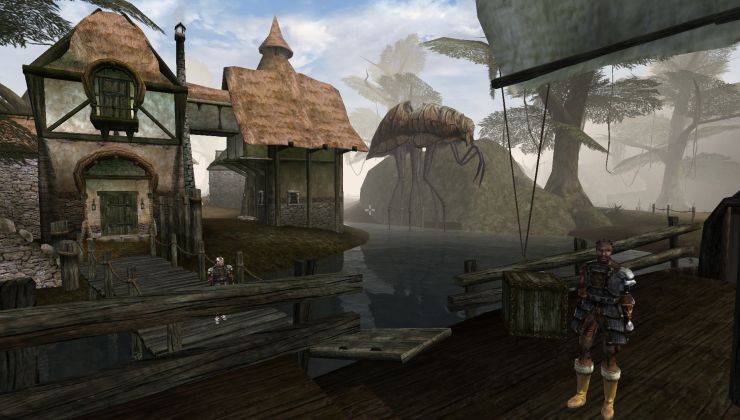 How to setup OpenMW for modern Morrowind on Linux / SteamOS and Steam Deck
 How to install Hollow Knight: Silksong mods on Linux, SteamOS and Steam Deck