 Support us on Patreon
 PayPal
Latest Comments by Purple Library Guy
The EU is going after Valve and others for "geo-blocking", a statement from Valve
5 Apr 2019 at 9:34 pm UTC Likes: 5
But it seems to me that there are big economic problems around the Euro and the way it is administered. Well, problems to most, and particularly some of the poorer countries--advantages to bankers, particularly German ones. Look how much they squalled when Iceland refused to take on its banks' private debts when they went under! EU policy on deficits, for instance, is basically designed to worsen economic downturns. And it's very hard to reform such policies because the main EU institutions are completely undemocratic; the parliament has relatively little power. It's also very bad for a country's economy not to be able to print money, devalue its currency and otherwise control its economy. The EU seems to be generally dedicated to the gradual destruction of the European welfare states in the countries that have them, and to making it impossible to establish them in the countries that don't. The administration of the EU is not, in short, politically neutral--rather, it is neoliberal and austerity oriented.
I suspect that progress towards the EU becoming a genuine country is and will remain something of a mirage. There will be movements to tie the countries closer together in some ways, but most of the things that could make it a genuine country run counter to the policy imperatives of the EU. They're more into privatizing than nation-building.
5 Apr 2019 at 9:34 pm UTC Likes: 5
Quoting: KimyrielleThe EU is in that fuzzy "not yet a nation, but not individual states anymore either" state. It's written goal actually IS full confederation one day. It's taking a while, because there are too many dumbass nationalists around that don't understand the "the sum is greater than its parts" thing.The EU does some good things. It acts as a really effective standards body, which can be annoying to some but is probably on balance a significant positive. And the standardization on the Euro does reduce certain costs and frictions.
People that defend that disgusting corporate practice of having no problem with moving your jobs to cheaper regions, but charging you prices as if the thing had been made in a high-wage country fail to understand that for the practice of trade the EU -is- one nation already. Goods, money, ideas and people can move absolutely freely inside the EU and did so for decades, so banning regional price discrimination is just a logical step. Nothing more, nothing less. Our our side of the pond, we don't allow corporations to block someone living in Texas from shopping in North Dakota either. Same thing.
But it seems to me that there are big economic problems around the Euro and the way it is administered. Well, problems to most, and particularly some of the poorer countries--advantages to bankers, particularly German ones. Look how much they squalled when Iceland refused to take on its banks' private debts when they went under! EU policy on deficits, for instance, is basically designed to worsen economic downturns. And it's very hard to reform such policies because the main EU institutions are completely undemocratic; the parliament has relatively little power. It's also very bad for a country's economy not to be able to print money, devalue its currency and otherwise control its economy. The EU seems to be generally dedicated to the gradual destruction of the European welfare states in the countries that have them, and to making it impossible to establish them in the countries that don't. The administration of the EU is not, in short, politically neutral--rather, it is neoliberal and austerity oriented.
I suspect that progress towards the EU becoming a genuine country is and will remain something of a mirage. There will be movements to tie the countries closer together in some ways, but most of the things that could make it a genuine country run counter to the policy imperatives of the EU. They're more into privatizing than nation-building.
The EU is going after Valve and others for "geo-blocking", a statement from Valve
5 Apr 2019 at 9:02 pm UTC Likes: 1
(Uh, I fear I'm drifting off topic here. I'll spoilerize this)
5 Apr 2019 at 9:02 pm UTC Likes: 1
Quoting: FirearmsUnitedYou're all doing it wrong. Let me explain this from a very simple economist point of view:It is perhaps worth pointing out that the rationale for modern globalized free trade is fairly explicitly based on Ricardo's theory of comparative advantage. But there are problems with that:
I don't know how old or young most of you are but the older ones among us will remember how almost all the big companies, especially those that used manual labour or first level it-support, moved to eastern Europe or even further to India, China, Taiwan, and so on, forcing many long time employees into unemployment.
Our politicians and the media called this "globalisation". They told us that this is inevitable and that we must adapt to it. Still it will benefit us all in the long run because the same way how work force can be bought and sold globally for the best price, we the consumer will also profit from lower prices because we as well are allowed to buy and sell goods from all over the world for the lowest price possible.
(Uh, I fear I'm drifting off topic here. I'll spoilerize this)
Spoiler, click me
First, Ricardo's theory of comparative advantage assumes that capital is not mobile, whereas "free trade" globalization is in fact as much about free investment as about trade, and is very explicitly premised on capital being mobile. As soon as investment moves around the world, Ricardo's math falls apart. So for instance, if you have two countries, we'll call them "country crap" and "country awesome", and two products, A and B. If country crap is half as efficient at making product A, but 80% as efficient at making product B, compared to country awesome, under Ricardo country awesome should specialize in making product A and trade with country crap to get product B even though country crap is still not as good at making product B--because country crap still has a comparative advantage at product B. This holds as long as country crap has local investment funds that will stay in country crap and have to be invested in something. But, if investment can just flow from country crap to country awesome, the result is that all the investment should go to country awesome and country crap should make . . . nothing, and country crap's citizens should buy all their products from country awesome until they starve because they aren't making any money. The pursuit is not of comparative, but absolute, advantage.
Clearly from the point of view of the public good in country crap, this kind of free trade does not produce a lot of advantages. They would be better off erecting trade barriers to keep production at home, or at least investment barriers to block capital flight so that local capitalists would have to invest in local production. Not that the latter is easy to do . . .
Second, the basic idea behind comparative advantage, like much economics but particularly neoclassical, assumes a timeless present, or at least a country having eternally static characteristics. But generally, no country has an eternal comparative advantage or disadvantage at making manufactured (and other technological) goods. Stuff like that applies to bananas, which Hawaii is always going to be better at than Canada unless global warming really gets out of control. With manufactured goods, it is possible for countries to gain efficiency at doing it until they have an advantage against other countries they previously had a disadvantage against. However, gaining efficiency at manufacturing production is best accomplished through the co-ordinated use of protectionist measures. The United States immediately post-revolution successfully used a raft of protectionist measures to nurture local manufacture away from British competition. Ricardo's arguments about the superiority of free trade were in part a colonialist argument dedicated to blocking economic development in colonies. It is no accident that there were often much more explicit blockages on competition from colonies--many Caribbean colonies, for instance, were explicitly banned from producing most manufactured goods, from cloth to nails, so they would be forced to import them from the colonizing country. India had similar bans under the Raj.
Finally, all else being equal, with machinery, regulations, transportation, taxation et cetera all costing the same, investment will go to wherever wages are lowest if there are no barriers, because lower wages is higher profits. From the point of view of investment, this is an advantage, or higher "efficiency". In the long run it is possible to maintain higher wages than, say, Bangladesh's, only by trade barriers. And since the difference is all about higher percentages of the selling price going to profit, less to employees, the lower prices will never ultimately make up for the lower wages.
Clearly from the point of view of the public good in country crap, this kind of free trade does not produce a lot of advantages. They would be better off erecting trade barriers to keep production at home, or at least investment barriers to block capital flight so that local capitalists would have to invest in local production. Not that the latter is easy to do . . .
Second, the basic idea behind comparative advantage, like much economics but particularly neoclassical, assumes a timeless present, or at least a country having eternally static characteristics. But generally, no country has an eternal comparative advantage or disadvantage at making manufactured (and other technological) goods. Stuff like that applies to bananas, which Hawaii is always going to be better at than Canada unless global warming really gets out of control. With manufactured goods, it is possible for countries to gain efficiency at doing it until they have an advantage against other countries they previously had a disadvantage against. However, gaining efficiency at manufacturing production is best accomplished through the co-ordinated use of protectionist measures. The United States immediately post-revolution successfully used a raft of protectionist measures to nurture local manufacture away from British competition. Ricardo's arguments about the superiority of free trade were in part a colonialist argument dedicated to blocking economic development in colonies. It is no accident that there were often much more explicit blockages on competition from colonies--many Caribbean colonies, for instance, were explicitly banned from producing most manufactured goods, from cloth to nails, so they would be forced to import them from the colonizing country. India had similar bans under the Raj.
Finally, all else being equal, with machinery, regulations, transportation, taxation et cetera all costing the same, investment will go to wherever wages are lowest if there are no barriers, because lower wages is higher profits. From the point of view of investment, this is an advantage, or higher "efficiency". In the long run it is possible to maintain higher wages than, say, Bangladesh's, only by trade barriers. And since the difference is all about higher percentages of the selling price going to profit, less to employees, the lower prices will never ultimately make up for the lower wages.
The EU is going after Valve and others for "geo-blocking", a statement from Valve
5 Apr 2019 at 6:17 pm UTC Likes: 4
I'm not sure of my position on this, but using actual countries as an analogy to the EU is a poor argument for whichever side and as a side effect leads to a misunderstanding of the nature of the EU.
5 Apr 2019 at 6:17 pm UTC Likes: 4
Quoting: KithopGeo-blocking is BS, so for once the EU is in the right of it with their demands.But the EU isn't a single country. It does not act fiscally, budgetarily, or in terms of many regulations, like a single country. It does not have EU-wide public pension plans paying the same amount across the region, it does not have EU-wide minimum wage laws, it does not have EU-wide unemployment insurance, it does not have payments moving between wealthier and poorer states to try to equalize their economic situation (if anything the reverse--it has EU-mandated rules redistributing the wealth of poorer states to the banks of richer ones). In the absence of these sorts of fiscal provisions to pull the economy of the region together, the Euro actually tends to broaden economic disparities in the Eurozone by worsening the economies of the poorer states, because it deprives them of a lot of fiscal tools needed more by the poorer states that go with control over one's own currency. Like devaluation to encourage exports, and stuff.
In Canada, the price for a game is the same across the country, whether you're in Ontario or the Yukon (barring GST/PST/HST differences, similar to VAT).
In the US, same deal - it doesn't matter what state you're in, the price of a game is the price of that game.
The article lists some EU member states in the Eurozone and some that aren't - sure, the requirement for currency exchange tends to mean there are winners and losers on the price difference... but isn't the point of the EU the whole 'single market' thing? So set the price of a game in Euro, let non-Eurozone-but-still-EU members buy it for whatever that converts to in their local currency, and otherwise treat the EU as a single 'country'.
I'm not sure of my position on this, but using actual countries as an analogy to the EU is a poor argument for whichever side and as a side effect leads to a misunderstanding of the nature of the EU.
Cats Fly Helicopters from Flippfly (Race The Sun) announced, some comments on Linux support
4 Apr 2019 at 4:27 pm UTC Likes: 9
4 Apr 2019 at 4:27 pm UTC Likes: 9
So it's about cats . . . doing work?! Wow, quite the imagination these people have.
Risk of Rain 2 works very nicely on Linux thanks to Steam Play, it's also pretty crazy
3 Apr 2019 at 4:42 pm UTC Likes: 3
3 Apr 2019 at 4:42 pm UTC Likes: 3
Risk of Rain, huh? I'm from Vancouver; that title sounds way too much like real life.
After failing Kickstarter funding, the Football-focused city builder Road to your City is now on Steam
2 Apr 2019 at 3:57 pm UTC
. . . But, what if your success on the pitch turns out to be evitable?
Request funding, huh? That's a realistic thing you don't see much in city simulators: Lobbying the federal government for funds!
2 Apr 2019 at 3:57 pm UTC
use your inevitable success on the pitch to attract new supporters.Build a better football team and the world will beat a path to your door.
. . . But, what if your success on the pitch turns out to be evitable?
Request funding, huh? That's a realistic thing you don't see much in city simulators: Lobbying the federal government for funds!
Woops - Valve accidentally put up the Valve Index, Base Station and Controllers unfinished store pages
1 Apr 2019 at 10:07 pm UTC Likes: 4
1 Apr 2019 at 10:07 pm UTC Likes: 4
There's something sorta "Star Wars" looking about it.
Valve have now officially teased their own VR headset with Valve Index
1 Apr 2019 at 9:26 pm UTC Likes: 1
1 Apr 2019 at 9:26 pm UTC Likes: 1
Quoting: aokamiAre they? The other day a co-worker who has no involvement with Linux was snarking about the Epic store, saying it was a joke and had like 20 games.Quoting: SolitaryWell, hopefully it's gonna be cheap, with Steam they can make money later with people buying VR games. VR needs to be more common to flourish, so it wouldnt make sense to keep it expensive hobby. Price of admission will go down with every VR generation.They are still facing a lot of publishers switching to Epic store. So money might not be so great lately. :(
(Hence so much effort to get both Linux and VR on tracks so they become leader of a new huge market.) IMHO
Tropico 6 releases today with Linux support from Limbic Entertainment and Kalypso Media
29 Mar 2019 at 8:07 pm UTC
29 Mar 2019 at 8:07 pm UTC
Catchy music on that trailer.
Valve just released a big Steam Play update with Proton now based on Wine 4.2 & more
27 Mar 2019 at 7:14 pm UTC
27 Mar 2019 at 7:14 pm UTC
Quoting: GuestMy guess is it won't be that much of a problem because Valve will take care of the regressions and older versions will be less necessary. Eventually they will be able to phase them out as you suggest. But it would take an awful amount of work to QA all those games and if they restricted Proton to the game they whitelisted themselves there would be an uproar.Welllll . . . I would expect there will always be a few regressions when a new version comes out; that seems to be the way of all software. So there will be a use for a couple versions back. But it's not totally unrealistic to hope there won't be really long-lasting regressions, so that there won't be any need for versions from years previous.
- AMD say the Steam Machine is "on track" for an early 2026 release
- GOG did an AMA and here's some highlights - like how they'll continue using generative AI
- Epic Games Store saw a 57% increase in purchases for third-party PC games in 2025
- Firefox will get AI controls to turn it all off
- Civilization VII major update "Test of Time" will stop the forced civ swapping
- > See more over 30 days here
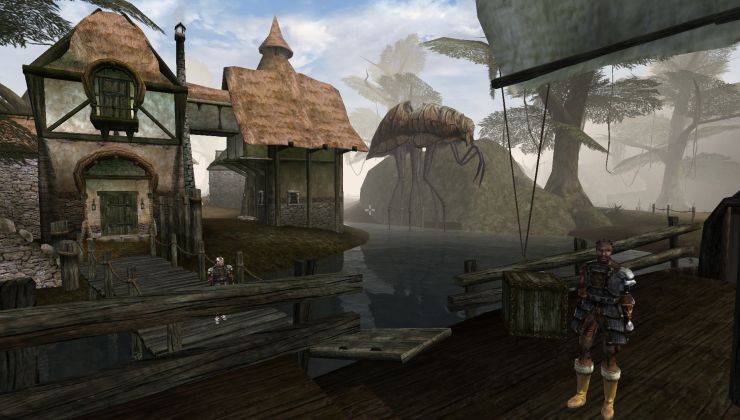 How to setup OpenMW for modern Morrowind on Linux / SteamOS and Steam Deck
 How to install Hollow Knight: Silksong mods on Linux, SteamOS and Steam Deck
- Help! Steam ignoring gamepad
- JSVRamirez - Weird thing happening with the graphics
- Ehvis - New Desktop Screenshot Thread
- scaine - Is it possible to have 2 Steam instances (different accounts) at …
- mr-victory - I need help making SWTOR work on Linux without the default Steam …
- WheatMcGrass - See more posts