 Support us on Patreon
 PayPal
Latest Comments by Purple Library Guy
Google announce ‘Stadia’, their new cloud gaming service built on Linux and Vulkan
22 Mar 2019 at 2:13 am UTC Likes: 2
22 Mar 2019 at 2:13 am UTC Likes: 2
Quoting: etonbearsThat's quite reassuring. Although yeah, Canada, no matter what the Prime Minister of the day's rhetoric, has a tendency to end up doing a lot of things the American way. BC and Quebec aren't much aligned with US values, but Alberta totally is, a distressing amount of Saskatchewan seems to be, and the big enchilada, Ontario, is in a culture war between US-conservative and Canadian "liberal" values which local Trump-wannabes win all too often. And anyway, what Canadians think doesn't always matter. Although so far we do have significantly better copyright law, despite a lot of pressure to go full DMCA.Quoting: Purple Library GuyPerhaps, but it seems like more like Political ( big P ) footballs that are being kicked around in the wrong Stadia ( OK, I'll stop that :) ).Quoting: etonbearsDebate and discussion of the term as used by Shmerl has been extremely widespread for a number of years. Even if it's used differently elsewhere, it's probably not used nearly as much your way overall because your sense is more technical and less controversial in its implications, so probably just less talked about. So you shouldn't be surprised if Shmerl's is the sense people expect. And if you think it's going to stay limited to the US, well, maybe, but I've sure noticed that nasty practices often start in the US and are then exported to much of the rest of the world through trade agreements and by the same interests elsewhere latching onto the American example to make their greed respectable.Quoting: ShmerlYou are adopting the narrow view of "network neutrality as monopolist tool" popular in the United States.Quoting: etonbearsWhich is one argument against net neutrality - you can't guarantee the quality of service you think you are paying for.Network congestion due to load is not an argument against net neutrality. Net neutrality is about preventing deliberate traffic discrimination (such as for anti-competitive purposes). Managing the network due to congestion is fine according to the concept of net neutrality. Mind you, something like data caps is not a network management tool, it's users fleecing, anti-competitive trash. Limiting bandwidth when network is overloaded though is a legitimate network managing technique.
I do think that public provision would be a good idea. The internet is infrastructure; infrastructure works well public.
It's unlikely that countries in the European Union would be "infected" by bad network practices of the sort some Americans fear, as the Competition Commission has a good record at acting on complaints concerning poor behaviour. Most countries here also have regulatory frameworks that work, more or less in the general interest of everyone.
Even the UK, which is much closer that any other EU country to American Ideals, really isn't all that similar. We have our own brands of loonies trying to impose their ill-informed worldviews on us, like most countries, but they don't really resonate with US groups.
I'd have to say that in Canada, neither BC nor Quebec ( the provinces I have visited ) seemed much aligned with US values, and your current administration doesn't exactly seem to idolise its US counterpart; but I suppose Canada might be the most likely domino because of co-location and economic pressure, so I can see your concerns might be more aligned with US sentiments.
Google announce ‘Stadia’, their new cloud gaming service built on Linux and Vulkan
21 Mar 2019 at 7:00 pm UTC Likes: 1
I do think that public provision would be a good idea. The internet is infrastructure; infrastructure works well public.
21 Mar 2019 at 7:00 pm UTC Likes: 1
Quoting: etonbearsDebate and discussion of the term as used by Shmerl has been extremely widespread for a number of years. Even if it's used differently elsewhere, it's probably not used nearly as much your way overall because your sense is more technical and less controversial in its implications, so probably just less talked about. So you shouldn't be surprised if Shmerl's is the sense people expect. And if you think it's going to stay limited to the US, well, maybe, but I've sure noticed that nasty practices often start in the US and are then exported to much of the rest of the world through trade agreements and by the same interests elsewhere latching onto the American example to make their greed respectable.Quoting: ShmerlYou are adopting the narrow view of "network neutrality as monopolist tool" popular in the United States.Quoting: etonbearsWhich is one argument against net neutrality - you can't guarantee the quality of service you think you are paying for.Network congestion due to load is not an argument against net neutrality. Net neutrality is about preventing deliberate traffic discrimination (such as for anti-competitive purposes). Managing the network due to congestion is fine according to the concept of net neutrality. Mind you, something like data caps is not a network management tool, it's users fleecing, anti-competitive trash. Limiting bandwidth when network is overloaded though is a legitimate network managing technique.
I do think that public provision would be a good idea. The internet is infrastructure; infrastructure works well public.
AMD have launched an update to their open source Radeon GPU Analyzer, better Vulkan support
21 Mar 2019 at 5:47 pm UTC Likes: 1
21 Mar 2019 at 5:47 pm UTC Likes: 1
I notice there a mention of Vulkan, and a mention of DirectX11, but no DirectX12. Hmmm . . .
Counter-Strike: Global Offensive now has much better queue times for Danger Zone
21 Mar 2019 at 5:44 pm UTC
21 Mar 2019 at 5:44 pm UTC
I wonder if it's making big box-office?
Objects in Space released for Linux on Steam, needs you to disable Steam Play
21 Mar 2019 at 5:42 pm UTC Likes: 1
21 Mar 2019 at 5:42 pm UTC Likes: 1
Quoting: liamdawePlus it's nice to have lots of things on the Whitelist, so a solution that doesn't require taking them off would be good.Quoting: EikeWouldn't removing it from the white list be the way to go (if it works well natively, that is of course)? Those who still would want the Proton version could force it with the available option...That would solve it yes, but we have no idea how long it will take Valve to update the whitelist, even if this time they do it within a day or two, next time if it happens we have to wait a week or longer? Disabling Steam Play is really not a good solution.
*edit* How nice a game from the white list gets natice support (on Steam)...!
Google announce ‘Stadia’, their new cloud gaming service built on Linux and Vulkan
21 Mar 2019 at 5:26 pm UTC
21 Mar 2019 at 5:26 pm UTC
Quoting: MohandevirI might imagine that in a game, (as etonbears points out, without buffering, everything happening in real time) by the time lost packets get re-sent they'd be irrelevant, so it would be better to just ignore them and leave a little fuzz in the picture than to, like, refuse to show the image until it's all complete. That might suggest this UDP thing. But I don't know anything about this, I'm just trying to do logic from too little data.Quoting: EhvisAnd still be faster than TCP? Or is it better to go with TCP, in that case?Quoting: MohandevirIs it TCP/IP, UDP or something I haven't heard of? Isn't UDP faster but prone to packet loss thus reducing the quality of the stream?TCP includes the control mechanism to deal with packet loss (detection and resending). For UDP it is up to the application to decide whether to detect it and what to do if something is lost.
Google announce ‘Stadia’, their new cloud gaming service built on Linux and Vulkan
21 Mar 2019 at 5:21 pm UTC Likes: 1
In terms of VR (XR?) I was thinking more that as I understand it, for it to work without messing up people's heads you need really, really low latency. I can imagine streaming working well enough for ordinary games in some places with some ISPs and data plans. But well enough for VR not to feel bad wonky? I seriously doubt it outside maybe South Korea. Mind you, I'm quite unconvinced that the future of gaming is VR. But if it was, it would be damn tough to stream effectively.
21 Mar 2019 at 5:21 pm UTC Likes: 1
Quoting: etonbearsHuh. Somehow I was under the impression that video streams were compressed, and so just how detailed the actual picture was (as opposed to the number of pixels) might be relevant to how compressible it was. But yeah, I guess if they're just dumping all the pixels it doesn't matter what the programs are doing with those pixels. Given the pauses I often experience with simple streamed video I can well imagine streamed games having some problems, but that is a separate issue from the backend power needed to run the games.Quoting: Purple Library GuyThe bandwidth required for graphics stream presentation has historically increased quite slowly. It is proportional to frame rate multiplied by pixels per frame multiplied by bits per pixel. Desired frame rate has remained at about 60 for decades, and bits per pixel for most people has been 24 for decades. That leaves pixel resolution as the main variant, which has risen from 1M pixel screens 30 years ago to 6M pixel screens now. Network bandwidth increase in those 30 years far exceeds the increased requirements of a graphics stream, so if both network and graphics bandwidth trends continue, the streaming itself should reduce as a cause of bottleneck. Even the bandwidth to support binocular XR presentation should not be an issue since the size of XR screens you can put in front of your eyes is physically limited, and the human eye's ability to resolve detail at close range tops out at around 1000 pixels per inch.Quoting: etonbearsFor me, the interesting implication of Stadia is its ability to change the supply side. The Steam survey shows that the average PC gamer does not have particularly good hardware, and this actually limits developers in what they can do and still address a large enough purchase market.Interesting point. Mind you, for most games most of that power would be dedicated to graphics stuff, in which case wouldn't those extra-power-hungry games also be extra-bandwidth-hungry? You could end up trading one bottleneck for another.
If Stadia has nodes with Vega56 GPUs as a minimum, and allows arbitrary combining of nodes to produce output, then the complexity of what developers may produce for Stadia can scale very quickly to the point that you actually could NOT run it on any normally available desktop hardware, let alone the average rig, making traditional sales of such games redundant. That may be why the new Google game studio is suggesting their titles will be exclusive to Stadia.
Of course, however amazing their back-end might be, Google still need to get the right price model, overcome the possible network limitations and avoid their normal habit of turning everything into advertising revenue.
Which in turn makes me wonder about two futures clashing. Imagine the future of gaming is this kind of streaming solution. Now imagine the future of gaming is VR. I don't think it can be both unless someone spends a bunch of billions on last-mile fibre optics.
In contrast, the amount of additional processing power you can put into determining the content of the graphics stream is effectively unbounded, since almost every aspect of current real-time game production is subject to approximation, simplification and deception, in order to fit into the processing 'budget' available.
In terms of VR (XR?) I was thinking more that as I understand it, for it to work without messing up people's heads you need really, really low latency. I can imagine streaming working well enough for ordinary games in some places with some ISPs and data plans. But well enough for VR not to feel bad wonky? I seriously doubt it outside maybe South Korea. Mind you, I'm quite unconvinced that the future of gaming is VR. But if it was, it would be damn tough to stream effectively.
Google announce ‘Stadia’, their new cloud gaming service built on Linux and Vulkan
21 Mar 2019 at 8:08 am UTC Likes: 1
By the way, a lot of posters are quite pessimistic about whether this will result in actual desktop Linux versions. I'm not sure; have to wait and see. Liam has pointed out that if game studios are doing these versions but aren't sure about a desktop version with issues like support and multiple distros, it could be an opportunity for the likes of Feral.
21 Mar 2019 at 8:08 am UTC Likes: 1
Quoting: 14I can also picture myself using the streaming service myself in small quantities. I prefer to be able to play games offline without DRM (thanks, GoG), but I would probably make exceptions. I can't think of any examples off the top of my head, but... OK, I got one. Total War: Warhammer. Why? So I can play the campaign with my Windows friends. It's also not an FPS, so I wouldn't be as concerned about input lag.That is actually a new point. This service would be totally local-system-agnostic for multiplayer. In that sense it would be better than many native desktop ports.
By the way, a lot of posters are quite pessimistic about whether this will result in actual desktop Linux versions. I'm not sure; have to wait and see. Liam has pointed out that if game studios are doing these versions but aren't sure about a desktop version with issues like support and multiple distros, it could be an opportunity for the likes of Feral.
Google announce ‘Stadia’, their new cloud gaming service built on Linux and Vulkan
21 Mar 2019 at 7:58 am UTC Likes: 1
Which in turn makes me wonder about two futures clashing. Imagine the future of gaming is this kind of streaming solution. Now imagine the future of gaming is VR. I don't think it can be both unless someone spends a bunch of billions on last-mile fibre optics.
21 Mar 2019 at 7:58 am UTC Likes: 1
Quoting: etonbearsFor me, the interesting implication of Stadia is its ability to change the supply side. The Steam survey shows that the average PC gamer does not have particularly good hardware, and this actually limits developers in what they can do and still address a large enough purchase market.Interesting point. Mind you, for most games most of that power would be dedicated to graphics stuff, in which case wouldn't those extra-power-hungry games also be extra-bandwidth-hungry? You could end up trading one bottleneck for another.
If Stadia has nodes with Vega56 GPUs as a minimum, and allows arbitrary combining of nodes to produce output, then the complexity of what developers may produce for Stadia can scale very quickly to the point that you actually could NOT run it on any normally available desktop hardware, let alone the average rig, making traditional sales of such games redundant. That may be why the new Google game studio is suggesting their titles will be exclusive to Stadia.
Of course, however amazing their back-end might be, Google still need to get the right price model, overcome the possible network limitations and avoid their normal habit of turning everything into advertising revenue.
Which in turn makes me wonder about two futures clashing. Imagine the future of gaming is this kind of streaming solution. Now imagine the future of gaming is VR. I don't think it can be both unless someone spends a bunch of billions on last-mile fibre optics.
Google announce ‘Stadia’, their new cloud gaming service built on Linux and Vulkan
20 Mar 2019 at 10:27 pm UTC
20 Mar 2019 at 10:27 pm UTC
Quoting: KlaasI'd be starting to pay my ISP extra awfully fast.Quoting: Sir_DiealotSo you are not willing to download 50 GB for a weekend but to download 50 GB for two hours of streaming?If we consider the 25 Mbit/s estimate from a few pages back and 8 hours playing time, you would require approximately 88 GB of traffic. That's insane.
- AMD say the Steam Machine is "on track" for an early 2026 release
- GOG did an AMA and here's some highlights - like how they'll continue using generative AI
- Epic Games Store saw a 57% increase in purchases for third-party PC games in 2025
- Firefox will get AI controls to turn it all off
- Civilization VII major update "Test of Time" will stop the forced civ swapping
- > See more over 30 days here
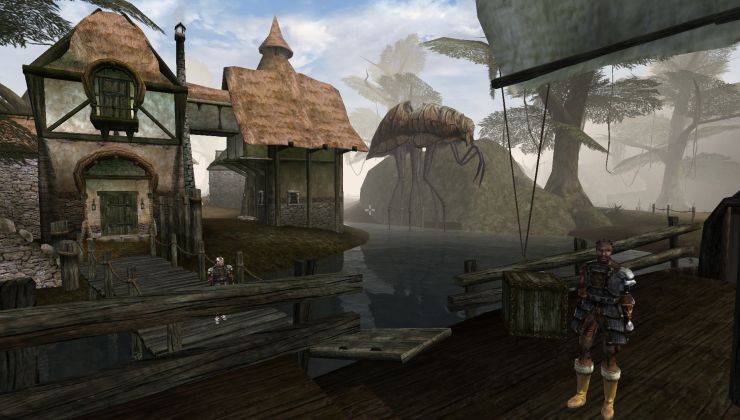 How to setup OpenMW for modern Morrowind on Linux / SteamOS and Steam Deck
 How to install Hollow Knight: Silksong mods on Linux, SteamOS and Steam Deck
- Help! Steam ignoring gamepad
- JSVRamirez - Weird thing happening with the graphics
- Ehvis - New Desktop Screenshot Thread
- scaine - Is it possible to have 2 Steam instances (different accounts) at …
- mr-victory - I need help making SWTOR work on Linux without the default Steam …
- WheatMcGrass - See more posts