 Support us on Patreon
 PayPal
Latest Comments by Glog78
KDE Discover gets update to prevent you breaking your Linux system
21 Nov 2021 at 2:24 pm UTC
21 Nov 2021 at 2:24 pm UTC
Out of the box ->
"with great power comes great responsibility" ... if i am completly under control of my os (from the beginning to end ...) , it's my resposibility to know what i do. If i don't want to have this responsibility i need to give away power.
We should ask ourself do we want to give away power or do we want to handle the responsibility? For Windows / Mac OS / Android / ChromeOS some companies defined how much power you have and therefor how much responsibility. For Linux i guess we should make sure people understand that this is power and not a burden. Some distributions can ease this and take over responsibility , but in the end there is only so much you can do without removing power and freedom.
Some of us might think it's better to give others the responsibility. Many oldschool it people will feel totally uncomfortable , cause we had this vendor lockins. We are currently already going again into vendor lockins. A few of us might still remember IE being shit but the only way to browse the internet. A few of us might remember when all the messenger protocols weren't opensource and you could never use all the "features". A few of us might remember the time, when something as easy as doing a click on windows (multi monitor) was calculating modlines on linux ...
Some of us have gone throu all of this because we believed that the flexibility to make the system exactly how we wanted it to be and being free of vendor lockins was worth all the trouble we had. A few of those guys wrote tools and improved the situation by alot. Being able to plug and play most hardware has been a hell of a ride. (remembering when i needed to compile a fucking kernel during installation to get support for a gfx card -> waves at slackware)
Some of those people say --> be careful .. the most easy way out has been never the best way out and usually makes you do things multiple times.
I personally say -> I can live very well because people have not even a basic understanding how a pc or how tech works today. "Usability" has become an synonym in many cases for "just works". "Just works" has become an synonym for yeah easy to attack. Easy to attack has become a synonym for all the bad experience modern users have on tech. Stolen Data & Datamining , Maleware , identity stealing -> i guess everyone can add something to this list.
If you ever want to break this cycle people need to understand again what is happening on their pc. For me LTT was the worst showcase of why i look happy and unhappy in the future. Happy because damm i can live of that behaivior. Unhappy cause i don't want to know when again a company or a person has so much power over the people like for example microsoft had in the 90's.
I guess noone is against making usage of pc's easier, but i guess alot of people are against letting people use pc's who (added "maybe") should not. There is a reason why we do driving licences (to give just a hint of a comparable powerful device)
"with great power comes great responsibility" ... if i am completly under control of my os (from the beginning to end ...) , it's my resposibility to know what i do. If i don't want to have this responsibility i need to give away power.
We should ask ourself do we want to give away power or do we want to handle the responsibility? For Windows / Mac OS / Android / ChromeOS some companies defined how much power you have and therefor how much responsibility. For Linux i guess we should make sure people understand that this is power and not a burden. Some distributions can ease this and take over responsibility , but in the end there is only so much you can do without removing power and freedom.
Some of us might think it's better to give others the responsibility. Many oldschool it people will feel totally uncomfortable , cause we had this vendor lockins. We are currently already going again into vendor lockins. A few of us might still remember IE being shit but the only way to browse the internet. A few of us might remember when all the messenger protocols weren't opensource and you could never use all the "features". A few of us might remember the time, when something as easy as doing a click on windows (multi monitor) was calculating modlines on linux ...
Some of us have gone throu all of this because we believed that the flexibility to make the system exactly how we wanted it to be and being free of vendor lockins was worth all the trouble we had. A few of those guys wrote tools and improved the situation by alot. Being able to plug and play most hardware has been a hell of a ride. (remembering when i needed to compile a fucking kernel during installation to get support for a gfx card -> waves at slackware)
Some of those people say --> be careful .. the most easy way out has been never the best way out and usually makes you do things multiple times.
I personally say -> I can live very well because people have not even a basic understanding how a pc or how tech works today. "Usability" has become an synonym in many cases for "just works". "Just works" has become an synonym for yeah easy to attack. Easy to attack has become a synonym for all the bad experience modern users have on tech. Stolen Data & Datamining , Maleware , identity stealing -> i guess everyone can add something to this list.
If you ever want to break this cycle people need to understand again what is happening on their pc. For me LTT was the worst showcase of why i look happy and unhappy in the future. Happy because damm i can live of that behaivior. Unhappy cause i don't want to know when again a company or a person has so much power over the people like for example microsoft had in the 90's.
I guess noone is against making usage of pc's easier, but i guess alot of people are against letting people use pc's who (added "maybe") should not. There is a reason why we do driving licences (to give just a hint of a comparable powerful device)
KDE Discover gets update to prevent you breaking your Linux system
21 Nov 2021 at 1:29 pm UTC
21 Nov 2021 at 1:29 pm UTC
Quoting: HolzkohlenWow, some of you actually complain about Linux becoming more user-friendly. How have you not outgrown this edginess? I was like that as a teenager. I cringe hard thinking back on that time. Maybe you should try something more obscure than linux eh? Have you heard about the anti-mainstream super edgy OpenBSD? No apt nor discover you need to worry about. And I guarantee that Linus won't even consider using that ever. How does that sound? :wink:I don't think it becomes more user-friendly with the idea of this change. Every package manager could throw a big red list on your face and say if you proceed you will remove the following packages... Big red and stopping any other input from taking over ... But instead some programmers decide what the user want or not want. That is not in the dna of linux , that is not why you want to use a linux. If you want this go to some of the wallet garden os'es which try to force their decissions on you now for years. Thanks alot for reading.
KDE Discover gets update to prevent you breaking your Linux system
21 Nov 2021 at 1:19 pm UTC
21 Nov 2021 at 1:19 pm UTC
Oh one more headline and view it without the ltt video -> "APT makes it harder to deinstall packages..."
KDE Discover gets update to prevent you breaking your Linux system
21 Nov 2021 at 1:13 pm UTC
21 Nov 2021 at 1:13 pm UTC
Quoting: Guest100% agree with you mirv. In all those talks most people only see that goal that it should be "newbie" safe get more market share. I am sure i didn't change to linux because i wanted a system which does something "newbie" safe. I could have choosen such an OS with mac os or windows. There is some kind of DNA inside of linux which in my eyes prevents it from being streamlined. We call it usually freedom and are about to give up on "freedom" and easy to try for some kind of false "security" idea (imho). If i want another "streamlined" "linux" distribution -> chromeos / android are totally valid alternatives. I guess steamos will fit into the same. Maybe some other distributions will go this road. But changing upstream which have an impact on everyone ... i dunno ... Seeing kde discovery (the one desktop which always wanted to let the user do whatever the fuck they want) go for such a change makes me honestly scared.... If they would have done this change without LTT -> i can see the headline -> "kde discovery forbids user to deinstall kde" and the shitstorm which would had happend would be crazy.Quoting: tuubiI think it was a change that can potentially impact everyone, made without due consideration, all because a youtuber wanted more page views. If distros are going to start doing such things then it can't be a good road to go down, no matter what change is made.Quoting: GuestSo is your only argument against the tiny apt change that it happened too fast? You say it doesn't fix anything, but does it break anything either? Do you actually think the UX is worse now, instead of better?Quoting: SamsaiI still disagree that the apt change was useful. The KDE Discover change, absolutely, but for apt people are still just going to follow something they found online to force modifications without fully understanding it. It's a knee-jerk reaction, and doesn't actually fix anything in my view.Quoting: NociferWell, this change is actually all about completely preventing the package manager from uninstalling essential packages when told to do so, either explicitly or implicitly. What produced the error Linus faced was trying to install a misconfigured package combined with his/the system's failure to first update the package listings before he tried to install it; it's just that this misconfigured package ended up firing apt's "remove essential package" routine and from thereon there was nothing to prevent apt from doing exactly as ordered, beyond that one silly "fail-safe" (which shouldn't ever have been implemented in the first place).I am aware of the scenario. Apt still retains the ability to uninstall essential packages and that counts as having the ability to explicitly order such a removal for me. The only difference is that now the fail-safe mechanism is stronger and will better dissuade users who don't actually know what they are doing.
People making a mountain out of a molehill, as is tradition.
And yes, the more I think on it, the worse the change is. As I wrote - anyone forcing things through by putting in a configuration override (which is almost certainly going to start to be recommended on random internet comments) now won't be warned of potential breakage.
Note that I'm not saying nothing should have been done, I'm instead saying that (in my view) the change wasn't an improvement and doesn't fix anything.
KDE Discover gets update to prevent you breaking your Linux system
21 Nov 2021 at 12:54 pm UTC
21 Nov 2021 at 12:54 pm UTC
Btw the last time someone tried to define what is an essential linux distribution was -> https://en.wikipedia.org/wiki/Linux_Standard_Base [External Link]
Hmm i would guess most currently used distributions aren't per default compatible with the lsb... it also had alot of reasons why this project (from my point of view) basically died.
Hmm i would guess most currently used distributions aren't per default compatible with the lsb... it also had alot of reasons why this project (from my point of view) basically died.
KDE Discover gets update to prevent you breaking your Linux system
21 Nov 2021 at 12:44 pm UTC
21 Nov 2021 at 12:44 pm UTC
Quoting: SamsaiThats exactly why i want to know what will be "essential" in the future ? ... For a "newbie" compatible distribution i would mark all packages essential (to say it very hard). But this distribution won't be able to really let you choose anymore without being "midly" annoying with questions if you really want to do what you want to do and don't allow it on the gui but force you to override something and use the terminal. So i go back to my question above -> how do we determine what is essential and if we have determined what is essential does it really help or does it start to annoy and be contra productive. Also is it good if every package manager frontend now decides on his own what is essential ?Quoting: Glog78[There is only so much you can do to prevent PEBCAK, but on this level I think we had room to push a bit further without any meaningful harm to any existing users, so I don't really understand all the push-back. None of this has ever been about preventing all wrong decisions or making the user learn things they don't want to learn. We are incapable of those things. But what we can do is deploy reasonable measures that make certain classes of stupid mistakes less likely to happen.
So in the end ... the user still needs to decide what he wants and not wants -> if a user can't decide in the first place if something is harmful how can he decide now? Will it stop him from doing harmful things ? Will it help him to understand the dependencies and why they are used ? Will it make him understand what is happen right now ? ... Most likely not and we might become a situation like under windows where user don't check anymore if they get an admin promt at all ... they just click it's fine someone on the internet told me to do so ... I would go so far that since you as someone who want to help can't be sure which packages are blocked by which frontend -> we will tell them to do on the commandline overruling the distribution protection ... Thats why i think we are on a complete stupid path currently ... we don't fix anything but we make it more overhead for people who are able to support those systems.
Also, I don't see how we are increasing the amount of overhead. The vast majority of situations where we support users don't involve removal of essential packages. In fact, regular users who just want to use their computer should be able to do so basically completely without ever worrying about a single essential package. They should only need to lift the veil if they are actually curious. If a user just wants to install Steam, that should never involve the removal of essential packages and we can make sure that doesn't happen either by deploying sanity checks that make sure those kinds of packaging mistakes don't happen or by having sanity checks performed by package managers so that they don't install faulty packages.
KDE Discover gets update to prevent you breaking your Linux system
21 Nov 2021 at 12:39 pm UTC
21 Nov 2021 at 12:39 pm UTC
Quoting: F.Ultrai can say for pacman --> unsatisfied dependencies are nearly impossible to install ...Quoting: Purple Library GuyWell it would happen if you where trying to replace say xfree with xorg or pulse with pipe-wire. Then you would remove what the disto have marked as an essential package and replace it with another which is what the Steam package tried to do here, the main issue of course is that there where no i386 version of the desktop or xorg available so apt replaced it all with nothing.Quoting: NociferBut I do have one question: what if I intentionally do want to remove a "system critical" package like Xorg or my DE - how do I do it if package managers, both GUI and CLI, prevent me from doing so?If you intentionally want to delete something, wouldn't you normally do it by, I dunno, using a "delete something" command of some sort, not by trying to trigger the deletion by installing a package? As far as I know, nobody's done anything to the stuff you do when you're trying to delete things.
And that is something that the apt (and possible also yum/dnf/pacman) devs should take a hard look on, if a package have a hard dependency that requires it to remove packages but where the actual dependency doesn't exist it should straight out refuse to perform the action regardless of any "do as I say".
KDE Discover gets update to prevent you breaking your Linux system
21 Nov 2021 at 12:23 pm UTC
21 Nov 2021 at 12:23 pm UTC
Quoting: SamsaiSo in the end ... the user still needs to decide what he wants and not wants -> if a user can't decide in the first place if something is harmful how can he decide now? Will it stop him from doing harmful things ? Will it help him to understand the dependencies and why they are used ? Will it make him understand what is happen right now ? ... Most likely not and we might become a situation like under windows where user don't check anymore if they get an admin promt at all ... they just click it's fine someone on the internet told me to do so ... I would go so far that since you as someone who want to help can't be sure which packages are blocked by which frontend -> we will tell them to do on the commandline overruling the distribution protection ... Thats why i think we are on a complete stupid path currently ... we don't fix anything but we make it more overhead for people who are able to support those systems.Quoting: Glog78Ok very slowly ... if someone of you can tell me how you want to solve the problem which programs are essential to a user in the user environment i would agree with this solution. Here again some question which might make it more obvious from a "scenario" which can happen:The questions you present are edge cases that might not be solved by the existing solution, but that doesn't negate the value of the solution. But sure, I'll take a stab at the issues.
Quoting: Glog78If someone removes Network Manager -> is this package essential with systemd networkd still being around or not ?If a user explicitly removes Network Manager, there is no issue. The package manager may employ some fail-safe mechanisms to dissuade users from uninstalling it, since it can be vital for the existence of networking, but when the user explicitly orders the removal of NM then that becomes their problem. No user-level application should be able to uninstall Network Manager as part of its dependency resolution process, particularly if NM is active.
Quoting: Glog78Question 2 to make it hard -> if one distribution says it is essential and the other says it isn't -> what would you as an developer of a none distribution package choose as an answer ? (in this case kde discover?)Make the best and probably most conservative decision the default, provide mechanisms for distributions to provide better information about which packages to consider essential. Since Discover uses the distribution's package management tools underneath, we can probably defer some responsibility to the underlying tools.
Quoting: Glog78Question 3 to make it completly lost -> what if the user wants to exchange network manager against wicd ?If two packages provide roughly equivalent functionality which would cause them to conflict at installation time, then I would be okay with the user being able to swap one essential package for another if the user has explicitly ordered an installation of that essential package. Package managers already exist which allow one package to cover other packages as dependencies. For example, the pipewire-pulse package provides the pulseaudio dependency under Arch Linux, allowing you to fairly seamlessly switch between the two without breaking the dependencies of all applications that depend on Pulseaudio. We could also decide to require satisfying the fail-safe mechanism in this instance, since switching from NM to wicd is a fairly niche use-case and people that would actually want to knowingly do that can probably figure out what they need to do to accomplish it. Alternatively, we could simply say that NM and wicd should not conflict in the first place and have the issue be resolved on service management level. I've got Network Manager installed in parallel with systemd-networkd, but I simply have the NetworkManager service disabled.
So, really, none of these scenarios is somehow impossible to overcome and solving these three arbitrary scenarios isn't even a requirement for the existing solution to be valid.
KDE Discover gets update to prevent you breaking your Linux system
21 Nov 2021 at 12:11 pm UTC Likes: 1
kdiscovery considers kate to be an essential part for editing text
gnome software center considers gedit to be an essential part for editing text
..... (you see a pattern here)
Now the question ->
What is the essential part of editing on the distribution for the package manager ?
21 Nov 2021 at 12:11 pm UTC Likes: 1
Quoting: NociferWhile i understand the arguments i still want to ask a question here too:Quoting: Glog78So KDE Discover now prevents you to deinstall kde plasma but you can go on and deinstall xfce or gnome which might used on a second user of this pc ? (Linus usecase ->) He doesn't liked dolphin as far as i got it and used another filemanager which can be in this scenario still be deinstalled ...Ah yes, that's another point I read and wanted to reply to but then forgot, so I'll reply to this instead: IMHO it makes absolute sense for a GUI tool that is part of a GUI family of packages and is not meant to work on its own to actually prevent you from uninstalling said GUI family of packages, including itself.
If you really want to uninstall your DE (or other GUI-related stuff like Xorg) you should be doing so via CLI, i.e. a tool/environment independent of your DE, in the same way that e.g. reformatting your root should be done via a second system independent of your root device.
Regarding Gnome or XFCE, they're just non-essential packages from the point of view of an active KDE environment.
kdiscovery considers kate to be an essential part for editing text
gnome software center considers gedit to be an essential part for editing text
..... (you see a pattern here)
Now the question ->
What is the essential part of editing on the distribution for the package manager ?
KDE Discover gets update to prevent you breaking your Linux system
21 Nov 2021 at 11:50 am UTC Likes: 1
21 Nov 2021 at 11:50 am UTC Likes: 1
Quoting: SamsaiOk very slowly ... if someone of you can tell me how you want to solve the problem which programs are essential to a user in the user environment i would agree with this solution. Here again some question which might make it more obvious from a "scenario" which can happen:Quoting: Glog78I think we should discuss those solutions not agree to them by default or hype them. All what we have currently presented is in my eyes just "acitvism" which in the end we all might more suffer than win.I agree with the solution because I see no obvious flaw that would lead to harm. The solutions implemented in Discover and apt seem to address a real, although somewhat niche, problem. They don't measurably increase complexity nor do they meaningfully harm usability, because the protection essentially only applies in situations where things are likely starting to go wrong already.
I've yet to see a convincing argument against the current implementation. The only arguments I've seen is that this somehow negatively affects the ability to tinker, which it doesn't, or that it doesn't solve every problem in the problem space of problems. It would be great if Discover and apt updates solved the world hunger, but I think expecting them to do that is maybe a bit unreasonable.
I don't know what to do with that activism comment. You seem to be vaguely gesturing at some sort of a slippery slope, but all I am seeing is developers looking at a problem and writing a small fix to prevent it from happening. I guess we could consider this activism of some kind, but that probably makes an activist of all of us programmers.
Quoting: Glog78...
If someone removes Network Manager -> is this package essential with systemd networkd still being around or not ?
Just a question :)
Question 2 to make it hard -> if one distribution says it is essential and the other says it isn't -> what would you as an developer of a none distribution package choose as an answer ? (in this case kde discover?)
Question 3 to make it completly lost -> what if the user wants to exchange network manager against wicd ?
- The "video game preservation service" Myrient is shutting down in March
- Discord delay global rollout of age verification to improve transparency and add more options
- Firefox 148.0 arrives with AI controls
- FINAL FANTASY VII arrives on GOG with a new edition live on Steam too
- SpaghettiKart the Mario Kart 64 fan-made PC port gets a big upgrade
- > See more over 30 days here
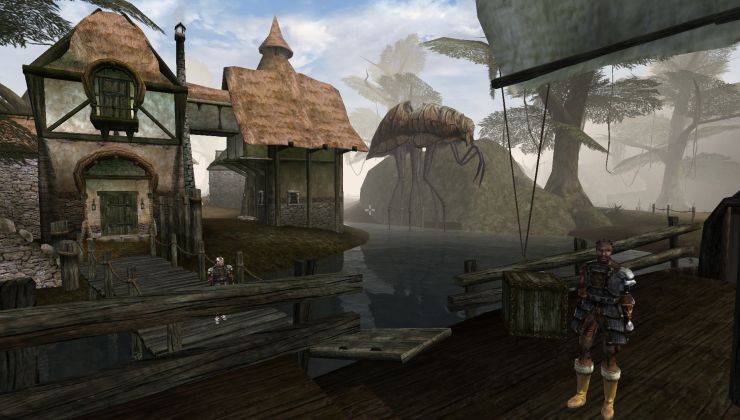 How to setup OpenMW for modern Morrowind on Linux / SteamOS and Steam Deck
 How to install Hollow Knight: Silksong mods on Linux, SteamOS and Steam Deck
- steam overlay performance monitor - issues
- Xpander - Nacon under financial troubles... no new WRC game (?)
- Xpander - Establishing root of ownership for Steam account
- Nonjuffo - Total Noob general questions about gaming and squeezing every oun…
- GustyGhost - Looking for Linux MMORPG sandbox players (Open Source–friendly …
- Jarmer - See more posts