 Support us on Patreon
 PayPal
Latest Comments by slaapliedje
DOSBox Staging has a rather large new release out with 0.76.0
5 Dec 2020 at 4:36 am UTC Likes: 1
5 Dec 2020 at 4:36 am UTC Likes: 1
Quoting: dreamer_Holy crap! No wonder there are several forks. And people whine that there hasn't been a version bump for Xorg.Quoting: jensVery cool, thanks for the hard work and cool to see dosbox (staging) moving forward!Yes, it's on our roadmap for 0.77.0 [External Link].
3dfx support is still work-in-progress right? (Not that 3dfx is super essential, the other changes are way more important)
Quoting: slaapliedjeIt's been a LONG time since dosbox mainline had a proper new release.10.5 years since last major release (0.74) and 15 months since last tiny security bugfix (0.74-3)…
DOSBox Staging has a rather large new release out with 0.76.0
4 Dec 2020 at 7:52 pm UTC
It's been a LONG time since dosbox mainline had a proper new release.
4 Dec 2020 at 7:52 pm UTC
Quoting: BladeforceI hadn't heard of Dosbox ECE, but DosBox-X does as well, but unfortunately you have to compile it yourself in Linux (unless maybe Arch has an PKGBUILD for it or something, I had to build it for Debian / Pop_OS) because the flatpak doesn't include some x11 libs, so menus don't work.Quoting: jensVery cool, thanks for the hard work and cool to see dosbox (staging) moving forward!Dosbox ECE has DOS 3dfx game support
3dfx support is still work-in-progress right? (Not that 3dfx is super essential, the other changes are way more important)
It's been a LONG time since dosbox mainline had a proper new release.
GeForce RTX 3060 Ti arrives December 2, hits RTX 2080 SUPER level performance
4 Dec 2020 at 7:04 pm UTC
What I was saying is that installing them ARE supported You just don't WANT to have to install newer kernels unless you really need something in the new kernel, that was my point. The whole 'meh, let's swap out the kernel' should be more of a 'holy shit, you're forced to get a new kernel because you want a new GPU?' It should be like any other platform, you update the driver for newer card support, you shouldn't have to update your whole kernel. Not everyone can just do that, like if they have a workstation where they are tied to a specific kernel for business case (like nessus won't accept anything but the kernel version string to certify it's not vulnerable).
Not sure why people don't take such things into account when they say 'just update the kernel'.
But the way nvidia and AMD do it with their proprietary driver is more supportable, as you don't have to muck with new kernels, and they package their own OpenGL/Vulkan libraries. DKMS is the correct way to go here. If your distribution breaks DKMS, that means they didn't test kernel+dkms+driver integration, and that's ON THE DISTRIBUTION, not nvidia or AMD's fault, right?
In the past, different distributions would end up patching flgrx to work with Xorg, or they wouldn't roll out new Xorg or flgrx drivers so as to not cause breakage. Now not all distributions have a large amount of testers / developers working on them, so some hardware support is simply lacking testing, and that could easily cause your system to not boot to a gui. But at least then (if you know what you're doing) you have a chance to try to fix it. A lot of times in the past, Windows would just crash, and safe mode is a pain to try to get a video driver working again....
4 Dec 2020 at 7:04 pm UTC
Quoting: x_wingThey BACKPORT kernels from testing to stable. https://packages.debian.org/buster-backports/linux-image-5.9.0-0.bpo.2-rt-amd64-unsigned [External Link] Also backports for nvidia drivers are also enabled.Quoting: slaapliedjeHow is it unsupported if I install nvidia drivers from the debian repo? Unlike Ubuntu and their Universe / Multi-verse repositories, Debian supports ALL of theirs... one of the reasons Debian is superior.So, installing a new kernel from Debian testing is unsupported but installing Nvidia drivers from testing is supported?
What I was saying is that installing them ARE supported You just don't WANT to have to install newer kernels unless you really need something in the new kernel, that was my point. The whole 'meh, let's swap out the kernel' should be more of a 'holy shit, you're forced to get a new kernel because you want a new GPU?' It should be like any other platform, you update the driver for newer card support, you shouldn't have to update your whole kernel. Not everyone can just do that, like if they have a workstation where they are tied to a specific kernel for business case (like nessus won't accept anything but the kernel version string to certify it's not vulnerable).
Not sure why people don't take such things into account when they say 'just update the kernel'.
Quoting: slaapliedjeI'm not, what I'm implying is that distros don't support AMDGPU Pro drivers within their distribution. Whether that is because they're too hard or because AMD doesn't let them, I haven't looked into. But nvidia clearly does allow distributions to put their drivers in repositories. Simple as that. Have you seen any distribution contain repositories with the proprietary AMD driver? If so, I'd like to know about them, as I haven't seen any. I mean let's hold both companies to the same standard, do they both allow repackaging of their drivers? Or are we stuck with the three distros they support (RHEL, CentOS, Ubuntu)? Even the open source drivers require firmware blobs, so the ones who are happy about that can't be 100% happy.
This just brings up the problem I stated in my last post, neither solution is 100% great. Nvidia just happens to have better distribution support as of right now. Unless you're using a rolling release (as you said, latest kernel) then you're shit out of luck for AMD.
Quoting: x_wingIf you don't want to imply that then you should probably start saying that Nvidia is better supported in your distro and that's it. And you don't need to have a rolling release. You just have to get the latest kernel and Mesa version if and only if you have the latest hardware, something you can do without a rolling release.That's what we're talking about here, if you are going to get the latest hardware, you basically have to upgrade kernel / mesa instead of just letting your distro packages handle it. Debian Sid apparently already has the minimum (kernel 5.9.x and Mesa 20.2+ (may have been 20.1+ that is needed). But that IS a rolling release. Yes they have backports, but you'd have to 'prep' for stable and install that stuff before you pull out your old card and put in the new.
But the way nvidia and AMD do it with their proprietary driver is more supportable, as you don't have to muck with new kernels, and they package their own OpenGL/Vulkan libraries. DKMS is the correct way to go here. If your distribution breaks DKMS, that means they didn't test kernel+dkms+driver integration, and that's ON THE DISTRIBUTION, not nvidia or AMD's fault, right?
In the past, different distributions would end up patching flgrx to work with Xorg, or they wouldn't roll out new Xorg or flgrx drivers so as to not cause breakage. Now not all distributions have a large amount of testers / developers working on them, so some hardware support is simply lacking testing, and that could easily cause your system to not boot to a gui. But at least then (if you know what you're doing) you have a chance to try to fix it. A lot of times in the past, Windows would just crash, and safe mode is a pain to try to get a video driver working again....
GeForce RTX 3060 Ti arrives December 2, hits RTX 2080 SUPER level performance
4 Dec 2020 at 5:53 pm UTC
This just brings up the problem I stated in my last post, neither solution is 100% great. Nvidia just happens to have better distribution support as of right now. Unless you're using a rolling release (as you said, latest kernel) then you're shit out of luck for AMD.
4 Dec 2020 at 5:53 pm UTC
Quoting: x_wingI never said to compile or use a third party. In your distro (Debian), I'm sure that you can download the latest kernel from unstable or experimental repos, just like you do in order to install the latest Nvidia drivers.How is it unsupported if I install nvidia drivers from the debian repo? Unlike Ubuntu and their Universe / Multi-verse repositories, Debian supports ALL of theirs... one of the reasons Debian is superior.
And when I mention "stable", I'm not talking about of what your distro considers stable. Also, in the moment you install the latest Nvidia driver you will also be running an "unsupported" configuration. Getting the latest version of a software implies getting into something not well tested in the distro and this "issue" applies for AMD and Nvidia.
Quoting: slaapliedjeYeah, they're just different, and as you said, sometimes it's just a matter of which distribution you use, on which is supported better. Unless you end up with some sort of AMD Linux distribution where they keep it up to date for future cards and prepares them for their users, then there is no 'perfect' solution at this point. Now maybe if Intel does something amazing with their dedicated GPUs, and makes the drivers compatible, then there'll be a better experience. But even then you'd still be tied to newer Mesa drivers, which is usually the sore point to the AMD ones.
Quoting: x_wingWhy do you imply that AMD must keep up to date their drivers in a distro? You ask for something that not even Nvidia does. If you want to be fair with the proprietary driver status, then you should ask your distro why the don't provide those packages in the repo. And regarding Mesa, the requirement to get the latest version are the same as for Nvidia.I'm not, what I'm implying is that distros don't support AMDGPU Pro drivers within their distribution. Whether that is because they're too hard or because AMD doesn't let them, I haven't looked into. But nvidia clearly does allow distributions to put their drivers in repositories. Simple as that. Have you seen any distribution contain repositories with the proprietary AMD driver? If so, I'd like to know about them, as I haven't seen any. I mean let's hold both companies to the same standard, do they both allow repackaging of their drivers? Or are we stuck with the three distros they support (RHEL, CentOS, Ubuntu)? Even the open source drivers require firmware blobs, so the ones who are happy about that can't be 100% happy.
This just brings up the problem I stated in my last post, neither solution is 100% great. Nvidia just happens to have better distribution support as of right now. Unless you're using a rolling release (as you said, latest kernel) then you're shit out of luck for AMD.
GeForce RTX 3060 Ti arrives December 2, hits RTX 2080 SUPER level performance
4 Dec 2020 at 5:40 pm UTC
This really is the cause of most of the problems with Linux, as the update mechanisms for drivers aren't really a 'thing' when they are all in the kernel. This is why dkms was created, so it could dynamically rebuild new drivers when kernel updates happened. It shouldn't be the other way where you need a whole new kernel version just to support the new hardware. Should be able to dynamically build a kernel module for your existing kernel. Needing extra libraries to be pulled from git, or compiling your own kernel off of kernel.org is so... 1999.
The random code drops by AMD completely explains why we're in this situation. But for now, the AMD vs nvidia decision may end up being simply accessibility to the cards. Seems both are sold out everywhere, but for AMD it's because they're selling so many chips to Sony and Microsoft for consoles, where nvidia is selling theirs to crypto-miners. So kind of a moot point!
4 Dec 2020 at 5:40 pm UTC
Quoting: 3zekielYeah, I think what it really comes down to is there isn't a stable driver model for graphics cards in general. Not even Linux specific, as graphics drivers are for sure the one thing across platforms (except the Mac, which meh) which are constantly having updates. Whether they are new features being added, new support for the next graphics cards, or even just fixing performance in games / applications.Quoting: slaapliedjeNow maybe if Intel does something amazing with their dedicated GPUs, and makes the drivers compatible, then there'll be a better experience. But even then you'd still be tied to newer Mesa drivers, which is usually the sore point to the AMD ones.For the latest Mesa part, this is also an issue of AMD working in "code drops" mode. Which is the typical Silicon's company vision of open source. Every now and then, you drop code. Result is, most often you end up with not well tested code in releases that themselves often come late.
Since Intel works upstream and enable hw much earlier, and usually long before hw availability, you end up with smthg much more robust. Well, not to say you will never have to go to next major version, but it should be much much less frequent, and git should be an absolute rarity thx to that. Next major version is a lesser evil at least, and you can often find semi official ways to get it. It's also included in HWE for ubuntu, and base for Fedora. For centos, well, that will still be a pain for sure. But at least, launch drivers support should be better if you fall on the right release time (that's centos for you ;p ).
This really is the cause of most of the problems with Linux, as the update mechanisms for drivers aren't really a 'thing' when they are all in the kernel. This is why dkms was created, so it could dynamically rebuild new drivers when kernel updates happened. It shouldn't be the other way where you need a whole new kernel version just to support the new hardware. Should be able to dynamically build a kernel module for your existing kernel. Needing extra libraries to be pulled from git, or compiling your own kernel off of kernel.org is so... 1999.
The random code drops by AMD completely explains why we're in this situation. But for now, the AMD vs nvidia decision may end up being simply accessibility to the cards. Seems both are sold out everywhere, but for AMD it's because they're selling so many chips to Sony and Microsoft for consoles, where nvidia is selling theirs to crypto-miners. So kind of a moot point!
GeForce RTX 3060 Ti arrives December 2, hits RTX 2080 SUPER level performance
4 Dec 2020 at 4:34 pm UTC Likes: 1
4 Dec 2020 at 4:34 pm UTC Likes: 1
Quoting: x_wingReally? Swapping kernels out for something you compiled yourself or fetched from some third party seems great to you??Quoting: slaapliedjeHa, I love the argument that it is simpler to swap out a kernel instead of using dkms to automatically compile the driver when there is an automatic kernel update...What is the difficulty of swapping kernels?
Quoting: slaapliedjeIf you are currently up to date on Debian Sid, then the AMD should work out of the box, but of course won't have any features that are in the AMDGPU PRO driver. Whereas with Nvidia cards, you will have to enable non-free repo and install 'nvidia-driver' package. But once you do that, it just works and they keep it well up to date. They don't always get the latest Mesa and sometimes (especially after a stable release) don't have the latest kernel.
Quoting: x_wingThat your distro doesn't provides the latest stable kernel or Mesa packages is problem with your distro. We are talking about of what Nvidia and AMD provides.There really isn't such a thing as 'latest' stable kernel, when you're running a stable distribution such as RH/CentOS, Debian Stable, Ubuntu LTS, etc. Sometimes you just don't want to be running unsupported configurations, which running the 'latest stable' kernel wouldn't be.
Quoting: slaapliedjeThere are plenty of advantages and disadvantages to each method. Neither is entirely better than the other.
In a perfect world, they would just work. Like maybe some sort of auto detection that could hit kernel.org or other once network pops up and looks to see if there is a minimal driver combination to be needed to get Xorg / Wayland running... but I guess we have things like fbdev for that.
Quoting: x_wingNeither is better than the other, but somehow many users says that Nvidia still provides a better driver support.Yeah, they're just different, and as you said, sometimes it's just a matter of which distribution you use, on which is supported better. Unless you end up with some sort of AMD Linux distribution where they keep it up to date for future cards and prepares them for their users, then there is no 'perfect' solution at this point. Now maybe if Intel does something amazing with their dedicated GPUs, and makes the drivers compatible, then there'll be a better experience. But even then you'd still be tied to newer Mesa drivers, which is usually the sore point to the AMD ones.
GeForce RTX 3060 Ti arrives December 2, hits RTX 2080 SUPER level performance
4 Dec 2020 at 4:28 pm UTC Likes: 1
I have been using nvidia for years, and it has pretty much been 'just works'.
4 Dec 2020 at 4:28 pm UTC Likes: 1
Quoting: ShmerlThe funny thing is, that used to be AMD, where their driver didn't work with the latest kernels and didn't work with the latest Xorg, and it'd take them months to fix it. There has only been the recent one with nvidia where that was ever the case, and that was the fault of the Linux kernel as they broke it intentionally.Quoting: slaapliedjeWhereas with Nvidia cards, you will have to enable non-free repo and install 'nvidia-driver' package. But once you do that, it just works and they keep it well up to date.It works, until it doesn't because it's not compatible with the latest kernel which you might need for completely unrelated reason. Leaving you to scratch your head, how to make your other hardware work and have a working Nvidia driver.
So it's clearly not "just works".
I have been using nvidia for years, and it has pretty much been 'just works'.
GeForce RTX 3060 Ti arrives December 2, hits RTX 2080 SUPER level performance
4 Dec 2020 at 4:05 pm UTC Likes: 1
4 Dec 2020 at 4:05 pm UTC Likes: 1
Ha, I love the argument that it is simpler to swap out a kernel instead of using dkms to automatically compile the driver when there is an automatic kernel update...
If you are currently up to date on Debian Sid, then the AMD should work out of the box, but of course won't have any features that are in the AMDGPU PRO driver. Whereas with Nvidia cards, you will have to enable non-free repo and install 'nvidia-driver' package. But once you do that, it just works and they keep it well up to date. They don't always get the latest Mesa and sometimes (especially after a stable release) don't have the latest kernel.
There are plenty of advantages and disadvantages to each method. Neither is entirely better than the other.
In a perfect world, they would just work. Like maybe some sort of auto detection that could hit kernel.org or other once network pops up and looks to see if there is a minimal driver combination to be needed to get Xorg / Wayland running... but I guess we have things like fbdev for that.
If you are currently up to date on Debian Sid, then the AMD should work out of the box, but of course won't have any features that are in the AMDGPU PRO driver. Whereas with Nvidia cards, you will have to enable non-free repo and install 'nvidia-driver' package. But once you do that, it just works and they keep it well up to date. They don't always get the latest Mesa and sometimes (especially after a stable release) don't have the latest kernel.
There are plenty of advantages and disadvantages to each method. Neither is entirely better than the other.
In a perfect world, they would just work. Like maybe some sort of auto detection that could hit kernel.org or other once network pops up and looks to see if there is a minimal driver combination to be needed to get Xorg / Wayland running... but I guess we have things like fbdev for that.
GeForce RTX 3060 Ti arrives December 2, hits RTX 2080 SUPER level performance
3 Dec 2020 at 12:20 pm UTC
3 Dec 2020 at 12:20 pm UTC
Quoting: PJI found recently that Nvidia has a repo for RHEL/CentOS. Though unfortunately they don't seem to have 686 packages, so you can't really get steam to work. Then again, who uses RHEL/CentOS to game?Quoting: x_wingBare in mind that you can use ORCA or PAL along side Mesa OpenGL/Vulkan. Also, not sure what do you mean when you say that Mesa OpenGL is not stable.Honestly - I don't even know what you're talking about. I know just one thing - with Nvidia regular desktop user has OpenGL / Vulkan / CUDA / OpenCL working well out of the box (and sadly no Wayland). With Amd I don't - I need to install AMDGPUPRO.
When I'm talking about mesa opengl is not good for creatives I mean it regularly fails in professional creative apps (Maya, Modo, Substance, Resolve etc). Often those apps don't work at all (with Modo I've been able to report mesa related issues and Modo was tweaked to work with it). Also when I've used amd mesa drivers it was the only time I've encountered hard lockups on Linux.
Quoting: x_wingThat shouldn't be the case. AMDGPU-PRO is normally used in workstation, so a kernel version update is not very common and if the kernel mayor version is updated, the dynamic module will not be required anymore (a.k.a. everything will work out of the box).I agree it shouldn't. But if you're creative it is. If you read my post you'll notice that I've specifically pointed out if you're a regular desktop user and a gamer mesa can be enough.
But if you're getting our of that comfort zone more than often it isn't.
I've managed a workstation with AMDGPU-PRO and I'm just reporting my findings. More than often after a kernel update I had to fix my box by reinstalling the driver. I get it that there may be a way to set it up better, so those won't break that easily / will get rebuilt. But that requires knowledge and setup that a creative / regular user shouldn't have to have. It's really not a way to expand linux user base.
That's the reason why when someone asks me about setting up a linux box for 3d I strongly recommend going with Nvidia despite my reservations about them as a company.
Quoting: x_wingWhich are the "Nvidia officially supported" drivers repos you refer?I mean repos for distros like Ubuntu , OpenSUSE etc... And I don't care whether they're maintained by Nvidia or other organization. I'm just saying that from an average Joe perspective those are easier to handle. You enable the repo and you stop worrying about the driver - and again that it my experience, haven't had any major Nvidia driver related isssues for years.
GeForce RTX 3060 Ti arrives December 2, hits RTX 2080 SUPER level performance
3 Dec 2020 at 9:55 am UTC
3 Dec 2020 at 9:55 am UTC
Quoting: ShmerlThar brings up the question... last time I think I bought a Radeon it was in a laptop (3200 I think) and the time before that they were still ATI... so which board partner do people buy from? I was leaning toward Sapphire myself.Quoting: slaapliedjeI think I've decided I am going to attempt an AMD RX6800 XT as well. The big question is... where can you get one? :PI'm waiting for Sapphire to release their Pulse model of RX 6800 XT. But I don't think it will be available anywhere until next year at least.
- US operating system age verification bill "Parents Decide Act" gets published
- Mozilla announced "Thunderbolt", their open-source and self-hostable AI client
- PlayStation 3 emulator RPCS3 can now auto-configure games for you
- Gaming on Linux with an older GPU levels up with DXVK-Sarek v1.12 bringing major new features
- SDL (Simple DirectMedia Layer) ban AI / LLM code contributions
- > See more over 30 days here
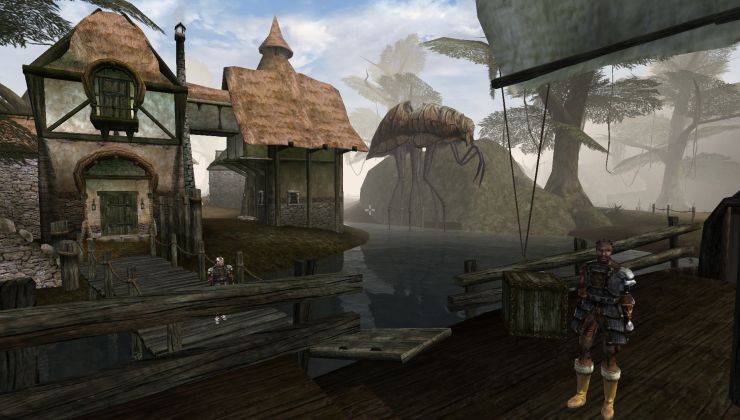 How to setup OpenMW for modern Morrowind on Linux / SteamOS and Steam Deck
 How to install Hollow Knight: Silksong mods on Linux, SteamOS and Steam Deck
- Steam achievement conundrum
- GustyGhost - Testing the VRAM valve patch
- Avehicle7887 - Away all of next week
- Liam Dawe - New Desktop Screenshot Thread
- tmtvl - Shop Crush - Psychological Horror Thrift Sim with Literal Illusio…
- hollowlimb - See more posts