 Support us on Patreon
 PayPal
Latest Comments by slaapliedje
Canonical have listed what 32bit packages they will continue to support through Ubuntu 20.04
19 Sep 2019 at 3:38 pm UTC Likes: 1
Ubuntu's forums were so good because it was the easy Debian for such a long time, and took off really well. I stopped using it once they started diverging from main Debian so much with upstart, then unity, and so on. I wanted to like it again when they dropped Unity and went back to the standard Gnome, but then they started this crap with snaps, and removing a bunch of things out of their repos, so I just go back to Debian that I've been using for a little more than 2 decades.
19 Sep 2019 at 3:38 pm UTC Likes: 1
Quoting: oldrocker99I moved from 11 years of Ubuntu to Manjaro:wub:, so I could have programs which Canonical has, over the years, decided to remove, because science.To be fair to the Arch forums, they do have REALLY good manuals. Probably the best I've seen for any distribution. Debian needs more volunteers to keep theirs up to date, where most of them still only cover distribution releases that are 3 or more older. Debian also has some highly unused forums. But then usually most people running Debian know what they're doing and only occasionally need some advice.
All the software that Canonical:><: has removed from their repos is still available in the AUR. It's also faster than any Ubuntu flavor, running ~20% of the daemons that Ubuntu does, at boot, idle.
And you only need to install it once. After 11 years of installing new versions of Ubuntu, I've finally moved to a rolling release.
You don't get "RTFM" answers for your questions, unlike the rather arrogant Arch forums; it's pretty much like the Ubuntu Forums. Manjaro does test new programs from Arch, so no Win10-like breaking of a system after an update. Besides, it's easy to downgrade a problematic file.
It's as easy to install as Ubuntu, and it is as suitable for rank n00bz as for old hands.
HIGHLY recommended.
Ubuntu's forums were so good because it was the easy Debian for such a long time, and took off really well. I stopped using it once they started diverging from main Debian so much with upstart, then unity, and so on. I wanted to like it again when they dropped Unity and went back to the standard Gnome, but then they started this crap with snaps, and removing a bunch of things out of their repos, so I just go back to Debian that I've been using for a little more than 2 decades.
You may want to hold off on Linux Kernel 5.3 and systemd 243 if you use a gamepad
19 Sep 2019 at 3:33 pm UTC
19 Sep 2019 at 3:33 pm UTC
Wonder if they'll ever fix that weird mapping issue that xbox 360 controllers have (and their clones).
Canonical have listed what 32bit packages they will continue to support through Ubuntu 20.04
19 Sep 2019 at 2:48 am UTC Likes: 1
19 Sep 2019 at 2:48 am UTC Likes: 1
Quoting: RedfaceIt isn't that I believe online trolls, I still see their original post as 'just use snaps'. Because that's exactly what it says. It also says if you have 32bit hardware, sorry bro, move to something else or stick to 18.04 until it's EOL. Granted that's 5 more years, and yes you probably shouldn't be running 32bit hardware at this point, but looking at it from another point of view, they're not vulnerable to the whole speculative execution bullshit :PQuoting: slaapliedjeIt is similar because they wanted to ditch 32 bit outright until everyone threatened to stop using itThat is not true, do not believe online trolls or blog posts based on those. Granted the communication from Canonical could have been a lot better, but much of the controversy was based on misunderstandings or outright lies.
From the original announcement at https://discourse.ubuntu.com/t/intel-32bit-packages-on-ubuntu-from-19-10-onwards/11263/2 [External Link]
Q. Doesn’t Steam use 32 bit libraries? How can I play my games?And if that is not enough look what Valve wrote: https://steamcommunity.com/app/221410/discussions/0/1640915206447625383/ [External Link]
Steam itself bundles a runtime containing necessary 32-bit libraries required to run the Steam client. In addition each game installed via Steam may ship 32-bit libraries they require. We’re in discussions with Valve about the best way to provide support from 19.10 onwards.
It may be possible to run 32 bit only games inside a lxd container running a 32 bit version of 18.04 LTS. You can pass through the graphics card to the container and run your games from that 32bit environment.
Q. How can I run 32-bit Windows applications if 32-bit WINE isn’t available in the archive?
Try 64-bit WINE first. Many applications will “just work”. If not use similar strategies as for 32 bit games. That is use an 18.04 LTS based Virtual Machine or LXD container that has full access to multiarch 32-bit WINE and related libraries.
Q. I have a legacy proprietary 32-bit Linux application on my 64-bit installation. How can I continue running it.
Run an older release of Ubuntu which supports i386, such as 16.04 LTS or, preferably 18.04 LTS in a Virtual Machine or LXD container as above.
There's a lot more to the technical and non-technical reasons behind our concerns, but the bottom line is that we would have had to drop what we're doing and scramble to support the new scheme in time for 19.10. We weren't confident we could do that without passing some of the churn to our users, and it would not solve the problems for third-party software outside of Steam upon which many of our users rely.So they did not like that, and I and many other did not either, but it still would have been possible to run steam and other 32bit programs.
Steam Play gets a small update with Proton 4.11-5 now available
18 Sep 2019 at 8:40 pm UTC
18 Sep 2019 at 8:40 pm UTC
[quote=phalen]
Quoting: BielFPsMake the bad men stop!!Quoting: orochi_kyoIt feels like they're still using just to difficult the life of linux gamers.apparently japan is very windows centric
Roberta, a new Steam Play compatibility tool to play games with a native ScummVM
17 Sep 2019 at 11:21 pm UTC Likes: 1
Either way, MIDI music on these are amazing, if you've got the cash, I highly recommend getting an old fashioned MIDI module :)
17 Sep 2019 at 11:21 pm UTC Likes: 1
Quoting: cprnSo... Steam Play is now a Windows games running platform similar to Lutris? Does Valve support any of the native versions of engines and translation layers other than Proton officially (as in: do any of the runscripts of officially supported Steam Play games run Roberta or Boxtron when you click "Play")?To be fair, these aren't Windows games, but more DOS+other platform games as well. Boxtron covers the DOS games, and ScummVM supports games from a whole lot of platforms. Not sure how many of the games that it supports are actually Windows versions (only a small percentage if I recall).
Either way, MIDI music on these are amazing, if you've got the cash, I highly recommend getting an old fashioned MIDI module :)
Canonical have listed what 32bit packages they will continue to support through Ubuntu 20.04
17 Sep 2019 at 11:14 pm UTC
17 Sep 2019 at 11:14 pm UTC
Quoting: ShmerlNever actually seen it this way, I have seen it the other way where things won't build on 64bit because of machine language and such, but most languages are more abstracted for that, and since the 64bit CPUs are just the extension of the old x86, I can't imagine there being many that are 'we can't compile this on 32bit, but works on 64bit just fine!' unless they start requiring more than 4gb of memory, there is no reason for it.Quoting: slaapliedjeThe dumb thing is these packages are mostly handled by the build system. So there isn't actually a person who manually builds these, they just hit a build server, and you know Debian isn't going to drop 32bit support anytime soon, Ubuntu is just trying to be like Apple.Problems might start creeping in, when upstream (i.e. library developers) will decide, that supporting 32-bit is too much of a burden. It's not as simple as "just build it" usually.
Canonical have listed what 32bit packages they will continue to support through Ubuntu 20.04
17 Sep 2019 at 10:49 pm UTC Likes: 1
17 Sep 2019 at 10:49 pm UTC Likes: 1
Quoting: RedfaceBy the way, the i386 packages and the packages for the 32bit version of the distribution are the same thing, so it is the fault of Ubuntu itself for ditching 32bit supported iso. Debian still supports it (as well as many other architectures) so and Ubuntu just rebuild the Debian packages. So is it REALLY that much more effort for them to continue to do so?Quoting: slaapliedjeThe dumb thing is these packages are mostly handled by the build system. So there isn't actually a person who manually builds these, they just hit a build server, and you know Debian isn't going to drop 32bit support anytime soon, Ubuntu is just trying to be like Apple.The build system is set up to support 32 bit installs on 32bit i386 processors which Debian supports for all distributions, and Ubuntu still for LTS 16.04 and LTS 18.04. But since there is no 32 bit installer for 18.04 or newer and no upgrade path for those on 32 bit processors most 32 bit packages since 18.10 will never be installed by a user.
But they still can fail to build and a maintainer has to look into why.
There are also really many of those. Ubuntu has for now 200 packages on the list, lets say that grows to 500.
I earlier counted 33365 available 32 bit packages on 19.04, so lets say 28000 wasted effort and resources. And Ubuntu always has always around 5 different releases supported or under development, so we now are around 100000 packages build that no one uses.
Apart from maintainer time this uses electricity, storage and bandwidth, which all could be used for something useful instead.
Apple is AFAIK completely disabling running 32 bit programs except from inside virtual machines, and soon there will be no MacOS version left with 32 bit support that still is supported. Ubuntu wants to stop building packages no one uses, and in the future finding another solution for the few hundred packages left that are needed to run all kind of 32 bit programs. But already in the first plan they wanted to make sure users still can run 32 bit programs, the solution for that was still not ready though, so they came up with this plan.
So really not like Apple.
How is that similar?
Canonical have listed what 32bit packages they will continue to support through Ubuntu 20.04
17 Sep 2019 at 10:12 pm UTC Likes: 1
17 Sep 2019 at 10:12 pm UTC Likes: 1
Quoting: RedfaceIt is similar because they wanted to ditch 32 bit outright until everyone threatened to stop using itQuoting: slaapliedjeThe dumb thing is these packages are mostly handled by the build system. So there isn't actually a person who manually builds these, they just hit a build server, and you know Debian isn't going to drop 32bit support anytime soon, Ubuntu is just trying to be like Apple.The build system is set up to support 32 bit installs on 32bit i386 processors which Debian supports for all distributions, and Ubuntu still for LTS 16.04 and LTS 18.04. But since there is no 32 bit installer for 18.04 or newer and no upgrade path for those on 32 bit processors most 32 bit packages since 18.10 will never be installed by a user.
But they still can fail to build and a maintainer has to look into why.
There are also really many of those. Ubuntu has for now 200 packages on the list, lets say that grows to 500.
I earlier counted 33365 available 32 bit packages on 19.04, so lets say 28000 wasted effort and resources. And Ubuntu always has always around 5 different releases supported or under development, so we now are around 100000 packages build that no one uses.
Apart from maintainer time this uses electricity, storage and bandwidth, which all could be used for something useful instead.
Apple is AFAIK completely disabling running 32 bit programs except from inside virtual machines, and soon there will be no MacOS version left with 32 bit support that still is supported. Ubuntu wants to stop building packages no one uses, and in the future finding another solution for the few hundred packages left that are needed to run all kind of 32 bit programs. But already in the first plan they wanted to make sure users still can run 32 bit programs, the solution for that was still not ready though, so they came up with this plan.
So really not like Apple.
How is that similar?
Canonical have listed what 32bit packages they will continue to support through Ubuntu 20.04
17 Sep 2019 at 7:27 pm UTC Likes: 3
17 Sep 2019 at 7:27 pm UTC Likes: 3
The dumb thing is these packages are mostly handled by the build system. So there isn't actually a person who manually builds these, they just hit a build server, and you know Debian isn't going to drop 32bit support anytime soon, Ubuntu is just trying to be like Apple.
Canonical have listed what 32bit packages they will continue to support through Ubuntu 20.04
17 Sep 2019 at 4:48 pm UTC Likes: 4
17 Sep 2019 at 4:48 pm UTC Likes: 4
The ones in the camp of '32 bit has to go anyhow' must not be seeing the big picture. There are tons of binary only software out there that are stuck in perpetuity in 32-bit. Also, you can VERY easily just install 64-bit programs only on your system. Hell Debian doesn't even have 32bit support enabled by default, you have to enable it yourself. So just install a distribution like that, and you can leave us that enjoy having 32 bit compatibility alone.
That said, I have to eliminate Ubuntu from my list of distributions for my '10 Thinkpad' project for LAN games due to their intention to remove 32bit libraries. Might stick with either Solus or Sparky Linux, they seem pretty decent for the task.
That said, I have to eliminate Ubuntu from my list of distributions for my '10 Thinkpad' project for LAN games due to their intention to remove 32bit libraries. Might stick with either Solus or Sparky Linux, they seem pretty decent for the task.
- New US Congress bill proposal requires all operating system providers to verify ages [updated]
- Mozilla announced "Thunderbolt", their open-source and self-hostable AI client
- US operating system age verification bill "Parents Decide Act" gets published
- Dune: Awakening to get self-hosted servers, plus they're splitting PvE and PvP
- Amazon Luna rips out game stores, game purchases and third-party subscriptions
- > See more over 30 days here
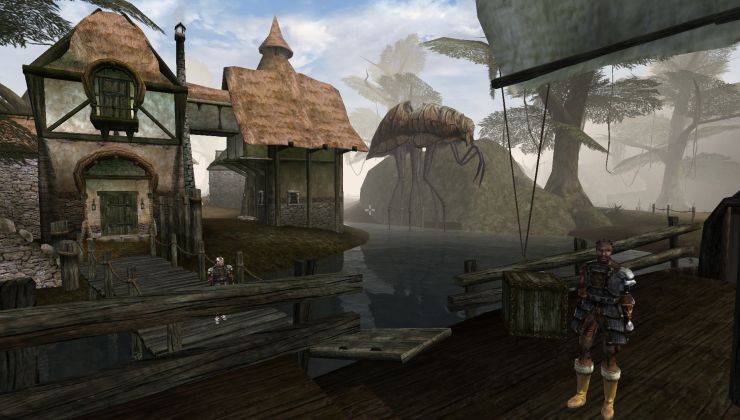 How to setup OpenMW for modern Morrowind on Linux / SteamOS and Steam Deck
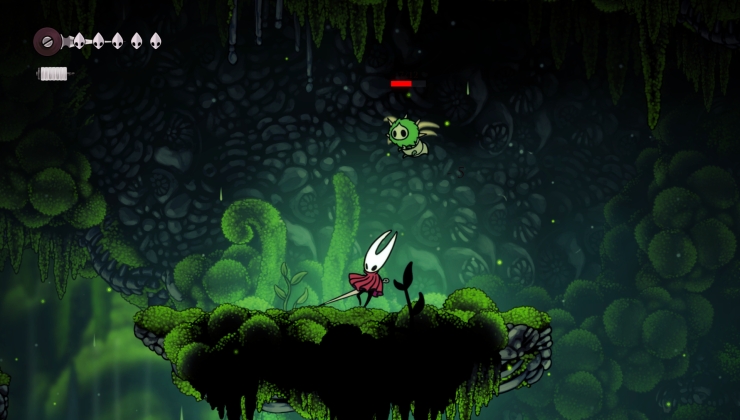 How to install Hollow Knight: Silksong mods on Linux, SteamOS and Steam Deck
Recently Updated
- Away all of next week
- Caldathras - Testing the VRAM valve patch
- Koopa - New Desktop Screenshot Thread
- tmtvl - Shop Crush - Psychological Horror Thrift Sim with Literal Illusio…
- hollowlimb - Proton/Wine Games Locking Up
- Caldathras - See more posts