Latest Comments by ObsidianBlk
The HTC Vive just had a price cut, VR just became a little more accessible
21 Aug 2017 at 4:18 pm UTC
21 Aug 2017 at 4:18 pm UTC
As neither the Oculus nor the Vive supported Linux at the time, I bought the PSVR. I still say, VR is gorgeous and has huge potential (even excluding games) IMHO.
That said, as much as I'd LOVE to get a Vive, it's just still too much! My PSVR sits on a shelf more often than I'd like as it is, I don't need two VR sets doing this... though... I do like playing with WebVR, soooo... *ponders*
That said, as much as I'd LOVE to get a Vive, it's just still too much! My PSVR sits on a shelf more often than I'd like as it is, I don't need two VR sets doing this... though... I do like playing with WebVR, soooo... *ponders*
Out of Reach, a survival game with a pirate theme has Linux support
18 Aug 2017 at 6:38 pm UTC
18 Aug 2017 at 6:38 pm UTC
This game has been around for quite some time. It changed it's name at one point (don't remember what it was called off the top of my head) and, originally, wasn't explicitly pirate themed. I played it briefly, and didn't seem like there was much available to do. Looks nice, though, and could be fun if you have a bunch of friends who all like survival games :)
GamingOnLinux is turning 8 years old soon, here’s what we have planned and some thoughts on 2017
2 Jul 2017 at 2:17 pm UTC
2 Jul 2017 at 2:17 pm UTC
Happy Birthday!!!!
Love this site!
Love this site!
I tried Wurm Unlimited and it was a painful experience
15 May 2017 at 11:33 am UTC Likes: 2
15 May 2017 at 11:33 am UTC Likes: 2
I played this for a couple weeks on a relatively active server... and by active, I mean, there were people in the game, somewhere, even if I rarely saw anyone.
Without wikis or a more experienced player to guide you, this game is nearly impossible to figure out. Best way to start? Forage the grass! Seriously? Better than punching a tree, I suppose.
IF, however, you read the wikis or find that more experienced player, then, WURM can be a relaxing game and you do get a real sense of actually accomplishing something as soon as you start building your first house (which, on the server I was playing on, I was able to start doing within about 4 hours).
My problem with the game (on a server), over all, was two fold...
1) You want much more than a simple house and a little garden, you NEED to play with others in a town. The catch 22 is, you really won't have the skills to help a village until you start building stuff. If you build stuff outside of a village, you will have to give it all up when you join a village, and, therefore, loose all your progress/stuff.
2) Combat is the worst thing I have ever seen! I suck at combat, in most games, so, I expect to loose a lot, but, in WURM, EVERYTHING can kill you out the gate. You start with a sword and shield, but that's meaningless. You're SKILLS for combat just suck. To raise them, you HAVE to fight. You fight, you die. Oh... no healing potions. You get hit, you take wounds which decrease your ability to fight. To heal wounds, you need bandages (at minimum), and they don't instantly heal the wound (beyond the fact you need to tell the system which wound to heal). OH! And when you die, you loose a little of your skills, across all of your skills. Now... you can train with dummys to raise your combat skills... but that uses up a LOT of time and a LOT of resources (the dummies break, you see, and you will either have to constantly repair or replace them).
After two weeks with the game, I loved the crafting! I built a house, a small row boat, had a decent garden, and was feeling rather accomplished... then, I pissed off a crocodile that chased me to my home. It was WAY to strong for me to kill. Worst yet? It doesn't just walk away when aggro is lost. It hangs around. After trying to fight the croc for an hour, I simply logged out for the night, thinking it'd eventually leave. Logged in the next day and IT WAS STILL THERE! When it was still there the second day (with a goblin friend, I might add), I decided that was it for me.
Long story short... LOVE the crafting... LOATH the combat!
Without wikis or a more experienced player to guide you, this game is nearly impossible to figure out. Best way to start? Forage the grass! Seriously? Better than punching a tree, I suppose.
IF, however, you read the wikis or find that more experienced player, then, WURM can be a relaxing game and you do get a real sense of actually accomplishing something as soon as you start building your first house (which, on the server I was playing on, I was able to start doing within about 4 hours).
My problem with the game (on a server), over all, was two fold...
1) You want much more than a simple house and a little garden, you NEED to play with others in a town. The catch 22 is, you really won't have the skills to help a village until you start building stuff. If you build stuff outside of a village, you will have to give it all up when you join a village, and, therefore, loose all your progress/stuff.
2) Combat is the worst thing I have ever seen! I suck at combat, in most games, so, I expect to loose a lot, but, in WURM, EVERYTHING can kill you out the gate. You start with a sword and shield, but that's meaningless. You're SKILLS for combat just suck. To raise them, you HAVE to fight. You fight, you die. Oh... no healing potions. You get hit, you take wounds which decrease your ability to fight. To heal wounds, you need bandages (at minimum), and they don't instantly heal the wound (beyond the fact you need to tell the system which wound to heal). OH! And when you die, you loose a little of your skills, across all of your skills. Now... you can train with dummys to raise your combat skills... but that uses up a LOT of time and a LOT of resources (the dummies break, you see, and you will either have to constantly repair or replace them).
After two weeks with the game, I loved the crafting! I built a house, a small row boat, had a decent garden, and was feeling rather accomplished... then, I pissed off a crocodile that chased me to my home. It was WAY to strong for me to kill. Worst yet? It doesn't just walk away when aggro is lost. It hangs around. After trying to fight the croc for an hour, I simply logged out for the night, thinking it'd eventually leave. Logged in the next day and IT WAS STILL THERE! When it was still there the second day (with a goblin friend, I might add), I decided that was it for me.
Long story short... LOVE the crafting... LOATH the combat!
OpenLara, an impressive open source engine for classic Tomb Raider has a WebGL demo
24 Apr 2017 at 11:38 am UTC Likes: 2
I will admit, though, that this isn't as exciting an idea as it may have been even five years ago, given that Unity and Unreal Engine exist and are both cheap enough for most any developer.
Still though, my point is, the assets aren't strictly required. Someone could create their own.
24 Apr 2017 at 11:38 am UTC Likes: 2
Quoting: EikeI always got mixed feelings with recreating stuff we already have, just in open source, which doesn't even result in something completely open as it still needs the assets. I mean, of course it's impressive, but...In regards to needing the assets... that's not, technically, true. Someone could create a whole new game with completely new assets running on this new open source engine. OpenMW is trying to do just this. There is a secondary project to develop assets and a small demo game using the OpenMW engine that doesn't use any of the original Morrowind assets.
I will admit, though, that this isn't as exciting an idea as it may have been even five years ago, given that Unity and Unreal Engine exist and are both cheap enough for most any developer.
Still though, my point is, the assets aren't strictly required. Someone could create their own.
Editorial: On paying for Linux games when you already have a Windows version
18 Mar 2017 at 3:05 pm UTC
In regards to the argument over getting a game from 2001 to work in 2017... even within Windows there can be issues with that, and sometimes developers put out patches to allow those older games to run some 16 years later. Perhaps they should charge for those patches too. Sure, patching up within the same OS isn't nearly that hard... then again, considering how much Windows has changed from 2001 to 2017, it very well may be just as hard.
Finally, I'm sure you know that both Duke Nukem 3D and Shadow Warrior have had their source released. Duke had his source exposed (*chuckles*) for over a decade now. If anyone's buying Duke or Shadow now, it is most definitely because they don't own all of the Assets... or they're not savvy enough to know they don't have to buy it again.
18 Mar 2017 at 3:05 pm UTC
Quoting: kernel.havok[/quote]Please stop it. I believe you're smart enough to have realized I was not speaking solely of this one game, but more to the president is may set for other games that cost several times more than this one example. You also seem smart enough to have grasped that I never suggested (1) Porters don't do a lot of work or (2) some form of compensation was totally out of the question. Your suggestion of my lack of competency in software development suggests you do not feel my evaluation of what components within the over-all application would/should not need porting was accurate... fair enough. I'd be happy to debate that with you in some other form, if you'd like... I'm not perfect. That said, if YOU are familiar with software development, then you should know that virtually no [game] developer builds an application from total scratch, and many libraries used (within the last two decades) are, indeed, universally compilable on most platforms, reducing the work a porter would need to do. This leaves the fact that, again, a porter is not rewriting %100 of the original code, and virtually nothing changes with the assets.Quoting: ObsidianBlkIf you want to make this an issue of Entitlement, then the same right back at the developers too that feel they should be entitled to full cost twiceFull cost -- we're talking about 5 dollars (here in Australia). As minimum wage here is ~17 dollars an hour, I can honestly tell you it would take you more than 20 minutes (the cost of working to earn 5 dollars) to code a game client that could execute natively on linux using those game assets.
...
In regards to the argument over getting a game from 2001 to work in 2017... even within Windows there can be issues with that, and sometimes developers put out patches to allow those older games to run some 16 years later. Perhaps they should charge for those patches too. Sure, patching up within the same OS isn't nearly that hard... then again, considering how much Windows has changed from 2001 to 2017, it very well may be just as hard.
Finally, I'm sure you know that both Duke Nukem 3D and Shadow Warrior have had their source released. Duke had his source exposed (*chuckles*) for over a decade now. If anyone's buying Duke or Shadow now, it is most definitely because they don't own all of the Assets... or they're not savvy enough to know they don't have to buy it again.
Editorial: On paying for Linux games when you already have a Windows version
17 Mar 2017 at 9:07 pm UTC Likes: 1
These people do, in their spare time, the same job as a Porter does. Here's where the difference is... we don't pay the people of these project (for the aforementioned license issue), but the payment for LICENCED porters should be fully worked out between the porter and the development house hiring them. WE, as the consumers, should NOT be responsible for their payment... at least, not in the way that seems to be the intimated by this thread.
The majority of the data that constitutes a game (the shear data size) is almost completely in the games assets (art, audio, scripts, etc). These assets do NOT change from OS to OS. What changes is the binary data (executable and libraries), and, even then, if the initial developer is even remotely competent, the code that constitutes core game mechanics would translate over between OSes with virtually no code change. So, even within binary data, the porter is not totally redeveloping the wheel, so why should we have to pay full price if we've already done so once.
If you want to make this an issue of Entitlement, then the same right back at the developers too that feel they should be entitled to full cost twice, when the difference between a game on two OSes is the difference of (at an extreme) ~100 MEGAbytes in a package of 2 to 100 GIGAbytes.
17 Mar 2017 at 9:07 pm UTC Likes: 1
Quoting: kernel.havokNot exactly sure what your point is here. OpenXcom and OpenMW are recreations of the engines, from scratch, by software developers that both love the games they're building executables for, as well as love the challenge of backwards engineering the engine. These are free because they have no license in which to distribute there work in any form of paid method. Furthermore, neither project give out the original digital assets. It's expected that any user wanting to run either of these executables already has a copy of the game from which these new engines load the assets.Quoting: LeopardI'm on Linux for two years but i already bought bunch of games on LinuxHaha, You bought a bunch of games on linux therefore you should get other third parties conversion efforts for free? Sometimes this is the case (OpenXcom, OpenMW) but why should people always have to do it for free?
Besides, you talk as if you're buying games as and giving money to the same monolithic organisation. Not sure if you're just virtue signalling or what at this point.
These people do, in their spare time, the same job as a Porter does. Here's where the difference is... we don't pay the people of these project (for the aforementioned license issue), but the payment for LICENCED porters should be fully worked out between the porter and the development house hiring them. WE, as the consumers, should NOT be responsible for their payment... at least, not in the way that seems to be the intimated by this thread.
Quoting: kernel.havokIf we were paying a percentage of the original total cost, then, I could agree with you. However, when you're speaking of having to pay the full price of a game for two separate OSes that, beyond small technical differences, do not otherwise force artificial limitations on developers in order to release software upon them, then, no, paying full price is complete crap. Here's why...Quoting: LeopardWe didn't say 'we don't want to pay for the game anyway'... We already bought itIf you already paid for it then you could have run the installer native in linux from 2001. What you're paying for is the convenience of running it native in linux.
The majority of the data that constitutes a game (the shear data size) is almost completely in the games assets (art, audio, scripts, etc). These assets do NOT change from OS to OS. What changes is the binary data (executable and libraries), and, even then, if the initial developer is even remotely competent, the code that constitutes core game mechanics would translate over between OSes with virtually no code change. So, even within binary data, the porter is not totally redeveloping the wheel, so why should we have to pay full price if we've already done so once.
If you want to make this an issue of Entitlement, then the same right back at the developers too that feel they should be entitled to full cost twice, when the difference between a game on two OSes is the difference of (at an extreme) ~100 MEGAbytes in a package of 2 to 100 GIGAbytes.
Editorial: On paying for Linux games when you already have a Windows version
15 Mar 2017 at 8:37 pm UTC Likes: 5
15 Mar 2017 at 8:37 pm UTC Likes: 5
Porters should get paid, but, it shouldn't be the customer's responsibility to worry about whether someone's financially supported or not. The developers who are too lazy (or inexperienced, if you want to be kind) to make the game cross platform in the first place and decide to hire an outside porter should be solely responsible for the financial well being of that porter... whether that be a lump-sum payment or a percentage royalty payment to the porter.
As far as whether I should have to buy the game all over again for each platform I want to play it on...
First of all, comparing having a game for Playstation and XBox to that of PCs is a bullsh*t argument. Firstly, PC has no bar to entry. Develop your game and sell. Steam, Origin, etc, are not REQUIRED to sell your game. Putting your game on Playstation and/or XBox (from what I've heard) is a chore and a half, even IF the game was written to cross support those platforms. Until Sony, Microsoft, and Nintendo (to go with the big three) take the sticks out their collective asses about what games can and cannot run on their system, it, at least, makes sense you can't but a game for Playstation and expect to play it on XBox. For crying out loud, the two systems won't even talk to each other from a network perspective (and I have a huge issue with not being able to play cross network. All limitations to that degree are artificial)
Now, on the PC side of things... I absolutely abore the idea of having to pay for a game more than once if I wanted to play that game in more than one OS. Firstly, when you think of everything that comes in the game, 99% of a physical space of the game is taken up purely by Assets (graphics, audio, scripts, etc). Assets DO NOT change from platform to platform... so why am I paying for the 3D model of my in-game character twice? No! So... beyond assets, you have the Binaries (executable and associated libraries). It's in the Binaries that the porter's work is done... and the amount of work the porter has to do is proportional to how many proprietary libraries the original developer went with instead of cross platform libraries. If the developers were even a little worth their salt, the core mechanics of the game would be decoupled from the difficult to port systems (audio/graphic engines, network interfaces, and, possibly, scripts interpreters), and, as such, the porter shouldn't really even be poking in the game mechanics.
Paying full price for a game for each OS you want to play that game on is purely greed, and, I say again, it should NOT be MY responsibility to make sure any porter is paid... that's the developer's job. That said, I will concede that a small "unlock" cost is acceptable. Full price for the first OS, then a smaller percentage for each additional (say, something like 10% the base cost). As an example, I buy "AAA Game Deluxe" on Linux for $60. I want to play it on my Windows partition too, so, since I already bought the game, $6 will give me access to the game for Windows. If I want to, then, play on Mac, then $6 again.
Realistically, though... all three platforms should be default.
As far as whether I should have to buy the game all over again for each platform I want to play it on...
First of all, comparing having a game for Playstation and XBox to that of PCs is a bullsh*t argument. Firstly, PC has no bar to entry. Develop your game and sell. Steam, Origin, etc, are not REQUIRED to sell your game. Putting your game on Playstation and/or XBox (from what I've heard) is a chore and a half, even IF the game was written to cross support those platforms. Until Sony, Microsoft, and Nintendo (to go with the big three) take the sticks out their collective asses about what games can and cannot run on their system, it, at least, makes sense you can't but a game for Playstation and expect to play it on XBox. For crying out loud, the two systems won't even talk to each other from a network perspective (and I have a huge issue with not being able to play cross network. All limitations to that degree are artificial)
Now, on the PC side of things... I absolutely abore the idea of having to pay for a game more than once if I wanted to play that game in more than one OS. Firstly, when you think of everything that comes in the game, 99% of a physical space of the game is taken up purely by Assets (graphics, audio, scripts, etc). Assets DO NOT change from platform to platform... so why am I paying for the 3D model of my in-game character twice? No! So... beyond assets, you have the Binaries (executable and associated libraries). It's in the Binaries that the porter's work is done... and the amount of work the porter has to do is proportional to how many proprietary libraries the original developer went with instead of cross platform libraries. If the developers were even a little worth their salt, the core mechanics of the game would be decoupled from the difficult to port systems (audio/graphic engines, network interfaces, and, possibly, scripts interpreters), and, as such, the porter shouldn't really even be poking in the game mechanics.
Paying full price for a game for each OS you want to play that game on is purely greed, and, I say again, it should NOT be MY responsibility to make sure any porter is paid... that's the developer's job. That said, I will concede that a small "unlock" cost is acceptable. Full price for the first OS, then a smaller percentage for each additional (say, something like 10% the base cost). As an example, I buy "AAA Game Deluxe" on Linux for $60. I want to play it on my Windows partition too, so, since I already bought the game, $6 will give me access to the game for Windows. If I want to, then, play on Mac, then $6 again.
Realistically, though... all three platforms should be default.
StarMade, the spaceship building sandbox has updated graphics
12 Jan 2017 at 8:57 pm UTC
12 Jan 2017 at 8:57 pm UTC
[quote=AlveKatt]
1) The game is already voxel based and it's easier to create new voxel blocks then a new sub-system
2) Including a scripting language (essentially programming) in a game means they'd have to write (or include) a runtime interpreter. They could use LUA, I suppose, but that's a relatively complex language that only hard-core modders would care to sit and learn. Creating their own scripting language would be a chore and a half... and suffer even more than using LUA as you'd be asking people to learn a language that has no use outside of the game.
3) Technically, the logic system as it stands IS a visual coding language. Why not contain that into a sing block and use a GUI for the programming part? My best guess is the complexity of doing that. Attaching the logic to the games already existing voxel system is easy. These voxels are already designed with logic as part of their code (like, how a "cannon computer" needs to be attached to "cannon barrels" to work, as an example), so exposing relatively simple logics (gates, delays, triggers, etc) is a trivial addition. Trying to do the exact same thing in a 2D space sounds simple, but you'd basically be asking for a new component of the game engine... and asking for it to integrate with the voxel component of the engine in a seamless way. That's a TON of work.
All that said, it boils down to how the engine is written. I don't work on the game, so I don't know what the code looks like, but, having tried my hand in a number of game projects, I've come to realize that more often than not, seemingly simple tasks are leagues more complex than you'd think they were, if you've never programmed before.
Quoting: ObsidianBlkOne thing I don't get is why use logic blocks. I would have gone for one logic block, and have a visual coding language, similar to Scratch that you edit through it. https://scratch.mit.edu [External Link]I would suspect logic blocks exist the way they do for three reasons...
http://alvekatt.deviantart.com/art/Yamato-inspired-ship-made-in-the-game-Starmade-596776972 [External Link]
1) The game is already voxel based and it's easier to create new voxel blocks then a new sub-system
2) Including a scripting language (essentially programming) in a game means they'd have to write (or include) a runtime interpreter. They could use LUA, I suppose, but that's a relatively complex language that only hard-core modders would care to sit and learn. Creating their own scripting language would be a chore and a half... and suffer even more than using LUA as you'd be asking people to learn a language that has no use outside of the game.
3) Technically, the logic system as it stands IS a visual coding language. Why not contain that into a sing block and use a GUI for the programming part? My best guess is the complexity of doing that. Attaching the logic to the games already existing voxel system is easy. These voxels are already designed with logic as part of their code (like, how a "cannon computer" needs to be attached to "cannon barrels" to work, as an example), so exposing relatively simple logics (gates, delays, triggers, etc) is a trivial addition. Trying to do the exact same thing in a 2D space sounds simple, but you'd basically be asking for a new component of the game engine... and asking for it to integrate with the voxel component of the engine in a seamless way. That's a TON of work.
All that said, it boils down to how the engine is written. I don't work on the game, so I don't know what the code looks like, but, having tried my hand in a number of game projects, I've come to realize that more often than not, seemingly simple tasks are leagues more complex than you'd think they were, if you've never programmed before.
StarMade, the spaceship building sandbox has updated graphics
4 Jan 2017 at 9:00 pm UTC
That said... to the question of if the game is good... I'd most definitely say yes! If you love building and creating, this is a really good game! There isn't much to "explore" yet, per-say (no life on the planets, for instance), but they just recently added NPC factions which server owners can create and modify. They all have their own rules for how they interact with the environment and the players and over all add some "life" to the universe beyond just the players of the server your on.
As far as building goes, there's a very nice variety of blocks (not just square), and the logic combined with the rails systems allows for the creation of some very nice systems and effects.
My opinion, the game isn't perfect (yet, lol), but it's definitely worth the price for people who love building and survival.
4 Jan 2017 at 9:00 pm UTC
Quoting: AlveKattI had a problem with my mouse automatically re-centering every time I crossed sectors. Made dog fights awful.Sadly, it hasn't completely gone away. I've been playing fairly often over the last year or so and it's still annoying when, fighting pirates in a fast ship, suddenly the screen jumps on you.
I wonder if that has been fixed?
That said... to the question of if the game is good... I'd most definitely say yes! If you love building and creating, this is a really good game! There isn't much to "explore" yet, per-say (no life on the planets, for instance), but they just recently added NPC factions which server owners can create and modify. They all have their own rules for how they interact with the environment and the players and over all add some "life" to the universe beyond just the players of the server your on.
As far as building goes, there's a very nice variety of blocks (not just square), and the logic combined with the rails systems allows for the creation of some very nice systems and effects.
My opinion, the game isn't perfect (yet, lol), but it's definitely worth the price for people who love building and survival.
- Valve announce a reservation system for the new Steam Controller
- Civilization VII "Test of Time" update lands May 19, finally letting you play entirely as one civ
- Proton Experimental gets fixes for Rocket League, Crimson Desert, Helldivers 2 and more
- Linux security flaws Dirty Frag and Copy Fail are a good reminder to stay up to date
- SteamOS 3.8.4 Beta brings further Steam Machine support and fixes for experimental nested desktop mode
- > See more over 30 days here
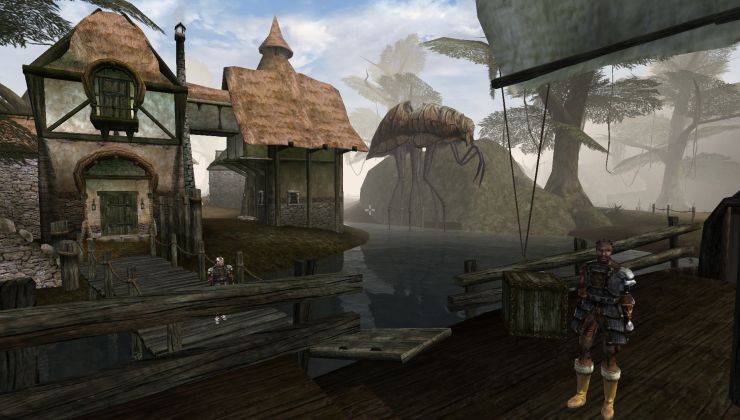 How to setup OpenMW for modern Morrowind on Linux / SteamOS and Steam Deck
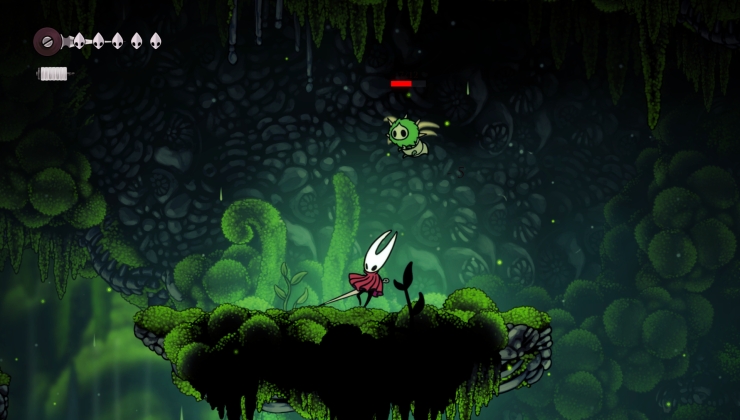 How to install Hollow Knight: Silksong mods on Linux, SteamOS and Steam Deck
- What's bad about generative AI on the Internet and beyond, exactl…
- GustyGhost - The value of ecosystem.
- LoudTechie - Lutris alternatives
- Tulon - The Great Android lockdown of 2026.
- mr-victory - Terminal trick - progress indicator in the task manager…
- Shmerl - See more posts