 Support us on Patreon
 PayPal
Latest Comments by F.Ultra
The Steam Deck has released, here's my initial review
25 Feb 2022 at 10:39 pm UTC Likes: 6
AND why on earth should we, readers of Gaming on _Linux_ care about how easy or hard it will be to install Windows on this thing or about the availability of Windows drivers?
And to be completely honest, I don't even think that you will see such a video by the likes of LTT, my money will be on Phoronix to attempt it (perhaps not first, that will probably be some obscure Windows tinkering site/channel).
25 Feb 2022 at 10:39 pm UTC Likes: 6
Quoting: Alm888I know you just used Valorant as an example but it's still a very interesting choice of yours since it's Epic exclusive and isn't something that you will be able to play via Steam on anything. And I know that some part of the younger generations for some reason refuses to look things up before they buy (and that not all games work is quite hard to miss when you try to buy a Steam Deck) but being angry that Valorant does not work on your new Deck is equal to being angry that neither it or their new PS5 also doesn't play Breath of the Wild.Quoting: areamanplaysgameI think you are talking about two different groups of people, honestly. "Ordinary people" do not buy consumer electronics and then try to replace the operating system on them.Well… Maybe you are right.
But! We are not talking about ordinary "ordinary people" here. Steam Deck will not be sold at brick&mortar stores. It must be pre-ordered through a dedicated gaming store. People on Steam (provided they know how to make a pre-order) are more than likely to tinker: install mods, stream on TVitch/YouTube, make benchmarks. You know, typical (glorious) PC gamer (master race) stuff. It would not be fair to treat them as "console players" who are more accustomed to "power-on & play" behavior. So, when they find out Valorant (for example) does not launch… What will they do?
Quoting: areamanplaysgameMost people I bet will not bother installing Windows on it. Only tech nerds will care. Your typical console player certainly won't.What should they do, then? Cancel their purchase, demand refunds and send their new handheld PC back to Valve?
I think at least some people will make attempts to "negotiate" their new devices before giving up. And I think they at least deserve to know what perils await them should they try to circumvent the problem by using Windows.
Quoting: areamanplaysgameBut as Liam pointed out, drivers aren't ready yet. This is custom stuff made by Valve/AMD from what I understand of it. So while it's a x86_64 setup, it has custom GPU, not to mention all the custom control inputs.Well, yeah. I figured as much. But will those drivers be ready by the time first owners get their devices? Will said owners be able to easily find those drivers? Will those drivers be included in the box on a mini CD (like the good old times) or flash drive? :P
Plus, I'm honestly curious about performance loss of the SteamOS against Windows (provided I do not even have a Steam account and have forgotten already the last time I've used WINE for gaming).
Well, it is Liam's choice not to test Windows games in their native ecosystem; I believe some reviewers will do such tests eventually.
Quoting: LoftyValve & the community need to put emphasis on how tailored Steam OS 3.0 is for the Steam Deck so people don't think it is just a binary choice of one OS over the other.Yes. But Valve also needs not to alienate potential (still Windows-using) customers preemptively. And people really do not like to be put in stressful situations. In this case, knowledge that in case something goes wrong there is a "Plan B" (installing Windows) as a fallback will assure gamers of the purchase safety.
AND why on earth should we, readers of Gaming on _Linux_ care about how easy or hard it will be to install Windows on this thing or about the availability of Windows drivers?
And to be completely honest, I don't even think that you will see such a video by the likes of LTT, my money will be on Phoronix to attempt it (perhaps not first, that will probably be some obscure Windows tinkering site/channel).
Proton Experimental heats up with fixes coming, plus a disk space saving measure
18 Feb 2022 at 11:50 pm UTC Likes: 8
18 Feb 2022 at 11:50 pm UTC Likes: 8
Quoting: Purple Library GuyExactly this. Let's get the Linux user base up to a reasonable amount first, then we can talk about native vs wine. Until then, that whole discussion is completely moot. It's like being trapped in the middle of the desert and arguing of you prefer Perrier over Evian.Quoting: hephaistionYeah, yeah, but you know what they mean.Quoting: IvancilloI don't like all of this emulation things.Proton is not an emulator.
For me, while I get their point, I think it's shortsighted. The problem is, Linux gaming hasn't been going anywhere. Without Valve it would have been far more nowhere than it is. At our size in the market, it's a major chicken-egg problem: Few were going to release their games for Linux unless there were more Linux buyers, and few were going to play games on Linux unless there were more games released for it. And as a side note, few would be likely to use Linux as their desktop at all if they couldn't play their games. At best, the status quo undisrupted sees Linux dragging along with a few decent games and stagnating market share; at worst, even the level we're at turns out to be a long-tailed artifact of the failed "Steam Machine" push and we gradually get fewer and fewer games released, trickling down in the general direction of where we were before Valve's initial Linux push.
So. Here's Valve, trying to break the cycle. They back Wine and DXVK and use 'em to make Proton, with the potential to allow nearly all games to be played on Linux so close to native as to make no practical difference. And yes, in the short term that means fewer games actually developed for Linux natively.
But they also release the Steam Deck, a mass market game machine running Linux, which would not be practical without Proton. If it goes well, suddenly the market share for Linux gets far larger, making Linux a much more noticeable development target. If they succeed, the chicken-egg problem will be, if not broken, at least seriously weakened. And Linux gaming in general becomes significantly more practical for a wider variety of gamers, making growth more plausible off the Deck as well.
So yeah. If the Steam Deck fails, and market share doesn't grow, then Proton could turn out to be a long term net negative. But the status quo is not tenable anyway.
Retro x86-based machine emulator 86Box v3.2 brings Linux support
17 Feb 2022 at 11:21 pm UTC Likes: 2
17 Feb 2022 at 11:21 pm UTC Likes: 2
Quoting: HamishNone I would imagine. It looks like they emulate various old graphics cards from the 80:ies up to VoodoFX.Quoting: Purple Library GuySays it also supports doing various old Linux distributions. Maybe I could use it to play my old Loki games.What is the support for GPU pasthrough like with this I wonder?
Quoting: GeamanduraRepresenting all the noobs out there, and taking one for the team.DosBox emulates MS-DOS so you can run MS-DOS software like old PC games. This emulates various old style PC:s at the hardware level so you could install MS-DOS on it to turn it into a slower but very accurate version of DoSBOX but that would probably be way overkill. This is mostly for people wanting to play around with old hardware and not so much play old games.
Could anyone kindly explain the difference between this, and DosBox? As long as I can run Transport tycoon and Sim city 2K and Mortal kombat in DosBox, what can I use this tool for?
Retro x86-based machine emulator 86Box v3.2 brings Linux support
17 Feb 2022 at 11:18 pm UTC Likes: 2
17 Feb 2022 at 11:18 pm UTC Likes: 2
Quoting: KithopThat's not the one either ;). I don't think any one is protesting the devs of 86Box to provide an AppImage image at their web site for people to download and use. The discussion is more that we would like the regular distributions to include new software in their repos so that people could install them "the proper way" to avoid the problems of security and bloat.Quoting: GuestI never said that.Apologies - I must have fumbled trying to trim down the quote on my phone :p Meant to be a reply to this one further up I think? https://www.gamingonlinux.com/2022/02/retro-x86-based-machine-emulator-86box-32-brings-linux-support/comment_id=220331
Either way - more just general info for anyone who might think their AppImage is the only route.
Retro x86-based machine emulator 86Box v3.2 brings Linux support
17 Feb 2022 at 4:48 pm UTC Likes: 2
17 Feb 2022 at 4:48 pm UTC Likes: 2
Quoting: M@GOidI agree with "some things", not sure if this type of application fits that category, for me that is. However I think the main problem is that distros don't add new software to their repos until they release a new version of the distro, sometimes I wish that they would just add new interesting software to the existing repos as long as they don't come with dependency breaking stuff.They went with AppImage for Linux so it should run across most major distributions.I wished more devs wold opt for this for their software. Some things shouldn't need you to plug a new repository, compile code or anything that requires a admin password. Just run it from the Download folder without much fuss.
I can hear the security minded folks furiously typing right now, but remember, I said "some things", not all apps.
Tim Sweeney has a point about Fortnite EAC support
17 Feb 2022 at 4:33 pm UTC Likes: 2
17 Feb 2022 at 4:33 pm UTC Likes: 2
Quoting: 14I once scored too high on a WPM typing test. In order to save my score, I had to achieve it again in a different session with various text. That was super annoying!Or here's a thought. Use all that statistics to flag potential cheaters and then have moderators connecting to the server<->client stream of such a flagged user and see what they should see and how they play and thus be able to detect if they can hit people behind walls and so forth. It's common on esports games to be able to switch to the players view so why not on any other highly competitive game.
Something like that could work for players who get automatically flagged or voted as possibly cheating. Modern, multiplayer shooters have some pretty detailed player statistics. You could use those, maybe add player's camera angle and how much of the target's hit box was even visible, to form an algorithm to detect anomalies.
Sure takes the fun out of game development, huh? Well, it could still be handled by a 3rd party in the form of licensed software you package into the game or your game servers and feed its API data from your game. It's all behind the scenes to the player and will work on any operating system that the game's engine works. The game dev has to put some effort into implementation but doesn't have to "recreate the wheel" every new game.
Tim Sweeney has a point about Fortnite EAC support
17 Feb 2022 at 4:25 pm UTC Likes: 1
17 Feb 2022 at 4:25 pm UTC Likes: 1
Quoting: EagleDeltaAll of which could be completely be worked around by creating a forked kernel in the very way that Tim says will definitely happen on the deck or Linux even though it so far haven't happened on Android which have a userbase that is several orders of magnitude larger than either the Deck or Linux native.Quoting: Guestwhat I don't get about this whole article... is how does the heck Fortnite for Android works? and I think there's enough android "distros" out there, that have plenty of different kernels. Did google let them run a proprietary module on their kernels?They will detect if you are running with root, or running with an unlocked bootloader, or try to see if you're running a custom ROM and block those things.
I'm sorry if my question is too stupid I simply ignore this.
Tomb Raider's Linux port from Feral Interactive delisted on Steam
15 Feb 2022 at 2:36 pm UTC Likes: 4
15 Feb 2022 at 2:36 pm UTC Likes: 4
Quoting: TeodosioI see this as a confirmation that "porting", intended as a company reworking a game developed for Windows by somebody else, is a failure.Well yes and no. In this particular case it looks like Ferals license simply expired and they decided to not renew it (most likely there having been not many sales or the new license cost was too high).
Games need to be developed in parallel for all the intended platform. Paradox interactive does this right.
520 games are now rated either Verified or Playable for Steam Deck
13 Feb 2022 at 10:37 am UTC Likes: 1
13 Feb 2022 at 10:37 am UTC Likes: 1
Quoting: denyasisCheesus, they have already 4k+ titles for the Switch!?Quoting: CybolicFor comparison, that's more than were ever released for the N64 (~300) and the Nintendo Wii U (~150) put together. Pretty nice launch already! :D393 for N64
783 for Wii U
From Wikipedia. Not sure how comparing to a game system released in 1996 makes much sense though. Totally different eras from economics, technically, and socially. A more reasonable comparison would be a more recent console, the Switch (4337), or Playstation 5 (465).
I still agree with you. At 309 Verified, it's still a very nice starting launch.
520 games are now rated either Verified or Playable for Steam Deck
13 Feb 2022 at 10:35 am UTC
Almost all my games are listed as unknown even though they are 99% Linux native, and one is listed as not supported Halo: MCC even though it works fine in Proton, guess that since multiplayer does not work they decided to call it unsupported.
13 Feb 2022 at 10:35 am UTC
Quoting: pete910And 9900 of those 11k are asset flips so no one bothered to test them for deck compatibility ;-)Quoting: CatKillerYour 11,000 would be the number that were released just in 2021.Lol, :unsure:
So that actually makes the percentages hilariously low then !
0.008 % :shock:
They have some serious work to do :huh:
Almost all my games are listed as unknown even though they are 99% Linux native, and one is listed as not supported Halo: MCC even though it works fine in Proton, guess that since multiplayer does not work they decided to call it unsupported.
- Epic Games just laid off over 1,000 people
- NVIDIA driver 595.58.03 released as the big new recommended stable driver for Linux
- Some top games under £5 in the Steam Spring Sale 2026
- Horizon Chase Turbo is getting delisted after the Epic Games layoffs
- Proton Experimental brings fixes for Crimson Desert, Steam Overlay with EA games, Death Stranding 2
- > See more over 30 days here
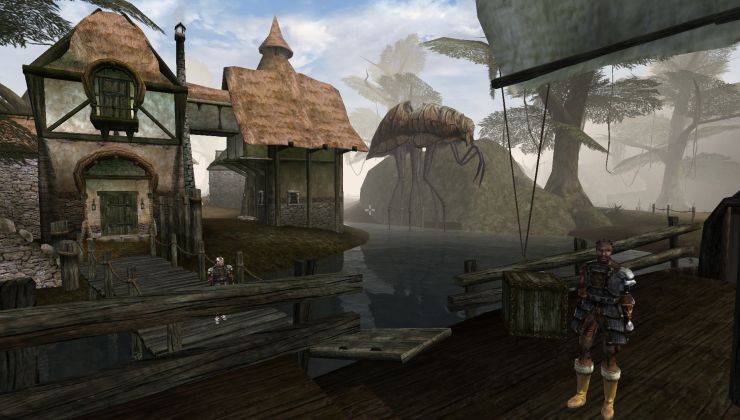 How to setup OpenMW for modern Morrowind on Linux / SteamOS and Steam Deck
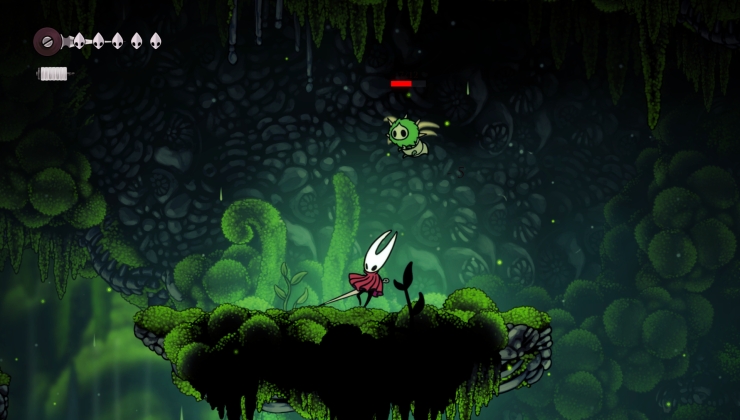 How to install Hollow Knight: Silksong mods on Linux, SteamOS and Steam Deck
- New Desktop Screenshot Thread
- tmtvl - Thrustmaster TMX drivers for Linux
- Kxzrt - Proton/Wine Games Locking Up
- Caldathras - I think I found my Discord alternative
- ridge - steam overlay performance monitor - issues
- Jarmer - See more posts