 Support us on Patreon
 PayPal
Latest Comments by kirgahn
DXVK, the Vulkan compatibility layer for Direct3D 11 and Wine has a fresh release reducing CPU overhead
6 Apr 2018 at 2:39 pm UTC Likes: 2
6 Apr 2018 at 2:39 pm UTC Likes: 2
Quoting: GuestI hope it will work for Warframe ... Still running windows on the side for that game only ...well, I recently saw this [External Link], not DXVK but it seems to be running fine.
Incredible looking story-based action platformer 'Iconoclasts' to release next year, for Linux too
7 Dec 2017 at 11:07 am UTC Likes: 1
7 Dec 2017 at 11:07 am UTC Likes: 1
Quoting: tuubiThat guy is debianxfce of Phoronix fame. Take a look at his post history over at Phoronix forums and then think again about having a civil exchange of ideas with him. His a bit of an extremist.Quoting: Guest"Those are some slick looking graphics!"You probably thought that Quake looked exactly like Wolfenstein 3D, and that the Tomb Raider from 2013 looks no better than the one from 1996? Maybe you need a better monitor or something? :)
More like graphics from the Commodore 64 era. Bruce Lee from 1984:
Editorial: On paying for Linux games when you already have a Windows version
15 Mar 2017 at 3:34 pm UTC Likes: 6
15 Mar 2017 at 3:34 pm UTC Likes: 6
Slippery slope.
No, I won't buy a game twice.
I would seriously consider *not* to pay for an "upgrade" to have a game I already bought run on another OS. I'd rather play it on Windows or not play it at all, and I really don't want to fire up any Windows installation in my household. I don't have the money to waste, which is one of the reasons that moved me away from console gaming years ago, since that's crazy expensive unless you live off of used games.
When it comes to supporting steamplay and porting fees the onus should be on the publisher.
Nowadays PC gaming is (becoming more and more) cross-OS and it should stay that way. If the publisher wishes to support more OSs it's due to the fact that they can reach a bigger market. That means selling more copies and earning more. That requires an investment, and that's where porting studios come into play. The publisher pays the porting studio to port the game to other OSs, every PC customer can buy the game without being restricted to Windows/OSX/Linux. Plus it lays the foundations of freeing themselves from Microsoft grip (altough freeing themselves from Steam is another thing).
If the publisher wishes to lock the game "ownership" to the specific OS, let them have it. They will sell even less on any other OS aside from Windows. That's because steamplay (and old humble bundle policies) do more to ease "established gamers with a backlog" into moving away from Windows than anything else. Nothing beats the confort of knowing that you can still run at least 40-50% of the games you already bought on your new OS. As noted by other, you simply won't see any gamer willing to part ways with tens/hundreds of games he has already bought to play on Linux, aside from a few crazies like myself. Moreover, when game streaming services will finally be viable, all this "you need to pay my game thrice because reasons" will slowly melt like a castle made of sand.
TD;DR: nowadays PC gaming is more and more cross-OS and it should stay that way *without extra fees*.
No, I won't buy a game twice.
I would seriously consider *not* to pay for an "upgrade" to have a game I already bought run on another OS. I'd rather play it on Windows or not play it at all, and I really don't want to fire up any Windows installation in my household. I don't have the money to waste, which is one of the reasons that moved me away from console gaming years ago, since that's crazy expensive unless you live off of used games.
When it comes to supporting steamplay and porting fees the onus should be on the publisher.
Nowadays PC gaming is (becoming more and more) cross-OS and it should stay that way. If the publisher wishes to support more OSs it's due to the fact that they can reach a bigger market. That means selling more copies and earning more. That requires an investment, and that's where porting studios come into play. The publisher pays the porting studio to port the game to other OSs, every PC customer can buy the game without being restricted to Windows/OSX/Linux. Plus it lays the foundations of freeing themselves from Microsoft grip (altough freeing themselves from Steam is another thing).
If the publisher wishes to lock the game "ownership" to the specific OS, let them have it. They will sell even less on any other OS aside from Windows. That's because steamplay (and old humble bundle policies) do more to ease "established gamers with a backlog" into moving away from Windows than anything else. Nothing beats the confort of knowing that you can still run at least 40-50% of the games you already bought on your new OS. As noted by other, you simply won't see any gamer willing to part ways with tens/hundreds of games he has already bought to play on Linux, aside from a few crazies like myself. Moreover, when game streaming services will finally be viable, all this "you need to pay my game thrice because reasons" will slowly melt like a castle made of sand.
TD;DR: nowadays PC gaming is more and more cross-OS and it should stay that way *without extra fees*.
Microsoft announces new DirectX Shader Compiler that's open source
24 Jan 2017 at 2:49 pm UTC Likes: 4
Using shaders is the "modern" way of working with graphics hardware in order to create special FX (and so much more). Think of that game you played that has that awesome lighting or that peculiar sepia filter. That's done through shading.
Shaders are software. They are written in a specific language (GLSL for OpenGL and Vulkan, HLSL for DirectX). Which means that they get compiled (to an intermediate language). Which means that you need a compiler. This open source compiler from Microsoft compiles HLSL into DXIL, which is Microsoft new intermediate representation.
The useful part here is that those involved with shader compiling can actually understand exactly how to parse and compile HLSL, and possibly make it compile directly into, say, SPIR-V, which is Vulkan's intermediate representation.
They only negative effect this could potentially have is that delevopers could stop writing shaders in GLSL because HLSL can be compiled for every possible IR. I don't see that happening tough.
TL;DR
could be potentially easier to develop other compilers that compile shaders directly from DirectX language to OpenGL/Vulkan supported intermediate representation.
24 Jan 2017 at 2:49 pm UTC Likes: 4
Quoting: amonobeaxHi brothers,Disclaimer: I'm neither a shaders nor game developer.
like many here I don't grasp what this really means, so if anybody has more content explaining the repercussions of this MS move, plz share with us.
Using shaders is the "modern" way of working with graphics hardware in order to create special FX (and so much more). Think of that game you played that has that awesome lighting or that peculiar sepia filter. That's done through shading.
Shaders are software. They are written in a specific language (GLSL for OpenGL and Vulkan, HLSL for DirectX). Which means that they get compiled (to an intermediate language). Which means that you need a compiler. This open source compiler from Microsoft compiles HLSL into DXIL, which is Microsoft new intermediate representation.
The useful part here is that those involved with shader compiling can actually understand exactly how to parse and compile HLSL, and possibly make it compile directly into, say, SPIR-V, which is Vulkan's intermediate representation.
They only negative effect this could potentially have is that delevopers could stop writing shaders in GLSL because HLSL can be compiled for every possible IR. I don't see that happening tough.
TL;DR
could be potentially easier to develop other compilers that compile shaders directly from DirectX language to OpenGL/Vulkan supported intermediate representation.
Feral Interactive's Linux ports may come with Vulkan sooner than we thought (UPDATED)
28 Oct 2016 at 9:57 am UTC Likes: 1
28 Oct 2016 at 9:57 am UTC Likes: 1
Quoting: amonobeaxIn other words the "Vulkan" version of the game will most likely benefit those gamers that have poor OpenGL performance (cough AMD owners) because of subpar drivers.furthermore, AMDGPU open source drivers use RADV, since AMD still hasn't live up to its promise of delivering an open source Vulkan implemantation. RADV is nice and coming along at a fast rate, but, lookin at benchmarks, it seems to perform worse than Mesa/OpenGL at the moment.
- Legendary, the free and open source Epic Games Launcher, has moved to a new organisation
- Godot gets a funding boost from Slay the Spire 2 devs Mega Crit
- Bazzite Linux gets some major upgrades for the April 2026 Update
- Valve dev fixes up VRAM management on AMD GPUs to improve performance
- Proton Experimental brings fixes for classic Resident Evil 1 & 2, Dino Crisis 1 & 2 and more
- > See more over 30 days here
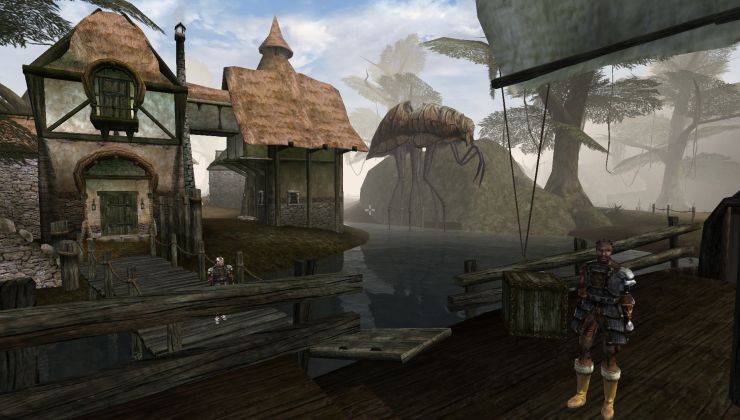 How to setup OpenMW for modern Morrowind on Linux / SteamOS and Steam Deck
 How to install Hollow Knight: Silksong mods on Linux, SteamOS and Steam Deck
- The Great Android lockdown of 2026.
- grigi - New Desktop Screenshot Thread
- DoctorJunglist - To wait or not to wait
- GustyGhost - Proton/Wine Games Locking Up
- tuubi - Introduce Yourself!
- LoudTechie - See more posts