 Support us on Patreon
 PayPal
Latest Comments by CFWhitman
Thousands of years later, The Bible has arrived on Steam
17 Nov 2022 at 12:50 am UTC
17 Nov 2022 at 12:50 am UTC
Nowhere do I see any mention of which translation of the Bible this is. It's obviously not one of the common older translations. It seems like they could at least mention what translation it was.
Intel's Linux Vulkan Driver readying up a 60%+ speed boost "in draw throughput"
19 Sep 2022 at 6:15 pm UTC Likes: 1
19 Sep 2022 at 6:15 pm UTC Likes: 1
I already thought it was odd that the Linux drivers were less glitchy for games than the Windows drivers. Are they going to be faster as well?
Couch-gaming Linux distro ChimeraOS 34 released
16 Aug 2022 at 2:10 pm UTC Likes: 2
16 Aug 2022 at 2:10 pm UTC Likes: 2
I have been using ChimeraOS on my Aya Neo Pro, and it makes it fairly 'Steam-Deck-like.' Of course, there are things that don't work correctly, but overall it's a pretty good experience. Sometimes when people are posting about what they are playing on their Steam Decks, I feel like joining in, and then I remember, I don't really play anything on my Steam Deck because I don't have one yet; my handheld is not a Steam Deck even though I may be looking at the same UI.
Get loads of Resident Evil in the latest Humble Bundle
15 Aug 2022 at 12:49 am UTC
15 Aug 2022 at 12:49 am UTC
I think I played the original on the Playstation a bit way back in the late 90s. I happen to have picked up Village, the remake/remaster of Resident Evil, and also 0 incidentally in a bundle or with hardware, but I haven't played them. I'm not generally into zombie or horror games (though to me, the ability to fight whatever's after you is not quite the same as pure horror), but I've been meaning to at least take a look at these games sometime since I have them. I'm not sure I'm ready to pick up the rest of the series, though.
KDE Plasma 5.25 is out now, here's some of what's new
15 Jun 2022 at 2:35 pm UTC
15 Jun 2022 at 2:35 pm UTC
Most of the time, Linux is better than Windows at treating a new instance of the same hardware you already had as the same device when the old one is not present. Windows insists on installing a new driver instance for a new instance of the same hardware you replaced. If I change monitors on my desktop (something I had to do recently because one kept not getting recognized as there by the computer), as long as the ports I plug them into are the same and the resolution is the same, they will be arranged just as they were before. Mind you, this is using Xfce. I would have expected Plasma to behave similarly, but I have not used it with multiple monitors.
In my experience, LightDM with multiple displays will put the login dialog on whichever screen the mouse pointer is on, unless you have mirrored displays, in which case it will put it on both/all. Again this is with Xfce as the desktop; it seems that LightDM can tell whether I have Xfce set to mirror or extend my desktop. I've heard that Xfce doesn't handle triple monitors well, but I have only used it with dual monitors, which it seems OK at.
In my experience, LightDM with multiple displays will put the login dialog on whichever screen the mouse pointer is on, unless you have mirrored displays, in which case it will put it on both/all. Again this is with Xfce as the desktop; it seems that LightDM can tell whether I have Xfce set to mirror or extend my desktop. I've heard that Xfce doesn't handle triple monitors well, but I have only used it with dual monitors, which it seems OK at.
GOG attempt to bring customers back with a revival of Good Old Games
17 Apr 2022 at 10:39 pm UTC
There are many difference in plot. The Eye of the World is neither where the group was originally headed nor their ultimate goal. The Eye of the World has a heroic guardian and is a place of refuge in the Blight. They happened to meet up with a character who has no equivalent in The Lord of the Rings that warned them about a problem there and joined their quest, of which the Eye of the World is only the first leg. The details of the plot differ in many ways, and are only similar in very general ones. The general similarities make The Eye of the World fairly formulaic. I won't argue with that, but the similarities are general. Just about any story of someone who seemed of no particular significance that goes on a quest will have similar ones. In fact, it would probably be easy to find a video game plot that had at least as many similarities to The Eye of the World as The Lord of the Rings does, especially since video games are about the hero, perhaps reluctantly, pursuing power, like The Eye of the World, and very unlike The Lord of the Rings. You could easily take the whole collection of The Wheel of Time and draw just as many similarities to the story as a whole as to the first volume.
17 Apr 2022 at 10:39 pm UTC
Quoting: NociferI guess it's a matter of perspective, or maybe attention to detail (though you seem to be a very detail-oriented person yourself), but as I also said in my previous comment, WoT #1 in my eyes is plot point to plot point a case of almost-plagiarism when compared to LoTR.I still don't see it that way. I see the similarities as those of general world building and not plot.
Quoting: NociferEverything from how the kid gets recruited/involved in the story,Except that Frodo is not a kid (he's 33 when he receives the ring and 50 when he leaves on his quest) and he gets involved in the story because of an object left to him, while Rand is around 18 and is involved because he is a person prophesied about. What makes Frodo special is his incorruptibility and no ambitions of power (and having the ring in his possession) while what makes Rand special is that he has the potential to be the most powerful person alive inherent to his being. Frodo knew Gandalf for years while Moiraine was a complete stranger to Rand.
Quoting: Nociferto how the supporting good guys are the equivalent of Gandalf and AragornA "magic" user and a warrior; call the plagiarism police.
Quoting: Nociferto how the group has to pass through the Moria-equivalent where now only shadows dwellI think this is a bit of a stretch. On a quest they go through a dangerous place; that's not unique, and they go there because the danger there is different than the danger pursuing them, and the things pursuing them are afraid to enter that place.
Quoting: Nociferto how they're being hunted by the equivalent of the Nazgul,I see the general similarity of the Myrddraal to the Nazgul, at least as hooded black figures of evil who carry swords. I think similar creatures are more a setting than a plot point, though. There are also big differences between Nazgul and Myrddraal (Myrddraal aren't nearly as special and don't have a particular limit in number). In a sense the Forsaken are closer to an equivalent of the Nazgul, though they are nothing like them in appearance.
Quoting: Nociferto how the kid gets separated from the good guys and then goes through his own adventures with his friends, to how his friends achieve some kind of secondary recognition of their own,This is hardly unique to these two books. That's part of almost any quest based story.
Quoting: Nociferto how the good guys live in an equivalent of a Gondor which oversees an ancient fence around the equivalent of a Mordor, to how that fence is about to fail because the Gondor lookalikes have grown too negligent and/or weak to fulfill their dutyThis is again a stretch. There is no fence or even natural barrier around the Blight, and it can ebb and flow in size. There is no negligence by the residents of Fal Dara and their fighting with the forces of the shadow is just a necessity to live where they live, but they are not alone in being at the edge of the Blight, they are just the nearest still inhabited city to where the Eye of the World is. The Blight is expanding because the bonds on the Dark One's prison are weakening, not because anyone is failing their duty.
There are many difference in plot. The Eye of the World is neither where the group was originally headed nor their ultimate goal. The Eye of the World has a heroic guardian and is a place of refuge in the Blight. They happened to meet up with a character who has no equivalent in The Lord of the Rings that warned them about a problem there and joined their quest, of which the Eye of the World is only the first leg. The details of the plot differ in many ways, and are only similar in very general ones. The general similarities make The Eye of the World fairly formulaic. I won't argue with that, but the similarities are general. Just about any story of someone who seemed of no particular significance that goes on a quest will have similar ones. In fact, it would probably be easy to find a video game plot that had at least as many similarities to The Eye of the World as The Lord of the Rings does, especially since video games are about the hero, perhaps reluctantly, pursuing power, like The Eye of the World, and very unlike The Lord of the Rings. You could easily take the whole collection of The Wheel of Time and draw just as many similarities to the story as a whole as to the first volume.
GOG attempt to bring customers back with a revival of Good Old Games
14 Apr 2022 at 2:41 pm UTC
14 Apr 2022 at 2:41 pm UTC
Quoting: Purple Library GuyIMO, the first one is really very good, although it should be noted that the plot is very much Lord of the Rings reheated.I can't agree with this. They are both high fantasy. There are parallels with some of the creatures (though other books just use the same creatures that LotR does, since they are basically unaltered from European mythology). As far as the plot goes, the hero of each comes into danger from dark forces and has to leave home to fulfill a quest, and that's pretty much where the similarity ends. That's quite generic as far as high fantasy goes. Don't get me wrong. It's definitely the same type of book as LotR, but it does not have the same plot in any but a very, very general way.
Quoting: Purple Library GuyAs power levels stacked up, Jordan kept having to come up with ways to top that.Umm, just no. This does not have the feel at all of something that is made up as the author went along. He was clearly following an outline that dealt with anything like that (the way the story got away from him was in developing the books from the outline he added too much story detail).
Quoting: Purple Library GuyI realized that the good guys (except for the main guy himself) were mostly as busy bickering, backbiting and betraying each other as the big time villains who were specifically portrayed as manifesting their evil natures via internal treachery.I think you are getting the amount that the books delve into politics (referenced by the phrase "the game of thrones" in medieval terms) confused with the struggle between good and evil. Some of the "good guys" do end up tangled up in politics to accomplish certain things, but generally not with each other (instead with other political figures). Also, a lot of what the books do is to show how a different point of view and misinformation can affect how people act toward each other, even if they are both well-intentioned.
Quoting: Purple Library GuyPretty much everything considered so nasty it was a hallmark of villainy, up to and including those torture-porn magic enslavement leashes, was soon done/used by the good guys. It's just, when a viewpoint character does it and is angsty about it, it's character development, whereas if a villain does it they're just being a dick. So it didn't exactly feel like they were jerks while you were reading it . . . unless you looked at their behaviour with some moral consistency.Some spoilers ahead.
Spoiler, click me
So you think that people who take everyone who has a certain ability and use a torture/reward system to completely control them are the same as some of their victims who get free and very briefly give them a taste of their own medicine and leave them to possibly get sucked into their own system on the other end? Or the same as people using the same object to control a specific criminal rather than random people with the ability?
Quoting: Purple Library GuyI also found the magical arms race got kind of old. One "jumping the shark" moment for me was when I realized that after introducing "balefire", this terrible power that didn't just kill people but erased them from reality so they'd never return and in some sense never existed and, if overused, could potentially cause reality itself to fall apart . . . it almost immediately became the "go-to" way of offing bad guys, and dangers to reality quickly stopped being mentioned.This just isn't accurate. Balefire didn't make it so people were "erased from reality" altogether, and it certainly didn't make it so they could never be reincarnated (part of the mythology of the book). What it did was destroy a person or thing at a previous point in time from its use, how long before depending on how much power was used when doing it. It was supposed to be particularly dangerous to reality / "the Pattern" to use on many people and with enough power to erase days of time. However, erasing a few seconds of one creature's life was not nearly so dangerous. To some degree, it was shown to be a little bit of an overreaction to never use it at all, since it seemed to be just about the only way to kill some creatures.
Spoiler, click me
The one time that the main character took it too far was seen as dangerous, but it was also implied that this particular use was actually a part of "the Pattern" since it's effects were predicted in advance.
Why balefire was the "go-to" way of killing "the Forsaken" was because it made it so "the Dark One" couldn't transfer them to a different body at the moment of death, even if it was only a few seconds of their life burned away.
Why balefire was the "go-to" way of killing "the Forsaken" was because it made it so "the Dark One" couldn't transfer them to a different body at the moment of death, even if it was only a few seconds of their life burned away.
Quoting: Purple Library GuyFrom portentous to cheap and banal in nothing flat. No doubt something even bigger time than balefire was soon introduced, in books later than the ones I got to. This kind of thing isn't subtle worldbuilding, it's just powergaming.Nope. That never happened. As I said before, those types of details had very clearly been planned and outlined from the beginning.
Spoiler, click me
Balefire was first used in the third book, and nothing "topping" it was ever mentioned. Of course, the scale of general power usage did increase toward the end of the series for cleansing "the taint" from "the One Power" and resealing "the Dark One's" prison, but this was again planned.
GOG attempt to bring customers back with a revival of Good Old Games
7 Apr 2022 at 7:18 pm UTC Likes: 1
Robert Jordan knew that he was terminally ill and added extra notes to his outline so that someone whom his wife would choose could finish the story for him. That someone turned out to be a young Brandon Sanderson, who has since established himself as a great fantasy writer in his own right (some of his other books are very, very good, among the best fantasy I've read).
Some people make the claim that Robert Jordan went into tremendous detail about scenes and people like Charles Dickens, while others will point to the prologue and epilogue of one of the books and say that he had a verbose style.
As far as I am concerned he did neither of these things. The details he gives are important to the story, and he only uses the style of writing in the prologues and epilogues in those places. I've never seen a whole chapter devoted to clothing and jewelry.
In fact, some of the early books are among the best in the series, like the first volume, The Eye of the World, the second volume, The Great Hunt and the fifth volume The Fires of Heaven.
However, what Robert Jordan did do was get bogged down in story details (not description details) during the middle volumes. He created so many story threads and extra characters that it was hard to keep track of them all. One volume in the middle has no climax (I don't remember which one offhand, and I don't want to wade through them to remind myself). In the end of course, many of the curious extra characters and story threads are just left without resolution, but don't let that deter you; they are minor characters.
What Brandon Sanderson did was bring the story back into full focus and restore what was great about the beginning of the series back to the end.
As far as I'm concerned the very end of the series was OK, not fantastic, but satisfying enough. Of course the characters in the series were extremely well done throughout.
7 Apr 2022 at 7:18 pm UTC Likes: 1
Quoting: razing32Did he finish it ?I'll give you my take on this:
I'd like to buy the books but i don't want anything incomplete.
Robert Jordan knew that he was terminally ill and added extra notes to his outline so that someone whom his wife would choose could finish the story for him. That someone turned out to be a young Brandon Sanderson, who has since established himself as a great fantasy writer in his own right (some of his other books are very, very good, among the best fantasy I've read).
Some people make the claim that Robert Jordan went into tremendous detail about scenes and people like Charles Dickens, while others will point to the prologue and epilogue of one of the books and say that he had a verbose style.
As far as I am concerned he did neither of these things. The details he gives are important to the story, and he only uses the style of writing in the prologues and epilogues in those places. I've never seen a whole chapter devoted to clothing and jewelry.
In fact, some of the early books are among the best in the series, like the first volume, The Eye of the World, the second volume, The Great Hunt and the fifth volume The Fires of Heaven.
However, what Robert Jordan did do was get bogged down in story details (not description details) during the middle volumes. He created so many story threads and extra characters that it was hard to keep track of them all. One volume in the middle has no climax (I don't remember which one offhand, and I don't want to wade through them to remind myself). In the end of course, many of the curious extra characters and story threads are just left without resolution, but don't let that deter you; they are minor characters.
What Brandon Sanderson did was bring the story back into full focus and restore what was great about the beginning of the series back to the end.
As far as I'm concerned the very end of the series was OK, not fantastic, but satisfying enough. Of course the characters in the series were extremely well done throughout.
Steam Deck Developer Mode does not turn off the read-only filesystem
5 Apr 2022 at 4:19 pm UTC
5 Apr 2022 at 4:19 pm UTC
ChimeraOS also uses a read-only system partition for the same reasons as SteamOS 3. It makes it much easier to push whole system updates. If you really want to mess with the system partition, then you could just install Arch or another distribution instead of SteamOS. There are still ways to run Gamescope and many of the other benefits of SteamOS 3; you just have to know what you're doing and be willing to put in the work.
Lutris version 0.5.10 brings improved Steam Deck support but no Flatpak yet
4 Apr 2022 at 11:37 pm UTC
A number of shell scripted installers did have an uninstall target (sometimes you would just run the script with --uninstall, or something like that, if there wasn't a separate uninstall script), but you couldn't count on that. It was just that since the software was all installed in subdirectories of /usr/local or /opt, it wasn't that hard to uninstall manually even if there was no uninstaller. If a program put a launcher in the system menu, you had to do a bit more to get rid of that.
Installation from 'make install' however, would put files all over the place. If the program didn't have an 'uninstall' target, then it would be a big time pain to try and remove one of them. There were things like checkinstall that would keep track of what 'make install' did or 'catch' the 'make install' changes and incorporate them into a package rather than letting them install directly.
*(InstallShield X article in Linux Journal [External Link])
4 Apr 2022 at 11:37 pm UTC
Quoting: pleasereadthemanualThank you for the correction. I've only recently become a GNU/Linux user, so I don't have first-hand knowledge of what the landscape was like 10+ years ago. No one seems to mention these distribution methods in the histories I've read. The InstallShield Wikipedia page only mentions that it's used for Windows: https://en.wikipedia.org/wiki/InstallShield [External Link]Well, the only part that perhaps could be considered a 'correction' would be that Windows used to be dependent entirely on install scripts. I thought of the post as more of a clarification. I seem to remember that there were two of the major Windows installation script makers that had a Linux version, but I couldn't remember offhand what the other one was. I don't want to mislead you; InstallShield* and its like for Linux were never popular. But then, neither was anything else along those lines really. Generally only the odd proprietary programs used a shell script installer, but they were still more common than the programs that used an InstallShield installer.
A number of shell scripted installers did have an uninstall target (sometimes you would just run the script with --uninstall, or something like that, if there wasn't a separate uninstall script), but you couldn't count on that. It was just that since the software was all installed in subdirectories of /usr/local or /opt, it wasn't that hard to uninstall manually even if there was no uninstaller. If a program put a launcher in the system menu, you had to do a bit more to get rid of that.
Installation from 'make install' however, would put files all over the place. If the program didn't have an 'uninstall' target, then it would be a big time pain to try and remove one of them. There were things like checkinstall that would keep track of what 'make install' did or 'catch' the 'make install' changes and incorporate them into a package rather than letting them install directly.
*(InstallShield X article in Linux Journal [External Link])
- The "video game preservation service" Myrient is shutting down in March
- SpaghettiKart the Mario Kart 64 fan-made PC port gets a big upgrade
- KDE Plasma 6.6.1 rolls out with lots of fixes for KWin
- California law to require operating systems to check your age
- The OrangePi Neo gaming handheld with Manjaro Linux is now "on ice" due to component prices
- > See more over 30 days here
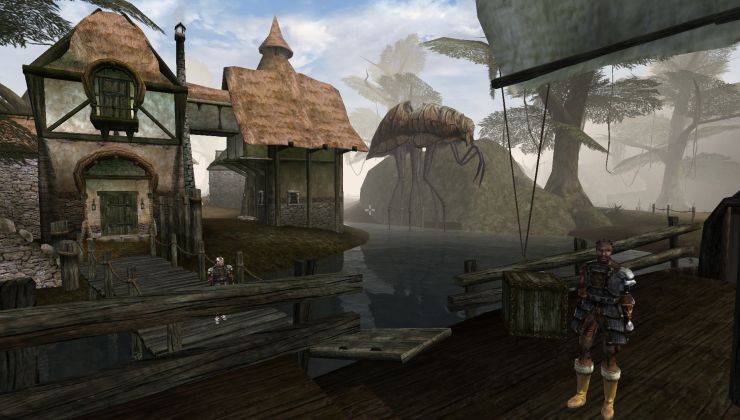 How to setup OpenMW for modern Morrowind on Linux / SteamOS and Steam Deck
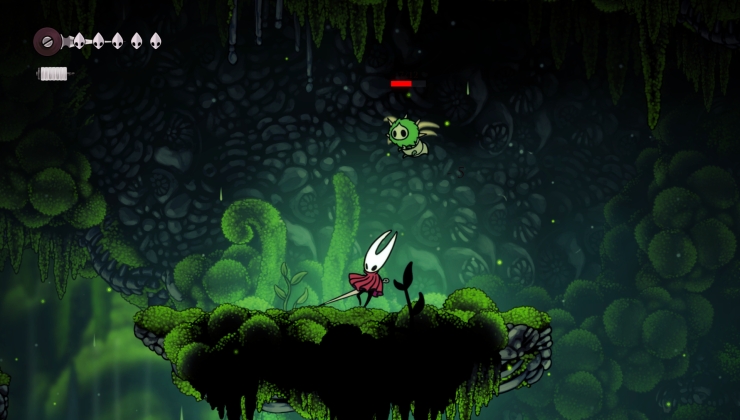 How to install Hollow Knight: Silksong mods on Linux, SteamOS and Steam Deck
- recently released super fun crpg - Sector Unknown
- Jarmer - steam overlay performance monitor - issues
- Xpander - Nacon under financial troubles... no new WRC game (?)
- Xpander - Establishing root of ownership for Steam account
- Nonjuffo - Total Noob general questions about gaming and squeezing every oun…
- GustyGhost - See more posts