 Support us on Patreon
 PayPal
Latest Comments by Shmerl
Valve are looking to gather a list of games that don't work with radeonsi
10 Jan 2017 at 3:09 am UTC
10 Jan 2017 at 3:09 am UTC
May be we should also make a wiki page with (32-bit) games affected by large XFS partition (aka broken LFS) bug?
Valve are looking to gather a list of games that don't work with radeonsi
10 Jan 2017 at 3:08 am UTC
10 Jan 2017 at 3:08 am UTC
Quoting: jsa1983Any chance offending games may be reported through other channels other than tweeter?Add them to the wiki, they can keep track of it.
Quoting: boltronicsDid Shadow Warrior have a mouse cursor rendering bug under Mesa? Or was that just the proprietary drivers? Can't remember - would have to check.It works fine with radeonsi / Mesa 13.0.2.
Divinity: Original Sin may soon work with Mesa drivers
9 Jan 2017 at 7:39 pm UTC Likes: 3
9 Jan 2017 at 7:39 pm UTC Likes: 3
Quoting: tuubiIn any case, I don't see the harm in them requiring adherence to standard practices, like the XDG directory spec.I fully agree here. I meant mostly that it shouldn't become a programmatic dependency, like games needing to use some Steam specific APIs and such.
Mesa patched to help render The Witcher 2 correctly on radeonsi
9 Jan 2017 at 7:17 pm UTC
9 Jan 2017 at 7:17 pm UTC
Quoting: buenaventuraPerformance for me in witcher 2 is just horrendous even on absolute bottom settings.It's very good for me on max settings (RX 480 / Mesa 13.0.2). What hardware and Mesa version do you use? Also, remember to always keep ubersampling disabled.
Divinity: Original Sin may soon work with Mesa drivers
9 Jan 2017 at 5:16 pm UTC
9 Jan 2017 at 5:16 pm UTC
Valve have no control over how games store configuration. And games shouldn't rely on such control either. It will only complicate ability to release games without Steam.
Divinity: Original Sin may soon work with Mesa drivers
9 Jan 2017 at 4:50 pm UTC
9 Jan 2017 at 4:50 pm UTC
Quoting: M@yeulCEven Steam puts a .steam folder in my home folder...I see. Then it's already a mess, and doing it for the client can help with moving client data to proper place, but it can also mess up games which check if $XDG_DATA_HOME isn't set, and use $HOME/.local/share when it's not. For those you'll get: $HOME/.local/share/.local/share in result.
Quoting: M@yeulCBut yeah, the ideal wold be for Valve to enforce this behaviour.It's really up to individual games to follow the spec. Valve should fix their own client though.
Divinity: Original Sin may soon work with Mesa drivers
9 Jan 2017 at 4:32 pm UTC Likes: 1
9 Jan 2017 at 4:32 pm UTC Likes: 1
Quoting: M@yeulCOr in the steam launch options:In case of GOG release that would be start.sh, but I don't think it's a good idea to set it for every game, since some do follow XDG base directory spec correctly, and for those you don't want to do it. So setting it individually only for games which mess up $HOME directly is the best approach.
HOME=${HOME}/.local/share %command%
This is actually a pretty good idea, and I am considering changing this variable before launching Steam, considering the number of games that behave correctly.
Divinity: Original Sin may soon work with Mesa drivers
8 Jan 2017 at 6:50 pm UTC
8 Jan 2017 at 6:50 pm UTC
Quoting: ShugyoushaThe patch only gets the game half-way there and I assume they will have to add another workaround before the game runs without issues.They already stated, that it's a mistake in the game to read some hardcoded vendor string for AMD. Mesa isn't going to "fix" it for them. May be instead of making shims they'll provide some way to set that through environment variables. At least that won't require compilation.
Divinity: Original Sin may soon work with Mesa drivers
8 Jan 2017 at 6:33 pm UTC Likes: 1
8 Jan 2017 at 6:33 pm UTC Likes: 1
Quoting: Al3sIn the same script that you set workaround hacks. I.e. in runner.sh that comes with the game.Quoting: ShmerlI also recommend setting this for the game, otherwise it will clutter your $HOME:Where should I set this?
HOME=${HOME}/.local/share
Divinity: Original Sin may soon work with Mesa drivers
8 Jan 2017 at 6:32 pm UTC
8 Jan 2017 at 6:32 pm UTC
I've heard driconf is a dead project anyway.
- PlayStation 3 emulator RPCS3 can now auto-configure games for you
- Playnix launch their own Steam Machine-like Linux gaming console
- Wine 11.7 released with DirectSound 7.1 support, VBScript improvements, MSXML updates
- The first major update for Slay the Spire 2 is out now
- Death Stranding 2 patch 1.4 should make it look better on lower settings
- > See more over 30 days here
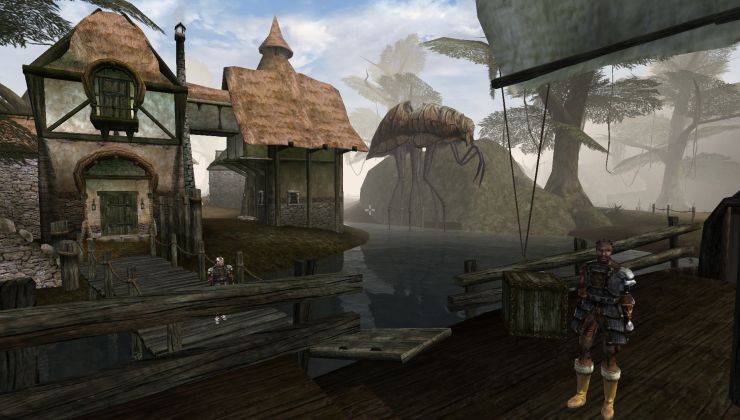 How to setup OpenMW for modern Morrowind on Linux / SteamOS and Steam Deck
 How to install Hollow Knight: Silksong mods on Linux, SteamOS and Steam Deck
- Steam achievement conundrum
- Auster - Do you miss LaunchBox/Playnite on Linux?
- Dark574 - Testing the VRAM valve patch
- Avehicle7887 - Away all of next week
- Liam Dawe - New Desktop Screenshot Thread
- tmtvl - See more posts