 Support us on Patreon
 PayPal
Latest Comments by Shmerl
Marek has sent in another Mesa commit to help improve OpenGL performance, using threading
30 Oct 2016 at 7:20 pm UTC Likes: 2
30 Oct 2016 at 7:20 pm UTC Likes: 2
Looks like Vega + radenosi will be a solid combination, if this will make it in in time.
Why GNU/Linux ports can be less performant, a more in-depth answer
28 Oct 2016 at 12:50 am UTC
28 Oct 2016 at 12:50 am UTC
Quite detailed article, thanks for posting @mirv. Are there tools which actually can translate all current HLSL into GLSL or SPIR-V? I thought such tools (at least open ones) aren't complete and are WIP. Example: https://github.com/KhronosGroup/glslang/issues/362 [External Link]
Quoting: GuestVulkan has a lot more industry push, has feature-parity with DX12 (and Metal)Mostly. Vulkan is still catching up on multi-GPU support for example.
'Sky Break', a single-player open-world action & adventure game now on Linux
23 Oct 2016 at 4:26 pm UTC Likes: 3
23 Oct 2016 at 4:26 pm UTC Likes: 3
Why no GOG release?
Mad Max released for Linux, port report and review available
21 Oct 2016 at 9:33 am UTC Likes: 1
21 Oct 2016 at 9:33 am UTC Likes: 1
Quoting: skinnyrafIs Mad Max on Linux DRM protected though?If not for DRM, why can't they release it on GOG then?
Mad Max released for Linux, port report and review available
20 Oct 2016 at 7:04 pm UTC
20 Oct 2016 at 7:04 pm UTC
/Mad Max/VFS/User/AppData/Roaming/WB Games/Mad MaxThat's quite a mess of a name. Looks like a clone from Windows version without simplifying it.
Bastion for Linux is finally available on GOG, the game also now uses FNA
20 Oct 2016 at 6:55 pm UTC Likes: 4
20 Oct 2016 at 6:55 pm UTC Likes: 4
That took quite a while, but good to see it on GOG at last.
Mad Max released for Linux, port report and review available
20 Oct 2016 at 5:38 pm UTC Likes: 1
Anyway, it's another title I'll skip. May be WB will wake up in 5 years from now.
20 Oct 2016 at 5:38 pm UTC Likes: 1
Quoting: liamdaweSure, I'm being only half sarcastic here. WB Interactive who own Mad Max started releasing their games on GOG already, so why not this one as well?Quoting: ShmerlNo GOG release though?If a game ported isn't already on GOG, then you should already know the answer dude. It won't be up to Feral to get it approved onto other stores.
Quoting: Comandante oardoThey can't. They aren't owners. It's all decided by WB Interactive.Quoting: PublicNuisanceYes it is. They can do that... They have the publishing rights of the Linux version... We talked a lot about that topic. :|Quoting: ShmerlNo GOG release though?I don't think that is up to Feral. I'd love a DRM free copy of Mad max. if it ever happens I will buy another copy happily.
Anyway, it's another title I'll skip. May be WB will wake up in 5 years from now.
Mad Max released for Linux, port report and review available
20 Oct 2016 at 3:07 pm UTC Likes: 3
20 Oct 2016 at 3:07 pm UTC Likes: 3
No GOG release though?
'Serious Sam VR: The Last Hope' will support Linux as soon as possible
19 Oct 2016 at 3:28 am UTC
19 Oct 2016 at 3:28 am UTC
Why aren't recent Serious Sam games on GOG yet?
HTC Vive VR demo on Linux used Kubuntu at SteamDevDays
14 Oct 2016 at 7:27 pm UTC
14 Oct 2016 at 7:27 pm UTC
I don't think they need to use SteamOS for desktop demo. KDE is just fine for that purpose.
- US operating system age verification bill "Parents Decide Act" gets published
- Mozilla announced "Thunderbolt", their open-source and self-hostable AI client
- PlayStation 3 emulator RPCS3 can now auto-configure games for you
- Gaming on Linux with an older GPU levels up with DXVK-Sarek v1.12 bringing major new features
- SDL (Simple DirectMedia Layer) ban AI / LLM code contributions
- > See more over 30 days here
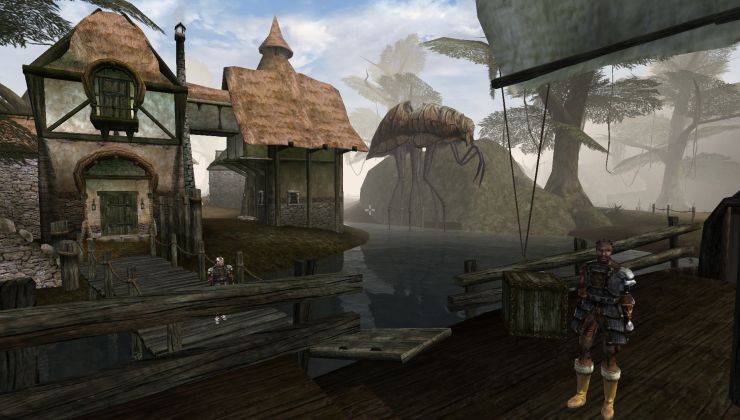 How to setup OpenMW for modern Morrowind on Linux / SteamOS and Steam Deck
 How to install Hollow Knight: Silksong mods on Linux, SteamOS and Steam Deck
- Steam achievement conundrum
- GustyGhost - Testing the VRAM valve patch
- Avehicle7887 - Away all of next week
- Liam Dawe - New Desktop Screenshot Thread
- tmtvl - Shop Crush - Psychological Horror Thrift Sim with Literal Illusio…
- hollowlimb - See more posts