 Support us on Patreon
 PayPal
Latest Comments by Shmerl
Tyranny, the new RPG from Obsidian, gets a release date and will have day-1 Linux support [Updated]
14 Oct 2016 at 6:02 am UTC Likes: 1
14 Oct 2016 at 6:02 am UTC Likes: 1
Looking forward to it. And great to see that it's coming out on GOG. Paradox own games have some issues with Steam lock-in. I suppose Obsidian managed to convince Paradox to avoid it.
Duke Nukem 3D Megaton Edition removed from stores in favour of the new Anniversary World Tour, no Linux support
14 Oct 2016 at 3:38 am UTC Likes: 1
14 Oct 2016 at 3:38 am UTC Likes: 1
I have 3D Atomic edition on GOG. And it's indeed gone now from the store for those who don't have it. Why can't Gearbox play nice and keep it in stores? Devolver should have kept the rights. They are way better owners than Gearbox.
Valve looking to contract experienced Mesa developers to work on the open source AMD driver for OpenVR
13 Oct 2016 at 2:06 pm UTC
13 Oct 2016 at 2:06 pm UTC
Except actual OpenVR isn't open (i.e. SteamVR). I've just red some news that Collabora are actually working on open replacement for SteamVR.
Superposition Benchmark, a new GPU stress-testing tool from UNIGINE
11 Oct 2016 at 12:36 pm UTC Likes: 4
11 Oct 2016 at 12:36 pm UTC Likes: 4
I'm waiting for them to support Vulkan in Unigine.
The open source Vulkan driver for AMD 'radv' has been merged into Mesa
7 Oct 2016 at 8:43 pm UTC
7 Oct 2016 at 8:43 pm UTC
Quoting: swickCaching shaders (or rather pipelines, because shaders can compile to different variants with different pipelines) is the responsibility of the application. https://www.khronos.org/registry/vulkan/specs/1.0-wsi_extensions/xhtml/vkspec.html#pipelines-cache [External Link]It's good if developers know that and implement such caching. Do actual current Vulkan games implement it?
The open source Vulkan driver for AMD 'radv' has been merged into Mesa
7 Oct 2016 at 8:38 pm UTC
7 Oct 2016 at 8:38 pm UTC
Yes, Vulkan should allow better management and offloading of such tasks to multiple threads. That helps, but it will still be up to developers when to load certain shaders. Some tend to do it at startup, which results in massive compilation right away (that's why some games load so slowly first). Some do it gradually, and try to spread the load more evenly. Either way, as you said, caching should better be done as well. I hope radv developers are planning to implement it. Not sure what happens with radeonsi in this regard (with GLSL shaders).
The open source Vulkan driver for AMD 'radv' has been merged into Mesa
7 Oct 2016 at 8:21 pm UTC
7 Oct 2016 at 8:21 pm UTC
To clarify for those who aren't familiar with how shaders work. Basically, to make cross platform games (i.e. cross hardware), their graphics commands need to be presented in some generic bytecode fashion. In case of Vulkan it's SPIR-V. Then at runtime, special compilers translate that bytecode into hardware specific instructions (differently on each GPU naturally). Optimization happens on that compilation step, but SPIR-V itself isn't as suitable for optimization as NIR (intermediate format used by the Intel drivers). If I understand correctly, runtime compilation will work like this: SPIR-V → NIR → llvm IR → GPU machine code. That's quite some sequence, but it allows producing better optimized result. Trouble is, since it all happens at runtime, it can cause noticeable delays. Caching of compiled result is a common solution of this issue.
The open source Vulkan driver for AMD 'radv' has been merged into Mesa
7 Oct 2016 at 7:53 pm UTC Likes: 1
7 Oct 2016 at 7:53 pm UTC Likes: 1
By that time, radv can be even better already. AMD developers are also considering stopping their current tedious pre-opensourcing review efforts, and instead complete radv with missing pieces. In the end, as long as result is working well and is open, everyone will be happy.
My only concern now is that radv is using extra step of translating SPIR-V into NIR. That makes compilation of sharders longer, and unless they'll be cached (they aren't yet as far as I know), some parts in games will be slower (any time when new shaders are loaded, like at startup, new levels opening and so on). According to developers, using NIR in the middle actually helps getting better optimized result to feed to the GPU, but as I said, actual compilation with extra step is longer.
My only concern now is that radv is using extra step of translating SPIR-V into NIR. That makes compilation of sharders longer, and unless they'll be cached (they aren't yet as far as I know), some parts in games will be slower (any time when new shaders are loaded, like at startup, new levels opening and so on). According to developers, using NIR in the middle actually helps getting better optimized result to feed to the GPU, but as I said, actual compilation with extra step is longer.
The open source Vulkan driver for AMD 'radv' has been merged into Mesa
7 Oct 2016 at 7:49 pm UTC Likes: 4
7 Oct 2016 at 7:49 pm UTC Likes: 4
Things are really getting good for AMD. I hope by the time Vega 10 cards will come out, amdgpu + Mesa will be in good shape already. Then I'll finally ditch Nvidia for it (and hopefully the added power of Vega will mitigate some performance lacking that still could remain in Mesa).
AMD's radeonsi driver is really close to having full OpenGL 4.4 support, with OpenGL 4.5 already done
7 Oct 2016 at 3:35 pm UTC
7 Oct 2016 at 3:35 pm UTC
I hope they'll finish it before next Mesa release.
- US operating system age verification bill "Parents Decide Act" gets published
- Mozilla announced "Thunderbolt", their open-source and self-hostable AI client
- PlayStation 3 emulator RPCS3 can now auto-configure games for you
- Gaming on Linux with an older GPU levels up with DXVK-Sarek v1.12 bringing major new features
- SDL (Simple DirectMedia Layer) ban AI / LLM code contributions
- > See more over 30 days here
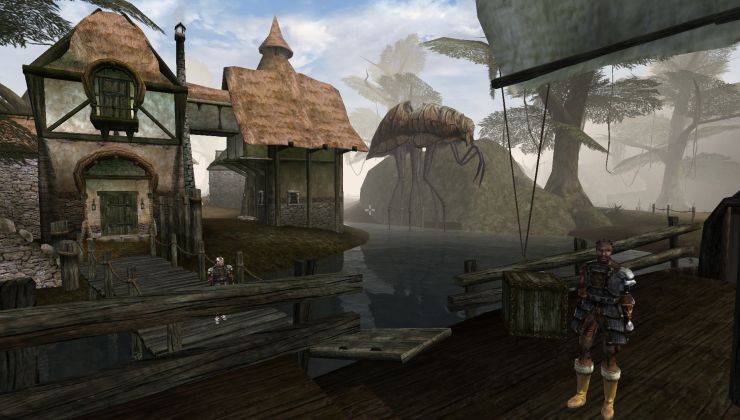 How to setup OpenMW for modern Morrowind on Linux / SteamOS and Steam Deck
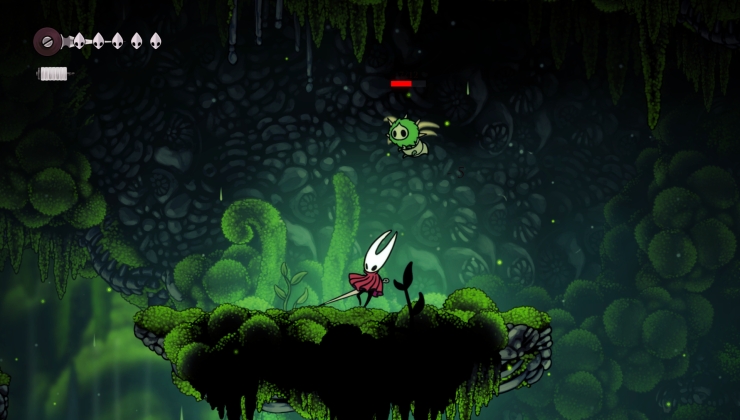 How to install Hollow Knight: Silksong mods on Linux, SteamOS and Steam Deck
- Steam achievement conundrum
- GustyGhost - Testing the VRAM valve patch
- Avehicle7887 - Away all of next week
- Liam Dawe - New Desktop Screenshot Thread
- tmtvl - Shop Crush - Psychological Horror Thrift Sim with Literal Illusio…
- hollowlimb - See more posts