 Support us on Patreon
 PayPal
Latest Comments by jonbitzen
Open 3D Engine (O3DE) 23.10 open source game engine released
11 Oct 2023 at 12:43 am UTC Likes: 4
11 Oct 2023 at 12:43 am UTC Likes: 4
I have been playing a bit with o3de recently. I'd say the big standouts for me was that although in some ways it (generously?) has ue4/5 levels of sophistication, it requires proprietary plugins for both sound (Audiokinetic wwise) and particle effects (PopcornFX). Whilst on the one hand it's great to see an open source engine with plugin support for high end third party middleware, as a would-be lone-wolf/Indy pursuing game development as an avocation, its a bit concerning that there isn't any built in open source alternative that "just works" for two such foundational game engine features, even if the said alternatives were understandably more basic. If I were a professional with at least a triple-I budget (higher end Indy) admittedly I probably wouldn't bat a lash.
I think o3de is worth watching, but I will likely use Godot 4, because although in some ways it is a bit more basic than o3de, it is at least feature complete.
jonbitzen
I think o3de is worth watching, but I will likely use Godot 4, because although in some ways it is a bit more basic than o3de, it is at least feature complete.
jonbitzen
Linux Foundation launches the Open 3D Engine based upon Amazon Lumberyard
6 Jul 2021 at 9:42 pm UTC Likes: 1
6 Jul 2021 at 9:42 pm UTC Likes: 1
It will be interesting to see if, in the next year, Valve puts anyone on this to nudge it along. From the github issue for Linux client support it sounds like they need testing and bugfixing, rather than a full-up writing of the Linux client code. Not saying it'd be trivial, but it may not be quite such a heavy lift either.
Meanwhile, I've been waiting for a Source 2 SDK release, something like I've used for UE4 or Unity for longer than I can remember now. I've heard of modding tools for DOTA2 and HL-Alyx, but nothing more substantive.
Even if they were about to release Source 2 tomorrow with all the ease-of-use features I've seen in UE4, having another AAA alternative couldn't hurt. And one that isn't owned by a professed competitor.
That said, who am I to tell GabeN how to spend his money? :smile:
Meanwhile, I've been waiting for a Source 2 SDK release, something like I've used for UE4 or Unity for longer than I can remember now. I've heard of modding tools for DOTA2 and HL-Alyx, but nothing more substantive.
Even if they were about to release Source 2 tomorrow with all the ease-of-use features I've seen in UE4, having another AAA alternative couldn't hurt. And one that isn't owned by a professed competitor.
That said, who am I to tell GabeN how to spend his money? :smile:
Slimbook reveal the Ryzen 7 and RTX 3070 powered Titan
14 Jan 2021 at 10:00 pm UTC
14 Jan 2021 at 10:00 pm UTC
This is an interesting development. Let's hope it works.
I have a notebook with a Ryzen 4800H + 1660ti, and basically there are driver conflicts between the integrated graphics and the nvidia card that prevent the nVidia card from working. I've trawled the nVidia developer forums for Unix graphics, and summa summarum is the nVidia people have yet to say anything about when a working driver will come. This is a common problem with Ryzen laptops with nVidia discrete graphics, if you Google it. To be fair, there are remedies which involve compiling a custom kernel. Not impossible, but below the threshold of convenience I'm used to with nVidia drivers on my other desktops and laptops.
So, hopefully the good people at Slimbook know something that I don't (about a compatible driver release for Linux systems). Or maybe they will host their own kernel repo? I can't imagine they could sell this laptop as Linux-compatible if you had to roll your own kernel to use it.
I have a notebook with a Ryzen 4800H + 1660ti, and basically there are driver conflicts between the integrated graphics and the nvidia card that prevent the nVidia card from working. I've trawled the nVidia developer forums for Unix graphics, and summa summarum is the nVidia people have yet to say anything about when a working driver will come. This is a common problem with Ryzen laptops with nVidia discrete graphics, if you Google it. To be fair, there are remedies which involve compiling a custom kernel. Not impossible, but below the threshold of convenience I'm used to with nVidia drivers on my other desktops and laptops.
So, hopefully the good people at Slimbook know something that I don't (about a compatible driver release for Linux systems). Or maybe they will host their own kernel repo? I can't imagine they could sell this laptop as Linux-compatible if you had to roll your own kernel to use it.
Despite the high price, the initial batch of Valve Index headsets have sold out on pre-orders
5 May 2019 at 2:06 pm UTC Likes: 2
5 May 2019 at 2:06 pm UTC Likes: 2
I've had a pretty good experience with SteamVR + Proton as well. The following games work flawlessly for me:
- Along Together
- Arcade Saga
- Audio Shield
- BOXVR
- Eleven: Table Tennis VR
- Fruit Ninja VR
- The Gallery Ep1: Call of the Starseed
- The Gallery Ep2: Heart of the Emberstone
- Holopoint
- Knockout League
- Rainbow Reactor
- Race the Sun
I've also lately been able to get Subnautica VR to work. I didn't list it under flawless, because I can't use the in-game menus to change settings while in VR mode, and it stutters a bit but that is likely because I had it on highest settings for non-VR mode. I'll probably try it again sometime after lowering the settings in non-VR mode. Still, even with the stutter I was able to swim about on Creative mode for about an hour. Great experience.
I'm running a i7 4790 (non-K), 8gb DDR3-1600 CL9, GTX 1060-6Gb, Mint 19 (Ubuntu 18.04). By 2019 standards, I would not call any of this high-end hardware.
Sometimes I need to turn the settings down a wee bit compared to my Windows machine. Also I've found (up to now) that you need to be "gentle" with it. Using the SteamVR Home to start and stop games doesn't work for me. I need to start games from the desktop.
But other than those relatively small nits, I have a pretty good experience.
Note its easy to have issues that are SteamVR-related, but ascribe them to the platform (Linux). For example, the change from SteamVR 1.3.22 -> 1.3.23 caused some performance issues in BoxVR, and the Gallery games sometimes don't start the first time (previously had no issues). But a little websearch indicated that there are (some) folks on Windows also having performance issues / stuttering after 1.3.23 (loud complaints about being allowed to revert SteamVR to previous versions) so not every issue is a platform-related one.
With that said, I'm saving my money, and I'll probably buy the Valve Index +Index Controllers. Possibly a new video card, if there is anything compelling toward the end of the year.
jonbitzen
- Along Together
- Arcade Saga
- Audio Shield
- BOXVR
- Eleven: Table Tennis VR
- Fruit Ninja VR
- The Gallery Ep1: Call of the Starseed
- The Gallery Ep2: Heart of the Emberstone
- Holopoint
- Knockout League
- Rainbow Reactor
- Race the Sun
I've also lately been able to get Subnautica VR to work. I didn't list it under flawless, because I can't use the in-game menus to change settings while in VR mode, and it stutters a bit but that is likely because I had it on highest settings for non-VR mode. I'll probably try it again sometime after lowering the settings in non-VR mode. Still, even with the stutter I was able to swim about on Creative mode for about an hour. Great experience.
I'm running a i7 4790 (non-K), 8gb DDR3-1600 CL9, GTX 1060-6Gb, Mint 19 (Ubuntu 18.04). By 2019 standards, I would not call any of this high-end hardware.
Sometimes I need to turn the settings down a wee bit compared to my Windows machine. Also I've found (up to now) that you need to be "gentle" with it. Using the SteamVR Home to start and stop games doesn't work for me. I need to start games from the desktop.
But other than those relatively small nits, I have a pretty good experience.
Note its easy to have issues that are SteamVR-related, but ascribe them to the platform (Linux). For example, the change from SteamVR 1.3.22 -> 1.3.23 caused some performance issues in BoxVR, and the Gallery games sometimes don't start the first time (previously had no issues). But a little websearch indicated that there are (some) folks on Windows also having performance issues / stuttering after 1.3.23 (loud complaints about being allowed to revert SteamVR to previous versions) so not every issue is a platform-related one.
With that said, I'm saving my money, and I'll probably buy the Valve Index +Index Controllers. Possibly a new video card, if there is anything compelling toward the end of the year.
jonbitzen
How to enable Steam Play (Proton) directly in SteamOS
9 Jan 2019 at 10:35 pm UTC Likes: 1
9 Jan 2019 at 10:35 pm UTC Likes: 1
I scanned the comments, and I thought it'd be appropos to mention that I have an open source post-installer program that turns an Ubuntu 18.04 / Linux Mint 19 Cinnamon install into a SteamOS-like operating system. It basically bolts the steamos-session onto the above OS's.
Relevant points:
- it has an icon to perform the operations described above to start Steam as the steam user
> note that as above, this will stop the steamos-session, since you can't have more than one running instance of Steam active for a given user
> a few other benefits to running the Steam desktop client I've used on my system is that I boot from and SSD and have a big mechanical HDD for my game storage; I was able to configure the steam game folder, and it is honored by the steamos-session
- it has an icon (like SteamOS) to return to Steam; it first checks if the desktop client is already being run, and if so offers to let you either terminate it manually or kill automatically
> note that if you have killed the steamos-session, to start the desktop client as above, it will be restarted automatically for you; no need to reboot your system
- since you're on a major, up-to-date Ubuntu-based platform, you are much more easily in control of your drivers if you enter the desktop (there was a poster above who noted issues with drivers on SteamOS).
> as a convenience, if the installer detects that you've got an nVidia card, it will install the nVidia driver PPA, and open the applicable driver manager for you so you can switch off of Nouveau before restarting
> if it detects that you have an AMD/Intel Mesa graphics install, it will install Mesa Vulkan and VDPAU components for you
You can find the project here:
https://github.com/jonbitzen/ConvergenceOS [External Link]
There's a bit on the GitHub page to discuss my other aspirations for the project.
I hope someone finds it useful!
Sincerely,
jonbitzen
Relevant points:
- it has an icon to perform the operations described above to start Steam as the steam user
> note that as above, this will stop the steamos-session, since you can't have more than one running instance of Steam active for a given user
> a few other benefits to running the Steam desktop client I've used on my system is that I boot from and SSD and have a big mechanical HDD for my game storage; I was able to configure the steam game folder, and it is honored by the steamos-session
- it has an icon (like SteamOS) to return to Steam; it first checks if the desktop client is already being run, and if so offers to let you either terminate it manually or kill automatically
> note that if you have killed the steamos-session, to start the desktop client as above, it will be restarted automatically for you; no need to reboot your system
- since you're on a major, up-to-date Ubuntu-based platform, you are much more easily in control of your drivers if you enter the desktop (there was a poster above who noted issues with drivers on SteamOS).
> as a convenience, if the installer detects that you've got an nVidia card, it will install the nVidia driver PPA, and open the applicable driver manager for you so you can switch off of Nouveau before restarting
> if it detects that you have an AMD/Intel Mesa graphics install, it will install Mesa Vulkan and VDPAU components for you
You can find the project here:
https://github.com/jonbitzen/ConvergenceOS [External Link]
There's a bit on the GitHub page to discuss my other aspirations for the project.
I hope someone finds it useful!
Sincerely,
jonbitzen
A small update on the status of BATTLETECH for Linux
15 Aug 2018 at 2:45 am UTC Likes: 3
15 Aug 2018 at 2:45 am UTC Likes: 3
I played with Unity 3D a few years back, and I wouldn't be surprised if there was an issue with an Engine/Editor plugin. I had a terrain generator plugin, and when I tried it on Linux, I found all sorts of issues with path strings used to refer to resources that had different case in different places. It was a sloppy practice, but not a problem on Windows (nor I assume OSX, which does not use a case-sensitive filesystem by default).
Although its just an example of a simple problem, its likely that more complex plugins have more complex platform-specific bugaboos like that.
I've also heard of issues with recent versions of Unity breaking Linux support. I believe that Rust recently stopped supporting Linux because of Unity issues. So, I'm with Liam - if it was easy for the devs to give us the Linux version (Unity behaved nicely, no plugin/middleware issues) they'd probably do it and take the nerd-cred.
UE4 has similar issues with Linux support- for example we're limited to 16 textures per material because of a limitation of OpenGL 4.3. I've had *very* many materials in content packs developed under Windows fail to work because D3D let's you multiplex your materials such that you can have something like 192 per material or somesuch. So it can be a lot of work to re-engineer a shader, and after doing so the results may still not look that good. And to reach a niche market, it's probably not that attractive for a small business.
As we all know Valve has an interest in Linux as an alternative to Microsoft closing up the Windows platform. The best thing Valve could do is *finally* finish up Source Engine 2 (and make it indie-friendly), offer it free with no strings attached (no Steam publishing requirement), and make sure it has absolutely bullet-proof compatibility for both Editor and Runtime on Linux.
If the engine could achieve greater market penetration by being excellent and free, and also have bullet-proof Linux compatibility, it'd increase all of our odds of getting high-quality games :) Unlike either Unity Technologies or Epic Games, Valve has a vested interest in the viability of their SteamOS / Linux platform to protect their business.
jonbitzen
Although its just an example of a simple problem, its likely that more complex plugins have more complex platform-specific bugaboos like that.
I've also heard of issues with recent versions of Unity breaking Linux support. I believe that Rust recently stopped supporting Linux because of Unity issues. So, I'm with Liam - if it was easy for the devs to give us the Linux version (Unity behaved nicely, no plugin/middleware issues) they'd probably do it and take the nerd-cred.
UE4 has similar issues with Linux support- for example we're limited to 16 textures per material because of a limitation of OpenGL 4.3. I've had *very* many materials in content packs developed under Windows fail to work because D3D let's you multiplex your materials such that you can have something like 192 per material or somesuch. So it can be a lot of work to re-engineer a shader, and after doing so the results may still not look that good. And to reach a niche market, it's probably not that attractive for a small business.
As we all know Valve has an interest in Linux as an alternative to Microsoft closing up the Windows platform. The best thing Valve could do is *finally* finish up Source Engine 2 (and make it indie-friendly), offer it free with no strings attached (no Steam publishing requirement), and make sure it has absolutely bullet-proof compatibility for both Editor and Runtime on Linux.
If the engine could achieve greater market penetration by being excellent and free, and also have bullet-proof Linux compatibility, it'd increase all of our odds of getting high-quality games :) Unlike either Unity Technologies or Epic Games, Valve has a vested interest in the viability of their SteamOS / Linux platform to protect their business.
jonbitzen
Valve has removed the Steam Machine section from Steam
30 Mar 2018 at 4:59 pm UTC Likes: 8
30 Mar 2018 at 4:59 pm UTC Likes: 8
I speculate that Valve may have some sort of Steam console up its sleeve. A few tidbits I've gathered from various articles on the web:
- Gabe Newell commented in an interview that he was interested in being able to provide a user experience the way Nintendo does, and that being able to do so meant hardware; and that unlike years ago he has hardware people (electrical engineers) now
- I've been following Phoronix for some time, and I think it's possible that there are between 3-5 Valve engineers making contributions to Mesa and the AMD open source graphics driver stack.
There are a lot of things that could mean, but one possibility is a Steam console. To compete on price with MS and Sony, and to leverage their existing users' library of games as much as possible, they need an x86 SOC with a reasonably good GPU. And only AMD can give them that. Nv can give them a great GPU, but not an x86 CPU. Intel could give them the CPU but they don't have a gamer-grade GPU on offer.
As other posters have mentioned, the Linux software stack wasn't nearly ready when Steam Machines came out. Its much better now, plus we can hope that with API's like Vulkan, there won't be so many game-specific optimizations that are in the platform-specific driver stack as there are now, which would (going forward) level the playing field.
With that said, I think they will still need to have something different to sell a Steam console, if that is their plan.
As a final comment, if they wanted this to get more traction, and supposing they're aiming at a Steam console, they could allow other stores to install onto the hardware to grow the platform. For example, it's probably not free for EA to be on Xbox and PS. But if they had their own store on a Steam console (they already don't sell games on Steam anyway, so its no loss to Valve I guess), then cutting the MS/Sony tax would be a compelling reason for them to get onboard an "open" console platform. It'd make the whole Linux/Steam console ecosystem more compelling to consumers, and cut the vendors loose from manipulation by MS.
jonbitzen
- Gabe Newell commented in an interview that he was interested in being able to provide a user experience the way Nintendo does, and that being able to do so meant hardware; and that unlike years ago he has hardware people (electrical engineers) now
- I've been following Phoronix for some time, and I think it's possible that there are between 3-5 Valve engineers making contributions to Mesa and the AMD open source graphics driver stack.
There are a lot of things that could mean, but one possibility is a Steam console. To compete on price with MS and Sony, and to leverage their existing users' library of games as much as possible, they need an x86 SOC with a reasonably good GPU. And only AMD can give them that. Nv can give them a great GPU, but not an x86 CPU. Intel could give them the CPU but they don't have a gamer-grade GPU on offer.
As other posters have mentioned, the Linux software stack wasn't nearly ready when Steam Machines came out. Its much better now, plus we can hope that with API's like Vulkan, there won't be so many game-specific optimizations that are in the platform-specific driver stack as there are now, which would (going forward) level the playing field.
With that said, I think they will still need to have something different to sell a Steam console, if that is their plan.
As a final comment, if they wanted this to get more traction, and supposing they're aiming at a Steam console, they could allow other stores to install onto the hardware to grow the platform. For example, it's probably not free for EA to be on Xbox and PS. But if they had their own store on a Steam console (they already don't sell games on Steam anyway, so its no loss to Valve I guess), then cutting the MS/Sony tax would be a compelling reason for them to get onboard an "open" console platform. It'd make the whole Linux/Steam console ecosystem more compelling to consumers, and cut the vendors loose from manipulation by MS.
jonbitzen
- The "video game preservation service" Myrient is shutting down in March
- Discord delay global rollout of age verification to improve transparency and add more options
- FINAL FANTASY VII arrives on GOG with a new edition live on Steam too
- SpaghettiKart the Mario Kart 64 fan-made PC port gets a big upgrade
- KDE Plasma 6.6.1 rolls out with lots of fixes for KWin
- > See more over 30 days here
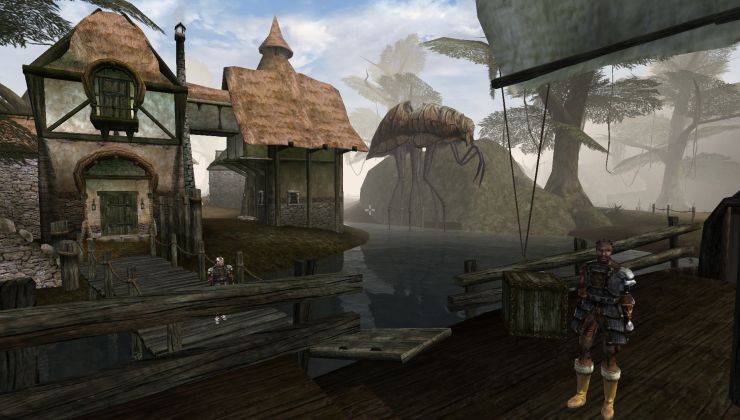 How to setup OpenMW for modern Morrowind on Linux / SteamOS and Steam Deck
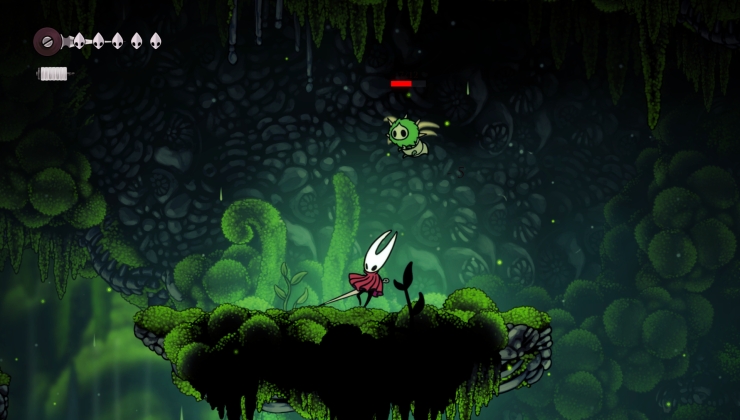 How to install Hollow Knight: Silksong mods on Linux, SteamOS and Steam Deck
- steam overlay performance monitor - issues
- Xpander - Nacon under financial troubles... no new WRC game (?)
- Xpander - Establishing root of ownership for Steam account
- Nonjuffo - Total Noob general questions about gaming and squeezing every oun…
- GustyGhost - Looking for Linux MMORPG sandbox players (Open Source–friendly …
- Jarmer - See more posts