 Support us on Patreon
 PayPal
Latest Comments by michaldybczak
No Man's Sky - Worlds Part I is out now and drastically transforms the planets
19 Jul 2024 at 6:22 pm UTC
There is really a lot to do, and for a long time, you won't be bored, because there are so many quests to follow and things to do. It can be surprisingly addictive. Also, survival mechanics feel very satisfying, so you won't feel like grinding much.
For me, it was a very nice surprise.
19 Jul 2024 at 6:22 pm UTC
Quoting: tfkI've never played it. Is it good?Yes it is. I thought that this is a pure survival game and not my cup of tea, but it turned out, there is some story to follow, character and base progressions, so it feels more like RPG in open world with survival mechanics.
There is really a lot to do, and for a long time, you won't be bored, because there are so many quests to follow and things to do. It can be surprisingly addictive. Also, survival mechanics feel very satisfying, so you won't feel like grinding much.
For me, it was a very nice surprise.
TUXEDO recently revealed two more AMD Ryzen laptops
3 May 2024 at 4:58 pm UTC Likes: 2
Personally, I would think that TUXEDO OS should be a rolling release, but it's something they cannot do as it requires too much work.
I personally use Manjaro, so I have access to Tuxedo Control Center as well, and it doesn't have issues that TUXEDO OS have.
As to the ISO layouts, then yeah. I expected that if I choose Polish layout, I will get the keys matched to my region, but no, they are typical German keys. Still, it turned out to be not a problem once I got to use them. The keyboard is great. I guess, TUXEDO is too small company to offer more flexibility. Again, it is what it is. Maybe some they they will grown big enough, but currently, take it as it is. If I were in US, I would buy System76. In Europe, I have TUXEDO or Slimbook. TUXEDO is close to me, so shipping is better, have better choice compared between those two, so I chose TUXEDO.
Having TUXEDO laptop, I can list more real issues than the ones you listed. For example, the speakers are too quiet and have no base. Sound is clear, and you can hear stereo sound, but it's flat and in general disappointing. Another issue may be how loud fans can be during gaming sessions, basically louder than sound from speakers, so I am forced to use headphones. This is a consequence of the slick design. Either you get a bulky, typical gaming laptop, or something smaller, looking nice, but must be ready for louder work when gaming. Since I mostly work on this laptop and game sporadically, this is fine by me. I love that the laptop is so lightweight. My previous Alienware laptop was almost 4kg, which was unpleasant to use on my knees...
On the other hand, Sirius gen1 have incredible chassis, very sturdy and on a level with Alienware laptops (I have one). This is something you didn't compare, maybe because there is no data on paper. This makes such comparison to be very flawed and narrow. Only having laptops from both companies physically, we could draw a proper comparison. Sadly, laptop reviewers only test laptops superficially, so they miss tons of stuff. If they have worked at least a week on such a laptop, they could get a much deeper understanding of the reviewed hardware. This makes us, the buyers, to be in a sad place. We have only paper data that miss a lot, and we still have to make a decision for better or worse.
3 May 2024 at 4:58 pm UTC Likes: 2
Quoting: cameronboschUnfortunately, I don't think either of these Tuxedo laptops are all that impressive for a few reasons, especially when compared to Framework's offerings:.The problem with your opinion is that you don't have the experience with Tuxedo computers and most of the points you brought up, are pointless for a regular user. I bought Sirus gen.1, and here is my take on this:
Quoting: cameronbosch1. The Tuxedo Sirius 16 is stuck with a highly outdated 16:9 aspect ratio screen when most of the rest of the laptop world has moved to 16:10. [...].Many laptops on the market still uses 16:9 aspect ratio and frankly, I don't care if the laptop has 16:9 or 16:10, the difference is too small. Sure, 16:10 would be better, but not by much.
Quoting: cameronbosch2. Framework supports Ubuntu LTS and Fedora, two very popular Linux distros officially. If you're willing to install Linux, it's not a huge deal to install a Linux distro on either, but Tuxedo OS, the distro preinstalled on Tuxedo computers, doesn't even have KDE Plasma 6 yet [..].Tuxedo OS is just their flagship, recommended OS, but you can install any Linux distro you want, and most probably will do just that. I texted TUXEDO OS and despite it having newer kernel, newer Plasma stack (it was before Plasma 6 then) and newer drivers, the basis Ubuntu 22 was old and it was shown. There were numerous bugs that were long fixed but they are still present on Ubuntu 22. Some old packages and new ones were not working well with each other, creating various issues. So yeah, TUXEDO OS wasn't the best experience. However, the kernel on TUXEDO OS comes with TUXEDO patches that make Sirius laptop work well, while on other systems, there are issues with suspend. This is however a matter of time till it will be fixed. Other TUXEDO laptops don't have this problem. Sirus gen1 is just experimental, first model so such issues are to be expected.
Personally, I would think that TUXEDO OS should be a rolling release, but it's something they cannot do as it requires too much work.
I personally use Manjaro, so I have access to Tuxedo Control Center as well, and it doesn't have issues that TUXEDO OS have.
Quoting: cameronbosch3. The Tuxedo Sirius 16 has a fingerprint reader that doesn't work with fprintd in Linux. The Tuxedo Pulse 14 only has an IR camera which as far as I know isn't supported in Linux at all. Both Framework Laptops do have working fingerprint sensors in both Windows and Linux (via fprintd, in GNOME's settings, or in KDE Plasma 6 and later's system settings).As far I am aware, they don't come with the fingerprint reader. This is just a casing that show a place for it, but it's not a functional fingerprint reader and Tuxedo never claimed anything different.
Quoting: cameronbosch4. The Tuxedo Laptops are pretty much DOA outside of the EU and the UK, as they only offer ISO layouts, while the Netherlands and everywhere outside of the EU and the UK use ANSI, which Tuxedo does not offer on these laptops. Not to mention how expensive the shipping costs are outside of Europe, so they may as well not exist outside of the EU.I'm not sure what DOA means, but I live in EU so for me there is no issue. The shipping costs are what parcel companies offer. Such small company as Tuxedo cannot negotiate better prices. Most small companies will have similar shipping costs. This is what it is. For me this is OK, because Gemany is our neghebour so shipping costs are OK and pretty standard for shipping across the border.
As to the ISO layouts, then yeah. I expected that if I choose Polish layout, I will get the keys matched to my region, but no, they are typical German keys. Still, it turned out to be not a problem once I got to use them. The keyboard is great. I guess, TUXEDO is too small company to offer more flexibility. Again, it is what it is. Maybe some they they will grown big enough, but currently, take it as it is. If I were in US, I would buy System76. In Europe, I have TUXEDO or Slimbook. TUXEDO is close to me, so shipping is better, have better choice compared between those two, so I chose TUXEDO.
Quoting: cameronbosch5. While the Framework Laptops do ship with a slightly worse MediaTek 7922 Wi-Fi 6E & Bluetooth combo card (I have had issues with their Wi-Fi 6 and earlier cards, but not their 6E cards), it's like $20 to get an Intel AX210 Wi-Fi 6E card and because it's Framework, the replacement can be done rather easily if need be. So I wouldn't make a buying decision based on that alone.Current models come with AX210 after I loudly criticized the Mediatek card, which is sh%$. I'm happy to see that they fixed this, but still I have no idea what came into their minds to use such weak and useless card as this Mediatek one.
Quoting: cameronbosch6. The Framework Laptop 16 has a replaceable GPU, the Radeon RX 7700S, that is very similar in terms of performance to the Radeon RX 7600M in the Tuxedo Sirius 16. And the Ryzen 7 8845HS is basically the same as the 7840HS in the Framework Laptop 16 and very similar to the Ryzen 9 7940HS; the only benefit with the Ryzen 7 8845HS is the better NPU, which is kind of useless on Linux at the moment. [...]There is not much of a choice for laptop AMD dGPUs, so I guess they take whatever they have access to and whatever it makes a financial sense to them. TUXEDO is a much smaller company than Framework (probably, correct me if I am wrong), so they have to choose carefully. Even if the newer dGPU has no sense now, it could work better in the future, when the drivers mature.
Quoting: cameronbosch7. The Framework Laptops have a more versatile port selection than the Tuxedo offers, both with the Expansion Card system allowing for a lot of flexibility[..]Hold your horses. Framework business model is to provide that versatility and that is UNIQUE to them. Tuxedo is just a different company with different business model. Besides, did you see the Framework prices? Sorry, they are too high. As much I would want such a laptop, it's too expensive. Tuxedo has much friendlier and normal price ranges. Still on an upper range, but since they offer more standard solutions (based on ready components, not manufactured only for them), the price can be more reasonable. You just can't compare TUXEDO and Framework.
Quoting: cameronboschI will give the Tuxedo Sirius 16 another bonus point for having a BIOS/UEFI accessible MUX switch while Framework only offers AMD Smart Access Graphics ==[...]Yeah, nice to have a choice but frankly, who will use dGPU on a laptop for the whole session? Hybrid version works well enough. dGPU heats up and uses incredible amounts of power. It's enough to enable dGPU for a browser and the energy consuption, and fans kick in hard. No thanks. There is no real benefit to use dGPU for anything than gaming or graphical tasks. iGPU is powerful enough.
Quoting: cameronboschFor most people, if they had the choice between the Framework Laptop 16 and the Tuxedo Sirius 16, I would definitely recommend the Framework Laptop 16 over the Sirius 16 because the Framework Laptop 16 has many more advantages over the the Sirius 16 that I mentioned.Again, price is also part of the consideration and in my book, Tuxedo wins. I would love to have Framework but again, it's out of my range. I already bought some extensions to my Tuxedo, so it costed almost 2000 EUR. For that price, I wouldn't even buy a basic option in Framework.
Having TUXEDO laptop, I can list more real issues than the ones you listed. For example, the speakers are too quiet and have no base. Sound is clear, and you can hear stereo sound, but it's flat and in general disappointing. Another issue may be how loud fans can be during gaming sessions, basically louder than sound from speakers, so I am forced to use headphones. This is a consequence of the slick design. Either you get a bulky, typical gaming laptop, or something smaller, looking nice, but must be ready for louder work when gaming. Since I mostly work on this laptop and game sporadically, this is fine by me. I love that the laptop is so lightweight. My previous Alienware laptop was almost 4kg, which was unpleasant to use on my knees...
On the other hand, Sirius gen1 have incredible chassis, very sturdy and on a level with Alienware laptops (I have one). This is something you didn't compare, maybe because there is no data on paper. This makes such comparison to be very flawed and narrow. Only having laptops from both companies physically, we could draw a proper comparison. Sadly, laptop reviewers only test laptops superficially, so they miss tons of stuff. If they have worked at least a week on such a laptop, they could get a much deeper understanding of the reviewed hardware. This makes us, the buyers, to be in a sad place. We have only paper data that miss a lot, and we still have to make a decision for better or worse.
AMDGPU driver for Linux 6.7 enforces lower power limits from vBIOS
11 Mar 2024 at 8:31 pm UTC Likes: 1
11 Mar 2024 at 8:31 pm UTC Likes: 1
I'm on 6.7 and see no changes in power usage, so I guess that has no big influence on laptop or iGPU.
AMDGPU driver for Linux 6.7 enforces lower power limits from vBIOS
10 Mar 2024 at 8:14 am UTC Likes: 1
10 Mar 2024 at 8:14 am UTC Likes: 1
I got answer from TUXEDO:
It shouldn't influence, the power profiles for the Sirius 16 Gen1.They said nothing about the power draw thou. I guess I have to test it myself.
If it's causing any problems, we have here a development team which is really quick at fixing issues.
AMDGPU driver for Linux 6.7 enforces lower power limits from vBIOS
6 Mar 2024 at 5:48 pm UTC Likes: 1
I think that power limits shouldn't matter that much for hybrid graphic, because dGPU is basically powered down or in some low energy, idle state, which is different from the normal state. However, if those rule apply to iGPU...
On a daily basis, I use 0,6-0,8 kWh/day for office work and media consumption (no gaming). If that will be higher on 6.7, this will be worrying. When gaming, I expect high energy consumption, so that doesn't matter, but I don't game much, so the daily, normal usage is what matters. Of course, current values are small, but if I counted, that my household uses on average 7kWh, 0,8 kWh is ca, 11% of the daily energy consumption and if that would double, that would be 20%, which adds up in a monthly or yearly basis. Not mentioning battery drainage or its quicker usage and fan work because of more heat.
There is a huge difference between my Cool energy profile, where I limit CPU to 0,4-2,6GHz, and the default one, which has no limits (up to 5,1 GHz). On Cool profile, laptop is silent and works normally, while on default, CPU frequency spikes, laptop goes hot and fans become loud - while I see no real gain. This is why I'm worrying that if GPUs become hotter, the culture of work on my laptop will become worse.
6 Mar 2024 at 5:48 pm UTC Likes: 1
Quoting: nwildnerI think that on Laptop usecases the impact will not be THAT big because usuallt the lower voltages are way lower on those dGPUs than they are on Desktop GPUs.I asked TUXEDO about that, but I don't know if and when they respond. However, I could check it myself, by switching to 6.7 and observing power usage and overall energy outputs.
I think that power limits shouldn't matter that much for hybrid graphic, because dGPU is basically powered down or in some low energy, idle state, which is different from the normal state. However, if those rule apply to iGPU...
On a daily basis, I use 0,6-0,8 kWh/day for office work and media consumption (no gaming). If that will be higher on 6.7, this will be worrying. When gaming, I expect high energy consumption, so that doesn't matter, but I don't game much, so the daily, normal usage is what matters. Of course, current values are small, but if I counted, that my household uses on average 7kWh, 0,8 kWh is ca, 11% of the daily energy consumption and if that would double, that would be 20%, which adds up in a monthly or yearly basis. Not mentioning battery drainage or its quicker usage and fan work because of more heat.
There is a huge difference between my Cool energy profile, where I limit CPU to 0,4-2,6GHz, and the default one, which has no limits (up to 5,1 GHz). On Cool profile, laptop is silent and works normally, while on default, CPU frequency spikes, laptop goes hot and fans become loud - while I see no real gain. This is why I'm worrying that if GPUs become hotter, the culture of work on my laptop will become worse.
AMDGPU driver for Linux 6.7 enforces lower power limits from vBIOS
5 Mar 2024 at 8:25 pm UTC
5 Mar 2024 at 8:25 pm UTC
How this is plays on hybrid setup AMD CPU/AMD GPU?
Is it only about dGPU or maybe also iGPU?
Usually, dGPU is powered down (or shows energy usage below 1W). When it is activated for games, then I guess it should deliver whatever it has in store, but otherwise, it should power down again, when it's no longer used. However, I'm not sure how it works when low demanding titles are launched.
In my case, I use TUXEDO laptop and I use Tuxedo Control Center (in short TCC) and it has power profiles. What it does (from user perspective), is that it can limit the CPU frequency (not the power usage per se), so the heat production and energy usage becomes lower. My question is, will this limitation influence TTC or maybe it has nothing to do with it?
In other words, on a daily basis, I don't need as much power and like to use low demand power profiles (limits CPU 1,4GHz). System words as fast as usual, but it doesn't have CPU spikes, doesn't overheat and fans are not working so frequently. It is an awesome feature and I'm afraid it won't work as good now. Or maybe my fears are unwarranted?
Is it only about dGPU or maybe also iGPU?
Usually, dGPU is powered down (or shows energy usage below 1W). When it is activated for games, then I guess it should deliver whatever it has in store, but otherwise, it should power down again, when it's no longer used. However, I'm not sure how it works when low demanding titles are launched.
In my case, I use TUXEDO laptop and I use Tuxedo Control Center (in short TCC) and it has power profiles. What it does (from user perspective), is that it can limit the CPU frequency (not the power usage per se), so the heat production and energy usage becomes lower. My question is, will this limitation influence TTC or maybe it has nothing to do with it?
In other words, on a daily basis, I don't need as much power and like to use low demand power profiles (limits CPU 1,4GHz). System words as fast as usual, but it doesn't have CPU spikes, doesn't overheat and fans are not working so frequently. It is an awesome feature and I'm afraid it won't work as good now. Or maybe my fears are unwarranted?
The future has arrived - KDE Plasma 6 desktop released
28 Feb 2024 at 9:37 pm UTC Likes: 1
- some apps don't scale (Steam - need to use manually variable to scale it, VLC doesn't scale at all)
- on multimonitors with various resolutions, some apps won't re-scale when moving through screens, like LibreOffice, so it looks good on 1440p, while on the 1080P monitor UI is oversized
- some pop-up windows are oversized on the secondary 1080p screen, even when the app is scaled correctly
Still, those things will pass with time. It's surprising that despite so many years have passed and most modern laptops and screens are hi-dpi, many popular apps still have poor high-res support (Steam, LibreOffice, VLC)
And it's not like you can just switch to 1080p so smoothly. No. If you do, you will get blurry experience and I will promise you, you will change back to high-resolution.
However, I'm happy that Plasma has fractional scaling, because I was able to set it to 130% which is the best scaling for 1440p screens. The default 150% is too much, while 125% is too little. 130% looks for the most part as it was on 1080p.
Interesting, that the same Plasma on system with Ubuntu 22 base, has more problems, and it doesn't scale so nicely, so it's not just Plasma, but the whole package stack that makes the difference. So on Manjaro it is very smooth experience, on Ubuntu 22 it's pretty bad, with the same Plasma version.
28 Feb 2024 at 9:37 pm UTC Likes: 1
Quoting: PlintslîchoI've always been a GTK guy myself, my favourite desktop still is Xfce. But when I got myself a new laptop I went with all the new stuff, including Wayland. So far I've been running Gnome and while it isn't bad, I'm not entirely happy with it either. But what annoys me most with Gnome is that it still has no proper fractional scaling out of the box.I just moved to a laptop with 1440p screen, and now I see some first world problems ;) that I never had on 1080p screen. For the most part it works on Plasma Wayland, much better than on X11, but I still noticed some issues:
- some apps don't scale (Steam - need to use manually variable to scale it, VLC doesn't scale at all)
- on multimonitors with various resolutions, some apps won't re-scale when moving through screens, like LibreOffice, so it looks good on 1440p, while on the 1080P monitor UI is oversized
- some pop-up windows are oversized on the secondary 1080p screen, even when the app is scaled correctly
Still, those things will pass with time. It's surprising that despite so many years have passed and most modern laptops and screens are hi-dpi, many popular apps still have poor high-res support (Steam, LibreOffice, VLC)
And it's not like you can just switch to 1080p so smoothly. No. If you do, you will get blurry experience and I will promise you, you will change back to high-resolution.
However, I'm happy that Plasma has fractional scaling, because I was able to set it to 130% which is the best scaling for 1440p screens. The default 150% is too much, while 125% is too little. 130% looks for the most part as it was on 1080p.
Interesting, that the same Plasma on system with Ubuntu 22 base, has more problems, and it doesn't scale so nicely, so it's not just Plasma, but the whole package stack that makes the difference. So on Manjaro it is very smooth experience, on Ubuntu 22 it's pretty bad, with the same Plasma version.
Steam UI scaling should work even better in the latest Beta
7 Feb 2024 at 10:45 pm UTC
7 Feb 2024 at 10:45 pm UTC
I don't understand. High resolution monitors are available for years and are now becoming a standard. Any new computer or laptop will have high resolution display. I recently switched to a laptop with 1444p monitor and Steam UI is very small. Setting to scale UI doesn't work. The variable given here does work, but why is it so troublesome? Why isn't it working automatically, or at least with a setting in UI? I just can't comprehend it. What is the issue here?
AMD announces Radeon RX 7600 XT, Ryzen 8000G series and new Ryzen 5000 series CPUs
17 Jan 2024 at 6:53 pm UTC Likes: 1
17 Jan 2024 at 6:53 pm UTC Likes: 1
Since I'm buying a laptop, I had to settle for AMD Radeon RX 7600M XT 8GB, which should be comparable to RTX 4060 8GB. There is not much choice when it comes to mobile dGPUs on the market so far. In theory Nvidia made a great progress, but when you check dedicated Linux laptops with Nvidia, there are still many issues with suspending, Wayland and so on, which is disappointing, given the fact that those are expensive laptops that should be 100% compatible for Linux. No, they are not if Nvidia is aboard.
Laptops with older Nvidia cards are in a decent shape and Wayland works fine there, but with newer Nvidia cards, there are numerous problems. Switching from old laptop where all runs fine to a newer, more powerful laptop with a lot of Nvidia issues makes no sense.
That is why I bought TUXEDO Sirius 16 - Gen1, which is fully AMD (CPU, GPU, WiFi), so this should be a nice upgrade from my old Alienware R17 with Nvidia GTX 970M. I'm still waiting for the assembly being finished.
Laptops with older Nvidia cards are in a decent shape and Wayland works fine there, but with newer Nvidia cards, there are numerous problems. Switching from old laptop where all runs fine to a newer, more powerful laptop with a lot of Nvidia issues makes no sense.
That is why I bought TUXEDO Sirius 16 - Gen1, which is fully AMD (CPU, GPU, WiFi), so this should be a nice upgrade from my old Alienware R17 with Nvidia GTX 970M. I'm still waiting for the assembly being finished.
Wine 9.0 brings much improved Windows app and game compatibility to Linux
17 Jan 2024 at 6:38 pm UTC
17 Jan 2024 at 6:38 pm UTC
How do we enable Wayland driver in Wine and in Proton (when based on Wine 9)?
- NVIDIA DLSS 5 has become the source of many memes as the backlash continues
- Manjaro Linux looks like it's in trouble with the release of the "Manjaro 2.0 Manifesto"
- PlayStation 3 emulator RPCS3 gets easier to use with Steam
- NVIDIA DLSS 5 announced and it's all about that AI generation
- EndeavourOS Titan released, devs comment on age verification laws
- > See more over 30 days here
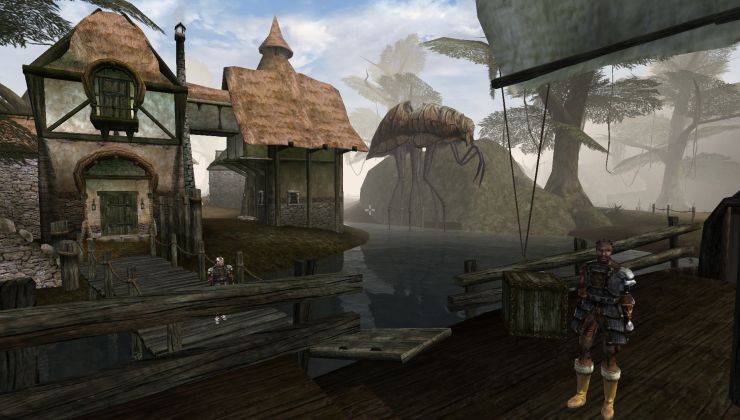 How to setup OpenMW for modern Morrowind on Linux / SteamOS and Steam Deck
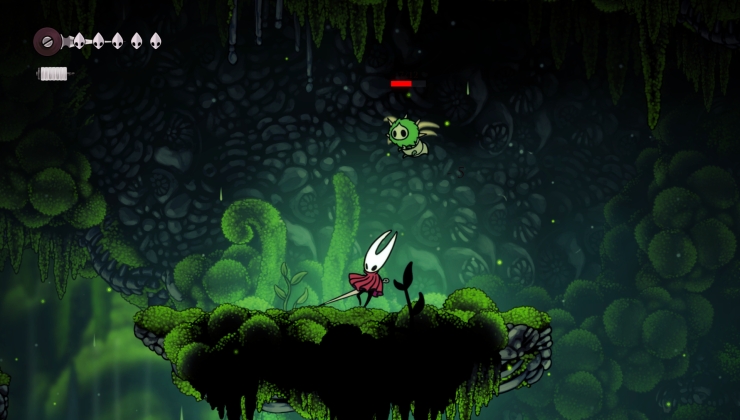 How to install Hollow Knight: Silksong mods on Linux, SteamOS and Steam Deck
- Incorrect monitor resolution as reported by Steam client…
- GustyGhost - Steam client makes more moves towards 64-bit
- GustyGhost - Patreon updates
- Liam Dawe - I think I found my Discord alternative
- Pyrate - Avowed asking for C++ Visual Runtime when launching from Battle.n…
- Caldathras - See more posts