 Support us on Patreon
 PayPal
Latest Comments by red193
Canonical have released some statistics from the Ubuntu installer survey
18 Oct 2018 at 10:53 pm UTC
18 Oct 2018 at 10:53 pm UTC
Quoting: GuestExcept the only method of probing the information about the hardware through the OS is the kernel, and that terminology has a basis in the hardware anyway. The man page of lscpu lists the topology in order as CPU, Core, Socket, and then a bunch of stuff relating to NUMA nodes. The author section of the man page lists two guys from Red Hat and another from IBM. If they don't know what they are talking about, who does?Quoting: red193I'll have to disagree with you because it's not talking about the kernel, but hardware. Even the kernel might schedule differently based on whether an allocated core is on the same CPU or not as something else. I'm not a kernel dev, so I don't know how aware the kernel is in that regard - but I would be very surprised if it wasn't.Quoting: liamdaweBecause what is life other than wasting time on meaningless things? I didn't mean the distinction was mentioned on the page, but rather that's the terminology used in that segment (specifically in the linux kernel development space). Just because it's different doesn't make it incorrect.Quoting: red193The distinction is already made, except using the terminology of CPU/socket instead of core/CPU.Except it isn't. Did you even read the linked statistics page? "Number of CPUs" - show me where there's any kind of distinction in that.
I always find this sort of thing amusing, how a few people seem to just latch onto something so specific like this rather than talk about the actual topic at hand ;)
More on-topic-ish:
Ideally I would like to see more depth from the stats. Physical disk storage for example: I do wonder on physical disk count, if raid is used, ssd vs hdd, that sort of thing. On a gaming angle, the more information developers have about what hardware people are using, the better development targets can be determined.
Canonical have released some statistics from the Ubuntu installer survey
18 Oct 2018 at 9:28 pm UTC
18 Oct 2018 at 9:28 pm UTC
Quoting: liamdaweBecause what is life other than wasting time on meaningless things? I didn't mean the distinction was mentioned on the page, but rather that's the terminology used in that segment (specifically in the linux kernel development space). Just because it's different doesn't make it incorrect.Quoting: red193The distinction is already made, except using the terminology of CPU/socket instead of core/CPU.Except it isn't. Did you even read the linked statistics page? "Number of CPUs" - show me where there's any kind of distinction in that.
I always find this sort of thing amusing, how a few people seem to just latch onto something so specific like this rather than talk about the actual topic at hand ;)
Canonical have released some statistics from the Ubuntu installer survey
18 Oct 2018 at 8:58 pm UTC
18 Oct 2018 at 8:58 pm UTC
Quoting: GuestThe distinction is already made, except using the terminology of CPU/socket instead of core/CPU.Quoting: red193As someone who deals with hardware designs where the difference between core and cpu matter an awful lot, and knowing quite a few people dealing with server racks, the distinction between core and cpu is an important one to some people. The technical details probably don't matter much to people here, but it's something that Canonical (considering they have builds for servers) should definitely make clearer I think.Quoting: liamdaweThe usage is correct, that's all I'm saying.Quoting: red193To the linux kernel, a multicore CPU is effectively multiple CPUs and is treated as such. Running lscpu on any distro will result in showing CPU(s):x where x is the number of what people would traditionally call cores. This is because a core is effectively it's own CPU sharing cache with other cores in the same way multiple sockets would share memory, and can act independently.We can talk about the technical details of stuff like that all we want, they likely just mean cores and they need to make it clear. Already spoken to them about this :)
Of course, there are details from each section that would benefit from more detail depending on who you ask anyway, and they can't show it all on what is essentially a PR web page.
Canonical have released some statistics from the Ubuntu installer survey
18 Oct 2018 at 7:57 pm UTC Likes: 5
18 Oct 2018 at 7:57 pm UTC Likes: 5
Quoting: liamdaweThe usage is correct, that's all I'm saying.Quoting: red193To the linux kernel, a multicore CPU is effectively multiple CPUs and is treated as such. Running lscpu on any distro will result in showing CPU(s):x where x is the number of what people would traditionally call cores. This is because a core is effectively it's own CPU sharing cache with other cores in the same way multiple sockets would share memory, and can act independently.We can talk about the technical details of stuff like that all we want, they likely just mean cores and they need to make it clear. Already spoken to them about this :)
Canonical have released some statistics from the Ubuntu installer survey
18 Oct 2018 at 7:47 pm UTC Likes: 7
18 Oct 2018 at 7:47 pm UTC Likes: 7
To the linux kernel, a multicore CPU is effectively multiple CPUs and is treated as such. Running lscpu on any distro will result in showing CPU(s):x where x is the number of what people would traditionally call cores. This is because a core is effectively it's own CPU sharing cache with other cores in the same way multiple sockets would share memory, and can act independently.
- NVIDIA DLSS 5 has become the source of many memes as the backlash continues
- Manjaro Linux looks like it's in trouble with the release of the "Manjaro 2.0 Manifesto"
- PlayStation 3 emulator RPCS3 gets easier to use with Steam
- NVIDIA DLSS 5 announced and it's all about that AI generation
- EndeavourOS Titan released, devs comment on age verification laws
- > See more over 30 days here
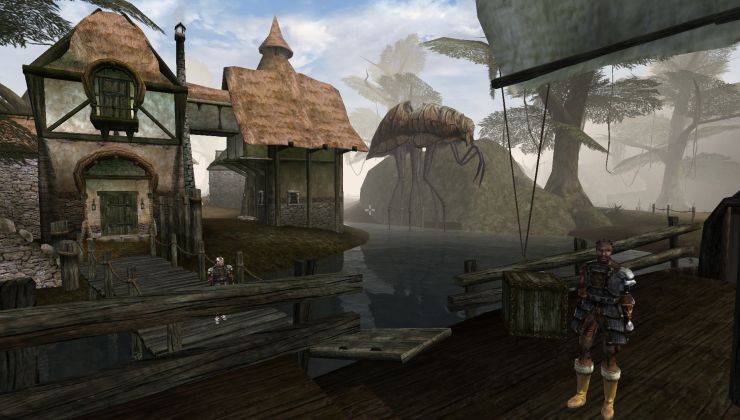 How to setup OpenMW for modern Morrowind on Linux / SteamOS and Steam Deck
 How to install Hollow Knight: Silksong mods on Linux, SteamOS and Steam Deck
- Incorrect monitor resolution as reported by Steam client…
- GustyGhost - Steam client makes more moves towards 64-bit
- GustyGhost - Patreon updates
- Liam Dawe - I think I found my Discord alternative
- Pyrate - Avowed asking for C++ Visual Runtime when launching from Battle.n…
- Caldathras - See more posts