 Support us on Patreon
 PayPal
Latest Comments by MayeulC
EVERSPACE is finally nearing a release on Linux, initial release will be under the radar
25 Aug 2017 at 10:25 pm UTC
I am impressed with those guys, and I really hope the necessary UE changes went back in the mainline, (as it would mean more port, therefore more potential Linux gamers, and more potential buyers for their game, due to the filtering effect ;))
25 Aug 2017 at 10:25 pm UTC
Quoting: tuxintuxedoI am curious whether the AMD problems are driver related and in that case, which one (open-source/closed). Maybe knowing that and asking the community would speed things up.I was wondering the same. I certainly hope that they are testing against the open one, as it's generally better and more compliant, in addition to the other benefits.
I am impressed with those guys, and I really hope the necessary UE changes went back in the mainline, (as it would mean more port, therefore more potential Linux gamers, and more potential buyers for their game, due to the filtering effect ;))
Entroware have unleashed Zeus, a powerful new "Ultra Mobile" Linux laptop
25 Aug 2017 at 4:33 pm UTC
For now, I will keep my old Samsung notebook :)
That is, until I find better. But I will have a look at the other solutions offered here.
25 Aug 2017 at 4:33 pm UTC
Quoting: WJMazepasI've looked into it, it sounded perfect (even got the mail for placing an order) until I figured that it was using a Mali GPU :/Quoting: MayeulCThe Pinebook is something like you want. But the screen is low end.In the market for a priceyNo.
But I would be in for a cheap ARM laptop ultraportable, with a decent screen (slim bezels not to loose space).
I only need vim in a VT, and a couple of days of battery :)
OK, if you want to be fancy, add in links, ssh, and maybe, maybe some VNC or GUI of some kind (with a browser).
But all I personaly really need right now is a cheap, low-power portable terminal ;)
I have a CHUWI Lapbook 14.1, which has a Quad-Core Celeron, 4GB RAM and a 1080p matte display. The battery lasts more than 8 hours with Ubuntu MATE. It comes with W10 but Linux worked with 0 issues. It could solve your problem a laptop like my
For now, I will keep my old Samsung notebook :)
That is, until I find better. But I will have a look at the other solutions offered here.
Want to know what could have happened in Half-Life 2: Episode 3? Well, now you might be able to
25 Aug 2017 at 4:17 pm UTC Likes: 1
25 Aug 2017 at 4:17 pm UTC Likes: 1
Interesting read, although the ending was a bit confusing.
I hope some fans will turn this third epistle playable :)
As a side note, it looks like the hyperborea name was part of the early prototype.
And I could have sworn seeing although my memory doesn't seem to be good on this one, as I couldn't find anything about it on the net.
I hope some fans will turn this third epistle playable :)
As a side note, it looks like the hyperborea name was part of the early prototype.
And I could have sworn seeing
Spoiler, click me
the Borealis flash in the portal 2 drydocks (which would be coherent with this "fanfict"),
Entroware have unleashed Zeus, a powerful new "Ultra Mobile" Linux laptop
25 Aug 2017 at 2:48 pm UTC
But I would be in for a cheap ARM laptop ultraportable, with a decent screen (slim bezels not to loose space).
I only need vim in a VT, and a couple of days of battery :)
OK, if you want to be fancy, add in links, ssh, and maybe, maybe some VNC or GUI of some kind (with a browser).
But all I personaly really need right now is a cheap, low-power portable terminal ;)
25 Aug 2017 at 2:48 pm UTC
In the market for a priceyNo.
But I would be in for a cheap ARM laptop ultraportable, with a decent screen (slim bezels not to loose space).
I only need vim in a VT, and a couple of days of battery :)
OK, if you want to be fancy, add in links, ssh, and maybe, maybe some VNC or GUI of some kind (with a browser).
But all I personaly really need right now is a cheap, low-power portable terminal ;)
The Civilization VI "Summer Update" for Linux will not feature cross-platform multiplayer
25 Aug 2017 at 2:39 pm UTC
Another solution could then be writing a hybrid: separate the game logic/simulation into its own library (or object file), and link it later (might need a DLL loader, but I don't think it's that complicated; and maybe a shim or two if the calling conventions are different).
In any case, I trust Feral to be competent enough to know the right thing to do (and choose whether to spend time on doing it).
25 Aug 2017 at 2:39 pm UTC
Quoting: F.UltraOoh,that's right :)Quoting: MayeulCI remember a game that lasted me six months, singleplayer on civ V (biggest map, slow time). But not every game is like this.Wine does not experience this problem, but it will also not fix it. Because the difference in the floating points are due to the compiler (yes different math libraries can also cause this but there is a basic difference on the compiler level) so one fix would of course be to force all windows devs to compile with gcc, but for some strange reason most windows devs prefer the Visual Studio compiler.
Usually, playing with your friends as an ally is less boring, as they can see your troops.
This is also a good candidate as a "mail-chess"-like (see freeciv 2's website).
A bit sad to hear this. Would love to hear the complete technical analysis of what happens here. The function names, actual differences, etc.
Is it floating point related, RNG related, other? Wine doesn't seem to have a problem with this. Wouldn't using some parts of winelib help? (It is LGPL, so definitely linkable against).
Another solution could then be writing a hybrid: separate the game logic/simulation into its own library (or object file), and link it later (might need a DLL loader, but I don't think it's that complicated; and maybe a shim or two if the calling conventions are different).
In any case, I trust Feral to be competent enough to know the right thing to do (and choose whether to spend time on doing it).
The Civilization VI "Summer Update" for Linux will not feature cross-platform multiplayer
25 Aug 2017 at 7:25 am UTC
25 Aug 2017 at 7:25 am UTC
I remember a game that lasted me six months, singleplayer on civ V (biggest map, slow time). But not every game is like this.
Usually, playing with your friends as an ally is less boring, as they can see your troops.
This is also a good candidate as a "mail-chess"-like (see freeciv 2's website).
A bit sad to hear this. Would love to hear the complete technical analysis of what happens here. The function names, actual differences, etc.
Is it floating point related, RNG related, other? Wine doesn't seem to have a problem with this. Wouldn't using some parts of winelib help? (It is LGPL, so definitely linkable against).
Usually, playing with your friends as an ally is less boring, as they can see your troops.
This is also a good candidate as a "mail-chess"-like (see freeciv 2's website).
A bit sad to hear this. Would love to hear the complete technical analysis of what happens here. The function names, actual differences, etc.
Is it floating point related, RNG related, other? Wine doesn't seem to have a problem with this. Wouldn't using some parts of winelib help? (It is LGPL, so definitely linkable against).
Open-world first-person shooter "The Signal From Tölva" has a Linux version in progress
20 Aug 2017 at 8:14 pm UTC
20 Aug 2017 at 8:14 pm UTC
Looks very interesting, I will however personally pass for now, as my graphics card died a few weeks ago, and I am considering a full upgrade, which won't happen very soon. Yet, I wish the best to the developer. 0.3 FPS is certainly not sounding ready for release, but at least it works :P
We love retrospectives on ports, it would be nice to have one.
We love retrospectives on ports, it would be nice to have one.
Valve limit key requests from developers if it isn't "worth the cost"
17 Aug 2017 at 6:54 pm UTC Likes: 6
17 Aug 2017 at 6:54 pm UTC Likes: 6
That makes perfect sense to me. In fact, I have been wondering about this rule for some time.
That, and free games (although there are some valid reasons to allow them, in this case).
_____
Edit two hours later, as it doesn't seem to be that obvious, and to elaborate a bit:
There are some costs associated with Steam. They need to pay for the development of the Steam client, website, infrastructure, store, support the ecosystem by submitting patches to the engines (Steam VR, Steam Audio, Steamworks). This admittedly doesn't cost much more if some developers try to game the system. The real issue is probably with the CDN: maintaining Terabytes of games and saves in various datacenters around the world, and handling support for various issues has a cost, however. The more games/people, the higher the cost. And it isn't fair to other developers to try to avoid Valve's cut (as it would result in a higher cut for the others).
Just to give an idea of the size of the infrastructure, according to Gabe Newell, in 2013, dota 2 updates accounted for 2-3% of the worldwide IP traffic when they were going live.
This is still valid for free games; although developers don't make money on these, so this is less profitable, and less unfair to other developers. But free games still drive gamers to the steam platform, and that may help Valve reach economics of size on their CDN, as well as gathering new people to market to. Moreover, there are often tradings cards or other involved, which can generate revenue (and this is probably not a coincidence). Free to play games are technically paid games.
That, and free games (although there are some valid reasons to allow them, in this case).
_____
Edit two hours later, as it doesn't seem to be that obvious, and to elaborate a bit:
There are some costs associated with Steam. They need to pay for the development of the Steam client, website, infrastructure, store, support the ecosystem by submitting patches to the engines (Steam VR, Steam Audio, Steamworks). This admittedly doesn't cost much more if some developers try to game the system. The real issue is probably with the CDN: maintaining Terabytes of games and saves in various datacenters around the world, and handling support for various issues has a cost, however. The more games/people, the higher the cost. And it isn't fair to other developers to try to avoid Valve's cut (as it would result in a higher cut for the others).
Just to give an idea of the size of the infrastructure, according to Gabe Newell, in 2013, dota 2 updates accounted for 2-3% of the worldwide IP traffic when they were going live.
This is still valid for free games; although developers don't make money on these, so this is less profitable, and less unfair to other developers. But free games still drive gamers to the steam platform, and that may help Valve reach economics of size on their CDN, as well as gathering new people to market to. Moreover, there are often tradings cards or other involved, which can generate revenue (and this is probably not a coincidence). Free to play games are technically paid games.
The fantastic and cheap RTS 'Rusted Warfare' has a huge update with mech units and lots more
14 Aug 2017 at 12:08 pm UTC
supcom 2 runs pretty well with wine, but I never bother.
I will have to check this out, though I tend to dislike the grid placement I could see in the trailer.
14 Aug 2017 at 12:08 pm UTC
If you're a fan of strategy games involving lots of units, like Total Annihilation or Supreme Commander, you should seriously take a look at this.Speaking of which, I wouldn't mind a port for either game :)
supcom 2 runs pretty well with wine, but I never bother.
I will have to check this out, though I tend to dislike the grid placement I could see in the trailer.
Looks like STAR WARS: Rebel Assault I + II will get their DOSBox versions for Linux on Steam
17 Jul 2017 at 12:52 pm UTC
17 Jul 2017 at 12:52 pm UTC
Quoting: Perkeleen_VittupääIt's wonderful for them to provide these old classics truly available. We don't miss too many classic SW titles no more! Episode I: Racer would be nice...I am still longing for a star wars Galactic battlegrounds port...
- Planetary Annihilation: TITANS gets revived as the devs ask for Linux help and feedback
- STALKER 2: Cost of Hope expansion announced for Summer 2026
- Hytale update 4 is another absolute whopper with over 500 new blocks
- Grounded 2 gets Steam Deck Verified with the latest updates
- Rebellion revealed first-person action horror Alien Deathstorm
- > See more over 30 days here
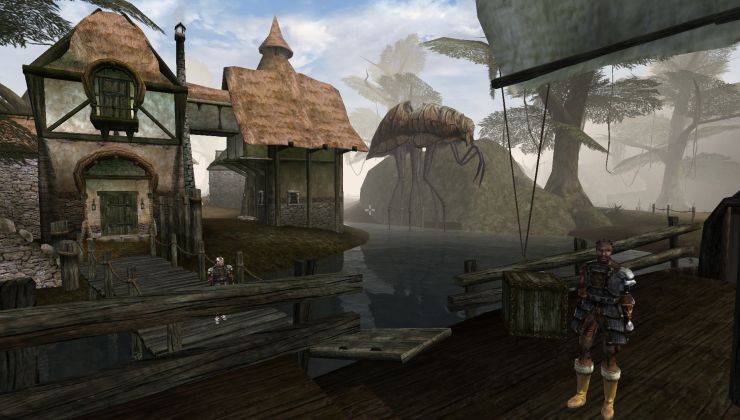 How to setup OpenMW for modern Morrowind on Linux / SteamOS and Steam Deck
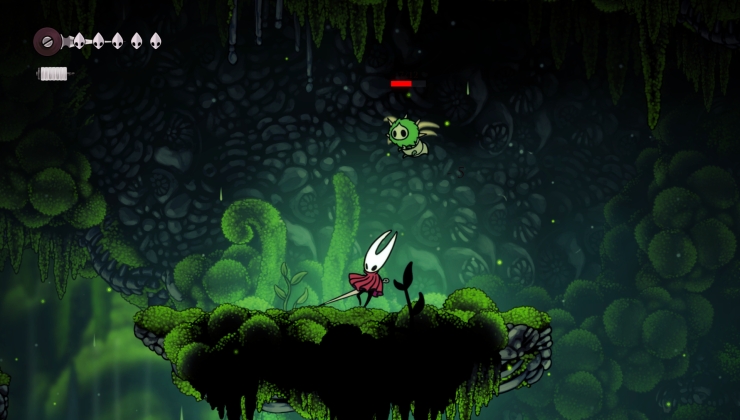 How to install Hollow Knight: Silksong mods on Linux, SteamOS and Steam Deck
- Away all of next week
- Ehvis - What Multiplayer Shooters are yall playing?
- Liam Dawe - The Great Android lockdown of 2026.
- Strigi - Proton/Wine Games Locking Up
- Caldathras - What have you been playing recently?
- Strigi - See more posts