 Support us on Patreon
 PayPal
Latest Comments by R3BiRtH
With a Nintendo Switch 2 on the way, I hope Valve make a Steam Deck 2
8 May 2024 at 7:25 pm UTC Likes: 4
8 May 2024 at 7:25 pm UTC Likes: 4
Quoting: ShmerlWhy? Desktop generation of CPUs and GPUs refresh around once per 2 years. Same happens with mobile phones. Why can't gaming handhelds refresh that way too?2 year refreshes may make more sense for the alternative PC handhelds such as the ROG Ally, and Legion go, which aren't targeted as a standard in terms of games having settings and such tailored for it, but for the Steam Deck that makes no sense, since it detracts from the "Deck Verified" system, as well as the seemingly intented purpose for the device to be the standard "lowest common denominator" target for developers to make sure their games are ready to be supported for handheld gaming PC's. A longer cycle makes more sense for a standard to work as a...standard, which would apply to a new device which would be intended to replace what was the standard target, with a new one.
League of Legends likely unplayable on Linux / Steam Deck soon due to Vanguard anti-cheat
12 Jan 2024 at 4:38 pm UTC Likes: 1
https://youtu.be/RwzIq04vd0M?si=WopAqHRbneJSUqxe [External Link]
(TL'DW, there are plenty of other methods which can be used to bypass the type of anti cheat which is used, which vary in terms of ease and cost on behalf of the cheater)
12 Jan 2024 at 4:38 pm UTC Likes: 1
Quoting: dubigrasuHere's a video about just that very subject! (Regarding the effectiveness combating cheating in any form) It's a long one.Quoting: PyreticI was asking how efficient is in terms of combating cheating in whatever form. Is Valorant cheaters free, or at least is cheating significantly reduced compared with other AC software, so much so that is worth (for Riot) the public backlash?Quoting: dubigrasuHow good is Vanguard compared with other AC software out there? Is that efficient on Valorant?If you're talking about performance, Valorant runs fine with it on.
If you're talking about security, you can circumvent the anti-virus (and most other kernel-level software) with a Windows VM.
And as a side note, what other game (if any) is using it?
https://youtu.be/RwzIq04vd0M?si=WopAqHRbneJSUqxe [External Link]
(TL'DW, there are plenty of other methods which can be used to bypass the type of anti cheat which is used, which vary in terms of ease and cost on behalf of the cheater)
AYANEO NEXT LITE handheld announced with SteamOS Linux
11 Jan 2024 at 10:19 pm UTC Likes: 1
11 Jan 2024 at 10:19 pm UTC Likes: 1
I'm a bit worried they went with HoloIso as the base rather than something more complete like ChimeraOS, since they don't have access to SteamOS direct from Valve. ChimeraOS provides some stuff which simplifies and enhances the support for hardware outside the Deck in a way which is more complete compared to HoloISO, such as using their own version of gamescope, and their own UI integrated with it similarly to Steam known as OpenGamepadUI to handle accessing stuff like TDP/GPU controls and fan options, which can be used alongside the Steam Client in a QAM-only mode.
Doing stuff like that saves from the potential of the Steam Client updating and breaking whatever hooks or plugins they would need to do similar stuff with Steam in SteamOS mode (and ultimately HoloISO), and ChimeraOS likely already is providing support for the device after release anyways, so it'd be a win/win pooling efforts.
Doing stuff like that saves from the potential of the Steam Client updating and breaking whatever hooks or plugins they would need to do similar stuff with Steam in SteamOS mode (and ultimately HoloISO), and ChimeraOS likely already is providing support for the device after release anyways, so it'd be a win/win pooling efforts.
Mundfish remove graphics options from Atomic Heart on Steam Deck (updated)
18 May 2023 at 7:56 pm UTC Likes: 7
18 May 2023 at 7:56 pm UTC Likes: 7
I've since learned, for any game that does this, to just launch the game with "SteamDeck=0 %command%" in the properties. It sucks that the game was forcing settings however.
Microsoft experiments with a handheld Windows 11 mode for Steam Deck
13 Apr 2023 at 5:07 pm UTC Likes: 2
13 Apr 2023 at 5:07 pm UTC Likes: 2
While interesting, there are some aspects about the hackathon project that misses on some stuff compared to SteamOS. Games/applications aren't auto full screened, and it seems as though applications still have windowing controlled the same way as windows normally handled (where the windows compositor defaults to explorer as the UI for handling window management), so apps aren't full screened, and you still need a "mouse" so to speak to handle applications.
Valve answers the question: should developers do native Linux support or Proton?
13 Nov 2021 at 6:35 pm UTC Likes: 2
13 Nov 2021 at 6:35 pm UTC Likes: 2
I think their answer was a good one. One thing not considered is that, even with native ports, there's no guarantee a developer would continue to provide support to it, especially if the native port involves a separate porting team (where that depends on the team's focus on that codebase), or if it involves another simultaneous codebase, where the support'll be split anyways.
Native will always be better from the standpoint of efficiency when running, no doubting that, however there's little assurance on the nature of developer focus. Proton in a way can address that (primarily on the basis of the codebases quite literally being shared, since it's the same release), and the only other way to push that to apply for native would be if Linux support becomes more of a primary target, or if portable development practices take hold. Those come in time however, so the stance is reasonable.
Native will always be better from the standpoint of efficiency when running, no doubting that, however there's little assurance on the nature of developer focus. Proton in a way can address that (primarily on the basis of the codebases quite literally being shared, since it's the same release), and the only other way to push that to apply for native would be if Linux support becomes more of a primary target, or if portable development practices take hold. Those come in time however, so the stance is reasonable.
Seems the Valve Steam Deck has been impressing people with some hands-on time
8 Aug 2021 at 10:59 am UTC
8 Aug 2021 at 10:59 am UTC
Quoting: LoftyIt should be noted that having the UI doesn't mean the complete experience, such as being able to connect Bluetooth devices and Wifi though the UI, being able to control sound devices, and being able to manage display brightness and such from the UI, and some other stuff like FPS and TDP control (amongst other things). It's likely to amount to being as simple as how Big Picture mode was (relative to just the aspect of selecting games, and the browser stuff) as the other stuff comes through deeper integration, and with other components bundled with the OS. This was the same regarding SteamOS and Big Picture in the past.Quoting: CatKillerI expect those videos to end with "Windows on this device kinda sucks."why ? i mean watching this bit of the steamdeck hands on they state that the new UI is coming to windows shortly after. All things being equal the performance and compatibility should be higher on windows. I don't expect a mountain of people to do this honestly. But maybe when the novelty of using steamOS wears out perhaps.
Ryan Gordon and Ethan Lee on Proton and the Steam Deck
22 Jul 2021 at 6:00 am UTC
22 Jul 2021 at 6:00 am UTC
Quoting: CatKillerI too would like this, a sorta "CI" approach to developing games, regarding supporting platforms (in this case, PC platforms). I'm hoping that through developers being pushed to use technologies like Vulkan for better Proton ports, and developing in a more portable fashion to better support the Deck with Proton, it leads to that happening as native releases are more considered.Quoting: constThe final goal isn't every game getting ported to Linux, it's every new game project taking linux into consideration and using the tools that let them support us.What I'd like to see is developers not thinking in terms of "ports" at all, but to have Linux builds as part of their standard development and testing routine for their PC release. They'll squash more bugs before release that way, just from having more lenses to examine their code with. They'll have saved time and money even without a single sale. Then they only need to make a depot of their existing, working, tested, Linux build the same as their Windows build.
- The "video game preservation service" Myrient is shutting down in March
- Discord delay global rollout of age verification to improve transparency and add more options
- FINAL FANTASY VII arrives on GOG with a new edition live on Steam too
- SpaghettiKart the Mario Kart 64 fan-made PC port gets a big upgrade
- KDE Plasma 6.6.1 rolls out with lots of fixes for KWin
- > See more over 30 days here
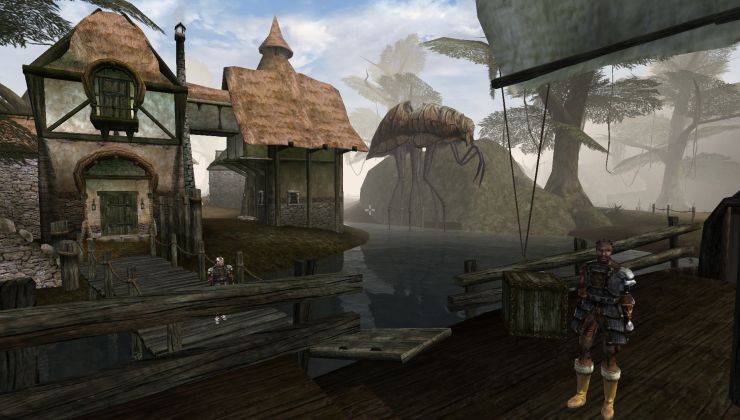 How to setup OpenMW for modern Morrowind on Linux / SteamOS and Steam Deck
 How to install Hollow Knight: Silksong mods on Linux, SteamOS and Steam Deck
- steam overlay performance monitor - issues
- Xpander - Nacon under financial troubles... no new WRC game (?)
- Xpander - Establishing root of ownership for Steam account
- Nonjuffo - Total Noob general questions about gaming and squeezing every oun…
- GustyGhost - Looking for Linux MMORPG sandbox players (Open Source–friendly …
- Jarmer - See more posts