 Support us on Patreon
 PayPal
Latest Comments by RedWyvern
WinBoat for containerised Windows apps on Linux adds custom install path, home folder sharing and more
9 Oct 2025 at 5:54 pm UTC Likes: 6
9 Oct 2025 at 5:54 pm UTC Likes: 6
After the previous article on it, I gave it a try now.
Initially had some trouble in getting it to work, turns out that Windows just takes a really long time to install.
It works fine with rootless Docker and a Windows 10 LTSC ISO, which is a pleasant surprise.
App support is a bit spotty, but seeing Windows apps as windows right on my Linux desktop is almost magical.
Some remarks on my experience so far, for Uni use:
- SolidWorks 2025 detects the VM and refuses to install.
- The "Windows App" fully works, even the health check is all green.
- Through this "Windows App", Mathcad Prime works but needs to be forced to full-screen to fix a cursor misalignment glitch.
- Office 365 crashes when opened on the Linux desktop, but works fine when connected to the full desktop with the in-app option.
- OneDrive integration works fine within the app (again, I use it for Uni work), but the native fileshare errors out.
- Some apps conflict on the internal RDP session, mainly the full desktop closes other apps when logged in to.
- The theming setting of the desktop is not respected in app windows, as it is not transferred to the per app RDP session.
- Windows's old "Performance" mode, buried in system settings, helps a lot with responsiveness in the Docker based VM.
- I have not gotten KDE connect or similar to link to the host system yet, but I think that this is a Docker network setting that can probably be changed for it.
Initially had some trouble in getting it to work, turns out that Windows just takes a really long time to install.
It works fine with rootless Docker and a Windows 10 LTSC ISO, which is a pleasant surprise.
App support is a bit spotty, but seeing Windows apps as windows right on my Linux desktop is almost magical.
Some remarks on my experience so far, for Uni use:
- SolidWorks 2025 detects the VM and refuses to install.
- The "Windows App" fully works, even the health check is all green.
- Through this "Windows App", Mathcad Prime works but needs to be forced to full-screen to fix a cursor misalignment glitch.
- Office 365 crashes when opened on the Linux desktop, but works fine when connected to the full desktop with the in-app option.
- OneDrive integration works fine within the app (again, I use it for Uni work), but the native fileshare errors out.
- Some apps conflict on the internal RDP session, mainly the full desktop closes other apps when logged in to.
- The theming setting of the desktop is not respected in app windows, as it is not transferred to the per app RDP session.
- Windows's old "Performance" mode, buried in system settings, helps a lot with responsiveness in the Docker based VM.
- I have not gotten KDE connect or similar to link to the host system yet, but I think that this is a Docker network setting that can probably be changed for it.
Airborne Empire an open-world city-building RPG gets a Linux / Steam Deck freezing fix
18 Sep 2025 at 5:30 pm UTC
18 Sep 2025 at 5:30 pm UTC
> Pity it's still in Early Access though ...
The previous game, Airborne Kingdom, is fully released and finished.
As-is, Airborne Empire already has more content and is more enjoyable IMO.
> Checked the system requirements and it will actually run on my laptop!
Do test if you pick it up, earlier versions ran surprisingly poor on my 3500U with older Proton releases.
This might have been improved since, it's been a while since I tried Airborne Empire and there have been significant updatea since.
The previous game, Airborne Kingdom, is fully released and finished.
As-is, Airborne Empire already has more content and is more enjoyable IMO.
> Checked the system requirements and it will actually run on my laptop!
Do test if you pick it up, earlier versions ran surprisingly poor on my 3500U with older Proton releases.
This might have been improved since, it's been a while since I tried Airborne Empire and there have been significant updatea since.
openSUSE Leap 16.0 will need Steam gamers to install some extras due to no 32-bit
5 Aug 2025 at 3:08 pm UTC Likes: 1
5 Aug 2025 at 3:08 pm UTC Likes: 1
Perhaps good to note:
Tumbleweed supports many things which Leap does not, since it can deviate more from SUSE Linux Enterprise.
E.g Leap now requires x86_64_v2, while Tumbleweed will continue to work on x86_64_v1.
YaST will continue to be available as-is for Tumbleweed, while it is getting deprecated from Leap.
And having to install dependencies like this is not new either, since you already need to run opi codecs for hardware encoding to function.
The Leap migration tool already takes care of enabling 32-bit support, but there is no mention of this coming to Tumbleweed yet.
Tumbleweed supports many things which Leap does not, since it can deviate more from SUSE Linux Enterprise.
E.g Leap now requires x86_64_v2, while Tumbleweed will continue to work on x86_64_v1.
YaST will continue to be available as-is for Tumbleweed, while it is getting deprecated from Leap.
And having to install dependencies like this is not new either, since you already need to run opi codecs for hardware encoding to function.
The Leap migration tool already takes care of enabling 32-bit support, but there is no mention of this coming to Tumbleweed yet.
Bazzite would shut down if Fedora goes ahead with removing 32-bit
25 Jun 2025 at 11:06 am UTC Likes: 2
25 Jun 2025 at 11:06 am UTC Likes: 2
This does show the benefit of OpenSUSE's way of handling their distro.
Not a recommendation nor an attempt at starting a distro war, just explaining how it works:
OpenSUSE Leap and derivatives like the immutable Micro flavours do enforce higher CPU requirements and package less software.
But Tumbleweed keeps legacy support, both with packaged software and architecture support.
I will note that OpenSUSE's Open Build Service and Fedora's Copr are similar and that I am not familiar enough to explain the differences.
Practical examples:
SLES 16 will require support for x86_64_v3 CPUs.
Since Leap 16 follows this, it would have gotten the same requirement.
They since decided to keep supporting x86_64_v2 on the community Leap 16 distro, though communication has been contradictory on this.
Which is a blessing for my ageing but reliable home server, but besides the point.
This since Tumbleweed will keep full x86_64_v1 support, at the cost of the more thorough testing done on Leap/SLES updates.
And in-place switching to a different distro version is possible, going either way.
Steam has an 'official' re-package on Tumbleweed, but requires adding the still official but experimental and less supported games:tools repo on Leap.
This is only an opi steam command away from adding on Leap, but it not being on the main repo is significant here.
As the main repo is kept compatible on updates, even on Tumbleweed, but community repos might develop dependency conflicts.
If this occurs, Zypper is smart enough to uninstall the problematic package from the system.
This in stead of self-destructing in dependency resolution, like Ubuntu with a prioritised PPA or Pop!_OS in the infamous Linus situation (example, not hating on the distro).
More accurately, it will give you dialogues on what resolution to choose, sorted on how sensible the choices are.
But when updating in unattended mode or through packagekit (Discover, Gnome Software, ect.), it defaults to the first options, which is good enough with only a few community repos installed.
Leap 16 will drop YaST2, which is a controversial move since that software is well-liked in the community.
But Tumbleweed will keep the software around, in as-is no longer updated but functional form.
Though in their messaging, the team made it clear that they are open for community members to pick up YaST maintenance for their own use.
Furthermore, the immutable Micro flavours are directly based on Leap and allow for overlaying Leap packages over the image.
To my knowledge, this includes community repositories, including ones which re-add legacy dependencies.
Making it possible to just use those on otherwise incompatible systems, though the need for a re-start makes them only recommended for servers.
That said, here it makes more sense to build a different image with the needed software installed.
I am not familiar enough with immutable distro's to know how feasible or applicable to Fedora Silverblue this is.
Circling back to the issue here, OpenSUSE's Leap 15.6 documentation currently lists support for running 32-bit applications on Leap.
But it lacks support for building new 32-bit applications.
The links to Leap 16 information are very broken at the moment, in what I can find I am not seeing mention of this getting dropped, but time will tell.
Summarising, OpenSUSE does drop support for software and hardware on Leap, similarly to Fedora.
But they leave the door open for 'legacy' usecases on Tumbleweed, at the cost of the less thorough testing of updates.
Though they are still above average on testing their core repository.
And the package manager is smart enough to resolve dependency conflicts in a way which keeps the system reliable.
Not a recommendation nor an attempt at starting a distro war, just explaining how it works:
OpenSUSE Leap and derivatives like the immutable Micro flavours do enforce higher CPU requirements and package less software.
But Tumbleweed keeps legacy support, both with packaged software and architecture support.
I will note that OpenSUSE's Open Build Service and Fedora's Copr are similar and that I am not familiar enough to explain the differences.
Practical examples:
SLES 16 will require support for x86_64_v3 CPUs.
Since Leap 16 follows this, it would have gotten the same requirement.
They since decided to keep supporting x86_64_v2 on the community Leap 16 distro, though communication has been contradictory on this.
Which is a blessing for my ageing but reliable home server, but besides the point.
This since Tumbleweed will keep full x86_64_v1 support, at the cost of the more thorough testing done on Leap/SLES updates.
And in-place switching to a different distro version is possible, going either way.
Steam has an 'official' re-package on Tumbleweed, but requires adding the still official but experimental and less supported games:tools repo on Leap.
This is only an opi steam command away from adding on Leap, but it not being on the main repo is significant here.
As the main repo is kept compatible on updates, even on Tumbleweed, but community repos might develop dependency conflicts.
If this occurs, Zypper is smart enough to uninstall the problematic package from the system.
This in stead of self-destructing in dependency resolution, like Ubuntu with a prioritised PPA or Pop!_OS in the infamous Linus situation (example, not hating on the distro).
More accurately, it will give you dialogues on what resolution to choose, sorted on how sensible the choices are.
But when updating in unattended mode or through packagekit (Discover, Gnome Software, ect.), it defaults to the first options, which is good enough with only a few community repos installed.
Leap 16 will drop YaST2, which is a controversial move since that software is well-liked in the community.
But Tumbleweed will keep the software around, in as-is no longer updated but functional form.
Though in their messaging, the team made it clear that they are open for community members to pick up YaST maintenance for their own use.
Furthermore, the immutable Micro flavours are directly based on Leap and allow for overlaying Leap packages over the image.
To my knowledge, this includes community repositories, including ones which re-add legacy dependencies.
Making it possible to just use those on otherwise incompatible systems, though the need for a re-start makes them only recommended for servers.
That said, here it makes more sense to build a different image with the needed software installed.
I am not familiar enough with immutable distro's to know how feasible or applicable to Fedora Silverblue this is.
Circling back to the issue here, OpenSUSE's Leap 15.6 documentation currently lists support for running 32-bit applications on Leap.
But it lacks support for building new 32-bit applications.
The links to Leap 16 information are very broken at the moment, in what I can find I am not seeing mention of this getting dropped, but time will tell.
Summarising, OpenSUSE does drop support for software and hardware on Leap, similarly to Fedora.
But they leave the door open for 'legacy' usecases on Tumbleweed, at the cost of the less thorough testing of updates.
Though they are still above average on testing their core repository.
And the package manager is smart enough to resolve dependency conflicts in a way which keeps the system reliable.
Valve will join Lenovo at CES 2025 for the future of gaming handhelds
20 Dec 2024 at 5:39 pm UTC
Though such a sensor can be used as a touchpad too with the right firmware.
My e-Ink smartphone lets me scroll by sliding my finger over it's fingerprint sensor, to name an example.
20 Dec 2024 at 5:39 pm UTC
Quoting: melkemindMost certainly a fingerprint reader for unlocking the system with biometrics.Quoting: tmtvlYet another machine without touchpads and with the left thumbstick and D-pad the wrong way around. Really makes me appreciate how good the Steam Deck is by comparison.That square below the right stick looks like a tiny touchpad. I suppose it could be anything though.
Though such a sensor can be used as a touchpad too with the right firmware.
My e-Ink smartphone lets me scroll by sliding my finger over it's fingerprint sensor, to name an example.
KDE Plasma 6.3 will have much better fractional scaling
17 Dec 2024 at 12:34 am UTC Likes: 2
I won't say stable since kwin can be a bit crash-happy, but this recovers gracefully, the panels only disappear for a second as it restarts.
After the initial kinks with Plasma 6 were worked out (this was a rough update for me), I have stopped looking at other Desktop Environments.
It is stable enough for my daily use and gaming, before on X11 but now switched to Wayland on both my systems.
Actually, for gaming it's the only DE I consider, since the window rules functionality is amazing for making games that display to the wrong screen behave.
Even having managed to make BeamNG work across both my screens with it.
It is worthy of note that this functionality can be janky and finicky to use, but that beats not having it.
Resource usage wise, it's a heavier deskop, but unlike Gnome 4 does not waste system resources for no apparent reason.
It does a lot, is very flexible (only switching all workspaces on multiple screens aside) and has many optional graphical effects, which all take resources when used.
But it is worthy of note that it can run extremely poorly on older Nvidia drivers or other older hardware, when it does not run properly it chugs.
If I wanted something light but actually nice to use I would use MATE or XFCE instead, but I want what I feel the most comfortable with.
Barring a few unobtrusive glitches, KDE Plasma 6 has proven to be for me, on my hardware.
That said, this is my opinion, I know others online who swear by XFCE and in ways I miss my time with MATE a bit.
17 Dec 2024 at 12:34 am UTC Likes: 2
Quoting: legluondunetHow is KDE plasma behavior today? Is it enough stable for a daily use and gaming ? How is it resources consuming ? I prefer light DE and keep resources for gaming.Personally I've awitched from XFCE to KDE 3 years ago and was pleasantly surprised with how reliable it has gotten.
I won't say stable since kwin can be a bit crash-happy, but this recovers gracefully, the panels only disappear for a second as it restarts.
After the initial kinks with Plasma 6 were worked out (this was a rough update for me), I have stopped looking at other Desktop Environments.
It is stable enough for my daily use and gaming, before on X11 but now switched to Wayland on both my systems.
Actually, for gaming it's the only DE I consider, since the window rules functionality is amazing for making games that display to the wrong screen behave.
Even having managed to make BeamNG work across both my screens with it.
It is worthy of note that this functionality can be janky and finicky to use, but that beats not having it.
Resource usage wise, it's a heavier deskop, but unlike Gnome 4 does not waste system resources for no apparent reason.
It does a lot, is very flexible (only switching all workspaces on multiple screens aside) and has many optional graphical effects, which all take resources when used.
But it is worthy of note that it can run extremely poorly on older Nvidia drivers or other older hardware, when it does not run properly it chugs.
If I wanted something light but actually nice to use I would use MATE or XFCE instead, but I want what I feel the most comfortable with.
Barring a few unobtrusive glitches, KDE Plasma 6 has proven to be for me, on my hardware.
That said, this is my opinion, I know others online who swear by XFCE and in ways I miss my time with MATE a bit.
Fedora KDE gets approval to be upgraded to sit alongside Fedora Workstation
11 Nov 2024 at 11:52 am UTC Likes: 1
I got my start in Linux-land with MATE, Ubuntu MATE to be exact.
Initially from finding it to be the better available desktop when playing around with a Raspberry Pi.
Then once I got an ancient netbook going again to have something not as awful as my school iPad, I went with Ubuntu MATE since I was somewhat familiar with it.
Ended up sticking with it for 3 years, also on my new laptop where I did not like how Linux Mint Cinnamon (nor it's factory Windows 10) felt and worked.
Though as Ubuntu's snaps doubled the boot time of that machine, I started trying different things again, switching to GNOME 3 for a bit as I figured it would work well with a drawing tablet.
Which it did not, along with relying on extensions that break on every major update and the new UI design not being to my preference, modern GNOME is not for me.
So on my desktop I ran XFCE for a bit, which was quite good if a bit basic and the only animation being an annoyingly delayed panel auto-hide.
It's panels being both less and more versatile than MATE's in differing ways, despite being similar.
Stuck to that for a short while on my desktop, while keeping the heavily tweaked GNOME 4X I got working to my needs on my laptop.
After getting a Steam Deck and finding out how stable Plasma had gotten, I quickly gave it another spin on my desktop.
And while before it was too buggy for my needs, the later 5.2X releases have gotten very polished, ran those with a Windows 7-esque theming.
Then transitioned to Garuda Linux's MacOS like lay-out on both my machines, since theming aside I prefer it.
This lay-out has stuck to this day for me, though I revert it to resemble an older version of Garuda's layout and occasionally change the theming.
It works way better than GNOME 3/4X when operated with a drawing tablet too, something I was a bit afraid of when moving my laptop over.
And with Plasma 6.1 it has gotten to the point where I currently only consider KDE Plasma for general usage and find it polished enough to almost universally recommend.
Stretching from the MacOS like layout I run on my laptop and desktop to standard Breeze on a media PC and backup OSes.
Also moved my father over to it, who I initially got started on GNOME 4X but had to move distro due to Clear Linux having become unsuitable on desktop (still great for servers though, my home server will continue to run it).
Currently I consider TuxedoOS the distro to experience Plasma 6.1 with, if Arch Linux(/Garuda/EndeavourOS) is not a suitable option and KDE Linux/OS is not out yet or unsuitable (will be like SteamOS's desktop mode, so image based and Flatpak reliant).
Which has generally proven to be a good Ubuntu derivative for me, akin to Linux Mint but shipping more modern software and sticking closer to the base project defaults, but replacing Snaps with Flatpak by default.
This in addition to the standard repositories, to which they also added a normal Firefox packages.
Noting that Fedora KDE seems like a good option too, simply not one I have experience with.
Circling back to the subject of the article, glad to see KDE Plasma get this recognition.
Which matches my experience of 6.1 and beyond to be the best I have used yet.
And it helps people who would be put off by GNOME to give Fedora a try.
11 Nov 2024 at 11:52 am UTC Likes: 1
Quoting: Purple Library GuyWhich is no coincidence, since MATE is the continuation of GNOME 2.Quoting: pleasereadthemanualMy needs are fairly simple, so I ended up using Mate. When Mandriva died I was looking around for a bit, and found myself using Mint. At the timeQuoting: fagnerlnI really like GNOME, but it has a few deficiencies that are unlikely to be fixed for a very long time. I like KDE too, but the UX is not as good. In some places it's much better, but overall it's not as well-constructed. Both have bugs.Quoting: pleasereadthemanualI tried out KDE for a while due to a missing feature on GNOME, but KDE then broke a similar feature, so I went back to GNOME.Yeah, that's exactly my experience. I really like the Gnome workflow, but because of disliking some of the dev's attitudes/opinions, and the fact that there's a lot of people hyping KDE (and now companies like Valve funding it), I keep an eye on every KDE release, but it's always the same: I try it, it breaks, I regret.
Maybe it's a "me" issue, but even on Windows, if I use it a bit, I find some bugs, even doing nothing. Gnome is just fine.
I just hope that Fedora Cosmic become a fantastic distro.
COSMIC is a great desktop. I ran it as my main desktop for a few weeks. I'd love to try it again when it's stable and has more features like support for graphics tablets and integrated input methods :)
--Gnome UI was weird and for me counterintuitive; they had just gone to Gnome 3, with the unofficial motto "If it ain't broke,don'tfix it". So that was out.
--KDE was theoretically great with everything I could need, but wonky; whenever I tried it there always seemed to be things that annoyingly didn't work right. That was out.
--Mint's flagship Cinnamon was still kind of rough and also at the time wouldn't let me put an extra panel up the right hand side of the screen. With wide screens, I figure that's a good place for a panel; I like to put my launchers there. That was out.
--Mate was comfortable, not buggy, let me do my panel thing, felt like Gnome 2 or maybe Windows without the annoying shit and with better customization. Went with that. Since then, has never gotten in my way so I've stuck with it.
If I had to decide today, the state of various desktops is way different, so don't know where I might have ended up.
I got my start in Linux-land with MATE, Ubuntu MATE to be exact.
Initially from finding it to be the better available desktop when playing around with a Raspberry Pi.
Then once I got an ancient netbook going again to have something not as awful as my school iPad, I went with Ubuntu MATE since I was somewhat familiar with it.
Ended up sticking with it for 3 years, also on my new laptop where I did not like how Linux Mint Cinnamon (nor it's factory Windows 10) felt and worked.
Though as Ubuntu's snaps doubled the boot time of that machine, I started trying different things again, switching to GNOME 3 for a bit as I figured it would work well with a drawing tablet.
Which it did not, along with relying on extensions that break on every major update and the new UI design not being to my preference, modern GNOME is not for me.
So on my desktop I ran XFCE for a bit, which was quite good if a bit basic and the only animation being an annoyingly delayed panel auto-hide.
It's panels being both less and more versatile than MATE's in differing ways, despite being similar.
Stuck to that for a short while on my desktop, while keeping the heavily tweaked GNOME 4X I got working to my needs on my laptop.
After getting a Steam Deck and finding out how stable Plasma had gotten, I quickly gave it another spin on my desktop.
And while before it was too buggy for my needs, the later 5.2X releases have gotten very polished, ran those with a Windows 7-esque theming.
Then transitioned to Garuda Linux's MacOS like lay-out on both my machines, since theming aside I prefer it.
This lay-out has stuck to this day for me, though I revert it to resemble an older version of Garuda's layout and occasionally change the theming.
It works way better than GNOME 3/4X when operated with a drawing tablet too, something I was a bit afraid of when moving my laptop over.
And with Plasma 6.1 it has gotten to the point where I currently only consider KDE Plasma for general usage and find it polished enough to almost universally recommend.
Stretching from the MacOS like layout I run on my laptop and desktop to standard Breeze on a media PC and backup OSes.
Also moved my father over to it, who I initially got started on GNOME 4X but had to move distro due to Clear Linux having become unsuitable on desktop (still great for servers though, my home server will continue to run it).
Currently I consider TuxedoOS the distro to experience Plasma 6.1 with, if Arch Linux(/Garuda/EndeavourOS) is not a suitable option and KDE Linux/OS is not out yet or unsuitable (will be like SteamOS's desktop mode, so image based and Flatpak reliant).
Which has generally proven to be a good Ubuntu derivative for me, akin to Linux Mint but shipping more modern software and sticking closer to the base project defaults, but replacing Snaps with Flatpak by default.
This in addition to the standard repositories, to which they also added a normal Firefox packages.
Noting that Fedora KDE seems like a good option too, simply not one I have experience with.
Circling back to the subject of the article, glad to see KDE Plasma get this recognition.
Which matches my experience of 6.1 and beyond to be the best I have used yet.
And it helps people who would be put off by GNOME to give Fedora a try.
Sony say their PSN account requirement on PC is so you can enjoy their games 'safely'
10 Nov 2024 at 11:22 am UTC Likes: 1
Guild Wars 2 lets you play on Steam and log in to arena.net (account management site) with a Steam account.
Though that does restrict what codes can be claimed, so an actual account does have benefits.
On which I lost all interest for the in attempting to create one before the Steam account option existed and learning how non-functional that process was.
Down to not being able to open a support ticket normally, having to dig through the site for another way to initiate one and ask them to fix the account.
Followed with horrendous onboarding ingame, making this another example of them clearly not wanting my money for expansions and other items, so also not receiving it.
I would still consider Horizon Forbidden West if it comes on a decent sale.
But any game which requires (it being optional is fine) a PSN account is a no-go.
This since it adds an unneeded point of failure to the game, outside of Steam's control and with Sony dirextly being able to sabotage it after purchase.
10 Nov 2024 at 11:22 am UTC Likes: 1
Quoting: CanadianBlueBeerNope. ANY game that requires me to make an account with them does not get purchased.Even for MMOs this need can be disproven by counter-example.
Except for MMO type, where duh, you do NEED one.
Single player? Frack no.
Of course, I could make another new gmail acct just for them, but honestly,
none of their games are appealing to me anyway.
Guild Wars 2 lets you play on Steam and log in to arena.net (account management site) with a Steam account.
Though that does restrict what codes can be claimed, so an actual account does have benefits.
On which I lost all interest for the in attempting to create one before the Steam account option existed and learning how non-functional that process was.
Down to not being able to open a support ticket normally, having to dig through the site for another way to initiate one and ask them to fix the account.
Followed with horrendous onboarding ingame, making this another example of them clearly not wanting my money for expansions and other items, so also not receiving it.
I would still consider Horizon Forbidden West if it comes on a decent sale.
But any game which requires (it being optional is fine) a PSN account is a no-go.
This since it adds an unneeded point of failure to the game, outside of Steam's control and with Sony dirextly being able to sabotage it after purchase.
CoreCtrl adds power profiles support for AMD RX 7600
25 Sep 2024 at 1:21 pm UTC
After this setup it does not need user authentication to work on startup, this is how I have been running it for over a year on my systems with no issues.
This also explains how to enable more advanced controls with a kernel parameter, which I have also done from the start so I can not comment on the difference without it.
See: https://gitlab.com/corectrl/corectrl/-/wikis/Setup [External Link]
25 Sep 2024 at 1:21 pm UTC
Quoting: ElectricPrism...Their GitLab wiki actually has a page on setting up polkit to give CoreCtrl the access it needs.
CoreCtrl has been fairly good. It's just too bad that they don't have a systemd service or daemon -- Sometimes our Linux users forget to put in the password after login and then their machines overheat and have to stay powered down for a few minuets to boot.
...
After this setup it does not need user authentication to work on startup, this is how I have been running it for over a year on my systems with no issues.
This also explains how to enable more advanced controls with a kernel parameter, which I have also done from the start so I can not comment on the difference without it.
See: https://gitlab.com/corectrl/corectrl/-/wikis/Setup [External Link]
Manjaro Linux gets an Immutable version available for testing
7 Aug 2024 at 11:15 am UTC Likes: 1
There is also the whole shippong of work in progress debacle around the M1 drivers, Firefox GTK theme and possibly other ones, leading to: https://dont-ship.it/ [External Link]
But if you are on some standard x86_64 systems thus avoiding the former, do not use the AUR and know to blame Manjaro first if shipped software has issues or problems, you do not have to switch.
A well working system is a well working one.
Heck, I stuck with Manjaro back during the aforementioned screwups, only changing as I wanted to change things about on my desktop and after learning how good Plasma 5 had gotten with a similar layout there also wanted to jump ship from GNOME on my laptop, another project that degraded my trust in it.
7 Aug 2024 at 11:15 am UTC Likes: 1
Quoting: CZiNTrPTI'm using Manjaro on my desktop and I'm happy with it? What's so wrong about it that it's usage stats are shrinking?While the above is true and while I still actively recommend against switching to Manjaro, it has been almost two years since they made such a mistake, as found on: https://manjarno.pages.dev/ [External Link]
There is also the whole shippong of work in progress debacle around the M1 drivers, Firefox GTK theme and possibly other ones, leading to: https://dont-ship.it/ [External Link]
But if you are on some standard x86_64 systems thus avoiding the former, do not use the AUR and know to blame Manjaro first if shipped software has issues or problems, you do not have to switch.
A well working system is a well working one.
Heck, I stuck with Manjaro back during the aforementioned screwups, only changing as I wanted to change things about on my desktop and after learning how good Plasma 5 had gotten with a similar layout there also wanted to jump ship from GNOME on my laptop, another project that degraded my trust in it.
- New Proton Experimental update adds controller support to more launchers on Linux / SteamOS
- Prefixer is a modern alternative to Protontricks that's faster and simpler
- GE-Proton 10-30 released with fixes for Arknights Endfield and the EA app
- Discord attempt to put out the fires with a clarification over new age verification
- Steam Deck completely out of stock in the US, Canada and Asia
- > See more over 30 days here
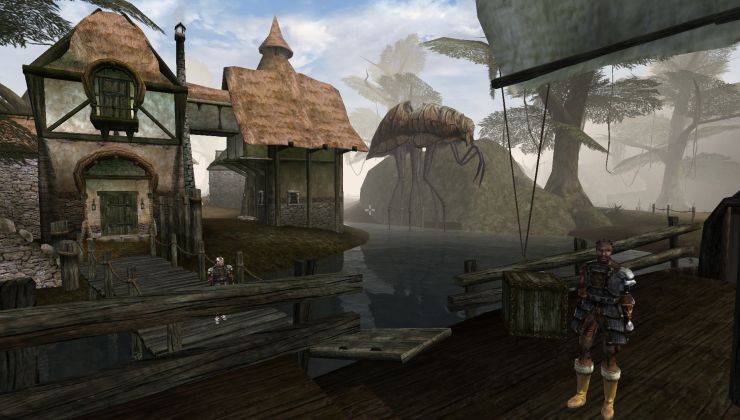 How to setup OpenMW for modern Morrowind on Linux / SteamOS and Steam Deck
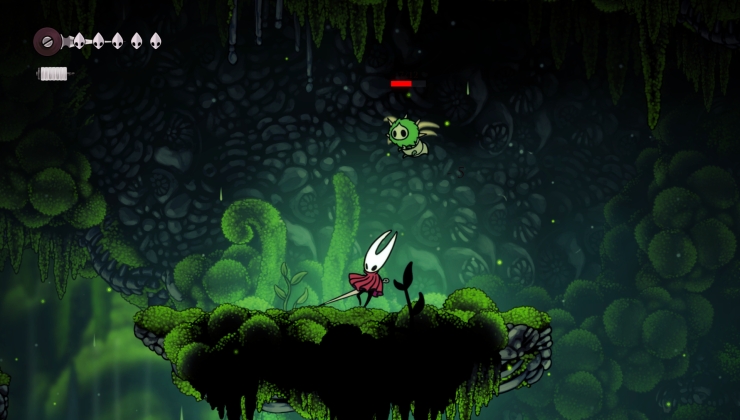 How to install Hollow Knight: Silksong mods on Linux, SteamOS and Steam Deck
- Total Noob general questions about gaming and squeezing every oun…
- on_en_a_gros - Detailed breakdown of performance differences between Linux and W…
- Ehvis - Small update for article comments and forum posts
- FeRDNYC - Do you miss LaunchBox/Playnite on Linux?
- Dark574 - Will you buy the new Steam Machine?
- tmtvl - See more posts