 Support us on Patreon
 PayPal
Latest Comments by Purple Library Guy
Edge ISO available for Linux Mint 21.3 with newer Linux kernel
23 Jan 2024 at 3:59 pm UTC Likes: 1
23 Jan 2024 at 3:59 pm UTC Likes: 1
Quoting: robvvWhen I saw the title, I thought the ISO included a well-known MS browser...Well known?
OpenAI say it would be 'impossible' to train AI without pinching copyrighted works
23 Jan 2024 at 4:45 am UTC
23 Jan 2024 at 4:45 am UTC
Quoting: 14I play tabletop RPGs; it's useful to me to not let my thinking stick in present-day grooves.Quoting: Purple Library Guy...say the government paid authors....Yes, my mind went there as well when thinking of counters, and then I dismissed the thought. :smile:
I do see your point, however it seems more theoretical than practical today.
MONSTER HUNTER RISE adds new DRM that breaks it on Steam Deck (UPDATED)
23 Jan 2024 at 1:09 am UTC
23 Jan 2024 at 1:09 am UTC
Quoting: LoudTechieI think he meant, the US is spying on Germany now, when it's their ally.Quoting: GuestReally? Then how did Germany threaten the US? or other US allies like South Korea?By annexing SudetenLand which was part of a country the allies promised to protect specifically from german agression.
Even attacking Poland and France(all U.S allies) wasn't enough to get specific USA soldiers on their doorstep sinking US ships and trying to ally with its enemies(Mexico and Japan) were needed to get that.
MONSTER HUNTER RISE adds new DRM that breaks it on Steam Deck (UPDATED)
22 Jan 2024 at 9:10 pm UTC Likes: 2
22 Jan 2024 at 9:10 pm UTC Likes: 2
Quoting: LoudTechieA westerner can sue a western government who's illegally spying on them and have a real chance of winning.Uhhh . . . how real?
Palworld overtakes Counter-Strike 2 for most players on Steam and hits 5 million sales
22 Jan 2024 at 5:37 pm UTC Likes: 4
22 Jan 2024 at 5:37 pm UTC Likes: 4
Quoting: LoudTechieDon't be ridiculous. Every Windows user knows that when mysterious error message boxes pop up, you click on the "go away" button because very few of them matter. I'm sure that habit carries over to games.Quoting: Liam DaweGives 2 or so errors in-game which you skip, as the errors are about multiplayer. Solo offline works fine.Ka-Ching you've been tricked.
Sneakily you've been an advanced user all along.
We knew it.
You consider something working well offline if the "errors are about multi-player".
This means you can see the difference between different kinds of error messages know multi-player is online and know that not every error is destruction of your play time.
The fact that you consider it fine means that you've experienced similar issues before.
You slept through the end of the world in Aground Zero
22 Jan 2024 at 5:34 pm UTC Likes: 1
22 Jan 2024 at 5:34 pm UTC Likes: 1
Quoting: RedTeaNO. No toast. No crumpets, no waffles.Quoting: Purple Library GuyDoes anyone want any toast?The world has ended. You are deep underground, and all alone with a cheery AI companion.Just tell me it's not Talky Toaster.
31% of devs already using AI and the PC platform looks strong from GDC Survey
22 Jan 2024 at 5:18 pm UTC Likes: 5
*Arguably it already is--SDL2, for instance.
22 Jan 2024 at 5:18 pm UTC Likes: 5
Quoting: Fester_MuddOn the positive note, possibly AI will help reach Linux port initially for the devs to start with. AI could help towards total platform freedom? Exclusiveness is not of this day and age at all.I dunno. Do you think that's the kind of thing it would be good at? I can see that kind of thing getting automated, at least partially, with normal software*, but I'm not sure that the stuff we've been calling "AI" would do it well. Because, like, porting strikes me as one of these fiddly things where the details all have to be done right, whereas "AI" seems to be better at broad strokes, "mushy" kind of output.
*Arguably it already is--SDL2, for instance.
You slept through the end of the world in Aground Zero
22 Jan 2024 at 5:00 pm UTC Likes: 2
22 Jan 2024 at 5:00 pm UTC Likes: 2
The world has ended. You are deep underground, and all alone with a cheery AI companion.Just tell me it's not Talky Toaster.
OpenAI say it would be 'impossible' to train AI without pinching copyrighted works
22 Jan 2024 at 3:50 pm UTC Likes: 1
22 Jan 2024 at 3:50 pm UTC Likes: 1
Quoting: LoudTechieWell, yes, that's certainly part of it. But they're going for the part I mentioned too--I mean, why not? Sure, it could maim the internet goose that lays the golden eggs, but that's not a "next quarter" problem.Quoting: Purple Library GuySorry. I didn't make my point clear.Quoting: LoudTechieUh, yeah, and that makes it worth it how if there's no revenue associated? I was pointing out where the revenue seems to be coming from. You counter that not by pointing out that the stuff is expensive, which just makes the point that they better have some revenue coming in, but by pointing out an alternative source of revenue, and suggesting some reason they'd want that source instead rather than having both. (Except you shouldn't, because I'm right :tongue: )Quoting: Purple Library GuyAnd there doesn't seem to be anything else in the wind that would make it worth all the expense of making the AI.There is another reason it's worth it.
Few entities have the budget to do it.
Those using my reasoning intend to use their control of a market they already control to be their source of income for it, but want to protect that source of income from competition with deep learning(I realized we might be talking about different things under the same banner).
It's somewhat like buying a lock for your house. Is a lock profitable. It doesn't generate money, but it keeps others from taking what you already possess.
OpenAI say it would be 'impossible' to train AI without pinching copyrighted works
22 Jan 2024 at 6:03 am UTC Likes: 1
Still, it's very much an artifact of the particular economic system. It only makes sense if publishing is done by outfits which are both multiple and privately owned, and the authors are paid by them. So for instance, say there were a theocracy where the church was the only publisher, rights for authors wouldn't have much to do with copyright because nobody else could copy at all. Or, say the government paid authors, based on some measure of their total cultural reach (number of copies sold, amount of derivatives in other media if any, amount of criticism and other discussion, presence in education) and publishers did not, they were just allowed to publish anything they thought they could sell, then attribution would be important but copyright would not. Even across relatively minor changes in how our economy works, our sense of copyright and the ethics around it has changed quite a bit just in the last few decades. For instance, in 1970 nobody would have connected copyright with property, they were distinct concepts and the moral ideas surrounding property had not been imported into the copyright concept. And I would say that copyright, patent and trademark were much less "grouped" as concepts than they became after the invocation of "intellectual property" as a metaphor for all of them.
22 Jan 2024 at 6:03 am UTC Likes: 1
Quoting: 14Well, except frankly copyright was always about benefits for publishers, not really for authors. So the worker being worthy of their hire is a bit of a smokescreen. It is, after all, the right to make copies, which authors were not originally capable of doing; you needed a printing press. But, sure, OK, that's a real ethic getting deployed to motivate copyright, true enough--it's not completely artificial.Quoting: Purple Library GuySo my point there is, the morality was built around the policy, not the other way around, and this will continue to be the way things work; we will end up with the policy that works (for the strongest political interests) and any moral issues will be adjusted to fit.I don't agree with this completely. The concept of the laborer being worthy of his hire is in religious text which is pretty old. The printing press example shows how policy lags behind technology. There is a period of self governing until enough people complain of unfair or hurtful practices (which seem inevitable unfortunately), then rules get invented.
I don't want to bring religious morals versus political and economical influence into the conversation; I merely used it to point out how old the idea of protecting someone's rightful pay is.
Still, it's very much an artifact of the particular economic system. It only makes sense if publishing is done by outfits which are both multiple and privately owned, and the authors are paid by them. So for instance, say there were a theocracy where the church was the only publisher, rights for authors wouldn't have much to do with copyright because nobody else could copy at all. Or, say the government paid authors, based on some measure of their total cultural reach (number of copies sold, amount of derivatives in other media if any, amount of criticism and other discussion, presence in education) and publishers did not, they were just allowed to publish anything they thought they could sell, then attribution would be important but copyright would not. Even across relatively minor changes in how our economy works, our sense of copyright and the ethics around it has changed quite a bit just in the last few decades. For instance, in 1970 nobody would have connected copyright with property, they were distinct concepts and the moral ideas surrounding property had not been imported into the copyright concept. And I would say that copyright, patent and trademark were much less "grouped" as concepts than they became after the invocation of "intellectual property" as a metaphor for all of them.
- Oh dear - ARC Raiders was logging your private Discord chats [updated]
- Ubuntu and Fedora devs comment on California's new Digital Age Assurance Act
- Many more US states are planning or already have operating system age verification laws
- EA Javelin Anticheat job listing mentions future support for Linux and Proton
- Sony PlayStation reportedly moving away from PC ports
- > See more over 30 days here
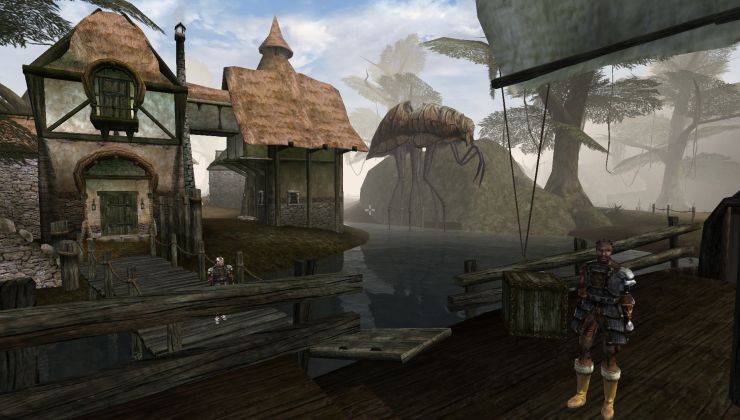 How to setup OpenMW for modern Morrowind on Linux / SteamOS and Steam Deck
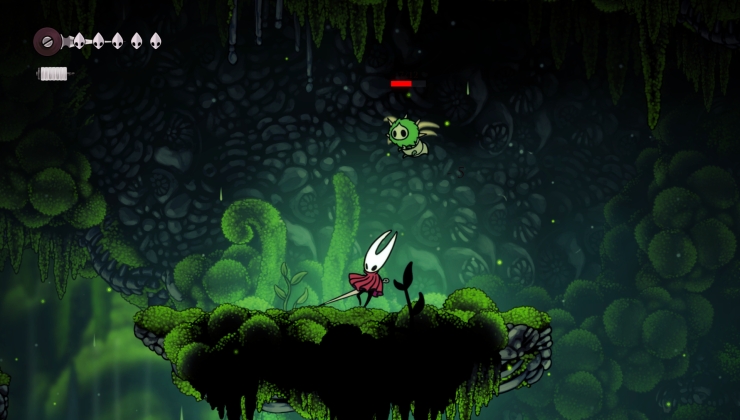 How to install Hollow Knight: Silksong mods on Linux, SteamOS and Steam Deck
Recently Updated