 Support us on Patreon
 PayPal
Latest Comments by Purple Library Guy
Steam with Linux now available in Tesla cars (Beta)
14 Dec 2022 at 5:25 pm UTC
14 Dec 2022 at 5:25 pm UTC
Quoting: scaineYou more of a Leaf man?a really expensive Steam Deck with wheelsHaha! That's about the only description that would actually tempt me to buy a Tesla. And it's still a hard nope.
Valve has finally fixed the Steam Remote Play audio loss bug on Linux
14 Dec 2022 at 5:15 pm UTC Likes: 2
14 Dec 2022 at 5:15 pm UTC Likes: 2
Quoting: denyasisIntroduced? Maybe at a party. The host was all, "Oh, hey, Remote Play, great to see you here! Say, there's someone you just have to meet--sound bug, this is Remote Play, I've been thinking you two would really hit it off!"Quoting: hardpenguinHuh, it never affected me THAT much. I guess my gaming sessions are short 😅. Plus one could restart the stream every now and then. Anyway, glad it is fixed!Yeah, I've had this bug since it was introduced in 2019. Restarting the stream didn't always work. A reboot would, but that kinda defeated the purpose of remote play.
I'm glad they finally fixed it. I'm curious as to how it got introduced in the first place.
Wine on Wayland sounds like it's coming along nicely
14 Dec 2022 at 5:03 pm UTC Likes: 1
14 Dec 2022 at 5:03 pm UTC Likes: 1
Quoting: fenglengshunYes, well, I use Mint, which seems to have about that attitude as a distro, so my experience of Wayland is pretty theoretical. So I'm kind of waiting for the time when Clem decides he's ready to go for it. Every Wayland announcement I'm sort of thinking "Wonder how close we are to when Wayland gets boring enough to be 'ready for Mint'?"Quoting: Purple Library GuyCool.This is literally how I feel whenever new Wayland/Portal things land. Cool.
I guess I tried making Wayland work for me once, it was too much of a pain in the ass. I'll wait until it reaches "just works", all the tools matures, and I don't notice any differences. So it's cool whenever new Wayland things lands, but just that, cool.
Microsoft's acquisition of Activision Blizzard hits a bump as FTC seeks to block it
14 Dec 2022 at 12:49 am UTC Likes: 1
As to what I'd prefer to see . . . depends. There's what I'd really like to see, in a complete blue-sky kind of way, and then there's what might be practical as limited improvements on the current dispensation . . .
I have a better idea of the blue-sky thing. So: Federal governments set aside a pool of money for creators that's somewhat bigger than what they get now from all the companies they sell their works to. Maybe subdivide it into kinds of things, like movies vs books, maybe not, I can imagine arguments either way. Citizens of the country each get to dedicate an equal share of that pool to whatever artists they wish. Governments maintain a big "Kickstarter" style website where artists put up their stuff and the citizens get to direct their entertainment money. The pot gets split up based on the people who show up to have an opinion. Individual artists get money according to what was voted, except at the high end where you have massive votes there's a sort of soft cap of diminishing returns. In return, no copyright (except in the sense that things like misrepresenting someone's work either by pretending it is yours or pretending they wrote it differently from how they did would stay illegal) and all citizens get access to all the country's artistic production, for free. Ideally, countries sign treaties with each other for use of each other's creative output.
Creators get paid, a bunch of worthless middlemen do not, everyone gets all the stuff. But it couldn't happen without society being in the throes of a major transformation.
14 Dec 2022 at 12:49 am UTC Likes: 1
Quoting: pleasereadthemanualYou make some good points, and in these particular arenas I don't really disagree . . . I do think that if Netflix had managed to maintain its effective monopoly and create some serious barriers to entry so it could continue to do so with little fear of competition, the story would have gone a less positive direction in the end.Quoting: Purple Library GuyI'll concede that I was wrong to say that "monopolies tend tend to have positive impacts on a business's customers". I should not have implied that, in general, monopolies tend to do more good than they do bad. Good points on AT&T. I agree that, in the long-term, Microsoft's power over the industry would be bad for their customers. However, I don't think that monopolies are bad in every situation. Counter-point: streaming.Quoting: pleasereadthemanualI don't find that argument very convincing for monopolies in general. AT&T was a kind of monopoly we don't see nowadays: a very highly regulated monopoly with profits limited by law. Those can have positive effects, particularly if, like AT&T, they're so-called "natural monopolies". Bell Labs became a thing because AT&T was able to make far more money than it was allowed to have exist as "profit", so they had to find something to do with it. Although, AT&T had its downsides as well. But if you're going to allow a "natural monopoly" to exist, largely because duplication of infrastructure is inefficient, then it's probably easier and less prone to abuse to just make it public than to try to regulate it effectively enough to stop it from abusing its power.Quoting: Purple Library GuyHey, someone had to argue for the other side. I tend to agree with this, but my argument is that monopolies are not bad for customers as a whole. Windows and Xbox users would welcome this change because it makes their lives more convenient, with more value for their money. In actual fact, it turns out that monopolies tend to have positive impacts on a business's customers. It's competitors and their customers (or in this case, free software users) that it tends to affect negatively.Quoting: pleasereadthemanualBut I don't see Microsoft making any big moves on the PC market until years down the line.I'm not sure I find "we wouldn't be the first victims" all that reassuring.
Monopolies have produced some great things. Take AT&T and Bell Labs, perhaps the most prolific monopoly in history, which resulted in UNIX, something that continues to have a ricocheting effect on operating systems today.
In general, though, near monopolies only fail to abuse their customers if they are in the process of trying to achieve the real thing. Once they've got a lock, they jack up the prices, slough off the service, and stop innovating. Monopolies do not tend to have positive impacts on a business' customers. It may happen now and then, but it is far from typical, and any positive impacts from structural factors will tend to be swamped by negative impacts, certainly if the monopoly is at all solid. And Microsoft certainly is no exception; Linux and Apple are probably the only reasons Windows doesn't suck far more than it does.
While I don't do much streaming myself, I've heard a lot of complaints from people saying that it's so much harder now that every company has its own streaming service, each with its own ever-shrinking pool of shows. When it was just Netflix, costs were far lower, and you got access to far more shows. Now, everyone has pulled their shows off Netflix, Netflix has raised their prices significantly, is trying to integrate draconian monitoring software from Adobe to ensure viewers can't share their logins with people in another house, and in general produces worse original shows. This is because there is a lot more competition now. Back when Netflix had a near-monopoly on the streaming industry, customers paid less, got more shows, and could share their logins with friends. And because of how successful Netflix was, they could attract better talent to produce better originals.
Let's take another example from the anime sphere (in the west, at least) that has gone in the opposite direction. Just two years ago, we used to have Crunchyroll, HiDive, Funimation, and AnimeLab. Each of these companies streamed a mostly-different pool of anime because they tended to deal in exclusive licenses. Many hate HiDive because it's just another streaming platform they have to subscribe to if they want to watch a particular show, even if they have some of the best features in the industry. Now, AnimeLab, Crunchyroll, and Funimation have consolidated into one company. While Crunchyroll has stopped their free tier and slightly increased their prices, this is far better for customers because they get many more shows for a similar amount of money all in one place, save for the occasional shows that HiDive and Netflix 'take hostage'.
Why is all of this an issue, you might ask? Because of a 'creative' monopoly called 'copyright'. When you create a work, you have an exclusive right to commercial exploitation of that work [External Link], and streaming companies generally negotiate an exclusive license with the copyright holder to stream that work. Now, you could argue that if the government didn't allow the copyright holder to sell exclusive licenses, this wouldn't be an issue, but that's also not true. If we did that, the environment would greatly favour Disney, because they produce and own much more content than any other one company, and why the hell should they put themselves in a worse position by selling licenses to use their own work to Netflix?
So, the crux of this issue is that copyright exists as a monopoly. Naturally, this argument applies to patents as well. So given that, I'm curious what you think the normal state of affairs should be to improve the situation for customers—should copyright be abolished, or drastically shortened from the death of the author + 75 years? Or is this a scenario in which you would prefer to preserve this 'creative' monopoly and have one company (perhaps government-owned), like Netflix, stream all media? I believe that the copyright period should be a little shorter than what it was before 1926, and that all copyrights should be registered.
(I initially considered including this in my last comment but thought it was quite long already, because this situation is why I believe what I do about monopolies)
As to what I'd prefer to see . . . depends. There's what I'd really like to see, in a complete blue-sky kind of way, and then there's what might be practical as limited improvements on the current dispensation . . .
I have a better idea of the blue-sky thing. So: Federal governments set aside a pool of money for creators that's somewhat bigger than what they get now from all the companies they sell their works to. Maybe subdivide it into kinds of things, like movies vs books, maybe not, I can imagine arguments either way. Citizens of the country each get to dedicate an equal share of that pool to whatever artists they wish. Governments maintain a big "Kickstarter" style website where artists put up their stuff and the citizens get to direct their entertainment money. The pot gets split up based on the people who show up to have an opinion. Individual artists get money according to what was voted, except at the high end where you have massive votes there's a sort of soft cap of diminishing returns. In return, no copyright (except in the sense that things like misrepresenting someone's work either by pretending it is yours or pretending they wrote it differently from how they did would stay illegal) and all citizens get access to all the country's artistic production, for free. Ideally, countries sign treaties with each other for use of each other's creative output.
Creators get paid, a bunch of worthless middlemen do not, everyone gets all the stuff. But it couldn't happen without society being in the throes of a major transformation.
Microsoft's acquisition of Activision Blizzard hits a bump as FTC seeks to block it
13 Dec 2022 at 4:03 pm UTC Likes: 3
In general, though, near monopolies only fail to abuse their customers if they are in the process of trying to achieve the real thing. Once they've got a lock, they jack up the prices, slough off the service, and stop innovating. Monopolies do not tend to have positive impacts on a business' customers. It may happen now and then, but it is far from typical, and any positive impacts from structural factors will tend to be swamped by negative impacts, certainly if the monopoly is at all solid. And Microsoft certainly is no exception; Linux and Apple are probably the only reasons Windows doesn't suck far more than it does.
13 Dec 2022 at 4:03 pm UTC Likes: 3
Quoting: pleasereadthemanualI don't find that argument very convincing for monopolies in general. AT&T was a kind of monopoly we don't see nowadays: a very highly regulated monopoly with profits limited by law. Those can have positive effects, particularly if, like AT&T, they're so-called "natural monopolies". Bell Labs became a thing because AT&T was able to make far more money than it was allowed to have exist as "profit", so they had to find something to do with it. Although, AT&T had its downsides as well. But if you're going to allow a "natural monopoly" to exist, largely because duplication of infrastructure is inefficient, then it's probably easier and less prone to abuse to just make it public than to try to regulate it effectively enough to stop it from abusing its power.Quoting: Purple Library GuyHey, someone had to argue for the other side. I tend to agree with this, but my argument is that monopolies are not bad for customers as a whole. Windows and Xbox users would welcome this change because it makes their lives more convenient, with more value for their money. In actual fact, it turns out that monopolies tend to have positive impacts on a business's customers. It's competitors and their customers (or in this case, free software users) that it tends to affect negatively.Quoting: pleasereadthemanualBut I don't see Microsoft making any big moves on the PC market until years down the line.I'm not sure I find "we wouldn't be the first victims" all that reassuring.
Monopolies have produced some great things. Take AT&T and Bell Labs, perhaps the most prolific monopoly in history, which resulted in UNIX, something that continues to have a ricocheting effect on operating systems today.
In general, though, near monopolies only fail to abuse their customers if they are in the process of trying to achieve the real thing. Once they've got a lock, they jack up the prices, slough off the service, and stop innovating. Monopolies do not tend to have positive impacts on a business' customers. It may happen now and then, but it is far from typical, and any positive impacts from structural factors will tend to be swamped by negative impacts, certainly if the monopoly is at all solid. And Microsoft certainly is no exception; Linux and Apple are probably the only reasons Windows doesn't suck far more than it does.
Microsoft's acquisition of Activision Blizzard hits a bump as FTC seeks to block it
12 Dec 2022 at 11:50 pm UTC Likes: 4
12 Dec 2022 at 11:50 pm UTC Likes: 4
Quoting: pleasereadthemanualBut I don't see Microsoft making any big moves on the PC market until years down the line.I'm not sure I find "we wouldn't be the first victims" all that reassuring.
Free 2D space exploration and action sim Naev has a big new Beta
12 Dec 2022 at 5:06 pm UTC
Still, I suppose if they're calling it "beta", plausibly there could be a release that is considered not beta any more.
12 Dec 2022 at 5:06 pm UTC
Quoting: JarmerThis looks fascinating! Eagerly awaiting the final release to land so I can grab it.Is there likely to be a "final release"? Open source games tend to just kind of go on and on.
Still, I suppose if they're calling it "beta", plausibly there could be a release that is considered not beta any more.
Microsoft's acquisition of Activision Blizzard hits a bump as FTC seeks to block it
12 Dec 2022 at 4:13 pm UTC Likes: 1
12 Dec 2022 at 4:13 pm UTC Likes: 1
It might actually get blocked. US lawmakers have been smarting over the problems caused by big tech monopolies like Google, Facebook and Twitter (well, that last seems to be solving itself in a sense), but too many of them are in their pockets to do anything about it. But even the ones who won't do anything 'cause they're being paid off are kind of miffed about the headaches. So, if they see a chance to head off a big tech monopoly before it happens, they might just be in a mood to do it, if only so they can say "Look, we did that! Pay no attention to the more important stuff we're going to continue not doing!"
Microsoft's acquisition of Activision Blizzard hits a bump as FTC seeks to block it
12 Dec 2022 at 4:06 pm UTC Likes: 2
12 Dec 2022 at 4:06 pm UTC Likes: 2
Quoting: massatt212i dont like it, they should allow Microsoft to acquire Activision, Sony is steady buying up single studios and everyone is worshipping itI must have missed the existence of Sony churches. Really, I've never heard anyone say much good about Sony . . . does that actually happen?
- The "video game preservation service" Myrient is shutting down in March
- Discord delay global rollout of age verification to improve transparency and add more options
- Firefox 148.0 arrives with AI controls
- FINAL FANTASY VII arrives on GOG with a new edition live on Steam too
- SpaghettiKart the Mario Kart 64 fan-made PC port gets a big upgrade
- > See more over 30 days here
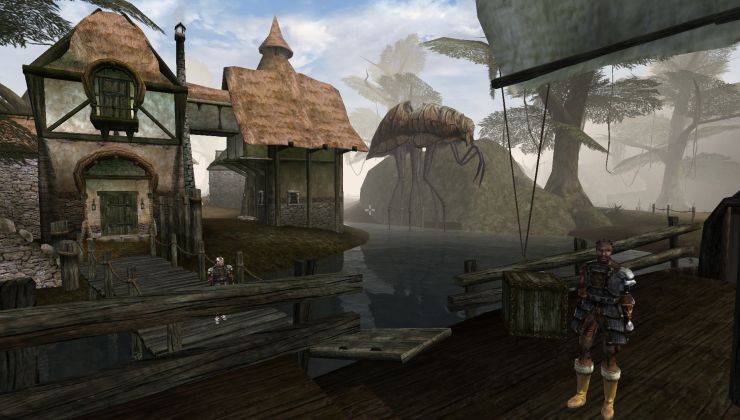 How to setup OpenMW for modern Morrowind on Linux / SteamOS and Steam Deck
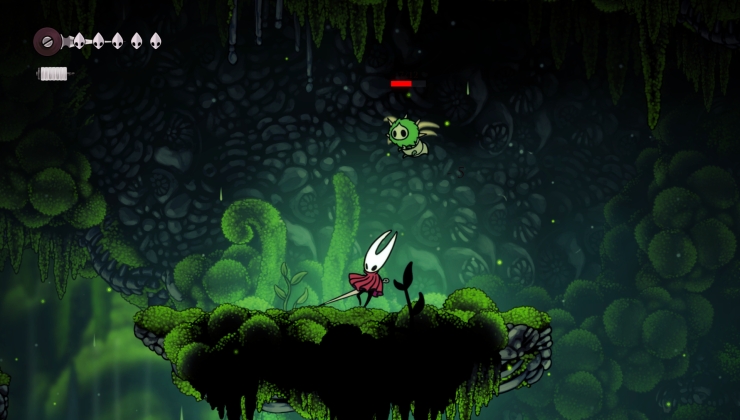 How to install Hollow Knight: Silksong mods on Linux, SteamOS and Steam Deck
- steam overlay performance monitor - issues
- Xpander - Nacon under financial troubles... no new WRC game (?)
- Xpander - Establishing root of ownership for Steam account
- Nonjuffo - Total Noob general questions about gaming and squeezing every oun…
- GustyGhost - Looking for Linux MMORPG sandbox players (Open Source–friendly …
- Jarmer - See more posts