 Support us on Patreon
 PayPal
Latest Comments by Purple Library Guy
Aolta is a unique casual adult-themed RPG where you explore a romantically wretched city
9 May 2021 at 6:39 pm UTC Likes: 3
9 May 2021 at 6:39 pm UTC Likes: 3
You know, this is probably the first time I've seen a depiction of consensual tentacle sex.
Sell stocks and get rich, The Invisible Hand has a Linux build on Steam ready for testing
9 May 2021 at 6:34 pm UTC Likes: 2
So, first: Marx was operating well within the Classical economic tradition, at least on the stuff I was talking about. Ricardo and all those guys would totally agree as to the nature of capital. Where they disagreed was on whether wage employment resulting in profits represented exploitation; they said it was free and open contracting between workers and capitalists so it's all good, he said in reality it was no such thing, it was a choice between taking the employer's offer and starvation, and considered the difference between wages and the value of what is produced to be exploitation.
Second, capitalism didn't really "just happen". The beginnings of it sort of did, but to get it to be the main part of the economy took a lot of concerted state action. For instance, to get a lot of the peasants to move to the city and work for wages, took a bunch of laws taking away their land, and a bunch more laws making it illegal to forage in forests ("poaching"), and a bunch more laws making it illegal to just kind of hang around ("vagrancy"), and the invention of police to make those laws stick. Much of this was very conscious--the workshop owners in the process of expanding those workshops into factories needed workers, and a lot of this stuff was quite specifically done to take away people's livelihoods and give them no option but to come and work. Also consider that the flagship of early British capitalism, the East India Company, was a state creation. Also consider that the raw materials that fed the British industry came from slave-operated plantations on Caribbean land, acquired from the people who previously lived there by the state.
This leads into the question of small government. The worship of small government is a relatively recent ideology. Adam Smith certainly wasn't into small government. And capitalism has always depended on the actions of government. Government defines the property regime capitalists require to even be considered to "own" the stuff they make profits from. It takes stuff away from people who aren't in the club, it makes sure nobody can take stuff from people who are in the club. It creates and regulates marketplaces, creates and enforces things like patents and copyrights, creates the infrastructures required for much production or transportation of goods, defines money. I would argue that the rise of the centralized state was one of the main contributing factors to capitalism being able to exist.
Fiat money. There have probably been times and ways in which the gold standard would have stopped some kinds of economic damage that happened. But basically, fiat money mostly works better. Through most of modern history, a serious adherence to the gold standard would have meant deflation, because the population and the economy were expanding, or trying to expand, faster than the supply of gold, which only gets bigger as fast as you can find some and mine it. Deflation causes depressions. What would have had to happen is a gold standard with repeated, near constant devaluation of the currency with respect to gold--which is to say, a de facto fiat currency but much clumsier and less flexible. Or they would have had to bypass it in other ways, like banks conveniently ignoring the level of their gold reserves when issuing loans. But in any case, the form of the currency is just not fundamental to the structure of the economy. It's a bit bigger than a detail, but it's certainly not important enough to be a factor in what economic system you want to say you're in. That idea just ignores how economies work and what drives them.
Finally, capitalist economies work best when governments are fairly large and work to mitigate inequality--in terms of quality of lives, but even economic growth. The data on that is clear. Unfortunately, such situations are unstable and tend not to last. The problem is that capitalists in a capitalist economy want all the goodies--it's their job to want all the goodies--and have a great deal of political power. They don't want fairly large, redistributive governments, so they work hard to make them go away. In democracies, part of that work involves persuading the electorate to believe in the fairy tale of wonderful small government. The amount of money they have spent on think tanks, public relations, media ownership, university chairs in economics and so forth to propagandize this idea is staggering. As a rule, people who believe in such things have been suckered by this operation. It's understandable, there's been a lot of money, effort and talent devoted to spreading it.
9 May 2021 at 6:34 pm UTC Likes: 2
Quoting: DorritAh, no. That's well, wrong from start to finish.Quoting: Purple Library GuyBut the basic thing about capitalism is this: Ownership of what Marx called "the means of production" by private individualsThat's the Marxist interpretation and the origin of many a misconception.
What we today call Capitalism was not a system but a handful of circumstances together at the right time. It's not an idea, it just happened. And it started to go wrong when two of its main pillars were taken: first sound money (gold) followed by small government.
What should we call today's fiat money and leviathan governments? Don't know but Capitalism it ain't.
So, first: Marx was operating well within the Classical economic tradition, at least on the stuff I was talking about. Ricardo and all those guys would totally agree as to the nature of capital. Where they disagreed was on whether wage employment resulting in profits represented exploitation; they said it was free and open contracting between workers and capitalists so it's all good, he said in reality it was no such thing, it was a choice between taking the employer's offer and starvation, and considered the difference between wages and the value of what is produced to be exploitation.
Second, capitalism didn't really "just happen". The beginnings of it sort of did, but to get it to be the main part of the economy took a lot of concerted state action. For instance, to get a lot of the peasants to move to the city and work for wages, took a bunch of laws taking away their land, and a bunch more laws making it illegal to forage in forests ("poaching"), and a bunch more laws making it illegal to just kind of hang around ("vagrancy"), and the invention of police to make those laws stick. Much of this was very conscious--the workshop owners in the process of expanding those workshops into factories needed workers, and a lot of this stuff was quite specifically done to take away people's livelihoods and give them no option but to come and work. Also consider that the flagship of early British capitalism, the East India Company, was a state creation. Also consider that the raw materials that fed the British industry came from slave-operated plantations on Caribbean land, acquired from the people who previously lived there by the state.
This leads into the question of small government. The worship of small government is a relatively recent ideology. Adam Smith certainly wasn't into small government. And capitalism has always depended on the actions of government. Government defines the property regime capitalists require to even be considered to "own" the stuff they make profits from. It takes stuff away from people who aren't in the club, it makes sure nobody can take stuff from people who are in the club. It creates and regulates marketplaces, creates and enforces things like patents and copyrights, creates the infrastructures required for much production or transportation of goods, defines money. I would argue that the rise of the centralized state was one of the main contributing factors to capitalism being able to exist.
Fiat money. There have probably been times and ways in which the gold standard would have stopped some kinds of economic damage that happened. But basically, fiat money mostly works better. Through most of modern history, a serious adherence to the gold standard would have meant deflation, because the population and the economy were expanding, or trying to expand, faster than the supply of gold, which only gets bigger as fast as you can find some and mine it. Deflation causes depressions. What would have had to happen is a gold standard with repeated, near constant devaluation of the currency with respect to gold--which is to say, a de facto fiat currency but much clumsier and less flexible. Or they would have had to bypass it in other ways, like banks conveniently ignoring the level of their gold reserves when issuing loans. But in any case, the form of the currency is just not fundamental to the structure of the economy. It's a bit bigger than a detail, but it's certainly not important enough to be a factor in what economic system you want to say you're in. That idea just ignores how economies work and what drives them.
Finally, capitalist economies work best when governments are fairly large and work to mitigate inequality--in terms of quality of lives, but even economic growth. The data on that is clear. Unfortunately, such situations are unstable and tend not to last. The problem is that capitalists in a capitalist economy want all the goodies--it's their job to want all the goodies--and have a great deal of political power. They don't want fairly large, redistributive governments, so they work hard to make them go away. In democracies, part of that work involves persuading the electorate to believe in the fairy tale of wonderful small government. The amount of money they have spent on think tanks, public relations, media ownership, university chairs in economics and so forth to propagandize this idea is staggering. As a rule, people who believe in such things have been suckered by this operation. It's understandable, there's been a lot of money, effort and talent devoted to spreading it.
David Rosen of Wolfire Games explains why they're taking on Valve in a lawsuit
9 May 2021 at 5:39 pm UTC Likes: 1
9 May 2021 at 5:39 pm UTC Likes: 1
Quoting: orochi_kyoSo a bunch of options.Hahaha! Sure they will.
If you want to keep selling your tomatoes in the big one but lower the price, lower it everywhere, the small and your farm included.
If you want to lower the price in the small supermarket just take it out from the big. If your tomatoes are good enough people will driving to the small supermarket or even your farm
Sell stocks and get rich, The Invisible Hand has a Linux build on Steam ready for testing
9 May 2021 at 5:12 pm UTC Likes: 1
9 May 2021 at 5:12 pm UTC Likes: 1
This next comment is, again, not going to be a criticism of capitalism. I have some, but since lots of people here seem to have odd ideas about what capitalism even is, I'm just going to drop a quick description.
First, capitalism is not markets. Up until (dates debatable) there was no capitalism, but there were markets since Babylonian times. Not only that, but some theorists of socialism envision factories and stores owned by the workers, the state, or the community, but still buying and selling their goods in markets (others don't). Capitalism is not even banks. Also note that no system is pure--to this day there are hunter-gatherers, there are agrarian peasants and so on, in all modern states there are elements of socialism, and in most countries of any size there are a few worker-owned co-ops in the mix of firms.
But the basic thing about capitalism is this: Ownership of what Marx called "the means of production" by private individuals, who hire workers for wages. These owners gained their ownership by having and investing capital. They sell what the workers produce, whether it be shoes or a computer game or financial advice, and hope to make a profit. This profit increases their capital; they can then reinvest it in order to get still more returns. So:
--Private wealth, invested in "means of production" (factories, machinery, offices, computers) becomes "capital"
--Workers, who don't own these things, are hired for wages, ideally less wages than what the stuff they make sells for
--Profit, return on investment, increases capital, allowing more investment
That's what capitalism is. It's called "capitalism" because it involves "capital", which involves private ownership of the means of production while labour does not own it. We've had a good deal of it ever since the industrial revolution and we have not stopped since. If you want to argue that there is (something good) that we had once upon a time but no longer have, well perhaps, but that (something good) is not capitalism, it's some specific variant of capitalism and you should find a proper word for it because capitalism as such is still very much with us. (Incidentally, as a side note, you can see that some things that don't even involve markets could still be capitalism, such as US military procurement)
Feudalism was different in two ways.
1) It was mostly about land ownership, nobles owning, peasants paying the nobles taxes/rent, mostly "in kind".
2) Production was done by individual craftspeople who owned their own tools; blacksmiths owned their smithy and hammers and such, cobblers owned their awls and whatnot. They might have apprentices working for them, but not for wages as such--the expectation was the apprentices would eventually get to become independent craftsmen themselves; they worked for room and board, training, and eventually sponsorship. This was not very growth-oriented and did not allow a great deal of division of labour, but the craftspeople were independent and relatively prosperous, certainly compared to non-union factory workers. It took a lot of coercion to get them stuffed into capitalist-owned factories.
Italian Renaissance merchants and bankers were not generally capitalists. They didn't own the means of production, they were middlemen. Quite important in their own way, but a different thing. Venetian merchants didn't even own their own ships--the merchant fleets of Renaissance Venice were built and owned by the government.
First, capitalism is not markets. Up until (dates debatable) there was no capitalism, but there were markets since Babylonian times. Not only that, but some theorists of socialism envision factories and stores owned by the workers, the state, or the community, but still buying and selling their goods in markets (others don't). Capitalism is not even banks. Also note that no system is pure--to this day there are hunter-gatherers, there are agrarian peasants and so on, in all modern states there are elements of socialism, and in most countries of any size there are a few worker-owned co-ops in the mix of firms.
But the basic thing about capitalism is this: Ownership of what Marx called "the means of production" by private individuals, who hire workers for wages. These owners gained their ownership by having and investing capital. They sell what the workers produce, whether it be shoes or a computer game or financial advice, and hope to make a profit. This profit increases their capital; they can then reinvest it in order to get still more returns. So:
--Private wealth, invested in "means of production" (factories, machinery, offices, computers) becomes "capital"
--Workers, who don't own these things, are hired for wages, ideally less wages than what the stuff they make sells for
--Profit, return on investment, increases capital, allowing more investment
That's what capitalism is. It's called "capitalism" because it involves "capital", which involves private ownership of the means of production while labour does not own it. We've had a good deal of it ever since the industrial revolution and we have not stopped since. If you want to argue that there is (something good) that we had once upon a time but no longer have, well perhaps, but that (something good) is not capitalism, it's some specific variant of capitalism and you should find a proper word for it because capitalism as such is still very much with us. (Incidentally, as a side note, you can see that some things that don't even involve markets could still be capitalism, such as US military procurement)
Feudalism was different in two ways.
1) It was mostly about land ownership, nobles owning, peasants paying the nobles taxes/rent, mostly "in kind".
2) Production was done by individual craftspeople who owned their own tools; blacksmiths owned their smithy and hammers and such, cobblers owned their awls and whatnot. They might have apprentices working for them, but not for wages as such--the expectation was the apprentices would eventually get to become independent craftsmen themselves; they worked for room and board, training, and eventually sponsorship. This was not very growth-oriented and did not allow a great deal of division of labour, but the craftspeople were independent and relatively prosperous, certainly compared to non-union factory workers. It took a lot of coercion to get them stuffed into capitalist-owned factories.
Italian Renaissance merchants and bankers were not generally capitalists. They didn't own the means of production, they were middlemen. Quite important in their own way, but a different thing. Venetian merchants didn't even own their own ships--the merchant fleets of Renaissance Venice were built and owned by the government.
Sell stocks and get rich, The Invisible Hand has a Linux build on Steam ready for testing
9 May 2021 at 4:16 pm UTC Likes: 2
But I think you're being a touch unfair. It's the game designers themselves who said "Capitalism bad". The first comment was a "capitalism good! Harrumph!"
And I personally haven't even said anything about capitalism yet, I've just pointed out that it's silly to rule out of bounds all critique of any system on the basis that the person criticizing is in, and part of, the system.
9 May 2021 at 4:16 pm UTC Likes: 2
Quoting: TheSHEEEPI came here to see a bunch of "capitalism bad! Harrumph!" comments and was not disappointed.Capitalism bad! Harrumph! :grin:
But I think you're being a touch unfair. It's the game designers themselves who said "Capitalism bad". The first comment was a "capitalism good! Harrumph!"
And I personally haven't even said anything about capitalism yet, I've just pointed out that it's silly to rule out of bounds all critique of any system on the basis that the person criticizing is in, and part of, the system.
Sell stocks and get rich, The Invisible Hand has a Linux build on Steam ready for testing
9 May 2021 at 8:40 am UTC Likes: 4
And of course people told the Peasants' Revolt folks "There Is No Alternative". And chopped their heads off. But it turns out there are alternatives to feudalism.
9 May 2021 at 8:40 am UTC Likes: 4
Quoting: RatmanYour comment is more or less analogous to people who say you're not allowed to worry about climate change unless your lifestyle has already been arranged to emit zero carbon. Capitalism is the system we live in, yes. Much as the folks involved in the Peasants' Revolt complained about feudalism even though they made their livelihood in it, people nowadays can complain about capitalism.Developed by Power Struggle Games, a French game development collective cheekily intent on dismantling Capitalism from the inside, through games and they say they're "unabashedly political".If I buy their game, aren't I supporting capitalism? If they take my money, aren't they supporting capitalism? What's with all the hate for capitalism? It's the way for small studios like this to make something of themselves. Maybe they really mean corporate manipulation and greed which is something else entirely.
And of course people told the Peasants' Revolt folks "There Is No Alternative". And chopped their heads off. But it turns out there are alternatives to feudalism.
Wolfire Games filed a lawsuit against Valve over abuse of their market position
8 May 2021 at 11:26 pm UTC
The way things work today, an actor with deep pockets spends a great deal of their money on marketing--advertising, bribing influencers, basically buying media space one way or another, perhaps buying armies of bots to spread the word. This works because if you develop one game and sell ten million copies you make literally a thousand times as much money as if you develop one game and sell ten thousand copies. And this snowballs. You end up with huge companies full of bastards trying to acquire monopolies.
With my scheme, there's a top end. If your game is moderately successful, you get paid a decent wage. If your game is an incredible runaway success . . . you get paid a decent wage, plus you are a social lion, plus maybe some fans just throw you some money via Patreon or something. You likely end up with a bit more money, but you aren't getting paid a thousand times as much, you don't acquire the muscle to mount huge advertising blitzes for the next title, you don't acquire several layers of executives saying we need to shape the games to safely fit the genre and the planned ad campaign so as to guarantee the same sales revenue as last time. Because a huge hit game doesn't actually mean more revenue, it just means more people happily playing the game.
There's also a lower end. As an indie, as long as you're working hard making a decent game, you're not going to find that at the end of it all you didn't have the luck and so you're deep in the hole, which as far as I can tell currently happens to quite a lot of people. And yeah, I can see some kind of system for defraying the costs of getting to the point of being funded . . . but there have to be limits at some point. You can't just have anyone who feels like it get a year's salary to do nothing on the basis that they say they're making a game, right?
I don't think such a voting system would consolidate genres, because you wouldn't need to be the winner to get funded, you'd just need to sort of beat a certain cutoff. And, again, there wouldn't be huge marketing budgets for the behemoth games to drive that kind of consolidation. If there's literally nobody interested in your offbeat thing, well, too bad--this is supposed to be resulting in games that people play. I suppose really big projects would tend to have to be in safer niches because presumably votes required would in some way be proportional to the number of developers (including artists etc.) involved. Likely most of the big projects would be by groups of developers who were already established, getting together to take on bigger challenges. And just by the nature of the compromises involved in a larger group, you'd probably be looking at somewhat safer projects. C'est la vie. But still, I think you'd see a lot less of the creative vitality drained away.
8 May 2021 at 11:26 pm UTC
Quoting: denyasisThanks for sharing!Well, to me the thing would be, everyone would be an indie. Some of them might be big groups of indies, doing big projects, but they wouldn't have market muscle.
It kinda makes me think of grants to develop games? Just with public input on the grant winners?
Quoting: Purple Library GuyAnd then once someone has some production under their belt, then maybe they just get paid to develop, or maybe they lose it if it leads to nothing for too long, or if nobody downloads any of their stuff, or if their reviews are too crappy, or some combination of that kind of stuffIf I were to quibble a bit, and granted I'm putting you under the spot so I mean no offense here, I don't see how the above part is much different than our current market system, just the source of the money had moved. If it's bad, or unpopular, they lose thier funding. In out current system, if it's bad or unpopular, they lose sale revenue.
I can see the possible argument that since it's a grant (or not sales dependant funding), the dev is not having to take out loans and put them in a precarious financial position to generate sales.
Although to get the potential votes to get "greenlighted", I imagine you'd have to do a pretty significant "media blitz", including tech demos, previews, maybe a real demo, etc, to rise above all the other candidates, which might already incur significant financial investments to get to that part. Though it would likely be much less than the full cost of development (I would hope, lol).
Do you worry the voting system could unintentionally consolidate genres? Ie, only big devs with huge PR would dominate, or only very popular genres with a big player base?
I wonder if Small devs or niche games would be left out. Or could we still buy games privately from these smaller devs that couldn't get public funding?
In my head, I'm trying to see how a popular game, like Valheim might have fared with a vote system. I think to get the votes, the devs would have needed to put in the same upfront cost and hours developing the game, so it could become popular enough to get the votes to get the funding. What do you think?
I do find your idea really interesting, it kinda reminds me of a grant or an endowment for the arts, but for games. Actually would that remove the national border problem? An international endowment? I think you could mix public and private funding for more stable revenue and it would eliminate some of the issues of who gets the money.
The way things work today, an actor with deep pockets spends a great deal of their money on marketing--advertising, bribing influencers, basically buying media space one way or another, perhaps buying armies of bots to spread the word. This works because if you develop one game and sell ten million copies you make literally a thousand times as much money as if you develop one game and sell ten thousand copies. And this snowballs. You end up with huge companies full of bastards trying to acquire monopolies.
With my scheme, there's a top end. If your game is moderately successful, you get paid a decent wage. If your game is an incredible runaway success . . . you get paid a decent wage, plus you are a social lion, plus maybe some fans just throw you some money via Patreon or something. You likely end up with a bit more money, but you aren't getting paid a thousand times as much, you don't acquire the muscle to mount huge advertising blitzes for the next title, you don't acquire several layers of executives saying we need to shape the games to safely fit the genre and the planned ad campaign so as to guarantee the same sales revenue as last time. Because a huge hit game doesn't actually mean more revenue, it just means more people happily playing the game.
There's also a lower end. As an indie, as long as you're working hard making a decent game, you're not going to find that at the end of it all you didn't have the luck and so you're deep in the hole, which as far as I can tell currently happens to quite a lot of people. And yeah, I can see some kind of system for defraying the costs of getting to the point of being funded . . . but there have to be limits at some point. You can't just have anyone who feels like it get a year's salary to do nothing on the basis that they say they're making a game, right?
I don't think such a voting system would consolidate genres, because you wouldn't need to be the winner to get funded, you'd just need to sort of beat a certain cutoff. And, again, there wouldn't be huge marketing budgets for the behemoth games to drive that kind of consolidation. If there's literally nobody interested in your offbeat thing, well, too bad--this is supposed to be resulting in games that people play. I suppose really big projects would tend to have to be in safer niches because presumably votes required would in some way be proportional to the number of developers (including artists etc.) involved. Likely most of the big projects would be by groups of developers who were already established, getting together to take on bigger challenges. And just by the nature of the compromises involved in a larger group, you'd probably be looking at somewhat safer projects. C'est la vie. But still, I think you'd see a lot less of the creative vitality drained away.
Proton Experimental begins work to allow Resident Evil Village to run on Linux
8 May 2021 at 6:56 pm UTC Likes: 9
8 May 2021 at 6:56 pm UTC Likes: 9
Quoting: KeyrockGiant Vampire Lady + Penguin = Love :heart:Now there's an image.
Wolfire Games filed a lawsuit against Valve over abuse of their market position
8 May 2021 at 5:21 am UTC
Well, it can't even just be proven developers, because otherwise how do you get into the business? So I'm imagining something along the lines of Kickstarter, except instead of people pledging money and getting copies, everyone gets some amount of votes they can put in, to the effect of "These people should get the chance to do their thing". And then once someone has some production under their belt, then maybe they just get paid to develop, or maybe they lose it if it leads to nothing for too long, or if nobody downloads any of their stuff, or if their reviews are too crappy, or some combination of that kind of stuff.
And I'm seeing this as a public thing. Your tax dollars at work. Of course one problem is that governments are national, whereas game sales are normally international (and so are some game development teams). So a given national government doesn't want to be funding foreigners a whole lot, so they'd probably only be funding developers from their country. And if they're funding a bunch of development they don't want to be hosting downloads for the whole world, they're doing this for the benefit of their own citizens using their own citizens' tax revenue. So they'd be restricting it to their own citizens. Problem. But perhaps different national governments working such schemes could come up with something like "trade deals" that worked a bit like patent pools, where they allowed each other's people access to their national schemes, and hopefully it would end up pretty much worldwide like the WTO. It seems a bit weird to think of trying to block people based on what country they're in on the internet, but it hasn't been long since last time I tried to play a video only to be told that I can't watch it because of the country I'm in, so between that and Steam's regional pricing, seems like it's potentially workable.
That general direction of thing.
8 May 2021 at 5:21 am UTC
Quoting: denyasisLet me do a bit of thinking in print. Like thinking out loud but with a keyboard.Quoting: Purple Library GuyIdeally, you'd want some kind of arrangement where proven game developers could be just paid a solid wage to develop games, and then everyone would have the right to download copies of the results for free or some minimal downloading charge.I think we might be a bit of topic, but likely everyone's moved on to a more recent dumpster fire. I'm interested in how something like that would work in your opinion. I'm most curious about, what makes a proven developer? A license/certificate or something? And if the current can get it for free or very little, who or what is paying the developers wage?
Well, it can't even just be proven developers, because otherwise how do you get into the business? So I'm imagining something along the lines of Kickstarter, except instead of people pledging money and getting copies, everyone gets some amount of votes they can put in, to the effect of "These people should get the chance to do their thing". And then once someone has some production under their belt, then maybe they just get paid to develop, or maybe they lose it if it leads to nothing for too long, or if nobody downloads any of their stuff, or if their reviews are too crappy, or some combination of that kind of stuff.
And I'm seeing this as a public thing. Your tax dollars at work. Of course one problem is that governments are national, whereas game sales are normally international (and so are some game development teams). So a given national government doesn't want to be funding foreigners a whole lot, so they'd probably only be funding developers from their country. And if they're funding a bunch of development they don't want to be hosting downloads for the whole world, they're doing this for the benefit of their own citizens using their own citizens' tax revenue. So they'd be restricting it to their own citizens. Problem. But perhaps different national governments working such schemes could come up with something like "trade deals" that worked a bit like patent pools, where they allowed each other's people access to their national schemes, and hopefully it would end up pretty much worldwide like the WTO. It seems a bit weird to think of trying to block people based on what country they're in on the internet, but it hasn't been long since last time I tried to play a video only to be told that I can't watch it because of the country I'm in, so between that and Steam's regional pricing, seems like it's potentially workable.
That general direction of thing.
David Rosen of Wolfire Games explains why they're taking on Valve in a lawsuit
7 May 2021 at 11:20 pm UTC Likes: 1
7 May 2021 at 11:20 pm UTC Likes: 1
Quoting: Guestwow everyone here is a game developing expert and a marketing expert and a legal expert!You on the other hand clearly do have the time . . . did you copy/paste your previous comment to save time?
I wonder where do you all find the time to play games?
- Rocket League is adding Easy Anti-Cheat, Psyonix say Linux will still be supported with Proton
- Game manager Lutris v0.5.20 released with Proton upgrades, store updates and much more
- Valve wins legal battle against patent troll Rothschild and associated companies
- Unity CEO says an upcoming Beta will allow people to "prompt full casual games into existence"
- Blue Archive devs confirm Steam Deck and controller support is on the way
- > See more over 30 days here
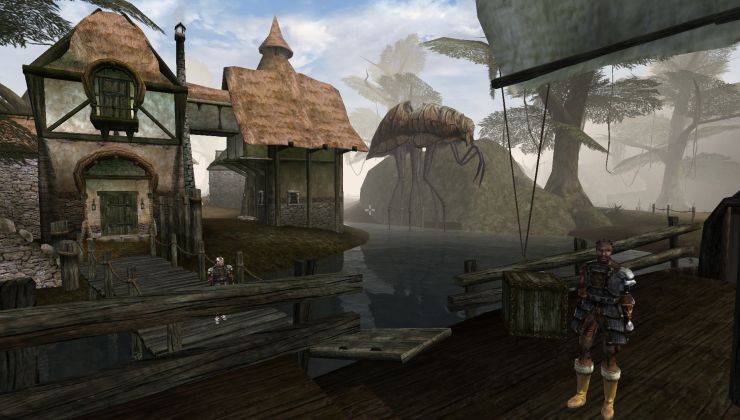 How to setup OpenMW for modern Morrowind on Linux / SteamOS and Steam Deck
 How to install Hollow Knight: Silksong mods on Linux, SteamOS and Steam Deck
Recently Updated
- KDE Plasma in Linux Mint
- Caldathras - I think I found my Discord alternative
- Pyrate - Help! Steam ignoring gamepad
- szorza - Total Noob general questions about gaming and squeezing every oun…
- Caldathras - Small update for article comments and forum posts
- Liam Dawe - See more posts