 Support us on Patreon
 PayPal
Latest Comments by Purple Library Guy
Changing your country on Steam has been made harder to battle VPNs
2 Aug 2020 at 6:43 pm UTC Likes: 1
US citizens do not benefit when US-sponsored coups and coerced trade deals create a situation where capital can readily arbitrage wages across countries. Yes, they get some cheap goods at Wal-mart, but their losses in wages among other things far more than make up for that. This loss is both direct, in that the manufacturing jobs themselves went somewhere else, and indirect, in that the bargaining power of labour is greatly weakened. When capital is very mobile and there are no trade barriers, it creates fairly direct competition between a wealthy country's labour and poor countries' labour--corporations can credibly threaten to move production elsewhere, and at the political level all kinds of social supports, labour rights, health and safety rules etc. can be evaluated in terms of "competitiveness" with those other places. Indeed, half the point of the whole exercise is not the production that happens in the poor countries, it's breaking the unions and cowing the left-of-centre political parties in the rich countries; "there is no alternative". If there are multiple poor countries, it also forces their wages, environmental standards and so on into competition with each other, making it harder for them, too, to improve living standards.
Old style imperialist coups for cheap resources are still going on; case in point, Bolivia. US consumers will no doubt benefit from that, at the direct expense of the Bolivians, if they can't reverse it. But if you look at the impact of NAFTA, it had negative impacts on the ordinary citizens of all three countries--Mexicans because their corn farmers couldn't compete with massively subsidized American (GMO) corn and so they had to flee to the cities and find sweatshop work in foreign-owned maquiladoras (or in prostitution, or drug dealing etc). Americans and Canadians because, just as Ross Perot predicted, there was a giant sucking sound as good union jobs went south and the manufacturing heartland turned into the "rust belt".
Offshoring production via neoliberal free trade is, as it were, imperialism come home to roost--it is an effort by elites to gain at the expense of the lower classes of rich and poor countries alike. It is distinct from classic imperialism even though the same people are often doing it at the same time.
2 Aug 2020 at 6:43 pm UTC Likes: 1
Quoting: eldakingBut it is naive to think that, in "colonial" relations between countries, only the very top class is benefiting... or supporting it. It is most clear when people support "America first" policies (or their equivalent) - aggressive foreign policies with obvious repercussions in other countries, but they get to benefit from the "economic growth", local jobs, and so on. Other people are taking the lion's share of the profits (through direct exploitation, lobbying, etc), sure, but there is a difference between "exploited to work in sweatshops" or "denied medical supplies" and "got a smaller share of the plunder from the US-sponsored coup that kept fruit prices low".You are conflating two different phenomena. Yes, US citizens benefit when US-sponsored coups keep fruit prices low. That is, where countries are coerced to produce things for export that could not be produced in the US in the first place (bananas, coffee, local mineral resources) and to hand them over for cheap.
US citizens do not benefit when US-sponsored coups and coerced trade deals create a situation where capital can readily arbitrage wages across countries. Yes, they get some cheap goods at Wal-mart, but their losses in wages among other things far more than make up for that. This loss is both direct, in that the manufacturing jobs themselves went somewhere else, and indirect, in that the bargaining power of labour is greatly weakened. When capital is very mobile and there are no trade barriers, it creates fairly direct competition between a wealthy country's labour and poor countries' labour--corporations can credibly threaten to move production elsewhere, and at the political level all kinds of social supports, labour rights, health and safety rules etc. can be evaluated in terms of "competitiveness" with those other places. Indeed, half the point of the whole exercise is not the production that happens in the poor countries, it's breaking the unions and cowing the left-of-centre political parties in the rich countries; "there is no alternative". If there are multiple poor countries, it also forces their wages, environmental standards and so on into competition with each other, making it harder for them, too, to improve living standards.
Old style imperialist coups for cheap resources are still going on; case in point, Bolivia. US consumers will no doubt benefit from that, at the direct expense of the Bolivians, if they can't reverse it. But if you look at the impact of NAFTA, it had negative impacts on the ordinary citizens of all three countries--Mexicans because their corn farmers couldn't compete with massively subsidized American (GMO) corn and so they had to flee to the cities and find sweatshop work in foreign-owned maquiladoras (or in prostitution, or drug dealing etc). Americans and Canadians because, just as Ross Perot predicted, there was a giant sucking sound as good union jobs went south and the manufacturing heartland turned into the "rust belt".
Offshoring production via neoliberal free trade is, as it were, imperialism come home to roost--it is an effort by elites to gain at the expense of the lower classes of rich and poor countries alike. It is distinct from classic imperialism even though the same people are often doing it at the same time.
Valve gets another developer to work on Linux graphics drivers, starting with AMD RADV
2 Aug 2020 at 6:13 pm UTC
2 Aug 2020 at 6:13 pm UTC
Quoting: Liam DaweIn current actuality, that's true. However, Wine and even Proton itself are open source. Valve couldn't stop some other portal if they wanted to offer Proton for their Linux users. Maybe if we had a bigger market share, they even would. So it's not a theoretical barrier, it's just that nobody else feels like stepping up.Quoting: oldrocker99One developer did say that it was easier for him to ensure Proton compatibility than to create a Linux version of his game, FWIW.Of course it is, because for developers they end up doing nothing to get those Linux sales thanks to Proton. However, it also entirely takes it out of their hands and then they're even more dependent on Valve for everything. Being realistic there's no way they're going to dive into Wine code to fix problems themselves when they come up. Since they're also then not likely to look into packaging for Linux at all, it also locks Linux to Steam. For me, I'm not biased towards any store but I can see why having everything in one place ends up as a bad idea.
Changing your country on Steam has been made harder to battle VPNs
2 Aug 2020 at 6:57 am UTC
So people in the US, or Canada in my case, certainly have reason to be upset when "free trade" results in local industries being destroyed, the jobs associated with them disappearing, the increased unemployment leading to downward wage pressures and so on. Sure, it might still be better (so far) to be unemployed or working gig jobs in Canada than working in the sweatshop in Indonesia where the manufacturing went . . . but that's not a reason to be OK with well paid longer term jobs going away from Canada.
Meanwhile in places like Indonesia, the reason there's tons of people more or less "willing" to work in those sweatshops is typically that they'd be better off as subsistence farmers but they got thrown off their land so someone could have a profitable plantation (and so they'd have no choice but to work in those sweatshops). The "free trade" is bad for both places. They'd be better off skipping the foreign-owned factories paying a pittance and sucking the profits out of the country, and instead doing locally owned import substitution. But the local wealthy comprador class get a cut, so change ain't gonna come easy.
Referring to the other conversation going on, Argentina is actually a case of a country that did prosper from import substitution, building up a solid local manufacturing sector . . . for a while, until the Americans managed to bring in some neoliberal types who got rid of the trade barriers that kept it going (and even for some time pegged the currency to the US dollar, so they couldn't make imports more expensive by devaluing), causing much of the local manufacturing to collapse. So they were back to hoping that various agricultural commodities would command good prices in any given year . . . sometimes they do, sometimes they don't.
2 Aug 2020 at 6:57 am UTC
Quoting: eldakingAll very true . . . and yet, US citizens on average are not better off when US corporations offshore jobs. That's not who the corporations are doing it for; profits are made but they go to the top. Rather, the average citizen is worse off when that happens, for a variety of reasons. It's certainly not the fault of the people in those other countries where the sweatshops get set up, who are often also worse off, but it's still the case.Quoting: KimyrielleI guess that's part of the "Globalization is for big business, not customers!" textbook. Apparently it's totally fine for a US company to ship your job to Vietnam because wages there are a fraction of what they are here, but if a customer goes "Ok, I can make that work for me too, and shop where it's cheaper!", the same companies go "Oh no, YOU can't do that. Only WE can!"Getting slightly off-topic, but I disagree a lot with how this is framed. This "Americans lose jobs to people that receive lower wages" is a load of bull; the person receiving poverty wages is not "taking your job", they are being exploited by your country. If an American wants that job, he can take it - I assure you immigration is a lot easier in that direction. As a bonus, you get their prices for videogames... People in the US benefit the most from the cost reductions of exploited labor; implying that US customers, of all the people in the world, can't benefit from globalization is not quite right.
Too funny.
This is a very literal "first world problem"...
Yes, globalization is for big businesses. They can set up a company in the US, pay taxes in Ireland, dispose of their garbage in China, exploit workers in Mexico, and get IT support from India. But for the people whose country is the one with all the big businesses, the right thing is to have more solidarity for the fellow workers of other countries, not thinking about how they get "cheaper" (not really) videogames.
So people in the US, or Canada in my case, certainly have reason to be upset when "free trade" results in local industries being destroyed, the jobs associated with them disappearing, the increased unemployment leading to downward wage pressures and so on. Sure, it might still be better (so far) to be unemployed or working gig jobs in Canada than working in the sweatshop in Indonesia where the manufacturing went . . . but that's not a reason to be OK with well paid longer term jobs going away from Canada.
Meanwhile in places like Indonesia, the reason there's tons of people more or less "willing" to work in those sweatshops is typically that they'd be better off as subsistence farmers but they got thrown off their land so someone could have a profitable plantation (and so they'd have no choice but to work in those sweatshops). The "free trade" is bad for both places. They'd be better off skipping the foreign-owned factories paying a pittance and sucking the profits out of the country, and instead doing locally owned import substitution. But the local wealthy comprador class get a cut, so change ain't gonna come easy.
Referring to the other conversation going on, Argentina is actually a case of a country that did prosper from import substitution, building up a solid local manufacturing sector . . . for a while, until the Americans managed to bring in some neoliberal types who got rid of the trade barriers that kept it going (and even for some time pegged the currency to the US dollar, so they couldn't make imports more expensive by devaluing), causing much of the local manufacturing to collapse. So they were back to hoping that various agricultural commodities would command good prices in any given year . . . sometimes they do, sometimes they don't.
Changing your country on Steam has been made harder to battle VPNs
1 Aug 2020 at 7:15 am UTC
1 Aug 2020 at 7:15 am UTC
Quoting: F.UltraThe small indie doesn't have the marketing to sell gajillions of copies, though. I don't think they're in a position to happily lose sales.Quoting: WorMzyMy opinion is that the price should be the price, and that should be converted to the real-time equivalent for the currency you're buying in.If you have fixed prices then you will loose lots of sales in countries where income is low while you get next to nothing from countries that can afford to pay. Now if you are a small indie and can price your game sufficiently cheap then this might work but not for big titles that costs billions to develop.
So game = £10. At time of writing:
- UK: £10
- USA: $13.15
- Japan: ¥1386
- Europe: €11.12
etc. Then apply whatever local tax applies (which is probably where most of the pressure on Valve comes from, taxperson always wants their cut...).
Changing your country on Steam has been made harder to battle VPNs
1 Aug 2020 at 7:11 am UTC Likes: 3
Basically, all prices for digital goods are arbitrary and fake. Regional pricing just makes it a bit more obvious.
1 Aug 2020 at 7:11 am UTC Likes: 3
Quoting: LinasTo be honest, it has always escaped me how games in e.g. Russia cost like 10% of what we pay in the EU. I mean, I do get that purchasing power and salaries are very different, but we are talking about digital goods. It takes whatever amount of money it takes to make a game, in whatever country is was made. It's not like the prices in Russia are lower because it is somehow cheaper to distribute them in Russia. Somehow feels arbitrary and fake in the global economy.Yeah, we're talking about digital goods. For which the price of distribution approaches zero. So, what's a "fair" price? There is none, there is only income maximization. The rationale for regional pricing is much the same as the rationale for a Steam sale: You do a cheaper price for people who aren't going to pay more than that, and you make sales you wouldn't have made, collecting a small amount of money instead of zero money.
Basically, all prices for digital goods are arbitrary and fake. Regional pricing just makes it a bit more obvious.
Free and open source 3D creation suite Blender gets funding from Microsoft
30 Jul 2020 at 5:36 am UTC
30 Jul 2020 at 5:36 am UTC
Quoting: CreakHave there been decades of 3D graphics?Quoting: tmtvlDepends on the developers you'd like to have. A senior programmer with decades of experience in 3D graphics could easily cost 10K€/mo (considering all the taxes).that's not much when split between a few developers90,000 Euros is not much when split between a few devs? You could hire 30 devs off that. Maybe 20 after taxes, but still.
Synergia is a vibrant cyberpunk visual novel that stands out and it's available now
29 Jul 2020 at 10:21 pm UTC
29 Jul 2020 at 10:21 pm UTC
Quoting: damarrinI like how every time a VN comes along Liam says he's not into them but this one is great. There are tons of great VNs out there and they're a great way to just lie back and relax. Though I'll admit that's best done with a portable device and not on a computer, so I mostly tend to get and play them on something like the PS Vita.I expect lots of other VNs come along. You can't expect him to post up articles saying "I'm not normally into Visual Novels, and this one is no exception--it pretty much sucks."
Designed for big-screen TV gaming, the SteamOS-like 'GamerOS' has a new release
26 Jul 2020 at 2:49 pm UTC Likes: 1
26 Jul 2020 at 2:49 pm UTC Likes: 1
Quoting: MohandevirI had no idea. Didn't expect anyone to be gutsy enough to call their own project vaporware!Quoting: Purple Library GuyI guess many of the GoL community members are already aware, but for the record...Quoting: LinuxeridkQuoting: MohandevirBeeePOS!Hmmm . . . something kind of like SteamOS . . . I know!!!
Like in "Beep! OS"? Or in "Bee Positive OS"? or in "Biiig Picture OS"?
Nevermind! :grin:
Sériously, finding a name for that OS, that is not SteamOS, considering what it does, is not an easy task, if you want a significant name. It does some retro gaming, else it is dedicated to Steam...
I give you: VaporOS! :tongue:
https://vaporos.net/ [External Link]
Designed for big-screen TV gaming, the SteamOS-like 'GamerOS' has a new release
23 Jul 2020 at 9:25 pm UTC Likes: 2
I give you: VaporOS! :tongue:
23 Jul 2020 at 9:25 pm UTC Likes: 2
Quoting: Linuxeridk
Quoting: MohandevirBeeePOS!Hmmm . . . something kind of like SteamOS . . . I know!!!
Like in "Beep! OS"? Or in "Bee Positive OS"? or in "Biiig Picture OS"?
Nevermind! :grin:
Sériously, finding a name for that OS, that is not SteamOS, considering what it does, is not an easy task, if you want a significant name. It does some retro gaming, else it is dedicated to Steam...
I give you: VaporOS! :tongue:
Sorting the mess of vendor specific lighting apps, OpenRGB has a new release
23 Jul 2020 at 7:57 pm UTC Likes: 3
23 Jul 2020 at 7:57 pm UTC Likes: 3
Quoting: bisbyxYou can turn it off, so getting mad that it exists is just getting mad that people have different preferences.Except it seems from numerous posts here that it is in fact often very difficult to turn off. And people are also claiming there is often a lack of alternatives. Given which, no, getting mad that it exists is getting mad that other people's preferences are being enforced and one's own preferences made needlessly unavailable.
- New Proton Experimental update adds controller support to more launchers on Linux / SteamOS
- Prefixer is a modern alternative to Protontricks that's faster and simpler
- Discord attempt to put out the fires with a clarification over new age verification
- Steam Deck completely out of stock in the US, Canada and Asia
- Diablo II: Resurrected – Infernal Edition gets released on Steam and Steam Deck Verified
- > See more over 30 days here
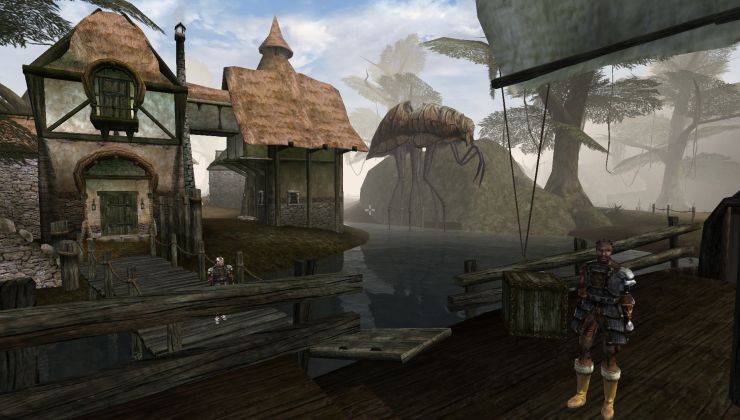 How to setup OpenMW for modern Morrowind on Linux / SteamOS and Steam Deck
 How to install Hollow Knight: Silksong mods on Linux, SteamOS and Steam Deck
- Small update for article comments and forum posts
- Liam Dawe - Detailed breakdown of performance differences between Linux and W…
- grigi - Total Noob general questions about gaming and squeezing every oun…
- on_en_a_gros - Do you miss LaunchBox/Playnite on Linux?
- Dark574 - Will you buy the new Steam Machine?
- tmtvl - See more posts