 Support us on Patreon
 PayPal
Latest Comments by Purple Library Guy
Half-Life: Alyx - Final Hours details lots of cancelled Valve projects
13 Jul 2020 at 2:00 am UTC Likes: 1
Luckily, imagination is extensible--as soon as you get an example of something you hadn't imagined, you can imagine it. That's how you learn. But, sometimes, one's imagination about a topic is accurate.
I remember once I got a brand new 4X space game, and it looked very very pretty. And instead of a flat technology tree, it was like this three dimensional thing, which looked really really cool and you could navigate around kinda. It took me a while to realize that actually, it wasn't conceptually any different--they'd just taken a flat tech tree and curved it so it looked more like a tube shape, the net effect being that it was a bit harder to see all the tech at once and more cumbersome to select one. And actually, the technologies weren't very interesting, and actually, the game kinda sucked.
So for instance, with VR it would be easier to do a 4X space game with a genuine three dimensional galaxy, where you'd walk around the stars and stuff. But what I'm not at all sure of is whether that would actually make it a better game or if it would just be a distraction from the decisions that make strategy games interesting.
13 Jul 2020 at 2:00 am UTC Likes: 1
Quoting: PatolaLet me just stop you right there. I like some RTS. I spent a good deal of time back in the day playing original Starcraft; it's fun. But, despite the word being in there, they are not strategy games, they are tactical action games. My claim does not apply to them. I am perfectly capable of imagining ways in which VR could be applied entertainingly to RTS games.Quoting: Purple Library GuyIn the abstract, I generally think VR is a good thing. But I can't see it improving the strategy games I mostly play very much. Like, how much would Stellaris or Civilization or whatnot get from going VR? I guess I actually like my games fairly abstract.So, your argument is: "I can't see (imagine) it improving the strategy games...". And as you can't imagine, you seem to assume a way to do it doesn't exist, it is not possible to happen.
Look at this game [External Link].
If you were convinced by this example, I would say that: never use the limits of your own imagination as an argument or a point.You think you're being deep, but you are not. Nobody ever does anything else but use the limits of their own imagination as an argument. There is no choice, that's what you have to work with.
Luckily, imagination is extensible--as soon as you get an example of something you hadn't imagined, you can imagine it. That's how you learn. But, sometimes, one's imagination about a topic is accurate.
The internet is vast and there are smart and creative people who can get deeply in a framework of thinking and get birth to powerful ideas and new ways of doing things. In other words, they outsmart everything you (and me) can personally imagine.That's all very fine, but not every tool is suited to every job. Just by the by, I also can't imagine how someone could use Microsoft Bob to improve strategy games, nor do I think a really good IDE for the computer language R would improve strategy games much. There may be smart and creative people out there who could show me for the foolish philistine I am on these topics; I am satisfied to remain deluded until they actually make a great strategy game incorporating an IDE for R.
I remember once I got a brand new 4X space game, and it looked very very pretty. And instead of a flat technology tree, it was like this three dimensional thing, which looked really really cool and you could navigate around kinda. It took me a while to realize that actually, it wasn't conceptually any different--they'd just taken a flat tech tree and curved it so it looked more like a tube shape, the net effect being that it was a bit harder to see all the tech at once and more cumbersome to select one. And actually, the technologies weren't very interesting, and actually, the game kinda sucked.
So for instance, with VR it would be easier to do a 4X space game with a genuine three dimensional galaxy, where you'd walk around the stars and stuff. But what I'm not at all sure of is whether that would actually make it a better game or if it would just be a distraction from the decisions that make strategy games interesting.
Half-Life: Alyx - Final Hours details lots of cancelled Valve projects
12 Jul 2020 at 4:48 am UTC Likes: 1
12 Jul 2020 at 4:48 am UTC Likes: 1
In the abstract, I generally think VR is a good thing. But I can't see it improving the strategy games I mostly play very much. Like, how much would Stellaris or Civilization or whatnot get from going VR? I guess I actually like my games fairly abstract.
Half-Life: Alyx - Final Hours details lots of cancelled Valve projects
11 Jul 2020 at 12:19 am UTC
11 Jul 2020 at 12:19 am UTC
Quoting: Comandante ÑoñardoIf you want something well done, do it yourself... I think the community should develop HL3.So, like, a group-storytelling fanfic?
More progress on Easy Anti-Cheat in Wine / Proton coming
11 Jul 2020 at 12:11 am UTC Likes: 1
11 Jul 2020 at 12:11 am UTC Likes: 1
Sooo . . . how long before all the important puzzle pieces are in place for a Steam Machine reboot?
Khronos Group open sources the OpenXR Conformance Test Suite for VR & AR
10 Jul 2020 at 9:43 pm UTC Likes: 1
Which brings us to monopoly. I'm sure you know what a monopoly is . . . you're just using the word to denigrate government in that knee-jerk way people who subscribe to free market ideologies do. But let's be clear, it's a category error; the point of monopoly is that profit-seeking firms, in the absence of price competition, can increase prices, charging economic "rent", gaining extreme profits. Government agencies aren't profit-seeking firms and don't do that, so the concept of monopoly doesn't apply.
There is in any case plenty of competition, to the extent the concept is relevant, both to and within government research. First, obviously in nearly all countries the government is not the only thing doing research, there is private sector research as well, and I've never heard of government "blocking" the private sector from doing it--to the contrary, they hand the private sector huge monopoly profits for any technology they research. But also, government agencies, universities and so on are not a single monolithic thing, they are a bunch of distinct entities. Furthermore, most governments tend to have agencies which give out research grants, to hundreds upon hundreds of mostly university-based researchers and research groups, who compete among themselves for the grants. And of course university researchers are very individually competitive--they want to publish top results which are widely cited, they want to get the reputation. The whole thing is a lot more dynamic than research at large corporations. And of course most of it is less encumbered by the intellectual property laws we agree are a problem, so public sector research is far more likely to be shared and built upon.
Well, except that increasingly, public sector research is handed over to the private sector so they can patent it. So for instance, the drug Remdesivir touted as a coronavirus treatment is owned by a big private pharmaceutical company, but most of the research leading to its discovery was done in the public sector. Virtually every technology that made up the iPhone was initially developed by government, and to the extent that Apple developed a couple themselves, they got government research grants to do so.
The problem with private sector research is that it tends to be very narrow and short term. The biggest exception sort of shows why: Bell Labs, where many groundbreaking technologies such as lasers were invented, came out of a firm that was a huge, heavily regulated monopoly which was unusually stable--Bell thought they would be The Phone Company forever, they almost acted like a quasi-government entity. So they could fund longer term research. But normal corporations don't. Small companies come up with clever ideas but don't do a lot of scientific research as such. Big companies spend most of their research money on stuff that's not very innovative, engineering improvements on existing tech. Big Pharma is a particularly clear case; they spend most of their research money finding variations on existing drugs (mainly so they can extend patents), new applications for existing drugs, and running clinical testing on drugs to establish efficacy and safety--which is necessary but not in itself innovative, and would be done better by firms which did not have a large financial stake in positive results. Basically, they cannot justify to their shareholders research which does not have a clear short term profit attached to it, and almost anything that represents any kind of fundamental progress doesn't look like clear short term profit. So it's inevitable that the private sector relies on the strength of research in the public sector. Tax cuts that end up gutting higher education and other sources of public research will make a country less competitive for that reason (and also because there's a need for an educated workforce). It's not a fast effect, and it doesn't swamp all other variables, but it's significant.
10 Jul 2020 at 9:43 pm UTC Likes: 1
Quoting: PatolaWe may see fairly eye to eye on intellectual property . . . except to me, the reduced profit incentive problem if "intellectual property" enforcement were relaxed is real, but largely an opportunity to move research away from the profit motive. If there were no intellectual property laws, but research was largely done by private companies, there would be somewhat less research and the companies would simply work harder to keep the fruits of their research secret so as to keep some barrier to competition up. Because while market theorists and even businesspeople believe in competition in general and in the abstract, the last thing any given firm wants in specific is competition.Quoting: Purple Library GuyIn an overpriced and monopolistic way, because the State does not allow for competition by nature. If these were provided by private companies, it would be cheaper and more efficient otherwise they would lose customers to competition. And their service would be a service, you would pay for what you get proportionally, not an infinite sink of money where you would sometimes see something appear as compensation. The same could be said about private sector research, if it were not for the State-enforced intellectual property laws.Quoting: HoriTaxes are a huge blocker to innovation and progress.Lack of infrastructure is a far huger blocker to innovation and progress. So is lack of robust public-sector research. Both are paid for by taxes, however.
Which brings us to monopoly. I'm sure you know what a monopoly is . . . you're just using the word to denigrate government in that knee-jerk way people who subscribe to free market ideologies do. But let's be clear, it's a category error; the point of monopoly is that profit-seeking firms, in the absence of price competition, can increase prices, charging economic "rent", gaining extreme profits. Government agencies aren't profit-seeking firms and don't do that, so the concept of monopoly doesn't apply.
There is in any case plenty of competition, to the extent the concept is relevant, both to and within government research. First, obviously in nearly all countries the government is not the only thing doing research, there is private sector research as well, and I've never heard of government "blocking" the private sector from doing it--to the contrary, they hand the private sector huge monopoly profits for any technology they research. But also, government agencies, universities and so on are not a single monolithic thing, they are a bunch of distinct entities. Furthermore, most governments tend to have agencies which give out research grants, to hundreds upon hundreds of mostly university-based researchers and research groups, who compete among themselves for the grants. And of course university researchers are very individually competitive--they want to publish top results which are widely cited, they want to get the reputation. The whole thing is a lot more dynamic than research at large corporations. And of course most of it is less encumbered by the intellectual property laws we agree are a problem, so public sector research is far more likely to be shared and built upon.
Well, except that increasingly, public sector research is handed over to the private sector so they can patent it. So for instance, the drug Remdesivir touted as a coronavirus treatment is owned by a big private pharmaceutical company, but most of the research leading to its discovery was done in the public sector. Virtually every technology that made up the iPhone was initially developed by government, and to the extent that Apple developed a couple themselves, they got government research grants to do so.
The problem with private sector research is that it tends to be very narrow and short term. The biggest exception sort of shows why: Bell Labs, where many groundbreaking technologies such as lasers were invented, came out of a firm that was a huge, heavily regulated monopoly which was unusually stable--Bell thought they would be The Phone Company forever, they almost acted like a quasi-government entity. So they could fund longer term research. But normal corporations don't. Small companies come up with clever ideas but don't do a lot of scientific research as such. Big companies spend most of their research money on stuff that's not very innovative, engineering improvements on existing tech. Big Pharma is a particularly clear case; they spend most of their research money finding variations on existing drugs (mainly so they can extend patents), new applications for existing drugs, and running clinical testing on drugs to establish efficacy and safety--which is necessary but not in itself innovative, and would be done better by firms which did not have a large financial stake in positive results. Basically, they cannot justify to their shareholders research which does not have a clear short term profit attached to it, and almost anything that represents any kind of fundamental progress doesn't look like clear short term profit. So it's inevitable that the private sector relies on the strength of research in the public sector. Tax cuts that end up gutting higher education and other sources of public research will make a country less competitive for that reason (and also because there's a need for an educated workforce). It's not a fast effect, and it doesn't swamp all other variables, but it's significant.
Google's UI toolkit Flutter comes to the Linux desktop with help from Canonical
9 Jul 2020 at 4:23 am UTC
9 Jul 2020 at 4:23 am UTC
Quoting: AcrophobicIn other note, Linux Mint has dropped [External Link] Snap packages. The latest release won't include any snaps or snapd. They also make APT will forbid snapd from getting installed.That is not quite accurate. Mint won't stop you from installing snapd. But you have to do it deliberately--it's not installed by default and it won't be automatically pulled in by certain applications that Ubuntu packages as snap only.
Khronos Group open sources the OpenXR Conformance Test Suite for VR & AR
8 Jul 2020 at 4:33 pm UTC
8 Jul 2020 at 4:33 pm UTC
Quoting: HoriTaxes are a huge blocker to innovation and progress.Lack of infrastructure is a far huger blocker to innovation and progress. So is lack of robust public-sector research. Both are paid for by taxes, however.
Make nefarious goods in Basement, now up on GOG
7 Jul 2020 at 11:09 pm UTC Likes: 1
7 Jul 2020 at 11:09 pm UTC Likes: 1
Another from the "write what you know" department?
VKD3D-Proton is the new official Direct3D 12 to Vulkan layer for Proton
7 Jul 2020 at 7:52 am UTC Likes: 1
7 Jul 2020 at 7:52 am UTC Likes: 1
Quoting: EikeSome of those reverse-world comments are hilarious.Like with DXVK, we might even see gamers on Windows using it in future. Yes, that's actually a thing and there's many more like it as it can boost performance on Windows too for older games.Now that's interesting!
*edit*
Googling for this reddit link, I found another nice one. :D
https://www.reddit.com/r/linux_gaming/comments/hgrcly/you_may_have_heard_of_playing_windows_games_on/ [External Link]
VKD3D-Proton is the new official Direct3D 12 to Vulkan layer for Proton
7 Jul 2020 at 1:49 am UTC Likes: 2
7 Jul 2020 at 1:49 am UTC Likes: 2
So it looks to me like, contrary to many claims about the death of PC gaming, what those graphs show is massive growth in gaming on general purpose desktop/laptop computers, with Linux growth within that initially strong but slower than the whole PC gaming platform, and more recently holding its own.
Of course all that is just within the context of "people who use Reddit" which is big and broad but not a proper sample of the planet.
I'm not sure how this all relates to the apparent growth in the general Linux desktop. I don't think the PC desktop overall has been growing that fast, while gaming on PCs has. So let's imagine for example that the proportion of PCs used for gaming doubled from 30% to 60%, while the percentage of those that are Linux desktops held steady at 1%--that would mean the percentage of total PC desktops that were Linux gaming desktops would only go from 0.3% to 0.6%, not a huge difference. And that's over years. The recent apparent couple-of-percentage-points boost in desktop Linux use generally dwarfs that in a much shorter time, but doesn't yet seem to have dragged a whole lot of new Linux gaming with it.
All in all, the stats lately are weird.
Of course all that is just within the context of "people who use Reddit" which is big and broad but not a proper sample of the planet.
I'm not sure how this all relates to the apparent growth in the general Linux desktop. I don't think the PC desktop overall has been growing that fast, while gaming on PCs has. So let's imagine for example that the proportion of PCs used for gaming doubled from 30% to 60%, while the percentage of those that are Linux desktops held steady at 1%--that would mean the percentage of total PC desktops that were Linux gaming desktops would only go from 0.3% to 0.6%, not a huge difference. And that's over years. The recent apparent couple-of-percentage-points boost in desktop Linux use generally dwarfs that in a much shorter time, but doesn't yet seem to have dragged a whole lot of new Linux gaming with it.
All in all, the stats lately are weird.
- New Proton Experimental update adds controller support to more launchers on Linux / SteamOS
- Prefixer is a modern alternative to Protontricks that's faster and simpler
- GE-Proton 10-30 released with fixes for Arknights Endfield and the EA app
- Discord attempt to put out the fires with a clarification over new age verification
- Steam Deck completely out of stock in the US, Canada and Asia
- > See more over 30 days here
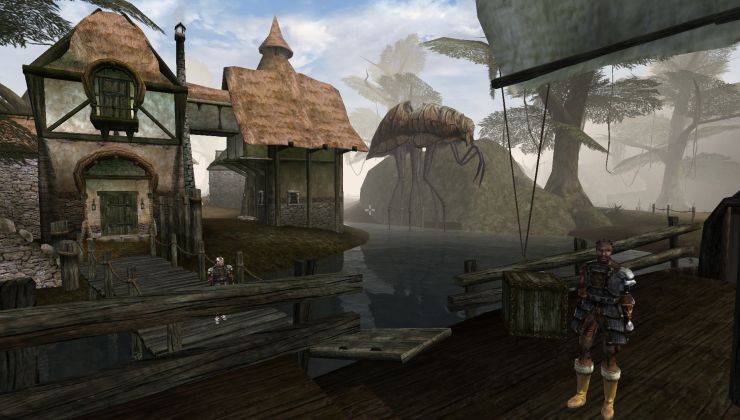 How to setup OpenMW for modern Morrowind on Linux / SteamOS and Steam Deck
 How to install Hollow Knight: Silksong mods on Linux, SteamOS and Steam Deck
- Detailed breakdown of performance differences between Linux and W…
- grigi - Total Noob general questions about gaming and squeezing every oun…
- on_en_a_gros - Small update for article comments and forum posts
- FeRDNYC - Do you miss LaunchBox/Playnite on Linux?
- Dark574 - Will you buy the new Steam Machine?
- tmtvl - See more posts