 Support us on Patreon
 PayPal
Latest Comments by Purple Library Guy
Editorial - Linux Gaming's Ticking Clock
22 May 2020 at 6:55 pm UTC Likes: 2
22 May 2020 at 6:55 pm UTC Likes: 2
Quoting: CatKillerThis is all very true, but servers and bandwidth cost money. You use a lot more of both running a streaming service than just letting people download their games. Any streaming service is gonna need a revenue model of some sort.Quoting: MohandevirUnless the "Steam streaming service" goes free, there is a possibilty that there will be a limited set of games available, lacking lots of popular titles.Free is the way that makes most sense. They have a shop, their client also already streams games;let the customer buy the games as normal but have the option to stream from Steam Machines In The Cloud as a value-add if the customer's Internet is better than their gaming rig. It builds on what they already know how to do. A Netflix-style subscription service would be quite a swerve.
Time will tell, if it ever becomes a thing...
GNOME and Rothschild Patent Imaging settle
22 May 2020 at 6:49 pm UTC Likes: 3
22 May 2020 at 6:49 pm UTC Likes: 3
I don't think much of patents in the first place--they may have had a particular time and place where they were briefly more use than harm, but it was pretty specific. For a long time they've been a terrible idea whose sole purpose is to make the rich richer and everyone else poorer while retarding and distorting technological progress.
And I dislike patents specifically on software almost as much as I dislike patents on existing genomes (really, on those, WTF?! You didn't invent it you stupid prat, you just had some techs run a sequencer). I'm not convinced that the "it's math" thing matters very much, but the structure of how software works socially and economically makes patents particularly damaging to it.
But even if we accept all that stuff I sometimes wonder whatever happened to the original requirements for patenting: A working model and disclosure of the specs, so that others can make improved models based on it. Nowadays apparently it's enough to have some vague verbiage that can barely even be called "concepts", and you don't have to show jack even if you have it. Transforms the way it works massively, and not for the better. Patents no longer reward actual inventors (if they ever did), they instead reward bullshit artists . . . or more specifically, they reward people with the money to hire professional bullshit artists who bill $$$$/hour to submit carefully vetted patent applications.
And I dislike patents specifically on software almost as much as I dislike patents on existing genomes (really, on those, WTF?! You didn't invent it you stupid prat, you just had some techs run a sequencer). I'm not convinced that the "it's math" thing matters very much, but the structure of how software works socially and economically makes patents particularly damaging to it.
But even if we accept all that stuff I sometimes wonder whatever happened to the original requirements for patenting: A working model and disclosure of the specs, so that others can make improved models based on it. Nowadays apparently it's enough to have some vague verbiage that can barely even be called "concepts", and you don't have to show jack even if you have it. Transforms the way it works massively, and not for the better. Patents no longer reward actual inventors (if they ever did), they instead reward bullshit artists . . . or more specifically, they reward people with the money to hire professional bullshit artists who bill $$$$/hour to submit carefully vetted patent applications.
Editorial - Linux Gaming's Ticking Clock
22 May 2020 at 8:11 am UTC Likes: 2
For instance, people have mentioned in this thread the ability of Proton/Wine to run old Windows games better than Windows does. Boxtron might also be mentioned in this connection. This is presumably true not only of old Windows games, but old Windows software in general. And there is a ton of old Windows software. In the past, all the masses of little old Windows apps for lots of little tasks that people still rely on was a shackle holding people to the safe backwards compatibility of Windows. Now the ability to use all that stuff could become an exclusive feature of Linux. My dad has this genealogy program that won't run on newer Windows . . .
There's the "Open source isn't spying on you" feature. Linux probably already has most of the paranoids . . . but paranoids are plausibly a growth market what with the way the world is going. You're not paranoid if they really are out to get you . . .
Linux could extend its various attempts to make everything run on it. Get serious about running Android apps, for instance. The Linux advantage could be that whatever platform you want something from, Linux can get it for you.
One thing to keep in mind in terms of growing the Linux (gaming) desktop is that we're sort of piggybacked on all the other Linux use cases. Desktop Linux is still viable largely because server Linux, HPC Linux, embedded Linux, "tinkerer" Linux (like Raspberry Pi and stuff) and so on and so forth are all prosperous or dominant in their spheres. That gives us a big mass of development happening on the Linux kernel and various important, infrastructural Linux software, so the core OS keeps on being very competitive, not to say awesome. Plus it creates this pool of people who work with Linux for various reasons, and some of them start wanting to use it for their desktop and their gaming.
The corollary is that every time Linux gains ground in some other space, it gives desktop/gaming Linux a little boost. And in fact, any time any open source software gains ground, it gives desktop/gaming Linux a little boost because open source software virtually always at least runs well on Linux and often is closely associated with Linux even if technically cross-platform. So if Blender starts taking over its space, there will be more Linux workstations, more development for graphics-oriented Linux software, drivers and so on, and a few more Linux desktops.
So we need to watch out for, and feed, disruptive open source software in various fields.
22 May 2020 at 8:11 am UTC Likes: 2
Quoting: gradyvuckovicReading over everything you wrote Liam about the different platforms competing, I don't think there should be any doubt that the way every major player in this market is competing right now, is with a strategy of platform lockin.It's an interesting problem for sure. One thing that makes it a problem is that the nature of Linux and open source makes it very hard to use lockin tactics in the usual way. However, there are forms of "opening all the things" that could effectively become exclusive-like in practical terms.
It's the name of the game. Every platform wants exclusives, or a subscription model, or at the very least to lock players into their platform with huge libraries of games, or a sense of dependency on a particular feature set, or 'something'.
For instance, people have mentioned in this thread the ability of Proton/Wine to run old Windows games better than Windows does. Boxtron might also be mentioned in this connection. This is presumably true not only of old Windows games, but old Windows software in general. And there is a ton of old Windows software. In the past, all the masses of little old Windows apps for lots of little tasks that people still rely on was a shackle holding people to the safe backwards compatibility of Windows. Now the ability to use all that stuff could become an exclusive feature of Linux. My dad has this genealogy program that won't run on newer Windows . . .
There's the "Open source isn't spying on you" feature. Linux probably already has most of the paranoids . . . but paranoids are plausibly a growth market what with the way the world is going. You're not paranoid if they really are out to get you . . .
Linux could extend its various attempts to make everything run on it. Get serious about running Android apps, for instance. The Linux advantage could be that whatever platform you want something from, Linux can get it for you.
One thing to keep in mind in terms of growing the Linux (gaming) desktop is that we're sort of piggybacked on all the other Linux use cases. Desktop Linux is still viable largely because server Linux, HPC Linux, embedded Linux, "tinkerer" Linux (like Raspberry Pi and stuff) and so on and so forth are all prosperous or dominant in their spheres. That gives us a big mass of development happening on the Linux kernel and various important, infrastructural Linux software, so the core OS keeps on being very competitive, not to say awesome. Plus it creates this pool of people who work with Linux for various reasons, and some of them start wanting to use it for their desktop and their gaming.
The corollary is that every time Linux gains ground in some other space, it gives desktop/gaming Linux a little boost. And in fact, any time any open source software gains ground, it gives desktop/gaming Linux a little boost because open source software virtually always at least runs well on Linux and often is closely associated with Linux even if technically cross-platform. So if Blender starts taking over its space, there will be more Linux workstations, more development for graphics-oriented Linux software, drivers and so on, and a few more Linux desktops.
So we need to watch out for, and feed, disruptive open source software in various fields.
Spoiler, click me
This relates to Windows dominance of the office space, and the growth in work from home seeming to have driven a growth in use of Linux desktops. Windows general desktop dominance would be reduced if they didn't control the office desktop. Apple's desktop niche would be way smaller if they didn't have such a footprint in the "creative" desktop. Linux needs to build its own niches and make inroads into those. This can be done.
I've said before that there's a tendency for open source software to dominate when it reaches a certain size. Open source software is hard to kill entirely, it can limp along as an also-ran for years and years in the shadow of big commercial offerings where a small closed competitor would go bankrupt and die. In that state it tends to have core features but be unpolished and missing things compared to the top closed source player/s. But sometimes something happens. Some key, energetic developers arrive, or some industry players decide this thing is needed and fund it, or some reform of how it's run makes it more high-profile and submission-friendly, or the people who have been plugging away for ages finally get the infrastructure how they want it and the fruits of their labour show up in big featureful releases. And development accelerates, excitement builds, user numbers grow, a "critical mass" is reached. Once this process begins, it feeds off itself--the better the features, the more users and developers, the more users and developers, the more features. At a certain market share, it becomes difficult for closed source to compete. And there's a new niche for open source, and riding on that a new niche for Linux.
So yeah, every time a piece of open source software hits critical mass and starts taking over some niche, it's ultimately a win for Linux gaming. We should be watching out for and helping such things.
I've said before that there's a tendency for open source software to dominate when it reaches a certain size. Open source software is hard to kill entirely, it can limp along as an also-ran for years and years in the shadow of big commercial offerings where a small closed competitor would go bankrupt and die. In that state it tends to have core features but be unpolished and missing things compared to the top closed source player/s. But sometimes something happens. Some key, energetic developers arrive, or some industry players decide this thing is needed and fund it, or some reform of how it's run makes it more high-profile and submission-friendly, or the people who have been plugging away for ages finally get the infrastructure how they want it and the fruits of their labour show up in big featureful releases. And development accelerates, excitement builds, user numbers grow, a "critical mass" is reached. Once this process begins, it feeds off itself--the better the features, the more users and developers, the more users and developers, the more features. At a certain market share, it becomes difficult for closed source to compete. And there's a new niche for open source, and riding on that a new niche for Linux.
So yeah, every time a piece of open source software hits critical mass and starts taking over some niche, it's ultimately a win for Linux gaming. We should be watching out for and helping such things.
Editorial - Linux Gaming's Ticking Clock
22 May 2020 at 7:14 am UTC Likes: 6
The problem is not so much with numbers, really. What have we got, a bit under a third of games released for Linux (really pretty amazing considering our market share)? In terms of raw numbers, Feral's releases are a drop in the bucket. And a lot of the smaller, indie ones are genuinely native.
The problem is with the bigger games coming from big studios with their own engines. Very few of those are truly native.
22 May 2020 at 7:14 am UTC Likes: 6
Quoting: appetrosyanI heard this speech a thousand times and will probably hear it again. There are very few truly native ports out there.Few truly native ports, true. But there are a fair number of games designed cross-platform in the first place, which would more or less include games made with Unity.
The problem is not so much with numbers, really. What have we got, a bit under a third of games released for Linux (really pretty amazing considering our market share)? In terms of raw numbers, Feral's releases are a drop in the bucket. And a lot of the smaller, indie ones are genuinely native.
The problem is with the bigger games coming from big studios with their own engines. Very few of those are truly native.
Editorial - Linux Gaming's Ticking Clock
22 May 2020 at 7:07 am UTC Likes: 3
22 May 2020 at 7:07 am UTC Likes: 3
Quoting: GuestDo you remember two years ago when proton came out and people on this site seriously thought linux gaming numbers were going to radically grow because of it? :)Yup. I was one of them. At this point about the best you can say is, Proton may be one reason Linux gaming numbers haven't significantly shrunk after the demise of the Steam Machine.
Editorial - Linux Gaming's Ticking Clock
21 May 2020 at 11:17 pm UTC Likes: 2
Actually, one might argue that there are developments that might reduce both support costs and the fear of them somewhat going forward. That is, things like Flatpaks, which reduce the need to worry about the eeevil Linux Fragmentation (both in terms of different distros and fragmentation in time, somewhat futureproofing games).
21 May 2020 at 11:17 pm UTC Likes: 2
Quoting: ShmerlBasically, the remaining argument is about support. And support costs aren't going to go away, but they aren't huge; we seem to be right at the edge of cost/profit. So we need to be at least a little bit bigger for native games, whether ports or designed cross-platform in the first place, to accelerate. Even if we were perceived to be at about 3% of the gaming desktops rather than a bit under 1%, we'd probably get way more native games than Mac because we're not seen to be deliberately making development for the platform a major pain.However, the story in terms of native development is more positive. In the open-source world, Godot has a significant fresh round of funding with its 2020 showreel showing a notable upward trend in quality and quantity, while Blender made a huge leap with 2.80 last year. For the big-name engines, both Unity and Unreal's support for native game development is improving at a solid pace.I think engines support, ease of use and cost of porting haven't been the blocker for quite a while already. Let's assume they are almost negligible even. Somehow that wasn't enough to boost the number of big native ports for the desktop.
Actually, one might argue that there are developments that might reduce both support costs and the fear of them somewhat going forward. That is, things like Flatpaks, which reduce the need to worry about the eeevil Linux Fragmentation (both in terms of different distros and fragmentation in time, somewhat futureproofing games).
Editorial - Linux Gaming's Ticking Clock
21 May 2020 at 11:04 pm UTC Likes: 6
All in all, if Wine is going to be around I think it's better if it works well and consistently than if it's half-assed. And I think it has in the last year or two reached a critical mass where people are writing Wine significantly faster than MS can change Windows; Wine may still be chasing taillights, but it's doing it over the speed limit.
21 May 2020 at 11:04 pm UTC Likes: 6
Quoting: Mountain ManWhile I'm grateful that Wine/Proton allow me to play more games on Linux, I think my one misgiving is that while it helps Linux gaming, it doesn't help Linux overall. In fact, it gives developers another excuse to not target Linux even after it has long since proven itself to be a viable platform.Wine/Proton is a two-edged sword. But the column has a point--it's here, and the question is how to exploit the good edge and minimize cutting ourselves with the bad, and to overextend the metaphor, what other things we can scrape up to serve as shield, armour, and longbow.
All in all, if Wine is going to be around I think it's better if it works well and consistently than if it's half-assed. And I think it has in the last year or two reached a critical mass where people are writing Wine significantly faster than MS can change Windows; Wine may still be chasing taillights, but it's doing it over the speed limit.
GNOME and Rothschild Patent Imaging settle
21 May 2020 at 10:49 pm UTC
21 May 2020 at 10:49 pm UTC
Well, that's a happy thing. Good going Gnome! May it set a precedent.
Denuvo Anti-Cheat to support Steam Play Proton, being removed from DOOM Eternal
21 May 2020 at 4:49 pm UTC Likes: 2
21 May 2020 at 4:49 pm UTC Likes: 2
Quoting: rustybroomhandleGood on them. Although if they're buying their OS from Microsoft it seems to me a bit late to worry about that kind of thing.Quoting: musojon74Pleased with their response. It can’t just have been Proton users review bombing it, why does it affect the Windows community so much? Also out of interest Denuvo not working would also affect Stadia wouldn’t it?Stadia does not not need Denuvo since it's both piracy-proof and cheat/tamper proof.
Also, Windows users are upset because they too don't like software having kernel level access to their systems.
Microsoft Build - DirectX and Linux (WSL) plus more
21 May 2020 at 8:05 am UTC Likes: 3
21 May 2020 at 8:05 am UTC Likes: 3
Quoting: ckonteThat's like saying 20 years ago "the new Microsoft is not interested anymore in the OS market, since they are mainly into office software now". One major point of the OS is that you can leverage that desktop monopoly to push other software and services. If MS didn't control the platform they'd have a much harder time selling the rest of their stuff.Don't be fooled about Microsoft's stance and their aim here, it's not because they love Linux. They're going where the developers are to continue pulling people to Microsoft services. Nothing more.Come on Microsoft is just doing what every single other company contributing to Linux is doing: their own interest.
Don't be naive, it's not different from Google, Intel, Valve, they all want to make money using Linux in many different ways, they are not charities.
Is that bad? Not necessarily, it will just increase the choice that we have in my opinion.
I think that the new Microsoft is not interested anymore in the OS market, since they are mainly into services now, so it makes perfectly sense.
- Discord is about to require age verification for everyone
- New Proton Experimental update adds controller support to more launchers on Linux / SteamOS
- Prefixer is a modern alternative to Protontricks that's faster and simpler
- GE-Proton 10-30 released with fixes for Arknights Endfield and the EA app
- Discord attempt to put out the fires with a clarification over new age verification
- > See more over 30 days here
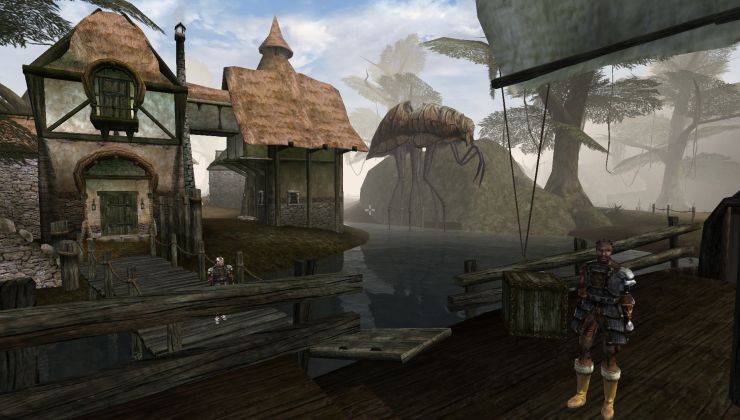 How to setup OpenMW for modern Morrowind on Linux / SteamOS and Steam Deck
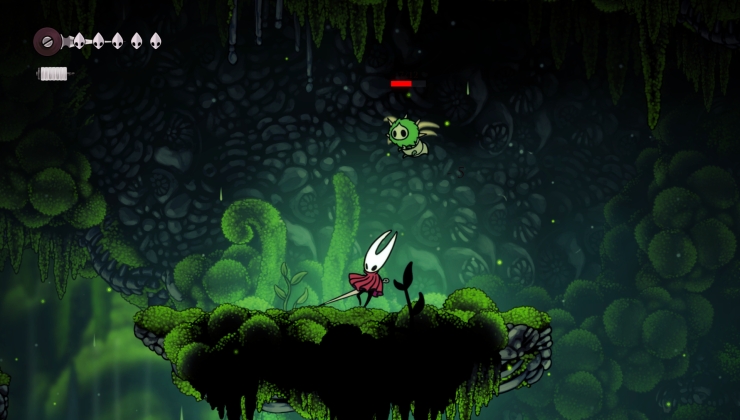 How to install Hollow Knight: Silksong mods on Linux, SteamOS and Steam Deck
- Total Noob general questions about gaming and squeezing every oun…
- TheLinuxPleb - Detailed breakdown of performance differences between Linux and W…
- Ehvis - Small update for article comments and forum posts
- FeRDNYC - Do you miss LaunchBox/Playnite on Linux?
- Dark574 - Will you buy the new Steam Machine?
- tmtvl - See more posts