 Support us on Patreon
 PayPal
Latest Comments by Purple Library Guy
Steam Beta adds Vulkan shader processing
26 May 2020 at 4:16 pm UTC
26 May 2020 at 4:16 pm UTC
I'll be interested to see if people notice differences.
ABS vs THE BLOOD QUEEN successfully funded and coming to Linux
25 May 2020 at 6:25 pm UTC
25 May 2020 at 6:25 pm UTC
When I said "I'd love to have killer Abs" this isn't quite what I meant.
One Dreamer: Prologue is now supported on Linux
25 May 2020 at 6:22 pm UTC Likes: 2
25 May 2020 at 6:22 pm UTC Likes: 2
A story about indie game developers. Well, I guess they do say "Write what you know".
If you feel the need to take down capitalism then Tonight We Riot is out now
25 May 2020 at 9:02 am UTC Likes: 2
Currently, the main thing the US is defending Europe against is the ability to have lucrative trade ties with countries the US disapproves of.
25 May 2020 at 9:02 am UTC Likes: 2
Quoting: DesumWhat, for fear the eeevil Russkies will invade? They have neither the motive nor the capability. Europe and Great Britain have no need to be defended against anyone in particular.Quoting: CyrilYou didn't say anything of substance this time. How are you going to keep that NHS when you also have to pay three times as much for your military as you do now?Quoting: DesumWe'll see how European socialism fares when the United States goes into decline and ceases to be the friendly global hegemon. Y'know, when they'll have to pay for all of their own defense budget.United States, friendly? OK now I know I really can't take you seriously, whathever you say about countries being socialist or not, this is top notch.
But you're right on one thing for sure, the United States are in decline, and when this day comes up it won't be a bad thing. So many countries are so tied, economically and politically, to the USA that's pretty slavery.
I won't reply on this thread again, at least I shouldn't.
Currently, the main thing the US is defending Europe against is the ability to have lucrative trade ties with countries the US disapproves of.
Editorial - Linux Gaming's Ticking Clock
24 May 2020 at 9:00 am UTC Likes: 1
--The OS is not made of nagware/coercionware. That is, it will not go around interrupting what you are doing to insist that you do updates or whatever.
--In some distros, fairly unified software management. All the open source stuff in your distribution's repositories is easy to find and install from a single GUI application, and it updates along with the OS, no muss, no fuss. The software manager is like Steam for your other software, if less glitzy.
--This may be counterintuitive, but I think a case could be made for superior UI. We've always had an inferiority complex about Linux UI; traditionally the Linux desktops were considered behind Windows and especially Mac, rough and lacking polish. But no matter which desktop environment you prefer, these days most of those rough edges have been knocked off, while new features and approaches have been added. If you want power and customizability, KDE makes Windows look like it's stuck at 3.1. If you want innovative and clean, Gnome is far cooler than Windows. I hear a couple of the others, like Budgie and what, are very nice too. If you want something like Windows but better, I personally think Mate totally fills that--I go back and forth every day (well, I did until I started working from home) and I find that for instance the Windows file manager feels clunky compared to the Mate one and probably most other Linux file managers. Like, I don't see a way to make the Windows file manager have more than one pane so you can easily move things back and forth, and it's not tabbed. And as far as I know you can only have one taskbar, and you can't move it--Windows is weak.
I can imagine a situation in the future when various existing projects become effective and reliable and easy to use, where Linux became "The OS where you can use all your old stuff--old games, old software generally, old games from previous generations of consoles and things, old Office files, whatever". It can already do a fair amount of that, but the ways are kind of scattered and some of them are hard to use.
24 May 2020 at 9:00 am UTC Likes: 1
Quoting: jensI dunno about strong. There are a couple minor ones I can think of.Quoting: Purple Library GuyVery good points, thanks.Quoting: LinuxwarperYou speak of Proton as if it's complete when reality is it's not. It still lacks support for anticheat, and VK3D is still not mature. How can Proton make a significant impact when it's still lacking? I am certain a completed Proton will drive adoption.I'm afraid you missed my whole point. Proton, whether incomplete or complete, is a thing which reduces barriers to adoption. It cannot in itself drive adoption. With Proton, you can potentially say "If I switch to Linux, I can still have my Windows games." But people who stay with Windows can already have their Windows games--that's not a reason to switch.
If barriers are high, there can be drivers of adoption and people still won't switch--they'll say "I'd like to switch, but I wouldn't be able to play my Windows games." So something like Proton is important in its own way. But it is not in itself a driver of adoption, just an enabler if such drivers exist.
For people to switch, there need to be both few and low barriers to switching, and positive drivers, actual reasons why you get something out of switching. My point was that Linux people have tended to work very hard to reduce barriers, but have not put as much effort into creating actual incentives--and Proton is in the former category, not the latter.
I wonder what actual drivers are there to move to Linux. The one I could think of, except from non-functionals like being free/open or less intrusive, is that Linux offers a much better developer experience. Even in development areas where Windows is rather strong, e.g. Web development, I'm gradually seeing people move to Linux since things like Docker or Nodejs do work much better on Linux (I guess that is also the reason why there is so much investment into WSL from Microsoft). Are there more strong functional drivers?
--The OS is not made of nagware/coercionware. That is, it will not go around interrupting what you are doing to insist that you do updates or whatever.
--In some distros, fairly unified software management. All the open source stuff in your distribution's repositories is easy to find and install from a single GUI application, and it updates along with the OS, no muss, no fuss. The software manager is like Steam for your other software, if less glitzy.
--This may be counterintuitive, but I think a case could be made for superior UI. We've always had an inferiority complex about Linux UI; traditionally the Linux desktops were considered behind Windows and especially Mac, rough and lacking polish. But no matter which desktop environment you prefer, these days most of those rough edges have been knocked off, while new features and approaches have been added. If you want power and customizability, KDE makes Windows look like it's stuck at 3.1. If you want innovative and clean, Gnome is far cooler than Windows. I hear a couple of the others, like Budgie and what, are very nice too. If you want something like Windows but better, I personally think Mate totally fills that--I go back and forth every day (well, I did until I started working from home) and I find that for instance the Windows file manager feels clunky compared to the Mate one and probably most other Linux file managers. Like, I don't see a way to make the Windows file manager have more than one pane so you can easily move things back and forth, and it's not tabbed. And as far as I know you can only have one taskbar, and you can't move it--Windows is weak.
I can imagine a situation in the future when various existing projects become effective and reliable and easy to use, where Linux became "The OS where you can use all your old stuff--old games, old software generally, old games from previous generations of consoles and things, old Office files, whatever". It can already do a fair amount of that, but the ways are kind of scattered and some of them are hard to use.
Editorial - Linux Gaming's Ticking Clock
24 May 2020 at 1:00 am UTC Likes: 6
If barriers are high, there can be drivers of adoption and people still won't switch--they'll say "I'd like to switch, but I wouldn't be able to play my Windows games." So something like Proton is important in its own way. But it is not in itself a driver of adoption, just an enabler if such drivers exist.
For people to switch, there need to be both few and low barriers to switching, and positive drivers, actual reasons why you get something out of switching. My point was that Linux people have tended to work very hard to reduce barriers, but have not put as much effort into creating actual incentives--and Proton is in the former category, not the latter.
24 May 2020 at 1:00 am UTC Likes: 6
Quoting: LinuxwarperYou speak of Proton as if it's complete when reality is it's not. It still lacks support for anticheat, and VK3D is still not mature. How can Proton make a significant impact when it's still lacking? I am certain a completed Proton will drive adoption.I'm afraid you missed my whole point. Proton, whether incomplete or complete, is a thing which reduces barriers to adoption. It cannot in itself drive adoption. With Proton, you can potentially say "If I switch to Linux, I can still have my Windows games." But people who stay with Windows can already have their Windows games--that's not a reason to switch.
If barriers are high, there can be drivers of adoption and people still won't switch--they'll say "I'd like to switch, but I wouldn't be able to play my Windows games." So something like Proton is important in its own way. But it is not in itself a driver of adoption, just an enabler if such drivers exist.
For people to switch, there need to be both few and low barriers to switching, and positive drivers, actual reasons why you get something out of switching. My point was that Linux people have tended to work very hard to reduce barriers, but have not put as much effort into creating actual incentives--and Proton is in the former category, not the latter.
Wine 5.9 is out with major WineD3D Vulkan work
23 May 2020 at 5:48 pm UTC Likes: 1
23 May 2020 at 5:48 pm UTC Likes: 1
Quoting: BrisseLike comparing apples to apple blossoms? "Look there, that might be an apple some day."Quoting: Xaero_VincentSo any examples of WineD3D Vulkan vs DXVK? Anything Vulkan work yet? I'd like to try it out.I don't know much about WineD3D, but I don't get the impression that it's at a point where we should start making comparisons like that. I have a feeling that it would be a bit like comparing apples to oranges.
Editorial - Linux Gaming's Ticking Clock
23 May 2020 at 5:43 pm UTC Likes: 1
23 May 2020 at 5:43 pm UTC Likes: 1
Reading through the last bunch of comments I noticed a couple of things.
Some people are talking about the way "the community" behaved at certain times as though that's tactically relevant and we could choose do do that differently in future. It isn't because we can't. It is not a controllable factor. Any uncontrolled community bigger than a certain size will have some people in it who act like jerks. Period. Planning based on the notion that we can make that not be the case is entirely pointless.
Some people in the last few posts are also talking as though if we get Proton working well enough, that will actually cause Linux adoption. It will not. A lot of the story of Linux is about removing barriers to adoption--getting rid of the things that block people from switching. Many, many barriers have been removed, many others have been made much lower. Proton is one of those barrier removers, and a fairly important one. Removing barriers is an important thing to do. IMO, Linux developers have been really very successful at barrier removal, whether it's hardware not working or UI polish or software that does needed jobs. For a lot of use cases, there are no significant ones left.
And yet here we are at about the same market share we've always been at. Removing all the barriers is not enough to drive adoption. The big question coming out of the original article and some of the key discussion posts is, what can be done to create actual pull towards Linux, so that people are not just not blocked from switching but have positive reasons to do so?
Some people are talking about the way "the community" behaved at certain times as though that's tactically relevant and we could choose do do that differently in future. It isn't because we can't. It is not a controllable factor. Any uncontrolled community bigger than a certain size will have some people in it who act like jerks. Period. Planning based on the notion that we can make that not be the case is entirely pointless.
Some people in the last few posts are also talking as though if we get Proton working well enough, that will actually cause Linux adoption. It will not. A lot of the story of Linux is about removing barriers to adoption--getting rid of the things that block people from switching. Many, many barriers have been removed, many others have been made much lower. Proton is one of those barrier removers, and a fairly important one. Removing barriers is an important thing to do. IMO, Linux developers have been really very successful at barrier removal, whether it's hardware not working or UI polish or software that does needed jobs. For a lot of use cases, there are no significant ones left.
And yet here we are at about the same market share we've always been at. Removing all the barriers is not enough to drive adoption. The big question coming out of the original article and some of the key discussion posts is, what can be done to create actual pull towards Linux, so that people are not just not blocked from switching but have positive reasons to do so?
Comedy point and click Nine Noir Lives coming to Linux, demo soon
22 May 2020 at 7:08 pm UTC Likes: 3
22 May 2020 at 7:08 pm UTC Likes: 3
So they have a mewsletter. Arg.
Editorial - Linux Gaming's Ticking Clock
22 May 2020 at 7:04 pm UTC
And yet, things do change sometimes.
22 May 2020 at 7:04 pm UTC
Quoting: appetrosyanReally well put. However I would argue that there’s a slight problem with the software utilisation. Most companies are using Microsoft because they can’t afford the downtime, the IT guy is very old fashioned and because they’ve already bought a subscription and want to make the best of it.Oh, sure. Microsoft benefits from a lot of inertia, and there's always pain in changing things. New software, or a new OS, have to offer a compelling improvement before people will budge--like gradyvuckovic said, they'll ask "Why?"
And yet, things do change sometimes.
- New Proton Experimental update adds controller support to more launchers on Linux / SteamOS
- Prefixer is a modern alternative to Protontricks that's faster and simpler
- GE-Proton 10-30 released with fixes for Arknights Endfield and the EA app
- Discord attempt to put out the fires with a clarification over new age verification
- Building a Retro Linux Gaming Computer Part 50: Dawn of Civilization
- > See more over 30 days here
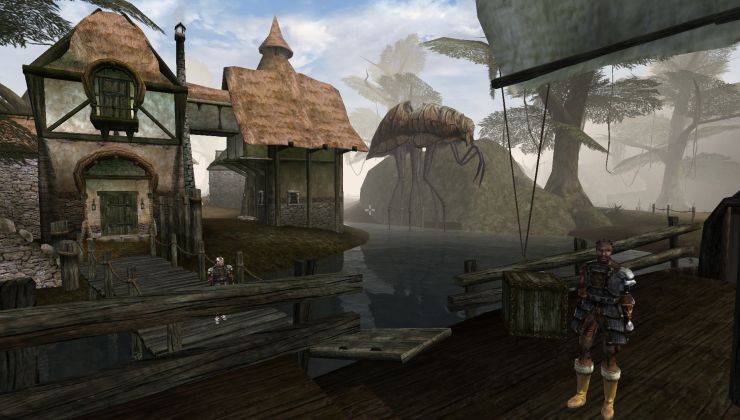 How to setup OpenMW for modern Morrowind on Linux / SteamOS and Steam Deck
 How to install Hollow Knight: Silksong mods on Linux, SteamOS and Steam Deck
- Total Noob general questions about gaming and squeezing every oun…
- TheLinuxPleb - Detailed breakdown of performance differences between Linux and W…
- Ehvis - Small update for article comments and forum posts
- FeRDNYC - Do you miss LaunchBox/Playnite on Linux?
- Dark574 - Will you buy the new Steam Machine?
- tmtvl - See more posts