 Support us on Patreon
 PayPal
Latest Comments by Purple Library Guy
Steam's top releases of May show why Steam Play is needed for Linux
30 Jun 2019 at 2:43 am UTC Likes: 4
30 Jun 2019 at 2:43 am UTC Likes: 4
Quoting: GuestI've said it before and I will say it again, "no tux no bucks" does more harm than good and this shows whyNot sure I see the conflict. Steamplay is for making migration to Linux easier. No Tux no Bux is current Linux users rewarding developers who support Linux. Both those things have a place; indeed I'd say they're complementary.
With the Valve Index about to launch and be delivered, Valve held a little private launch party with speeches
30 Jun 2019 at 2:22 am UTC Likes: 2
30 Jun 2019 at 2:22 am UTC Likes: 2
Quoting: Appelsin"Not available in your country."Wait, wait . . . you're a hologram. What do you need with VR? You already are VR!
This was also the case with the Steam Link and the Steam Controller, at least for a long while after their initial release. I'm willing to bet that's part of the reason neither of thise ever really took off.
DOSBox is still alive, with a new bug fix release available
30 Jun 2019 at 2:06 am UTC
30 Jun 2019 at 2:06 am UTC
If we didn't have Ur-Quan Masters I'd probably be using it to play Star Control 2.
Steam Play updated as Proton 4.2-8 is out, DXVK also sees a new release with 1.2.3 (updated)
27 Jun 2019 at 6:09 pm UTC Likes: 1
27 Jun 2019 at 6:09 pm UTC Likes: 1
Quoting: Whitewolfe80I think your cynicism is in this particular case misplaced. It's not like they came out of the blue and suddenly said something like this. They commented because everything obviously wasn't fine, the biggest Linux distro was apparently dropping support for half the games on Steam. Some reassurance was in order. If they hadn't said anything, now that would be reason to worry.Quoting: SolitaryWell its clearly not just me as Valve felt the need to come out and publically state they are fully committed to linux, I have worked at enough large companies for that statement to worry me. If everything was fine you wouldnt need to keep saying something it would be a given yeah why wouldnt it be. Same sort of feeling a soccer manager gets when the chairman gives you the full confidence line in the press. Like I said maybe its just me be cynical but not sure i have have the same rosey picture as most, I hope am wrong.Quoting: Whitewolfe80... I know people love to white knight them but no the track record of cancelling projects and features that they have invested heavily in the past when the demand was not as expected. I hope am just being negative and valve never turn off the money tap. However it must be working as they keep paying for development mmm I wonder if we could get hold of the steam play sales for the top ten steam games (excluding battle eye games)I am not sure what kind of track record you are talking about, that kind of behavior is typical to Google... I am not aware of project that would eat lot of money and got canned (except rushed Steam machines, but that probably didnt cost that much).
But to be honest, I don't think they can stop supporting Linux at this point... Linux as gaming platform is the "future", because of the same reason as it is on servers and in other cases. Sure, it might not always be direct support, like Google Stadia is basically walling off the user from it. But that's where Valve will beat Stadia, because you still have to buy games on Stadia, so yet another library and one that you cant even play locally. Steam offers local play and once streaming service goes live you will be able to stream (almost?) any game from your massive library... no need to port thanks to Steam Play or already native games. If they offer some basic streaming for free like Stadia (fee taken from the 30% cut) then it's no brainer. So no, they really can't stop supporting Linux as it is their competetive edge and future-proofing.
Steam Play updated as Proton 4.2-8 is out, DXVK also sees a new release with 1.2.3 (updated)
27 Jun 2019 at 6:05 pm UTC Likes: 1
27 Jun 2019 at 6:05 pm UTC Likes: 1
Quoting: cprnOuch.Quoting: x_wing[...] Try deleting the proton prefix for the game.Yeah, I'm a moron. After few minutes of trying to find the prefix directory and failing greatly I decided to just re-download that 46 gigs, why not, I have fast intertubes, right? So I selected the game, dropped "uninstall" and confirmed without noticing my sticky shift made me select half of the library...
Why is there no "cancel" button while accidentally uninstalling 97 games, Valve!?
Why???
The Colonists is a city-builder that's worth your time with cute little robot workers
27 Jun 2019 at 4:59 pm UTC Likes: 3
27 Jun 2019 at 4:59 pm UTC Likes: 3
So um, they're robots. And they're building a colony. Fine, cool. And so they presumably don't eat, they use electricity or something to work. But they're sort of mimicking humans. So they have all these cows and sheep. But what do they do with them? I have this creepy image of them slaughtering them so they can pretend to eat them and then having this huge pile of rotting animal corpses just behind the trees somewhere.
DOSBox is still alive, with a new bug fix release available
27 Jun 2019 at 4:48 pm UTC Likes: 1
27 Jun 2019 at 4:48 pm UTC Likes: 1
I play MOO 1 & 2 with DOSBox. Mostly 2, but sometimes 1. Master of Orion 2 is still one of the best space 4x games. But Master of Orion 1 is interesting to go back to, just to see how differently people thought about planet/city and technology development before Civilization came out.
So for instance, where in MOO 2 you have all these different production and other buildings unlocked with different technologies like in a Civilization city, MOO 1 has an abstract industrial capacity, where you're building like 10 factories per turn on this planet up to the maximum it can have, and new technologies increase the amount of production a given population can control with improved robotics. And like, your planet's production has sliders--rather than building either one thing or another thing, you can devote x much to shipbuilding and y much to improving industry and such. And again, rather than researching one single tech in a tree, you split research up between tech areas with sliders. But after Civilization II came out, everyone did stuff Civ-style for years and years after, and that influence is still fairly strong. Once in a while I like to go back to original MOO just to do things different.
So for instance, where in MOO 2 you have all these different production and other buildings unlocked with different technologies like in a Civilization city, MOO 1 has an abstract industrial capacity, where you're building like 10 factories per turn on this planet up to the maximum it can have, and new technologies increase the amount of production a given population can control with improved robotics. And like, your planet's production has sliders--rather than building either one thing or another thing, you can devote x much to shipbuilding and y much to improving industry and such. And again, rather than researching one single tech in a tree, you split research up between tech areas with sliders. But after Civilization II came out, everyone did stuff Civ-style for years and years after, and that influence is still fairly strong. Once in a while I like to go back to original MOO just to do things different.
After initially being rejected by Valve, The Expression Amrilato is now live on Steam
27 Jun 2019 at 6:13 am UTC
27 Jun 2019 at 6:13 am UTC
Quoting: DesumYour points about the simplicity of Esperanto are doubtless all very true, and English is certainly a very messy language. But that just tells us that Esperanto should be a significantly easier language to learn than a natural language. It does not tell us that you learn more about Spanish from learning Esperanto than from learning Spanish. Learning Esperanto does not subtract any of those complicated features you mention from Spanish when you go to learn Spanish.Quoting: Purple Library GuyIt's a matter of how high you want the first hurdle to be. Spanish is a much more complex language (grammatically, I would not be surprised if the lexicons are more even thanks to the online community built around Esperanto constantly adding new words) and has several quirks. And lets not undersell how much of a pain it is to learn the gender of every single noun; especially when there is no rhyme or reason for thing A to be male and thing B to be female. These things compound to make even relatively easy languages to learn (Like Spanish) have a longer road to mastery than Esperanto. And before anyone thinks I'm just dunking on Spanish, the terrible state of English spelling (less than 80% phonetic in some cases) and over abundance of homophones and 'exceptions' to its own rules makes it an even bigger hurdle.Quoting: DesumIf I study Esperanto, I know Esperanto's grammar and vocabulary. This will have some commonalities with those of various other languages, and no doubt will make it easier to learn them. Further, any second language I learn will increase my flexibility in terms of understanding language concepts--I will have to come to terms with the fact that there can be other grammatical structures, sounds and so forth from the set I first learned, and having done so, further languages are a smaller step. There are lots of studies about this effect--it's quite well established. So sure, studying Esperanto will help one learn other languages.Quoting: Purple Library GuyOutlandish? Esperanto is easier to learn than any Germanic, Romance, or Slavic language that evolved naturally. Yet, it has something in common with nearly all of them. It's not hard to see how that makes it a good bridge to other, more complex and quirk ridden, European languages.Quoting: DesumI'd want more than one study, and some pretty meticulous rigor, for a claim that outlandish; that's way too big an effect to be believable. It defies logic to say that I would not only be helped in my study of subject A by studying subject B, but actually learn more about subject A by studying subject B than by studying subject A.Quoting: Purple Library GuyLearning Esperanto is easier than almost any natural language since it lacks most of the quirks and inconsistencies most languages that develop naturally have. It's also a mix of many European languages, which makes it particularly useful to learn before Romance, Germanic, or even Slavic languages. As for time spent, look at my second post. Child A who spends two years learning Esperanto and then three years learning Spanish will likely out perform Child B who spent the full five years on Spanish.Quoting: DesumSome balk at the utility of leaning Esperanto, but it has been shown that learning it as a first additional language makes learning subsequent natural languages (at least European languages) much easier.As I understand it, learning any additional language makes learning subsequent languages easier. So how much more easier does that language being Esperanto make it? Unless the differential was huge, or you were planning to learn a lot of languages, I suspect that any gains would not be big enough to make up for the time actually spent learning Esperanto.
Like I mean, if learning any second language made subsequent languages 20% easier, and if it's Esperanto subsequent languages are 30% easier, then you'd break even at around 10 languages . . . and that's if the effects don't even out as you add languages.
The most compelling case I've seen for Esperanto was as an easily-learned sort of "middle layer" diplomats and translators could use, like at the UN or whatever. Computers are arguably making such middle layers obsolete, and I've noticed that manga translations that are two step kind of suck anyway. So even that niche is pretty iffy.
That said, I tend to think Esperanto is cool and doesn't really need an excuse. Not as cool as, say, Quenya or Sindarin though. And not cool enough in any of those cases for me to want to actually learn them.
Educational studies are notoriously tricky. They've found enhanced results for practically any kind of new and different pedagogical approach, basically because any time the teachers and students think they're doing something special, they work harder and have better attitudes. So if you believe the studies, all the approaches are vastly superior to, well, each other.
But studying Esperanto is still studying Esperanto, not studying Spanish. I will obviously learn more about Spanish from studying Spanish than from studying Esperanto. It is just silly to assert that my Spanish knowledge gain from studying Esperanto will be greater than my Spanish knowledge gain from studying Spanish. I would, as I say, require a lot more than one study to establish such an extreme claim, especially in a field (pedagogy) which is, as I said, very tricky to do studies in. And which, frankly, has historically had a whole lot of fluff research.
I don't see the simplicity thing as a likely help in learning further languages. It may make learning Esperanto itself easier, but if anything I would expect it would leave one less prepared for the messiness of real languages.
Think of Esperanto as the perfect warm-up European language. It keeps things as simple as possible for a fully-featured language, while giving you a taste of Germanic, Latin and Slavic languages in the process of learning it.
After initially being rejected by Valve, The Expression Amrilato is now live on Steam
26 Jun 2019 at 8:44 pm UTC
But studying Esperanto is still studying Esperanto, not studying Spanish. I will obviously learn more about Spanish from studying Spanish than from studying Esperanto. It is just silly to assert that my Spanish knowledge gain from studying Esperanto will be greater than my Spanish knowledge gain from studying Spanish. I would, as I say, require a lot more than one study to establish such an extreme claim, especially in a field (pedagogy) which is, as I said, very tricky to do studies in. And which, frankly, has historically had a whole lot of fluff research.
I don't see the simplicity thing as a likely help in learning further languages. It may make learning Esperanto itself easier, but if anything I would expect it would leave one less prepared for the messiness of real languages.
26 Jun 2019 at 8:44 pm UTC
Quoting: DesumIf I study Esperanto, I know Esperanto's grammar and vocabulary. This will have some commonalities with those of various other languages, and no doubt will make it easier to learn them. Further, any second language I learn will increase my flexibility in terms of understanding language concepts--I will have to come to terms with the fact that there can be other grammatical structures, sounds and so forth from the set I first learned, and having done so, further languages are a smaller step. There are lots of studies about this effect--it's quite well established. So sure, studying Esperanto will help one learn other languages.Quoting: Purple Library GuyOutlandish? Esperanto is easier to learn than any Germanic, Romance, or Slavic language that evolved naturally. Yet, it has something in common with nearly all of them. It's not hard to see how that makes it a good bridge to other, more complex and quirk ridden, European languages.Quoting: DesumI'd want more than one study, and some pretty meticulous rigor, for a claim that outlandish; that's way too big an effect to be believable. It defies logic to say that I would not only be helped in my study of subject A by studying subject B, but actually learn more about subject A by studying subject B than by studying subject A.Quoting: Purple Library GuyLearning Esperanto is easier than almost any natural language since it lacks most of the quirks and inconsistencies most languages that develop naturally have. It's also a mix of many European languages, which makes it particularly useful to learn before Romance, Germanic, or even Slavic languages. As for time spent, look at my second post. Child A who spends two years learning Esperanto and then three years learning Spanish will likely out perform Child B who spent the full five years on Spanish.Quoting: DesumSome balk at the utility of leaning Esperanto, but it has been shown that learning it as a first additional language makes learning subsequent natural languages (at least European languages) much easier.As I understand it, learning any additional language makes learning subsequent languages easier. So how much more easier does that language being Esperanto make it? Unless the differential was huge, or you were planning to learn a lot of languages, I suspect that any gains would not be big enough to make up for the time actually spent learning Esperanto.
Like I mean, if learning any second language made subsequent languages 20% easier, and if it's Esperanto subsequent languages are 30% easier, then you'd break even at around 10 languages . . . and that's if the effects don't even out as you add languages.
The most compelling case I've seen for Esperanto was as an easily-learned sort of "middle layer" diplomats and translators could use, like at the UN or whatever. Computers are arguably making such middle layers obsolete, and I've noticed that manga translations that are two step kind of suck anyway. So even that niche is pretty iffy.
That said, I tend to think Esperanto is cool and doesn't really need an excuse. Not as cool as, say, Quenya or Sindarin though. And not cool enough in any of those cases for me to want to actually learn them.
Educational studies are notoriously tricky. They've found enhanced results for practically any kind of new and different pedagogical approach, basically because any time the teachers and students think they're doing something special, they work harder and have better attitudes. So if you believe the studies, all the approaches are vastly superior to, well, each other.
But studying Esperanto is still studying Esperanto, not studying Spanish. I will obviously learn more about Spanish from studying Spanish than from studying Esperanto. It is just silly to assert that my Spanish knowledge gain from studying Esperanto will be greater than my Spanish knowledge gain from studying Spanish. I would, as I say, require a lot more than one study to establish such an extreme claim, especially in a field (pedagogy) which is, as I said, very tricky to do studies in. And which, frankly, has historically had a whole lot of fluff research.
I don't see the simplicity thing as a likely help in learning further languages. It may make learning Esperanto itself easier, but if anything I would expect it would leave one less prepared for the messiness of real languages.
After initially being rejected by Valve, The Expression Amrilato is now live on Steam
26 Jun 2019 at 5:44 pm UTC Likes: 1
Educational studies are notoriously tricky. They've found enhanced results for practically any kind of new and different pedagogical approach, basically because any time the teachers and students think they're doing something special, they work harder and have better attitudes. So if you believe the studies, all the approaches are vastly superior to, well, each other.
26 Jun 2019 at 5:44 pm UTC Likes: 1
Quoting: DesumI'd want more than one study, and some pretty meticulous rigor, for a claim that outlandish; that's way too big an effect to be believable. It defies logic to say that I would not only be helped in my study of subject A by studying subject B, but actually learn more about subject A by studying subject B than by studying subject A.Quoting: Purple Library GuyLearning Esperanto is easier than almost any natural language since it lacks most of the quirks and inconsistencies most languages that develop naturally have. It's also a mix of many European languages, which makes it particularly useful to learn before Romance, Germanic, or even Slavic languages. As for time spent, look at my second post. Child A who spends two years learning Esperanto and then three years learning Spanish will likely out perform Child B who spent the full five years on Spanish.Quoting: DesumSome balk at the utility of leaning Esperanto, but it has been shown that learning it as a first additional language makes learning subsequent natural languages (at least European languages) much easier.As I understand it, learning any additional language makes learning subsequent languages easier. So how much more easier does that language being Esperanto make it? Unless the differential was huge, or you were planning to learn a lot of languages, I suspect that any gains would not be big enough to make up for the time actually spent learning Esperanto.
Like I mean, if learning any second language made subsequent languages 20% easier, and if it's Esperanto subsequent languages are 30% easier, then you'd break even at around 10 languages . . . and that's if the effects don't even out as you add languages.
The most compelling case I've seen for Esperanto was as an easily-learned sort of "middle layer" diplomats and translators could use, like at the UN or whatever. Computers are arguably making such middle layers obsolete, and I've noticed that manga translations that are two step kind of suck anyway. So even that niche is pretty iffy.
That said, I tend to think Esperanto is cool and doesn't really need an excuse. Not as cool as, say, Quenya or Sindarin though. And not cool enough in any of those cases for me to want to actually learn them.
Educational studies are notoriously tricky. They've found enhanced results for practically any kind of new and different pedagogical approach, basically because any time the teachers and students think they're doing something special, they work harder and have better attitudes. So if you believe the studies, all the approaches are vastly superior to, well, each other.
- AMD say the Steam Machine is "on track" for an early 2026 release
- GOG did an AMA and here's some highlights - like how they'll continue using generative AI
- Epic Games Store saw a 57% increase in purchases for third-party PC games in 2025
- Discord is about to require age verification for everyone
- Google's Project Genie experiment allows creating interactive worlds with generative AI
- > See more over 30 days here
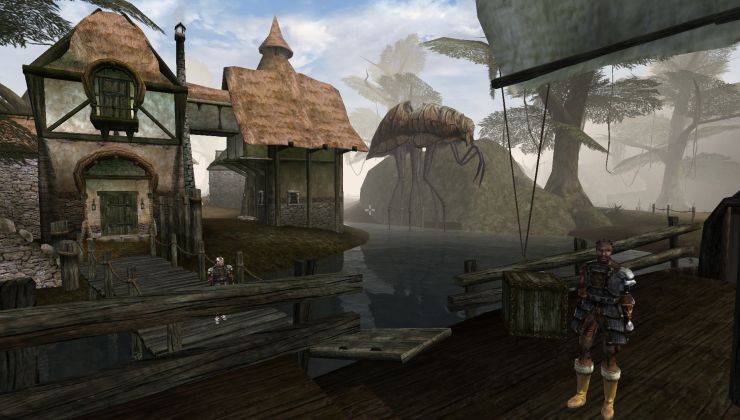 How to setup OpenMW for modern Morrowind on Linux / SteamOS and Steam Deck
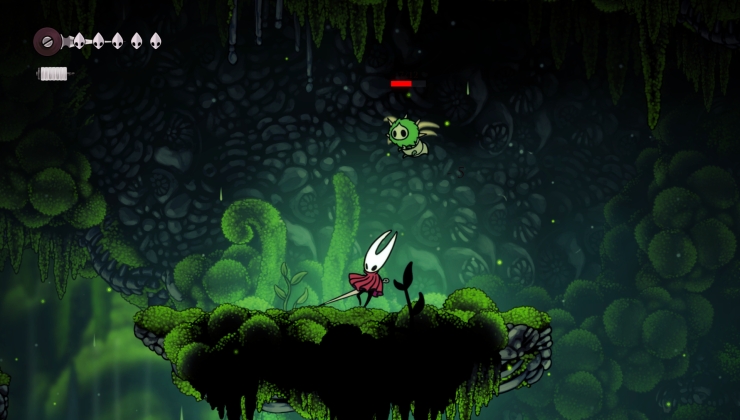 How to install Hollow Knight: Silksong mods on Linux, SteamOS and Steam Deck