 Support us on Patreon
 PayPal
Latest Comments by Purple Library Guy
After initially being rejected by Valve, The Expression Amrilato is now live on Steam
26 Jun 2019 at 4:10 pm UTC
Like I mean, if learning any second language made subsequent languages 20% easier, and if it's Esperanto subsequent languages are 30% easier, then you'd break even at around 10 languages . . . and that's if the effects don't even out as you add languages.
The most compelling case I've seen for Esperanto was as an easily-learned sort of "middle layer" diplomats and translators could use, like at the UN or whatever. Computers are arguably making such middle layers obsolete, and I've noticed that manga translations that are two step kind of suck anyway. So even that niche is pretty iffy.
That said, I tend to think Esperanto is cool and doesn't really need an excuse. Not as cool as, say, Quenya or Sindarin though. And not cool enough in any of those cases for me to want to actually learn them.
26 Jun 2019 at 4:10 pm UTC
Quoting: DesumSome balk at the utility of leaning Esperanto, but it has been shown that learning it as a first additional language makes learning subsequent natural languages (at least European languages) much easier.As I understand it, learning any additional language makes learning subsequent languages easier. So how much more easier does that language being Esperanto make it? Unless the differential was huge, or you were planning to learn a lot of languages, I suspect that any gains would not be big enough to make up for the time actually spent learning Esperanto.
Like I mean, if learning any second language made subsequent languages 20% easier, and if it's Esperanto subsequent languages are 30% easier, then you'd break even at around 10 languages . . . and that's if the effects don't even out as you add languages.
The most compelling case I've seen for Esperanto was as an easily-learned sort of "middle layer" diplomats and translators could use, like at the UN or whatever. Computers are arguably making such middle layers obsolete, and I've noticed that manga translations that are two step kind of suck anyway. So even that niche is pretty iffy.
That said, I tend to think Esperanto is cool and doesn't really need an excuse. Not as cool as, say, Quenya or Sindarin though. And not cool enough in any of those cases for me to want to actually learn them.
Canonical have released a statement on Ubuntu and 32bit support, will keep select packages
25 Jun 2019 at 7:24 pm UTC
Do all the 32-bit games etc. really depend on thousands of libraries? I'm prepared to be told yes, it just seems kind of odd.
25 Jun 2019 at 7:24 pm UTC
Quoting: GuestAre we talking about two different things again? Many thousands sounds rather like you're talking about releasing the whole distro on 32-bit, so as to be usable on 32-bit hardware. But after this many pages of discussion, I thought it was rather clear that's not what we're talking about and not something most people had a problem with.Quoting: TobiSGDHow much work is it to deal with many many thousands of packages and actually make a new release every 6 months? If I need to explain to you why there is a lot of work to do this the conversation is kinda already over I'm sad to say. Sure they get packages from Debian. There is a lot of work maintaining and supporting them as a whole. If you don't think keeping 32 bit is a lot of work I think you're somewhat out of touch. Sure, it's easier than if they had to make every single package themselves, but that doesn't mean it's not complex to keep everything working smoothly and supporting it.Quoting: GuestI can see why they want to remove 32 bit libs because it's a ton of work.But a ton of work for whom? They still get the majority of their packages directly from Debian, throwing a patch on one or the other package and just compile. If Debian still supports newer versions of 32 bit libraries, how much work is there really to be done for canonical?
Do all the 32-bit games etc. really depend on thousands of libraries? I'm prepared to be told yes, it just seems kind of odd.
Canonical have released a statement on Ubuntu and 32bit support, will keep select packages
25 Jun 2019 at 7:11 pm UTC
25 Jun 2019 at 7:11 pm UTC
Quoting: Prime_EvilGiven that part of the reason for dropping support for 32-bit libraries is the effort required to perform QA, would it be worth running a fundraiser so those who care about continued multiarch support can contribute towards a solution? Would Canonical be open to such a solution - it seems a better use of the community's time and effort than the angst out there at the moment...The angst out there at the moment got them to partially change their mind in just a couple of days, and that's just so far. Seems like a good use of time to me.
Valve looking to drop support for Ubuntu 19.10 and up due to Canonical's 32bit decision (updated)
25 Jun 2019 at 2:26 pm UTC Likes: 1
25 Jun 2019 at 2:26 pm UTC Likes: 1
Quoting: TheSHEEEPYes, yes, there's always a justifiable urge to break support for things so you can make improvements or even just have things be "cleaner". But if you do it too much you don't support anything at all; tons of lovely clean functionality with no function. So there always has to be a balance--just how many pounds of baby flesh are you dumping out with that bathwater? Too many and it shouldn't be done. It seems pretty clear that in this case, that's some pretty humongous babies getting dumped. To the point where it seems like, if it were just a case of "X much effort has to be made to support libraries depended on by Y much software used by Z many people" and the software didn't happen to be old, nobody would even consider not supporting them.Quoting: Purple Library GuyThat's not at all what I was saying, but as those mental gymnastics must have been very straining, you get an A for effort.Quoting: TheSHEEEPYes, if 32bit were gone for good, never again would people complain about the removal of 32bit. This is kind of a tautology about any course of action, whether wise or moronic. If Canonical decided to ship without a graphical desktop environment so you just had a terminal and nothing else, after the initial firestorm they would never again have to face complaints about them ripping out the graphical environment. So I suppose by your logic they'd better go ahead and do that.Quoting: Purple Library GuyThat wouldn't serve any purpose, as it would only be for me. As I said, I'm looking at the bigger picture here.Quoting: TheSHEEEPI simply look beyond a few personal inconveniences at the bigger picture.Because . . . the libraries take up a few megs on your terabyte+ hard drive? Yeah, surely it's worth getting rid of some functionality to get that!!!
And the bigger picture is that progress requires sacrifice. Can't play some games/use some apps anymore? So be it, if that's the price to pay to finally get rid of old stuff like 32bit for good.
But you know, all you have to do is delete the relevant libs. Nobody's stopping you.
And the bigger picture is that right now, 32bit is like an annoying mosquito at the butt of many developers and users... just look at this very situation.
If 32bit were gone for good, well, so would be situations like these.
Quoting: Purple Library GuyAnd as far as I can tell, 32bit is only an annoying mosquito to whoever maintains the libs. I have seen no case advanced by anyone in which the existence of the libs causes any problems for anyone else. Whereas lack of it is a really significant problem for a lot of cases. So the big picture seems to be that the only reason for supporting the removal of support for 32 bit applications is a sort of abstract hatred of old things and an annoyance at people getting to retain old functionality.Manpower spent on maintaining old software is not spent on developing, testing or improving new software. Which is even worse in a space as fragmented as linux.
That affects everyone in the long run, even if not directly & immediately.
I also can't really imagine maintenance of 32bit libraries to be a very fulfilling activity, so it always seems a bit threatened to me if nobody is directly paying for it.
As a software developer myself, I can say that one of the biggest costs in development of almost any software project that is going for a few years is usually maintenance of legacy code/libs.
Yes, getting rid of old software/libs means a few people will be inconvenienced due to a change of functionality, but as long as you offer a working "good enough" replacement, the cost is much smaller in the long run than having to maintain obsolete stuff for all eternity.
As such, I understand the desire to get rid of old stuff very much.
Now, Canonical failed at this attempt as they simply did not offer a working replacement at all.
I don't care what the eventual replacement for being able to run 32bit will be. It can be emulation, Snap/flatpak-like or a big ol' precompiled "32bit compatibility pack" for all I care.
I'm just saying that the current method is obviously not the best if it causes Canonical to kick off such a fuss (and so obviously ill-prepared), and this isn't even something new, these discussions have been going on since what, 2014?
Who knows, maybe this chaos has the potential to bring some better solutions.
Valve looking to drop support for Ubuntu 19.10 and up due to Canonical's 32bit decision (updated)
25 Jun 2019 at 2:11 pm UTC Likes: 1
25 Jun 2019 at 2:11 pm UTC Likes: 1
Quoting: TheSHEEEPThat's not at all what I was saying,Then learn to communicate.
Valve looking to drop support for Ubuntu 19.10 and up due to Canonical's 32bit decision (updated)
25 Jun 2019 at 2:10 pm UTC
25 Jun 2019 at 2:10 pm UTC
Quoting: einherjarAs may be--would you be happier right now if Ubuntu were the only Linux distro?Quoting: Purple Library GuyLike it or not, but with that small userbase it is also a disadvantage.Quoting: einherjarThanks Canonical :><:No doubt we will. But they will be fools to do so. Look, Microsoft and Apple make stupid decisions all the time. When they do, just exactly what can you do about it? Can you switch to a different Windows or Mac OS distro?
Now we will have lots of game devs and publishers saying:
"See, there is no reliable Distro in the Linux world. It doesn't make sense to ship software for Linux"
This is a time to celebrate the fact that Linux distros are not monopolies.
Developers and Companys like Adobe will be held away from bringing their software to Linux.
They want one reliable OS --> MS gives it to them.
We need a big popular and reliable Distro, to have enough marketshare and live the "diversity". With 1% marketshare distributed across more then 10 Distros, we will remain irrelevant (on Desktop) for most of the companies.
Valve looking to drop support for Ubuntu 19.10 and up due to Canonical's 32bit decision (updated)
25 Jun 2019 at 1:28 pm UTC Likes: 3
And as far as I can tell, 32bit is only an annoying mosquito to whoever maintains the libs. I have seen no case advanced by anyone in which the existence of the libs causes any problems for anyone else. Whereas lack of it is a really significant problem for a lot of cases. So your "big picture" seems to be that the only reason for supporting the removal of support for 32 bit applications is a sort of abstract hatred of old things and an annoyance at people getting to retain old functionality.
There are cases to be made at times for making changes that break compatibility with old stuff. I haven't seen anyone make such a case about this, beyond "We can't be arsed to maintain it". And I don't think anyone would even be suggesting ceasing to maintain functionality that supported this much stuff if the stuff in question didn't have the stigma of being old.
25 Jun 2019 at 1:28 pm UTC Likes: 3
Quoting: TheSHEEEPYes, if 32bit were gone for good, never again would people complain about the removal of 32bit. This is kind of a tautology about any course of action, whether wise or moronic. If Canonical decided to ship without a graphical desktop environment so you just had a terminal and nothing else, after the initial firestorm they would never again have to face complaints about them ripping out the graphical environment. So I suppose by your logic they'd better go ahead and do that.Quoting: Purple Library GuyThat wouldn't serve any purpose, as it would only be for me. As I said, I'm looking at the bigger picture here.Quoting: TheSHEEEPI simply look beyond a few personal inconveniences at the bigger picture.Because . . . the libraries take up a few megs on your terabyte+ hard drive? Yeah, surely it's worth getting rid of some functionality to get that!!!
And the bigger picture is that progress requires sacrifice. Can't play some games/use some apps anymore? So be it, if that's the price to pay to finally get rid of old stuff like 32bit for good.
But you know, all you have to do is delete the relevant libs. Nobody's stopping you.
And the bigger picture is that right now, 32bit is like an annoying mosquito at the butt of many developers and users... just look at this very situation.
If 32bit were gone for good, well, so would be situations like these.
And as far as I can tell, 32bit is only an annoying mosquito to whoever maintains the libs. I have seen no case advanced by anyone in which the existence of the libs causes any problems for anyone else. Whereas lack of it is a really significant problem for a lot of cases. So your "big picture" seems to be that the only reason for supporting the removal of support for 32 bit applications is a sort of abstract hatred of old things and an annoyance at people getting to retain old functionality.
There are cases to be made at times for making changes that break compatibility with old stuff. I haven't seen anyone make such a case about this, beyond "We can't be arsed to maintain it". And I don't think anyone would even be suggesting ceasing to maintain functionality that supported this much stuff if the stuff in question didn't have the stigma of being old.
Valve looking to drop support for Ubuntu 19.10 and up due to Canonical's 32bit decision (updated)
25 Jun 2019 at 1:15 pm UTC Likes: 3
25 Jun 2019 at 1:15 pm UTC Likes: 3
Quoting: BeamboomSo it's OK because they can be run in virtualized environments. So, you're saying one can't expect an old binary to run on new computers for all eternity because there's a way of making old binaries run on new computers for all eternity.Quoting: Purple Library GuyDo I really need to explain that? Why do do think they want to do this to begin with? Why do we phase out technology quite regularly - despite the hard struggle every bloody time we do it?Quoting: BeamboomAnd like I said in that other discussion: One can't expect an old binary to run on new computers for all eternity.Why not?
Why did Windows become such a bloody, security issue riddled mess? Several reasons, but the need to be backward compatible is one massive reason. Messy as f*ck. A patchwork out of this world.
In a world of limited resources, spending a lot of those resources on backward compatibility can be argued is a energy wasted that could be spent a lot better. Especially now that those old blobs of binaries can be run in virtualized environments.
Valve looking to drop support for Ubuntu 19.10 and up due to Canonical's 32bit decision (updated)
24 Jun 2019 at 3:06 am UTC
The next one could be either Valve or someone partnering with Valve, the big difference being that Valve seem pretty convinced a robust Linux end-user desktop is one way or another going to make them money.
24 Jun 2019 at 3:06 am UTC
Quoting: EzyRhinoI'm beginning to think that the decision Canonical made is exactly what they want. This is all speculation on my part, but I think they want to focus 100% on the enterprise (AWS, Azure, etc...) and get out of the end-user desktop market. Sad if true.Could be. I've noticed a tendency with distros produced by companies: They enter the scene by creating a lot of buzz as the saviors of the Linux desktop. They leverage this into a more or less prosperous business selling their distro for servers and other back-end work. They gradually ease away from the desktop, which they have found impossible to make money from; it seems to be merely overhead. Once they are no longer seen as major desktop players, their share of back-end stuff gradually erodes because there is no buzz about them. Then some new company comes along, creating a lot of buzz as the saviors of the Linux desktop . . .
The next one could be either Valve or someone partnering with Valve, the big difference being that Valve seem pretty convinced a robust Linux end-user desktop is one way or another going to make them money.
Valve looking to drop support for Ubuntu 19.10 and up due to Canonical's 32bit decision (updated)
24 Jun 2019 at 2:57 am UTC Likes: 7
24 Jun 2019 at 2:57 am UTC Likes: 7
Quoting: BeamboomAnd like I said in that other discussion: One can't expect an old binary to run on new computers for all eternity.Why not?
- AMD say the Steam Machine is "on track" for an early 2026 release
- GOG did an AMA and here's some highlights - like how they'll continue using generative AI
- Epic Games Store saw a 57% increase in purchases for third-party PC games in 2025
- Discord is about to require age verification for everyone
- Google's Project Genie experiment allows creating interactive worlds with generative AI
- > See more over 30 days here
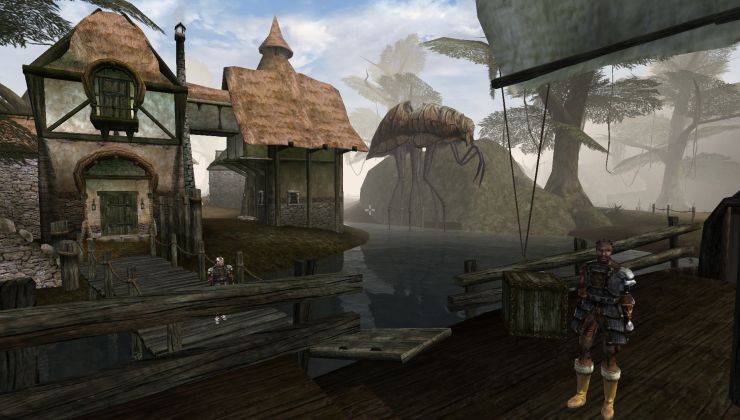 How to setup OpenMW for modern Morrowind on Linux / SteamOS and Steam Deck
 How to install Hollow Knight: Silksong mods on Linux, SteamOS and Steam Deck
- Help! Steam ignoring gamepad
- JSVRamirez - Weird thing happening with the graphics
- Ehvis - New Desktop Screenshot Thread
- scaine - Is it possible to have 2 Steam instances (different accounts) at …
- mr-victory - I need help making SWTOR work on Linux without the default Steam …
- WheatMcGrass - See more posts