 Support us on Patreon
 PayPal
Latest Comments by Purple Library Guy
Objects in Space released for Linux on Steam, needs you to disable Steam Play
21 Mar 2019 at 5:42 pm UTC Likes: 1
21 Mar 2019 at 5:42 pm UTC Likes: 1
Quoting: liamdawePlus it's nice to have lots of things on the Whitelist, so a solution that doesn't require taking them off would be good.Quoting: EikeWouldn't removing it from the white list be the way to go (if it works well natively, that is of course)? Those who still would want the Proton version could force it with the available option...That would solve it yes, but we have no idea how long it will take Valve to update the whitelist, even if this time they do it within a day or two, next time if it happens we have to wait a week or longer? Disabling Steam Play is really not a good solution.
*edit* How nice a game from the white list gets natice support (on Steam)...!
Google announce ‘Stadia’, their new cloud gaming service built on Linux and Vulkan
21 Mar 2019 at 5:26 pm UTC
21 Mar 2019 at 5:26 pm UTC
Quoting: MohandevirI might imagine that in a game, (as etonbears points out, without buffering, everything happening in real time) by the time lost packets get re-sent they'd be irrelevant, so it would be better to just ignore them and leave a little fuzz in the picture than to, like, refuse to show the image until it's all complete. That might suggest this UDP thing. But I don't know anything about this, I'm just trying to do logic from too little data.Quoting: EhvisAnd still be faster than TCP? Or is it better to go with TCP, in that case?Quoting: MohandevirIs it TCP/IP, UDP or something I haven't heard of? Isn't UDP faster but prone to packet loss thus reducing the quality of the stream?TCP includes the control mechanism to deal with packet loss (detection and resending). For UDP it is up to the application to decide whether to detect it and what to do if something is lost.
Google announce ‘Stadia’, their new cloud gaming service built on Linux and Vulkan
21 Mar 2019 at 5:21 pm UTC Likes: 1
In terms of VR (XR?) I was thinking more that as I understand it, for it to work without messing up people's heads you need really, really low latency. I can imagine streaming working well enough for ordinary games in some places with some ISPs and data plans. But well enough for VR not to feel bad wonky? I seriously doubt it outside maybe South Korea. Mind you, I'm quite unconvinced that the future of gaming is VR. But if it was, it would be damn tough to stream effectively.
21 Mar 2019 at 5:21 pm UTC Likes: 1
Quoting: etonbearsHuh. Somehow I was under the impression that video streams were compressed, and so just how detailed the actual picture was (as opposed to the number of pixels) might be relevant to how compressible it was. But yeah, I guess if they're just dumping all the pixels it doesn't matter what the programs are doing with those pixels. Given the pauses I often experience with simple streamed video I can well imagine streamed games having some problems, but that is a separate issue from the backend power needed to run the games.Quoting: Purple Library GuyThe bandwidth required for graphics stream presentation has historically increased quite slowly. It is proportional to frame rate multiplied by pixels per frame multiplied by bits per pixel. Desired frame rate has remained at about 60 for decades, and bits per pixel for most people has been 24 for decades. That leaves pixel resolution as the main variant, which has risen from 1M pixel screens 30 years ago to 6M pixel screens now. Network bandwidth increase in those 30 years far exceeds the increased requirements of a graphics stream, so if both network and graphics bandwidth trends continue, the streaming itself should reduce as a cause of bottleneck. Even the bandwidth to support binocular XR presentation should not be an issue since the size of XR screens you can put in front of your eyes is physically limited, and the human eye's ability to resolve detail at close range tops out at around 1000 pixels per inch.Quoting: etonbearsFor me, the interesting implication of Stadia is its ability to change the supply side. The Steam survey shows that the average PC gamer does not have particularly good hardware, and this actually limits developers in what they can do and still address a large enough purchase market.Interesting point. Mind you, for most games most of that power would be dedicated to graphics stuff, in which case wouldn't those extra-power-hungry games also be extra-bandwidth-hungry? You could end up trading one bottleneck for another.
If Stadia has nodes with Vega56 GPUs as a minimum, and allows arbitrary combining of nodes to produce output, then the complexity of what developers may produce for Stadia can scale very quickly to the point that you actually could NOT run it on any normally available desktop hardware, let alone the average rig, making traditional sales of such games redundant. That may be why the new Google game studio is suggesting their titles will be exclusive to Stadia.
Of course, however amazing their back-end might be, Google still need to get the right price model, overcome the possible network limitations and avoid their normal habit of turning everything into advertising revenue.
Which in turn makes me wonder about two futures clashing. Imagine the future of gaming is this kind of streaming solution. Now imagine the future of gaming is VR. I don't think it can be both unless someone spends a bunch of billions on last-mile fibre optics.
In contrast, the amount of additional processing power you can put into determining the content of the graphics stream is effectively unbounded, since almost every aspect of current real-time game production is subject to approximation, simplification and deception, in order to fit into the processing 'budget' available.
In terms of VR (XR?) I was thinking more that as I understand it, for it to work without messing up people's heads you need really, really low latency. I can imagine streaming working well enough for ordinary games in some places with some ISPs and data plans. But well enough for VR not to feel bad wonky? I seriously doubt it outside maybe South Korea. Mind you, I'm quite unconvinced that the future of gaming is VR. But if it was, it would be damn tough to stream effectively.
Google announce ‘Stadia’, their new cloud gaming service built on Linux and Vulkan
21 Mar 2019 at 8:08 am UTC Likes: 1
By the way, a lot of posters are quite pessimistic about whether this will result in actual desktop Linux versions. I'm not sure; have to wait and see. Liam has pointed out that if game studios are doing these versions but aren't sure about a desktop version with issues like support and multiple distros, it could be an opportunity for the likes of Feral.
21 Mar 2019 at 8:08 am UTC Likes: 1
Quoting: 14I can also picture myself using the streaming service myself in small quantities. I prefer to be able to play games offline without DRM (thanks, GoG), but I would probably make exceptions. I can't think of any examples off the top of my head, but... OK, I got one. Total War: Warhammer. Why? So I can play the campaign with my Windows friends. It's also not an FPS, so I wouldn't be as concerned about input lag.That is actually a new point. This service would be totally local-system-agnostic for multiplayer. In that sense it would be better than many native desktop ports.
By the way, a lot of posters are quite pessimistic about whether this will result in actual desktop Linux versions. I'm not sure; have to wait and see. Liam has pointed out that if game studios are doing these versions but aren't sure about a desktop version with issues like support and multiple distros, it could be an opportunity for the likes of Feral.
Google announce ‘Stadia’, their new cloud gaming service built on Linux and Vulkan
21 Mar 2019 at 7:58 am UTC Likes: 1
Which in turn makes me wonder about two futures clashing. Imagine the future of gaming is this kind of streaming solution. Now imagine the future of gaming is VR. I don't think it can be both unless someone spends a bunch of billions on last-mile fibre optics.
21 Mar 2019 at 7:58 am UTC Likes: 1
Quoting: etonbearsFor me, the interesting implication of Stadia is its ability to change the supply side. The Steam survey shows that the average PC gamer does not have particularly good hardware, and this actually limits developers in what they can do and still address a large enough purchase market.Interesting point. Mind you, for most games most of that power would be dedicated to graphics stuff, in which case wouldn't those extra-power-hungry games also be extra-bandwidth-hungry? You could end up trading one bottleneck for another.
If Stadia has nodes with Vega56 GPUs as a minimum, and allows arbitrary combining of nodes to produce output, then the complexity of what developers may produce for Stadia can scale very quickly to the point that you actually could NOT run it on any normally available desktop hardware, let alone the average rig, making traditional sales of such games redundant. That may be why the new Google game studio is suggesting their titles will be exclusive to Stadia.
Of course, however amazing their back-end might be, Google still need to get the right price model, overcome the possible network limitations and avoid their normal habit of turning everything into advertising revenue.
Which in turn makes me wonder about two futures clashing. Imagine the future of gaming is this kind of streaming solution. Now imagine the future of gaming is VR. I don't think it can be both unless someone spends a bunch of billions on last-mile fibre optics.
Google announce ‘Stadia’, their new cloud gaming service built on Linux and Vulkan
20 Mar 2019 at 10:27 pm UTC
20 Mar 2019 at 10:27 pm UTC
Quoting: KlaasI'd be starting to pay my ISP extra awfully fast.Quoting: Sir_DiealotSo you are not willing to download 50 GB for a weekend but to download 50 GB for two hours of streaming?If we consider the 25 Mbit/s estimate from a few pages back and 8 hours playing time, you would require approximately 88 GB of traffic. That's insane.
Google announce ‘Stadia’, their new cloud gaming service built on Linux and Vulkan
20 Mar 2019 at 2:40 pm UTC Likes: 1
20 Mar 2019 at 2:40 pm UTC Likes: 1
Quoting: silmethI have another random thought about it.That is quite a clever idea IMO. Let's hope Valve think of it.
I wonder if Valve could exploit it somehow to convince more publishers to support (some kind of) Linux desktop.
Stadia supposedly is a single uniform hardware platform (working in a cloud, but still a set hardware and software configuration, like a console). Valve hypothetically could try to basically copy this configuration (similar AMD CPU and a GPU, Debian-based SteamOS with the same drivers) and release it as the new Steam Machine, and advertise it as its new PC-compatible console that is also compatible with Stadia and has just one supported configuration.
Then they could market it that if you already have a Stadia version, you can just release it for the Steam Machine, and not worry about support for other Linuxes and hw configuration.
This might generate compatibility issues for other distros (but still, most games target only Ubuntu, so eg. Arch or Fedora users already have this problem) and Intel+nVidia PCs, but in the age of open APIs and good drivers it shouldn’t be that problematic. And it might convince more companies to release the Linux versions.
Google announce ‘Stadia’, their new cloud gaming service built on Linux and Vulkan
20 Mar 2019 at 2:21 am UTC Likes: 1
20 Mar 2019 at 2:21 am UTC Likes: 1
Quoting: iiariA question for everyone, though: Is anyone else surprised Google has backed off Google Fiber and having its own ISP? I mean, this is going to need gobs of bandwidth for low latency, 4K gaming. The ISP's/cable companies could put a serious crimp into Google's plans in our new non-net-neutral age. I imagined if they had this planned (and I think it could be really big for them $$-wise) they would still be working on being a low cost data provider... Ideas?Those ISPs wanted non-net-neutrality so they can push content at the same time. If they screw with Google nobody will ever find their shiny new content 'cause it will be buried on page 3 of every search.
Google announce ‘Stadia’, their new cloud gaming service built on Linux and Vulkan
19 Mar 2019 at 8:57 pm UTC Likes: 5
19 Mar 2019 at 8:57 pm UTC Likes: 5
Quoting: Xaero_VincentOr is this just Google using Debian as a VM host to run Windows 10 guests w/ GPU passthrough, where the games will run inside Windows and get streamed in the cloud?I don't think Vulkan would be such a big deal if it were that. Plus they're going to have enough speed issues with streaming stuff without running everything in VMs.
Google announce ‘Stadia’, their new cloud gaming service built on Linux and Vulkan
19 Mar 2019 at 8:54 pm UTC Likes: 9
19 Mar 2019 at 8:54 pm UTC Likes: 9
Well. I hope this does well. Well enough that something which would basically be considered a "Linux gaming market" using Vulkan has an impact on how developers view their sales figures, so that Linux is no longer an afterthought. There's probably a good chance of that, because Google is huge.
But, I hope it doesn't do well enough to cannibalize the normal game industry. IMO chances are it won't, because of latency problems and so on. Google is huge, but I don't think they're huge enough to bully all the ISP corporations in North America, Britain etc. into building proper broadband. It'll be fine for some, but for many it won't. I'm sure not going to use it personally, not my thing at all for reasons people have pointed out.
One question . . . so, say you release a game built to run with Vulkan on a Debian server. Anyone know just how close that is to releasing the same game to run as a normal desktop Linux game? Feels to me like it must be pretty close, meaning once you've done the first you might as well do the second (barring issues like not feeling like spending money on support). But I don't know enough to be sure of that; could someone enlighten me?
But, I hope it doesn't do well enough to cannibalize the normal game industry. IMO chances are it won't, because of latency problems and so on. Google is huge, but I don't think they're huge enough to bully all the ISP corporations in North America, Britain etc. into building proper broadband. It'll be fine for some, but for many it won't. I'm sure not going to use it personally, not my thing at all for reasons people have pointed out.
One question . . . so, say you release a game built to run with Vulkan on a Debian server. Anyone know just how close that is to releasing the same game to run as a normal desktop Linux game? Feels to me like it must be pretty close, meaning once you've done the first you might as well do the second (barring issues like not feeling like spending money on support). But I don't know enough to be sure of that; could someone enlighten me?
- Legendary, the free and open source Epic Games Launcher, has moved to a new organisation
- Godot gets a funding boost from Slay the Spire 2 devs Mega Crit
- Bazzite Linux gets some major upgrades for the April 2026 Update
- Valve dev fixes up VRAM management on AMD GPUs to improve performance
- Proton Experimental brings fixes for classic Resident Evil 1 & 2, Dino Crisis 1 & 2 and more
- > See more over 30 days here
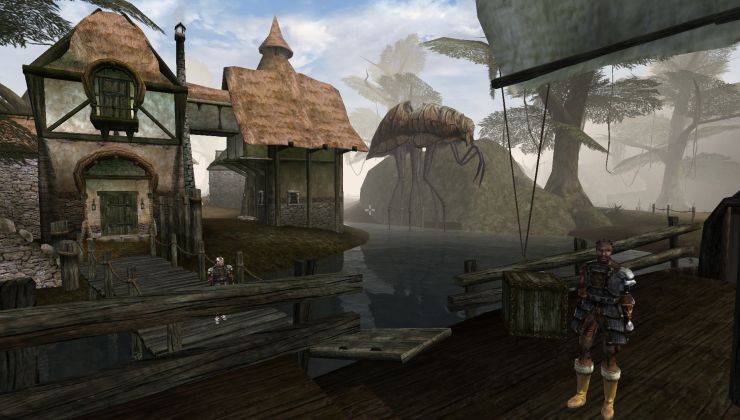 How to setup OpenMW for modern Morrowind on Linux / SteamOS and Steam Deck
 How to install Hollow Knight: Silksong mods on Linux, SteamOS and Steam Deck
- Shop Crush - Psychological Horror Thrift Sim with Literal Illusio…
- hollowlimb - Proton/Wine Games Locking Up
- tuubi - Away all of next week
- Ehvis - The Great Android lockdown of 2026.
- Linux_Rocks - Lutris alternatives
- Caldathras - See more posts