 Support us on Patreon
 PayPal
Latest Comments by Purple Library Guy
DXVK 0.96 is now officially out with CPU & GPU overhead improvements plus plenty more
27 Jan 2019 at 5:02 pm UTC
27 Jan 2019 at 5:02 pm UTC
Quoting: BrisseAh. Thank you.Quoting: Purple Library Guy"In an effort to make copy protection more effective (i.e. resistant to cracks), the methods used by many copy protection products have become complex, difficult to understand (obfuscated), and hard to debug. In some cases Wine would need to be altered to allow for almost rootkit-like functionality of programs to get some of these copy protection schemes to work. To support copy protection Wine developers have to contend with undocumented interfaces, code obfuscation, and maintaining compatibility with *nix security models. "Quoting: GuestNice release! I'm still impressed how well DXVK works, how fast it has evolved and how much I use Proton(Wine) now. After Valve allowed us to install Linux games with Proton, I've started to test several additional games with DXVK and it is getting really hard to find the ones that do not run or have some graphical issues :-) Yes, BattlEye and other DRM software is an issue, but this is nothing DXVK can change and it is all up to the game developers and maybe Valve to ask for another solution.There's something I don't quite understand about all this: These anti-cheat softwares are . . . software, right? Software that, like, runs on . . . Windows? What exactly is so special about them that makes it hard for Wine to run them? Clearly there must be something or this whole deal wouldn't be an issue, but can anyone explain to me what?
https://wiki.winehq.org/Copy_Protection [External Link]
Anti-cheat is probably a similar situation.
DXVK 0.96 is now officially out with CPU & GPU overhead improvements plus plenty more
27 Jan 2019 at 4:59 pm UTC
27 Jan 2019 at 4:59 pm UTC
Quoting: BrisseI believe in the US it's the reverse--the DMCA makes it actually illegal to remove "security features" or "bypass encryption measures" or like that even on something you supposedly own, making EULAs still irrelevant but in the other direction--it would still be illegal even if the EULA specifically gave you the right. I think it's insane, but that's the Digital Millennium Copyright Act for you.Quoting: WoodlandorI have a few single player games that will not work due to DRM issues.Don't think it's the same in the US, but in most of Europe you have the legal right to reverse engineer and modify however you see fit as long as you do not violate copyright. This right goes above whatever the EULA says, so if the EULA tries to prevent you, you can just ignore it because it's invalid. This also means that downloading a nocd-patch or similar for a game which you have a licence for is perfectly legal.
I’m curious as to what Steam’s terms of service are on modifying the game files as there are obviously removal tools from the pirate community.
On one hand, yes you are removing a “security feature” and likely breaking the EULA of that particular game.
On the other hand, since it was purchased on Steam. The fact that you paid for that game is 100% verifiable ?
DXVK 0.96 is now officially out with CPU & GPU overhead improvements plus plenty more
27 Jan 2019 at 4:54 pm UTC
27 Jan 2019 at 4:54 pm UTC
Quoting: GuestNice release! I'm still impressed how well DXVK works, how fast it has evolved and how much I use Proton(Wine) now. After Valve allowed us to install Linux games with Proton, I've started to test several additional games with DXVK and it is getting really hard to find the ones that do not run or have some graphical issues :-) Yes, BattlEye and other DRM software is an issue, but this is nothing DXVK can change and it is all up to the game developers and maybe Valve to ask for another solution.There's something I don't quite understand about all this: These anti-cheat softwares are . . . software, right? Software that, like, runs on . . . Windows? What exactly is so special about them that makes it hard for Wine to run them? Clearly there must be something or this whole deal wouldn't be an issue, but can anyone explain to me what?
Some information on why Wine is not going to be using DXVK
26 Jan 2019 at 12:14 am UTC Likes: 3
26 Jan 2019 at 12:14 am UTC Likes: 3
As has been pointed out, we really don't know what's going on. At the same time, this last bit does suggest it's more than missing 2 emails.
Mind you, I have no interest in defending this vaporous comment since it is likely to be wildly off base.
It is my understanding that since then both Jeremy White and CodeWeavers' partners at Valve have tried reaching out to Philip on the subject, but evidently with little success.I have the impression that Philip Rebohle has firm opinions about approaches to software, what works well and what leads to problems. I have the suspicion maybe he simply doesn't like Wine's style of coding, doesn't think trying to converge and make DXVK work with Wine would be fruitful but instead would maybe tangle him up, but doesn't want to tell them to their faces that he thinks their way of doing things is broken. So, sidestepping maybe.
Mind you, I have no interest in defending this vaporous comment since it is likely to be wildly off base.
Some information on why Wine is not going to be using DXVK
26 Jan 2019 at 12:01 am UTC Likes: 8
26 Jan 2019 at 12:01 am UTC Likes: 8
Quoting: benjamimgoisSaddly this is not new in the opensource realm. Duplicated efforts due to Gigantic egos always generate duplicated / triplicated efforts. This is the same old DEB x RPM, KDE x Gnome, upstart x systemv , Snap x Flatpak.... While opensource is fighting it self, closed source OS like Windows and OSX concentrate efforts in what really matter.. . . lock-in?
Reassembly, the awesome spaceship builder and exploration game has its first expansion out now
24 Jan 2019 at 5:11 am UTC
24 Jan 2019 at 5:11 am UTC
Those are some of the most organic-looking spacecraft I've ever seen. I mean, some games will feature sort of organic-look skins, but that trailer half the time looked like a bunch of micro-organisms were drifting around shooting at each other. Pretty cool.
Broforce, possibly the best action-platformer ever is still being updated
22 Jan 2019 at 8:46 pm UTC
22 Jan 2019 at 8:46 pm UTC
Quoting: orochi_kyoSorry but the best action platform outthere has a name: Metal Slug.Does it have a companion game called "Ceramic Snail"?
Steam Play versus Linux Version, a little performance comparison and more thoughts
20 Jan 2019 at 5:58 pm UTC
For the rest, all of that may be so . . . and yet for some reason or other, as I move to newer versions of a distro, I don't generally find that open source Linux software stops running; rather I find that the stuff gradually shifts its dependencies to newer versions of things. Which was my point, which you don't seem to have missed so much as sidestepped.
The point is that (closed, commercial) games don't really have ongoing development . . . I mean, nowadays they kind of do, for a while, some of them, but after a year or two from full release they're mostly basically done, you have this static thing which will stop working if the OS you're running it on changes. And on Windows most of the non-game software ecosystem is these little commercial applications which someone developed, sold, and moved on, even less likely to get ongoing development than games. So Windows has strong reasons to keep things pretty static--everything will break if they don't, except Office and whatever they're calling Internet Exploder these days.
Linux has less reason, because traditionally most of the stuff changed with the OS, so users really don't notice huge problems as changes are made. Oh, not zero problems, but it's more like aggravations here and there which are assumed to be temporary. Meanwhile there traditionally have been strong motivations to improve Linux, which can tend to lead to changes that break stuff.
Although despite all this talk starting from you saying "no one is held accountable to break compatibility on linux", to be fair I don't think much breakage comes from kernelspace.
20 Jan 2019 at 5:58 pm UTC
Quoting: elmapulThe Gimp thing is a separate issue--it has nothing to do with Linux, it's internal to the Gimp itself.Quoting: Purple Library Guyand all the open source stuff with critical mass is maintained and improved on an ongoing basis.those are the exceptions.
quoting Linus torvalds
" The normal size for most open source projects is three people"
even projects like gimp have something like 2 or 3 mantainers, so i dont know what you mean by critical mass.
and speaking of gimp, if you think its properly support, it isnt, they ditched support for old script-fu scripts some time ago, back then i needed to make an edit in a bunch of images, i tried to make an script to select the first pixel of a bunch of images and set it as transparent color, and failed, the documentation of ho to make script-fu for it was out dated, was no long working even if you know english you have an bad time solving those issues, imagine people who arent native speakers...
For the rest, all of that may be so . . . and yet for some reason or other, as I move to newer versions of a distro, I don't generally find that open source Linux software stops running; rather I find that the stuff gradually shifts its dependencies to newer versions of things. Which was my point, which you don't seem to have missed so much as sidestepped.
The point is that (closed, commercial) games don't really have ongoing development . . . I mean, nowadays they kind of do, for a while, some of them, but after a year or two from full release they're mostly basically done, you have this static thing which will stop working if the OS you're running it on changes. And on Windows most of the non-game software ecosystem is these little commercial applications which someone developed, sold, and moved on, even less likely to get ongoing development than games. So Windows has strong reasons to keep things pretty static--everything will break if they don't, except Office and whatever they're calling Internet Exploder these days.
Linux has less reason, because traditionally most of the stuff changed with the OS, so users really don't notice huge problems as changes are made. Oh, not zero problems, but it's more like aggravations here and there which are assumed to be temporary. Meanwhile there traditionally have been strong motivations to improve Linux, which can tend to lead to changes that break stuff.
Although despite all this talk starting from you saying "no one is held accountable to break compatibility on linux", to be fair I don't think much breakage comes from kernelspace.
Steam Play versus Linux Version, a little performance comparison and more thoughts
19 Jan 2019 at 9:13 am UTC Likes: 2
Even the closed software for Linux tends to be stuff that's updated and security-fixed fairly continuously--server stuff and whatnot.
For Linux, closed games and their ephemeral nature are an outlier (and until recently much more of an outlier--there hardly were any through much of Linux's development). So this is not a problem anyone had much reason to think about. Making Linux as good as it could be by ruthlessly ripping out cruft and replacing outdated things (with certain exceptions, [cough] X [/cough]) took decisive priority over backwards compatibility because there was little backwards to need compatibility with.
19 Jan 2019 at 9:13 am UTC Likes: 2
Quoting: elmapulThing about Linux is, most of the software ecosystem for it is open source, and all the open source stuff with critical mass is maintained and improved on an ongoing basis. So the stuff just gets updated along with the libraries. Everyone uses the current versions or pretty close to because why would you use the old versions when your distro will cheerfully automate updating to the new for free?Quoting: KimyrielleAlso, remember when Loki's native ports stopped working on newer Linux machines because of library updates and distro changes? Native ports aren't the perfect solution either, honestly.native ports are the solution, but with the current marketshare we will not have many.
the fact that those old games stoped working is only an sign of an bigger problem: no one is held accountable to break compatibility on linux.
Even the closed software for Linux tends to be stuff that's updated and security-fixed fairly continuously--server stuff and whatnot.
For Linux, closed games and their ephemeral nature are an outlier (and until recently much more of an outlier--there hardly were any through much of Linux's development). So this is not a problem anyone had much reason to think about. Making Linux as good as it could be by ruthlessly ripping out cruft and replacing outdated things (with certain exceptions, [cough] X [/cough]) took decisive priority over backwards compatibility because there was little backwards to need compatibility with.
Another Steam Client Beta is out, adds the ability to force Steam Play
19 Jan 2019 at 12:27 am UTC Likes: 1
The problem is there's lots of money in things that exploit a really robust internet infrastructure (many of them hostile to the interests of consumers)--but there's pretty much no money in building that infrastructure, so nobody wants to. Which would mean government would do it, except current economic orthodoxy says governments aren't supposed to do anything constructive, they're supposed to cut taxes (on the rich). So: Until there's a big time political change in the world, the infrastructure for this stuff will come slowly. Maybe faster wireless will make a difference.
19 Jan 2019 at 12:27 am UTC Likes: 1
Quoting: ThetargosThe industry can try to go wherever it wants, but unless they're willing to step up and build the internet of tomorrow, the reality of infrastructure is gonna block games-as-a-streamed-service. Lots of streamed things work fine, but note how streamed music and video take a bit of time to get started, and sometimes pause in the middle. Would this kind of thing fly for games?Quoting: mylkaThat's the direction the industry is going anyway. See what are doing MS with the XBox and Google and nVidia, even.Quoting: Thetargosthats not an alternative. if you think streaming is the future, it makes everything else unimportant and it doesnt matter if we have native or proton or anythingQuoting: mylkawhat do you think? what would be the alternative?WaaS*, that's what... plus soon-ish gaming will move to the cloud, so you will only rent access, and own nothing... though that could be said is true already with digital distribution and always on-line DRM (not only digital distribution), albeit without a periodic fee. So your "client" device won't matter if it's a PC, Chromebook, phone, tablet, Switch, XBOX or PSX.
*Windows as a Service. Plus, as ironic as it sounds, there are already projects and efforts to implement past MS APIs on top of modern Windows (Wine for Windows, if you will) in order to run older software... so...
The problem is there's lots of money in things that exploit a really robust internet infrastructure (many of them hostile to the interests of consumers)--but there's pretty much no money in building that infrastructure, so nobody wants to. Which would mean government would do it, except current economic orthodoxy says governments aren't supposed to do anything constructive, they're supposed to cut taxes (on the rich). So: Until there's a big time political change in the world, the infrastructure for this stuff will come slowly. Maybe faster wireless will make a difference.
- Legendary, the free and open source Epic Games Launcher, has moved to a new organisation
- Godot gets a funding boost from Slay the Spire 2 devs Mega Crit
- Bazzite Linux gets some major upgrades for the April 2026 Update
- Valve dev fixes up VRAM management on AMD GPUs to improve performance
- Proton Experimental brings fixes for classic Resident Evil 1 & 2, Dino Crisis 1 & 2 and more
- > See more over 30 days here
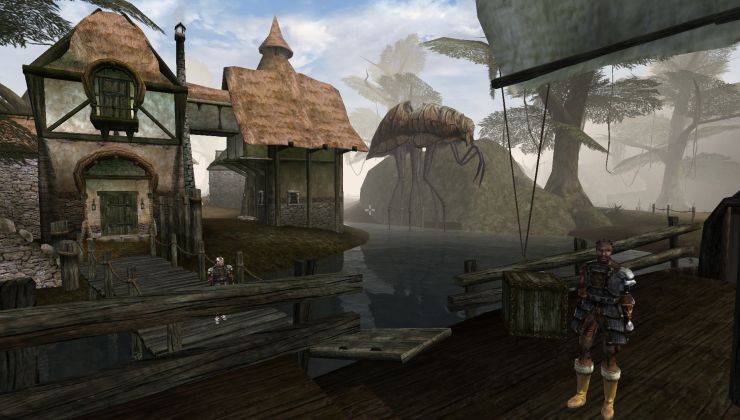 How to setup OpenMW for modern Morrowind on Linux / SteamOS and Steam Deck
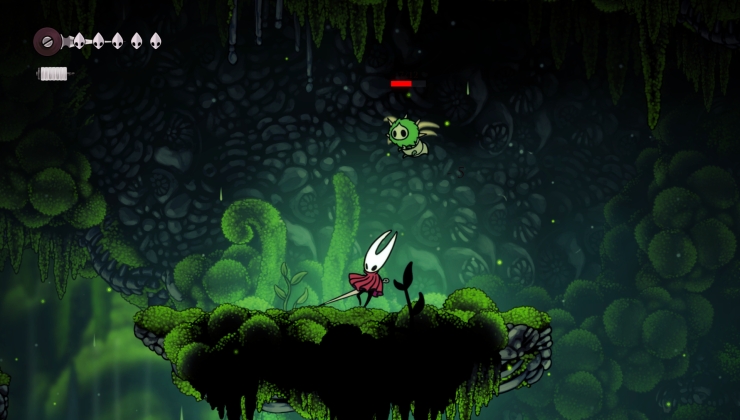 How to install Hollow Knight: Silksong mods on Linux, SteamOS and Steam Deck
- Shop Crush - Psychological Horror Thrift Sim with Literal Illusio…
- hollowlimb - Proton/Wine Games Locking Up
- tuubi - Away all of next week
- Ehvis - The Great Android lockdown of 2026.
- Linux_Rocks - Lutris alternatives
- Caldathras - See more posts