 Support us on Patreon
 PayPal
Latest Comments by Purple Library Guy
The first beta for Lutris 0.5 is out with a refreshed UI and GOG support
28 Dec 2018 at 5:36 am UTC
28 Dec 2018 at 5:36 am UTC
Quoting: jensI guess I wont be popular with my opinion, but I hope that Steam Play/Proton will take that much steam that wrapping Wine/Steam on windows via Lutris will soon no longer be relevant. The reason for my opinion here is that I still think that gaming on Linux will only improve in the long term when Linux hits a significantly higher market share than the current 1%. Playing windows games outside of Proton does not increases Linux visibility.Mm . . . well, I like Proton (in theory, haven't used it yet), and I don't actually use GOG much, but even for me I have a few games that aren't from Steam, which Lutris will probably at some point help me play. Like I have this old Sins of a Solar Empire CD which I never got working back in the day . . .
This is just my opinion, by all means everyone is free to use Linux as one wishes. Note also that I don't talk about making Lutris irrelevant, I know that it wraps more than just Wine.
41 of Steam's most played games in 2018 are supported on Linux
28 Dec 2018 at 5:20 am UTC Likes: 7
28 Dec 2018 at 5:20 am UTC Likes: 7
Minor pet peeve . . . none of the games literally flew off the digital shelves. You're thinking of games that figuratively flew off the digital shelves. :P
41 of Steam's most played games in 2018 are supported on Linux
28 Dec 2018 at 5:18 am UTC Likes: 2
28 Dec 2018 at 5:18 am UTC Likes: 2
The surprise point for me is about the 3/120 top VR titles . . .
There were 120 VR titles?! Who knew?
There were 120 VR titles?! Who knew?
Steam Play is great for a younger audience with games like LEGO Jurassic World
22 Dec 2018 at 8:38 pm UTC Likes: 7
22 Dec 2018 at 8:38 pm UTC Likes: 7
But what about all the hardcore children complaining that the frame rate is slower on Linux?!
Some thoughts on Linux gaming in 2018, an end of year review
22 Dec 2018 at 8:18 pm UTC Likes: 2
People whose use of computers is based around hard core gaming will be among the last to migrate to Linux. I figure if we somehow got to 25% desktop share and Vulkan dominance, basically all the games would be built natively for Linux despite Proton and all the drivers would work fast and all the engines would treat Linux as first class citizen; at that point hard core gamers going to Linux to game because they thought Linux performance was better could become a thing.
There are two things influencing Linux adoption. One is the features of the OS for a user; use-cases vary hugely. Over time, the disadvantages have been shrinking and the advantages growing, so that Linux would be a comparable or superior option for more and more users. Proton could definitely be a component in continuing to shrink the disadvantages. The other is big pushes from outfits with money and muscle; I hate to say this, but it's true--Linux can be awesome but will not get far if someone isn't shoving it hard through big sales channels and backing it with marketing. But such pushes won't work if users have to give up too much. If Linux has too many drawbacks for most users, we have no prospects even if someone wants to back us.
Right now at this moment, Valve is working pretty consistently to shrink the disadvantages of Linux use, at least for gaming. On the other hand, arguably the outfit quietly pushing actual Linux adoption the most is Google, with their Chromebooks, which are gradually becoming beefier and softening their "everything is the browser" schtick. The things have already been selling well as basically crippleware, cheapo little laptops to just browse and do basic things with. But it's gotten people used to them, used to the idea of having a computer that isn't Windows and isn't a Mac. At this point, now that people are used to them, they could probably build a market for Chromebooks that weren't crippled, and there's some indication that they're trying. At some point we're going to start to see "Chromebooks" which are actually honest-to-God general-use computers. They will probably run Linux software (I mean, you can already make 'em do it, but I'm talking designed to out of the box). Consider the following: A "Chromebook" with gaming-laptop level power, with Steam installed, playing Linux-native and Proton games along with the usual suite of Linux software like Libreoffice etc.
22 Dec 2018 at 8:18 pm UTC Likes: 2
Quoting: BeamboomAnd nobody will jump to Linux for gaming (emphasis added--Purple) just because we can emulate Windows. That's just simply not gonna happen.We have no realistic prospects of people jumping to Linux for gaming (barring some kind of snazzy category-blurring Steam Machine someday). But we have prospects of people jumping to Linux despite gaming, for other features, and those prospects become better as the degree of gaming sacrifice shrinks. It has already shrunk a lot, but as you yourself point out, after the big push around Steam Machines the level of releases for Linux was stagnating. Proton shrinking that disadvantage, as felt by a typical computer user, subtracts some level of barrier to adoption.
People whose use of computers is based around hard core gaming will be among the last to migrate to Linux. I figure if we somehow got to 25% desktop share and Vulkan dominance, basically all the games would be built natively for Linux despite Proton and all the drivers would work fast and all the engines would treat Linux as first class citizen; at that point hard core gamers going to Linux to game because they thought Linux performance was better could become a thing.
There are two things influencing Linux adoption. One is the features of the OS for a user; use-cases vary hugely. Over time, the disadvantages have been shrinking and the advantages growing, so that Linux would be a comparable or superior option for more and more users. Proton could definitely be a component in continuing to shrink the disadvantages. The other is big pushes from outfits with money and muscle; I hate to say this, but it's true--Linux can be awesome but will not get far if someone isn't shoving it hard through big sales channels and backing it with marketing. But such pushes won't work if users have to give up too much. If Linux has too many drawbacks for most users, we have no prospects even if someone wants to back us.
Right now at this moment, Valve is working pretty consistently to shrink the disadvantages of Linux use, at least for gaming. On the other hand, arguably the outfit quietly pushing actual Linux adoption the most is Google, with their Chromebooks, which are gradually becoming beefier and softening their "everything is the browser" schtick. The things have already been selling well as basically crippleware, cheapo little laptops to just browse and do basic things with. But it's gotten people used to them, used to the idea of having a computer that isn't Windows and isn't a Mac. At this point, now that people are used to them, they could probably build a market for Chromebooks that weren't crippled, and there's some indication that they're trying. At some point we're going to start to see "Chromebooks" which are actually honest-to-God general-use computers. They will probably run Linux software (I mean, you can already make 'em do it, but I'm talking designed to out of the box). Consider the following: A "Chromebook" with gaming-laptop level power, with Steam installed, playing Linux-native and Proton games along with the usual suite of Linux software like Libreoffice etc.
Digital voyeur simulator Do Not Feed the Monkeys looks weird and it's now on Linux
21 Dec 2018 at 12:45 am UTC
21 Dec 2018 at 12:45 am UTC
Quoting: fnordianslipNothing gets installed for me when I download the game on Linux. Guess they haven't ironed out the details yet.Maybe they're just not feeding you.
Some thoughts on Linux gaming in 2018, an end of year review
20 Dec 2018 at 5:16 am UTC Likes: 1
First, it could be that PC game sales are less dominated by the few top games, and so while those top games have fewer sales than the top few console games, overall sales on PC could be high. Second, the top games being on consoles now does not mean they weren't also on consoles years ago--it's only a trend if PC sales used to be stronger relative to console sales.
And I mean, the overall trend of number of Steam players is (give or take some rather large Pubg blips) strongly upwards. A quick poke round googling about game sales it looks like PC sales are actually in the same ballpark as total console sales. So for instance
https://www.dsogaming.com/news/pc-games-sales-in-2017-are-almost-as-big-all-console-sales-combined/ [External Link]
Edited to add: The real trend appears to be mobile growing to eclipse both PC and consoles. But even there, it's not like PC and console are shrinking; mobile games have just been growing really fast.
20 Dec 2018 at 5:16 am UTC Likes: 1
Quoting: GuestWhile I am willing to believe that there is a trend of PC losing ground to consoles, the article you link isn't really evidence of that, in two ways.Quoting: BeamboomI'm the first to feel sorry for saying so, but to be honest I feel this is one of the weaker years in Linux gaming so far. It feels like we're taken quite a few steps back to the first years of Steam, with mostly indie titles coming our way.Linux is not alone in this. PC is losing ground as part of a much wider trend.
Let's just say it like it is: Without Feral we would have had practically nothing in the pipeline now. Like we did back then.
So this is not something to be too cheerful about. Rather we should worry if the top was already reached.
Maybe Steam Play in fact is the only way forward after all. Forget games developed for our platform, forget ports even, we now need to emulate our way to the bigger games.
https://247wallst.com/special-report/2018/12/04/the-best-selling-video-games-of-2018/ [External Link]
AAA is now almost exclusively the domain of the PS4, with Nintendo exclusives making up the remainder.
The days of comparing the asymmetric scale of something like Half-Life on PC to something like Halo on the original Xbox are long gone ... or long overdue, depending on your outlook. :wink:
First, it could be that PC game sales are less dominated by the few top games, and so while those top games have fewer sales than the top few console games, overall sales on PC could be high. Second, the top games being on consoles now does not mean they weren't also on consoles years ago--it's only a trend if PC sales used to be stronger relative to console sales.
And I mean, the overall trend of number of Steam players is (give or take some rather large Pubg blips) strongly upwards. A quick poke round googling about game sales it looks like PC sales are actually in the same ballpark as total console sales. So for instance
https://www.dsogaming.com/news/pc-games-sales-in-2017-are-almost-as-big-all-console-sales-combined/ [External Link]
Edited to add: The real trend appears to be mobile growing to eclipse both PC and consoles. But even there, it's not like PC and console are shrinking; mobile games have just been growing really fast.
Stellaris MegaCorp expansion and the 2.2 'Le Guin' free update are now both out
19 Dec 2018 at 5:20 pm UTC
19 Dec 2018 at 5:20 pm UTC
One thing I've concluded, still in early-mid game at this point, is that I can't always get away with upgrading buildings even if I have all the resources needed and can afford their energy upkeep. The thing about the jobs is, there's two kinds of jobs--the basic ones, in the "districts" for food, minerals and energy plus the clerk jobs in city districts, and the advanced ones in the "buildings". The buildings do things in themselves sometimes, but mostly they make jobs available doing specialized building-things. The upgraded versions make more jobs. So like, most of the basic buildings have two jobs associated with them, while the first upgrade goes to 4 or 5 and the serious upgrade might provide 10 jobs.
All fine so far. But here's the rub: The population seems to fill the specialty jobs first. And you get a building slot every 5 pop. So if you build and upgrade all your building slots on a planet to serious 5-job versions, that means the buildings are providing enough jobs for the whole population. Everyone will shift away from mining, farming and staffing power plants to doing the snazzy stuff! Your economy would go poof. So the upkeep on those buildings is if anything the small part of the equation, the bigger issue is balancing basic production jobs with jobs in the buildings so you keep making enough basic stuff to support the researchers and alloy-forgers and Unity and "amenities" producers and whatnot.
I agree with Pete910 that the sectors are weird and pointless now. And small. And the cost of leaders is what grows most rapidly with empire size, both acquisition and maintenance. As you grow it's no longer clear to me that sector governors' general production boost makes it worth having them on most sectors. Presumably worth it if you're going "tall". I know it's a balance thing, but it doesn't make a lot of sense--why if you're a massive empire is the manager of some dinky planet in the boonies suddenly worth the upkeep on a bunch of ships, where when you're small the governor of the core systems costs peanuts?
All fine so far. But here's the rub: The population seems to fill the specialty jobs first. And you get a building slot every 5 pop. So if you build and upgrade all your building slots on a planet to serious 5-job versions, that means the buildings are providing enough jobs for the whole population. Everyone will shift away from mining, farming and staffing power plants to doing the snazzy stuff! Your economy would go poof. So the upkeep on those buildings is if anything the small part of the equation, the bigger issue is balancing basic production jobs with jobs in the buildings so you keep making enough basic stuff to support the researchers and alloy-forgers and Unity and "amenities" producers and whatnot.
I agree with Pete910 that the sectors are weird and pointless now. And small. And the cost of leaders is what grows most rapidly with empire size, both acquisition and maintenance. As you grow it's no longer clear to me that sector governors' general production boost makes it worth having them on most sectors. Presumably worth it if you're going "tall". I know it's a balance thing, but it doesn't make a lot of sense--why if you're a massive empire is the manager of some dinky planet in the boonies suddenly worth the upkeep on a bunch of ships, where when you're small the governor of the core systems costs peanuts?
VK9, the project that aims to support Direct3D 9 over Vulkan has hit another milestone
17 Dec 2018 at 6:31 pm UTC Likes: 4
17 Dec 2018 at 6:31 pm UTC Likes: 4
Even if it's not that useful yet, I see this as future-proofing. OpenGL is gradually becoming obsolete. Eventually, driver and other sorts of support will become spotty and we're not going to want to be relying on translating stuff into OpenGL at that time. Better to have this already mature by then, than starting from scratch when the problem starts looking serious.
Discord announce a 90/10 revenue split, Discord Store will support Linux
16 Dec 2018 at 5:36 am UTC Likes: 6
So there you go. Capitalism and market competition can have serious problems even if competition is working as it's supposed to.
16 Dec 2018 at 5:36 am UTC Likes: 6
Quoting: SamsaiThis is drifting far off topic, but I'd like to briefly discuss a now little-known group called the "railway economists" who explained why such services might operate at a loss.Quoting: kuhpunktNowhere did I say that Valve couldn't afford taking a smaller cut or anything - but there's got to be a line that's fair to all parties: Valve, the game developers and the customers. No one is independent of each other here.Alright, why is 10% below that line? You yourself called it a downward spiral implying that the line is being crossed. Also, I would like you to explain why you think these services would operate at a loss even if there is absolutely no way for them to maintain that kind of a margin. I mean, it might work in the short term to draw people in but then there would be backlash when the cuts go up, so to me that move would make little sense.
Quoting: kuhpunktAs I said: there's a line. Capitalism isn't the best thing in the world, because it will eventually hit you, too.and this race to the bottom is just capitalism working for a change?
Spoiler, click me
Back in what's often called the "gilded age", late 19th century US, they had an economic problem which had caused a few depressions--bigger than normal recessions, smaller than the "great" depression that happened later. And they were trying to figure out why it was happening, and they concluded that the problem was, ironically, competition. In modern times we normally think of competition as something that, if it's really happening, is the condition that makes markets and capitalism work properly and everything will be hunky dory, and the problem is that it so often isn't really happening. Neoclassical economics says that would be the case if a bunch of assumptions held in real life which actually don't, and most modern economists sort of say that economies sorta probably should be treated as if efficient markets were real.
But the railway economists found a significant problem with how markets for many things worked under price competition. It was a problem that emerged once you started dealing with time, something which basic neoclassical math treats as if it didn't exist. Also, debt. Here's how it works, as I recall it. Say you have two cities, and 10,000 people per month want to travel between them by rail. And say it costs 20 million bucks (in 19th century dollars that are worth something) to build a railway between them and buy the trains and stuff. And say you borrow that money at 6% interest (or alternatively, you have that money, but you eschew investing at 6% interest where you could have and spend it on this stuff instead). So every month you're paying out 6/12= .5% on 20 million dollars, or 100,000 dollars a month. Now if you actually start running that railway, you will also be spending money on coal and engineers and ticket-selling staff and maintenance--operating costs; say it's another 100,000 a month. But you're on the hook for the debt, the "sunk costs", even if you never start running the railway.
Right. Now imagine we have two railways servicing those cities in competition. They each have 5,000 of the customers, and they break even at $40 each, giving them $200,000 a month which just pays off their costs. Both of them would clearly prefer to have all the customers. If one could have all the customers at $35 each, it would be making $350,000 a month, and clearing a profit of $150,000 instead of just treading water. So at some point, if they're genuinely competing, someone's gonna make a move--they'll drop their price to attract more of the customers. But you can already see the problem--if the other one doesn't match it, they'll lose their customers and be losing money. So they'll drop their price, too. Now the new equilibrium has both losing money. Neither can increase their price, lest they lose their customers. They may continue the price war in an attempt to get out of the situation.
But the weird thing is, although they're losing money, they can't just quit. See, they're losing money--but they're still losing less than if they stopped running the railway; they're making more than their operating costs. They can't stop operating, but they can't pay off their sunk costs--they're stuck! The railway economists predicted that in cases of competition where the total available revenue was basically fixed, and sunk costs were significant, price competition would inevitably lead to all the competitors charging prices that left them barely making an operating profit but unable to service the debt for their sunk costs, with losses mounting until some of the competitors went bankrupt. In modern times, probably the most prominent example of this sort of thing is what's happened with airlines, which keep competing on price, going bankrupt, and consolidating into bigger and bigger airlines.
Back in the day, certain tycoons basically "solved" the problem by ending price competition, through monopolies and trusts. This had its own problems which became intolerable during the Great Depression, when governments got serious, for a while, about antitrust laws.
But the railway economists found a significant problem with how markets for many things worked under price competition. It was a problem that emerged once you started dealing with time, something which basic neoclassical math treats as if it didn't exist. Also, debt. Here's how it works, as I recall it. Say you have two cities, and 10,000 people per month want to travel between them by rail. And say it costs 20 million bucks (in 19th century dollars that are worth something) to build a railway between them and buy the trains and stuff. And say you borrow that money at 6% interest (or alternatively, you have that money, but you eschew investing at 6% interest where you could have and spend it on this stuff instead). So every month you're paying out 6/12= .5% on 20 million dollars, or 100,000 dollars a month. Now if you actually start running that railway, you will also be spending money on coal and engineers and ticket-selling staff and maintenance--operating costs; say it's another 100,000 a month. But you're on the hook for the debt, the "sunk costs", even if you never start running the railway.
Right. Now imagine we have two railways servicing those cities in competition. They each have 5,000 of the customers, and they break even at $40 each, giving them $200,000 a month which just pays off their costs. Both of them would clearly prefer to have all the customers. If one could have all the customers at $35 each, it would be making $350,000 a month, and clearing a profit of $150,000 instead of just treading water. So at some point, if they're genuinely competing, someone's gonna make a move--they'll drop their price to attract more of the customers. But you can already see the problem--if the other one doesn't match it, they'll lose their customers and be losing money. So they'll drop their price, too. Now the new equilibrium has both losing money. Neither can increase their price, lest they lose their customers. They may continue the price war in an attempt to get out of the situation.
But the weird thing is, although they're losing money, they can't just quit. See, they're losing money--but they're still losing less than if they stopped running the railway; they're making more than their operating costs. They can't stop operating, but they can't pay off their sunk costs--they're stuck! The railway economists predicted that in cases of competition where the total available revenue was basically fixed, and sunk costs were significant, price competition would inevitably lead to all the competitors charging prices that left them barely making an operating profit but unable to service the debt for their sunk costs, with losses mounting until some of the competitors went bankrupt. In modern times, probably the most prominent example of this sort of thing is what's happened with airlines, which keep competing on price, going bankrupt, and consolidating into bigger and bigger airlines.
Back in the day, certain tycoons basically "solved" the problem by ending price competition, through monopolies and trusts. This had its own problems which became intolerable during the Great Depression, when governments got serious, for a while, about antitrust laws.
- Legendary, the free and open source Epic Games Launcher, has moved to a new organisation
- Valve dev fixes up VRAM management on AMD GPUs to improve performance
- Bazzite Linux gets some major upgrades for the April 2026 Update
- Godot gets a funding boost from Slay the Spire 2 devs Mega Crit
- Proton Experimental brings fixes for classic Resident Evil 1 & 2, Dino Crisis 1 & 2 and more
- > See more over 30 days here
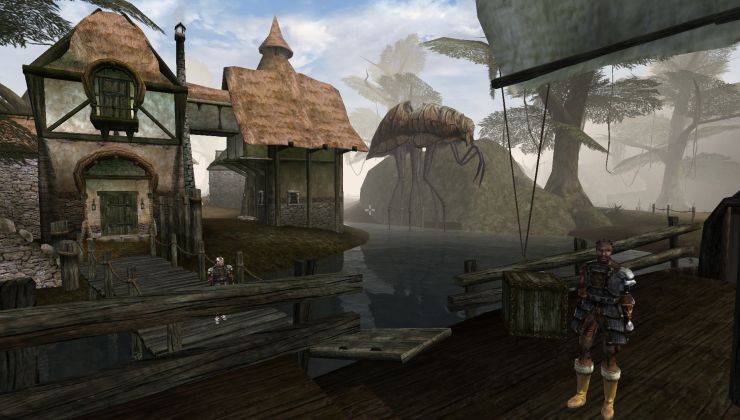 How to setup OpenMW for modern Morrowind on Linux / SteamOS and Steam Deck
 How to install Hollow Knight: Silksong mods on Linux, SteamOS and Steam Deck
- Proton/Wine Games Locking Up
- tuubi - Away all of next week
- Ehvis - The Great Android lockdown of 2026.
- Linux_Rocks - Lutris alternatives
- Caldathras - What Multiplayer Shooters are yall playing?
- Strigi - See more posts