 Support us on Patreon
 PayPal
Latest Comments by slaapliedje
My experiences of Valve's VR on Linux
13 Aug 2020 at 9:30 pm UTC
13 Aug 2020 at 9:30 pm UTC
Quoting: scaineha, remember when Ubuntu was talking about releasing 20.04 without 32bit support and was going to package that up as snaps... then Valve said they were going to change the distribution of what was considered 'officially supported'? Good times.Quoting: randylLike all Valve products, Ubuntu is the only "official" supported platform. However, as you can see from this article, Mint works with a bit of foresight, and I can see extensive notes on the ArchWiki [External Link] too, so there's plenty of platforms you can use if you prefer not to go with Ubuntu. You haven't filled in your profile details, so I can't see what distro you do run, but I unless it's Linux From Scratch, I doubt you'll have too many issues making this stuff work.Quoting: berarmaI would have liked that you started with a supported title like HL:Alyx. It would have been more representative of the state of SteanVR on GNU/Linux.Wait, does Valve VR only support Ubuntu? That would be a terrible marketing decision on their part.
Besides, add to that, like others said, that you're using an unsupported distro and it seems you're going for the big prize. Yesterday I read Lutris isn't supporting Mint for the issues with Wine games.
I'd like to read the experiences from someone not going so hard on it.
My experiences of Valve's VR on Linux
13 Aug 2020 at 9:29 pm UTC Likes: 3
That's why you get so many people that have the hardware telling others how GREAT it is. Because we also want wider support for it, and if we get more people to buy it, the more developers will release things... the endless circle.
Also, if you guys get it, we could try to get the Star Trek Bridge Crew game working and nerd out on that! I keep meaning to try it, but I generally dislike people (so dislike playing multiplayer) but could be some fun between Linux users!
13 Aug 2020 at 9:29 pm UTC Likes: 3
Quoting: barottoIt's a chicken / egg thing like Desktop Linux... If people don't support it and buy into it, there are no reasons for developers to make games for it. If no one makes games for it, then no one buys it...Quoting: bekoI never expected so much discussions on this topic at all. I guess the interest in VR is really high for such a niche?I'm super interested in VR, but not at the current price and level of support. I consider it still beta at best.
I hope it won't disappear before reaching maturity though...
That's why you get so many people that have the hardware telling others how GREAT it is. Because we also want wider support for it, and if we get more people to buy it, the more developers will release things... the endless circle.
Also, if you guys get it, we could try to get the Star Trek Bridge Crew game working and nerd out on that! I keep meaning to try it, but I generally dislike people (so dislike playing multiplayer) but could be some fun between Linux users!
There's going to be an online Linux App Summit this November
13 Aug 2020 at 8:02 pm UTC
You know why there are so many different Linux distributions? Because different people have different needs. You don't think that if Windows was open source and 100% customizable that there wouldn't be all sorts of crazy and awesome configurations? You don't think the same would be said about iOS? Choice is good. There isn't so much as fragmentation as there is a lack of understanding how to package things cleanly. A platform like Steam does it mostly correctly with few bugs. AppImage is another method. Flatpak as well. These are things that actually are trying to solve the packaging / library differences you're so concerned with.
If you're preferred use of Linux is to just play games on it, use GamerOS or one of the other ones that are optimized as such. Me, I enjoy general computing usage and gaming, so I use Debian. The fragmentation thing is really a myth, as any distribution that doesn't suck will have work arounds to make them more usable. Look at Arch, generally not the friendliest to install, but you can keep the same install updated for many years, and the user community is fantastic and make all sorts of PKGBUILDs for just about any software you can think of. Does this make them different than Debian, Ubuntu, RHEL/Cent, Fedora? Sure! Is it a good or bad thing? I think it's a good thing, as I sad, we all have our use cases!
Are you a developer for anything Linux related? If not, I'd say talk to some and find the real issue. Sure support can kind of be a pain from the "well I have Arch installed and...' well when did you last update? "three months ago..." "Update, then see if the issue is still there..." But I mean if you're running Arch... you should be punched if you did that.
It's simple enough to say 'we'll help with whatever issue, but if it takes more time because you're not running 'supported' OS than we may have to give up, as we can't support every config.' That's basically the 'correct' way to support software on Linux.
13 Aug 2020 at 8:02 pm UTC
Quoting: randylMountain of molehill...Quoting: slaapliedjeI've found Itch to be a bad experience overall because the games target old OS versions that are either statically linked to out of date libraries or dynamically linked in a manner that breaks when libs change. Dynamically linking sounds smart but every library maintainer has their own idea of how backwards compatibility works. But don't worry, fragmentation isn't a problem.Quoting: furaxhornyxNot anymore than 'we sell from our own store, and you can only get this one package that works on *buntu, but you are on your own with anything else."Quoting: grigiNo, the "fragmentation" isn't a bad thing. Think of it in terms of innovations, if only one thing is allowed, will we ever actually get progress?In terms of innovation, yes, but no so much in terms of development (I quote below a good illustration):
Quoting: randylWhen we ask a game studio to support "Linux" and provide us a native "port", what exactly are we asking? What are they supposed to target and support? Do we expect them to support all our various packaging systems?--8<--------------
Quoting: slaapliedjeIn my mind we should be asking 'please support this game on Linux via Steam or GOG or itch.io.' not "please make debian packages."But wouldn't targeting a "store" end up for example like what we see with Epic Game Store getting exclusives ?
But otherwise that is already happening. Commercial games for Linux are only really being released on those two, or from individual store fronts. Maybe if we had more choices, like Origin and Uplay, then we could ask for those to be released... as it is, we get mediocre suplort from GOG and only really have Steam and Itch. Unless snap or flatpqk gets some sort of retail support or we get some weird shock like EGS coming to Linux, it is what it is.
Has anyone ever asked why GoG doesn't support us? Don't ask too deeply or you won't like the answer. Market share always takes the blame, but it isn't the only reason. We're a huge pain in the ass because "supporting Linux" means everything and nothing at once. It isn't worth their effort.
Why won't EGS "come to Linux"? Because it isn't worth the effort for a fraction of a fraction of marketshare for a distribution that doesn't even know if it wants to be a desktop OS or not. Canonical can't even figure out a plan for 32 bit blob support going forward. They just backtracked on that a little and pushed it out to be dealt with some other time.
There is no fragmentation or consistency issue. This is fine.
You know why there are so many different Linux distributions? Because different people have different needs. You don't think that if Windows was open source and 100% customizable that there wouldn't be all sorts of crazy and awesome configurations? You don't think the same would be said about iOS? Choice is good. There isn't so much as fragmentation as there is a lack of understanding how to package things cleanly. A platform like Steam does it mostly correctly with few bugs. AppImage is another method. Flatpak as well. These are things that actually are trying to solve the packaging / library differences you're so concerned with.
If you're preferred use of Linux is to just play games on it, use GamerOS or one of the other ones that are optimized as such. Me, I enjoy general computing usage and gaming, so I use Debian. The fragmentation thing is really a myth, as any distribution that doesn't suck will have work arounds to make them more usable. Look at Arch, generally not the friendliest to install, but you can keep the same install updated for many years, and the user community is fantastic and make all sorts of PKGBUILDs for just about any software you can think of. Does this make them different than Debian, Ubuntu, RHEL/Cent, Fedora? Sure! Is it a good or bad thing? I think it's a good thing, as I sad, we all have our use cases!
Are you a developer for anything Linux related? If not, I'd say talk to some and find the real issue. Sure support can kind of be a pain from the "well I have Arch installed and...' well when did you last update? "three months ago..." "Update, then see if the issue is still there..." But I mean if you're running Arch... you should be punched if you did that.
It's simple enough to say 'we'll help with whatever issue, but if it takes more time because you're not running 'supported' OS than we may have to give up, as we can't support every config.' That's basically the 'correct' way to support software on Linux.
There's going to be an online Linux App Summit this November
13 Aug 2020 at 4:08 am UTC
But otherwise that is already happening. Commercial games for Linux are only really being released on those two, or from individual store fronts. Maybe if we had more choices, like Origin and Uplay, then we could ask for those to be released... as it is, we get mediocre suplort from GOG and only really have Steam and Itch. Unless snap or flatpqk gets some sort of retail support or we get some weird shock like EGS coming to Linux, it is what it is.
13 Aug 2020 at 4:08 am UTC
Quoting: furaxhornyxNot anymore than 'we sell from our own store, and you can only get this one package that works on *buntu, but you are on your own with anything else."Quoting: grigiNo, the "fragmentation" isn't a bad thing. Think of it in terms of innovations, if only one thing is allowed, will we ever actually get progress?In terms of innovation, yes, but no so much in terms of development (I quote below a good illustration):
Quoting: randylWhen we ask a game studio to support "Linux" and provide us a native "port", what exactly are we asking? What are they supposed to target and support? Do we expect them to support all our various packaging systems?--8<--------------
Quoting: slaapliedjeIn my mind we should be asking 'please support this game on Linux via Steam or GOG or itch.io.' not "please make debian packages."But wouldn't targeting a "store" end up for example like what we see with Epic Game Store getting exclusives ?
But otherwise that is already happening. Commercial games for Linux are only really being released on those two, or from individual store fronts. Maybe if we had more choices, like Origin and Uplay, then we could ask for those to be released... as it is, we get mediocre suplort from GOG and only really have Steam and Itch. Unless snap or flatpqk gets some sort of retail support or we get some weird shock like EGS coming to Linux, it is what it is.
My experiences of Valve's VR on Linux
13 Aug 2020 at 4:00 am UTC Likes: 1
Problem with the PSVR is the LCD brightness and the resolution. Thkugh yku do get used to the LCD backlight after a while in VR. The Vive Pro is really nice about this, but at the same time text is much more readable in the Index.
13 Aug 2020 at 4:00 am UTC Likes: 1
Quoting: TheRiddickIt is the single reason I don't play Elite as much as I want to, as currently it doesn't quite run as well without this in Linux. Windows supports it fine, and overall the FPS is about 100 less on Linux, but they are still mostly in the 200s... it is just in space stations they dip down to like 70... which in VR is atrocious.Quoting: Patoladreaded async reprojectionIs NVIDIA going to support this someday? does this feature exist under Windows drivers.
Seems odd they'd leave such a critical feature out given how quick they are at adding extension support and fixes to their linux bin drivers.
Quoting: Cyba.CowboyAnd this is why I will stick to Sony PlayStation VR for the foreseeable future... I don't mind mucking around to get things running under a Linux-based operating system, but that amount of mucking around - especially for the price of the product - is just unacceptable.I bought a PSVR specifically because they added 3d Bluray support so it should work out of the box. Something I can't get to work on Linux as it lacks Virtual Desktop support (haven't tried it on Proton in a while) and at the best on Windows you have to muck around each time to get it to work as all the VR headsets lack HDCP, so you have to decrypt the disk on the fly...
Thanks for the (extensive) write-up, it was well worth the read though...
Problem with the PSVR is the LCD brightness and the resolution. Thkugh yku do get used to the LCD backlight after a while in VR. The Vive Pro is really nice about this, but at the same time text is much more readable in the Index.
My experiences of Valve's VR on Linux
12 Aug 2020 at 7:02 pm UTC Likes: 4
The 'out of the box' comments are usually based on people who have already had their setup for a while, most likely already ran into some other thing that required 32bit libraries to be installed (I think Lutris might as well?).
The OP admitted right off that he was by no means a Linux Guru, and that he very much didn't want to dig into the guts of the system. So it was a good article from that perspective. I mean SteamVR works pretty much 'out of the box' for me on my Debian system as well, but that's only because I've already previously installed the 32bit stuff for Steam and other things. Only thing to gather from this is that it's quite possible the dependencies of the Steam package differ between Debian / Ubuntu / Mint, as it seems Ubuntu has now moved steam to a snap? (Need confirmation on that) and that leaves Mint probably having to package their own for 20.04, which could be the cause of the dependency discrepancy from it 'just working' on Debian. Though I did recently do a re-install (wanted to play with a new distro, always end up going back to Debian though...) and I might be missing some of the libraries now.
As to your other note about DRM and companies deserving to protect their IP. You know, that's fine, I have no problem with developers trying to protect their hard work. What I have a problem with is the publishers (who ultimately are the ones who put DRM on your system) creating such intrusive DRM as to create kernel level drivers that create instability and privacy concerns. I'm not one to go 'boo, Steam has DRM!' as I think it's one of the least invasive forms. I do complain about the anti-cheat stuff that should find a better way of working over 'let's just scan the user's entire system to see what they have...' Especially when a lot of that software is developed in countries that have far less ethical standards than most of us are comfortable with.
12 Aug 2020 at 7:02 pm UTC Likes: 4
Quoting: orochi_kyoI don't want to be that guy, but this "it worked for me straight out of the box" comments IMO are mostly are desperate screams looking to promote a technology thought on just a small base of gamers, not only because the price but because just a few think it could be cool to change the casual way most gamers play, in a couch or a desk when you can stop from playing without detaching anything from your body when you want to go somewhere else.Fairly certain SteamVR is officially supported on Linux by Valve. As there is a 'beta' branch and 'normal' one. Just as there is under Windows.
I can hardly tell something working out of the box when it comes to Linux gaming, even with Proton on Steam, you need to config first the Steamplay, enable Windows games to show on your library, but all these VR guys are trying to downplaying the author of the article claiming they got their VR to work "out of the box" when VR is not officially supported yet on Linux neither by Valve or any other VR company.
Pretty much like the antiDRM folks, the fact VR guys are so vocal in this forum and other forums just show how desperate both groups are to get attention, the first ones because they live in a world when Devs has no rights to protect their IPs from pirates, the second ones because they want to shove their way to play games down our throats.
I'm glad the article warns possible buyers of the hassle of VR, not quite ready to work out of the box on Linux, instead of being misled by the hype of those who are desperate to have more games for their VR devices.
The 'out of the box' comments are usually based on people who have already had their setup for a while, most likely already ran into some other thing that required 32bit libraries to be installed (I think Lutris might as well?).
The OP admitted right off that he was by no means a Linux Guru, and that he very much didn't want to dig into the guts of the system. So it was a good article from that perspective. I mean SteamVR works pretty much 'out of the box' for me on my Debian system as well, but that's only because I've already previously installed the 32bit stuff for Steam and other things. Only thing to gather from this is that it's quite possible the dependencies of the Steam package differ between Debian / Ubuntu / Mint, as it seems Ubuntu has now moved steam to a snap? (Need confirmation on that) and that leaves Mint probably having to package their own for 20.04, which could be the cause of the dependency discrepancy from it 'just working' on Debian. Though I did recently do a re-install (wanted to play with a new distro, always end up going back to Debian though...) and I might be missing some of the libraries now.
As to your other note about DRM and companies deserving to protect their IP. You know, that's fine, I have no problem with developers trying to protect their hard work. What I have a problem with is the publishers (who ultimately are the ones who put DRM on your system) creating such intrusive DRM as to create kernel level drivers that create instability and privacy concerns. I'm not one to go 'boo, Steam has DRM!' as I think it's one of the least invasive forms. I do complain about the anti-cheat stuff that should find a better way of working over 'let's just scan the user's entire system to see what they have...' Especially when a lot of that software is developed in countries that have far less ethical standards than most of us are comfortable with.
My experiences of Valve's VR on Linux
12 Aug 2020 at 5:44 pm UTC Likes: 1
12 Aug 2020 at 5:44 pm UTC Likes: 1
Quoting: PatolaWhat's sad is that Red Hat at one point came out and said they were absolutely uninterested in doing anything for the desktop... but then repeatedly kept hiring Gnome developers... Ubuntu lost their vision long ago. They used to be all about trying to get Linux on the desktop, and it was supposed to be 'Debian with a 6 month release schedule'. They dropped that idea long ago and broke compatibility with Debian and started trying to go out on their own and do things that were sometimes good, but other times rather crap. I was a big supporter of them when they first crept around, but now much less so and I prefer things like Mint or Pop_OS. Ubuntu based distros that do things 'right'.Quoting: TuxeeWho cares what you think? It's mere facts: The most widespread distribution is *Ubuntu. Neither is it of any interest, how much they contribute upstream, and as far as OS customization goes - there hasn't been a lot going on in this direction over the last few years.I think it's not exactly the most "popular" distribution, but the most famous desktop-oriented distribution. Ubuntu still gets that vibe although it has been renouncing that "mission" in favor of IoT and the cloud and due to its attempts to succeed in the enterprise -- looking like a desktop distro makes it look like "less serious", like if a good working and leisure environment makes you less productive.
Yes, there is no "standard" distro and there will never be one, hence developers target the most popular distribution. Period.
My experiences of Valve's VR on Linux
12 Aug 2020 at 5:37 pm UTC Likes: 2
Mind you, I have been using Gnome since it was pre-1.0 days... I remember the initial KDE layout was pretty damn close to just being Windows and I wanted to get away from that. Then a funny thing happened, KDE seemed to be the model for the upgraded looks of Windows 7... I still occasionally try to give KDE a chance, but then it annoys me for one reason or another and I go back to Gnome.
But we're all different with different needs / wants / workflow. So I'm not going to belittle someone else for choosing what DE they run. I save that for people who use macs and Windows :P
12 Aug 2020 at 5:37 pm UTC Likes: 2
Quoting: CatKillerOff Topic:See this is the reason we like Linux though. WE all have different use cases. Me, I love Gnome 3. It's so minimal and stays out of my way so I can focus on the task at hand, rather than me fiddling with the desktop to make it how I like it...
Quoting: scaineAnd I just can't enjoy my desktop when it's Gnome3. It doesn't gel, despite my giving it 6 months to do so.I was in a similar position to you. I had Cinnamon on my laptop because, at the time I got it, the high-DPI support was best, and I was getting increasingly annoyed by Gnome 3 on my desktop.
But Mint! Holy cow, what a slick, beautiful experience it is. Better... better(!) than Unity, in my opinion. I have fallen in love with my desktop all over again. So, giving up Mint for a slightly better VR experience isn't on the cards, I'm afraid!
When I built my new desktop I gave KDE a try. Within a week I decided to switch my laptop to KDE as well, since I liked it so much more.
In particular, and the reason I'm mentioning it, the out-of-the-box audio configuration for setting device priorities - and having different priorities for different classes of audio application if you want that - is way better than what you get on the GTK side, since they had all that already for Phonon.
If you do get itchy feet to try something different, that's the direction that I'd suggest you try.
Mind you, I have been using Gnome since it was pre-1.0 days... I remember the initial KDE layout was pretty damn close to just being Windows and I wanted to get away from that. Then a funny thing happened, KDE seemed to be the model for the upgraded looks of Windows 7... I still occasionally try to give KDE a chance, but then it annoys me for one reason or another and I go back to Gnome.
But we're all different with different needs / wants / workflow. So I'm not going to belittle someone else for choosing what DE they run. I save that for people who use macs and Windows :P
My experiences of Valve's VR on Linux
12 Aug 2020 at 5:33 pm UTC Likes: 1
Granted I also have a 2080 RTX, so maybe it behaved differently. I am still kind of annoyed that I had ordered the USB C cable for that so I wouldn't have to use a Display Port + USB connection for the Index, but then Valve canceled that cable.
12 Aug 2020 at 5:33 pm UTC Likes: 1
Quoting: PatolaWeird, as that's exactly what it was doing on mine.Quoting: slaapliedjeYes, that's exactly what I thought was happening, but no, it was not booting, nor accepting keys, nor outputting to the headset, nor going to the UEFI menus and waiting some confirmation. If I turned the PC on with the Index Display Port plugged in the first slot, it hung. I tested that for a few hours.Quoting: PatolaI went through the same attempts you made, had an AMD rig and bought the Valve Index, and I strongly disagree with you, my experience on Ubuntu 20.04 was almost completely seamless out of the box, only thing I had to change is the order of DP connections on my GPU otherwise the PC would not boot.It boots fine, the problem is that your PC is outputting to the Index, and not your normal monitors. If you'd picked up the headset, the desktop would be there. I know this because I'd ran into it myself and happened to have the Index sitting on the table at the right angle to see it lit up!
Granted I also have a 2080 RTX, so maybe it behaved differently. I am still kind of annoyed that I had ordered the USB C cable for that so I wouldn't have to use a Display Port + USB connection for the Index, but then Valve canceled that cable.
My experiences of Valve's VR on Linux
12 Aug 2020 at 5:32 pm UTC Likes: 3
Also, Elite Dangerous in VR is AMAZING! I'd give up walking around for it. Then again I also have a Thrustmaster Warthog with full rudders that I bought specifically for the game.
12 Aug 2020 at 5:32 pm UTC Likes: 3
Quoting: barottoI think this experience should be added to the wiki.Doesn't matter, what's to stop you from just lifting off the headset to play when you walk around?
Also, don't get used to Elite Dangerous on VR too much, as the next big Odyssey expansion will not support it.
Also, Elite Dangerous in VR is AMAZING! I'd give up walking around for it. Then again I also have a Thrustmaster Warthog with full rudders that I bought specifically for the game.
- New US Congress bill proposal requires all operating system providers to verify ages [updated]
- Mozilla announced "Thunderbolt", their open-source and self-hostable AI client
- US operating system age verification bill "Parents Decide Act" gets published
- PlayStation 3 emulator RPCS3 can now auto-configure games for you
- Only 2 years after release Star Trek: Resurgence is being delisted
- > See more over 30 days here
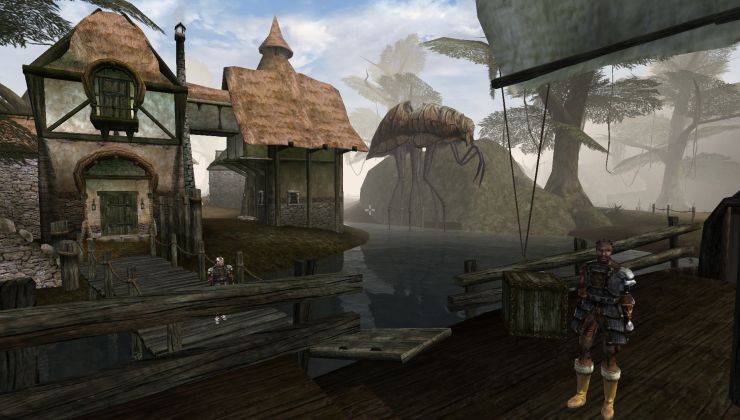 How to setup OpenMW for modern Morrowind on Linux / SteamOS and Steam Deck
 How to install Hollow Knight: Silksong mods on Linux, SteamOS and Steam Deck
- Away all of next week
- Liam Dawe - Testing the VRAM valve patch
- Koopa - New Desktop Screenshot Thread
- tmtvl - Shop Crush - Psychological Horror Thrift Sim with Literal Illusio…
- hollowlimb - Proton/Wine Games Locking Up
- Caldathras - See more posts