Latest Comments by Hamish
Building a Retro Linux Gaming Computer - Part 8: Shovelware with a Penguin
5 Apr 2023 at 10:56 pm UTC
5 Apr 2023 at 10:56 pm UTC
So my brother come across a GameSpot article from when 100 Great Linux Games was first announced:
https://www.gamespot.com/articles/take-two-jumps-on-linux/1100-2446349/ [External Link]
Posting here for posterity.
https://www.gamespot.com/articles/take-two-jumps-on-linux/1100-2446349/ [External Link]
Posting here for posterity.
Atari are acquiring Night Dive Studios
23 Mar 2023 at 4:49 pm UTC Likes: 1
23 Mar 2023 at 4:49 pm UTC Likes: 1
Quoting: KlaasFunny. Does that mean that they will finish Blood: Fresh Supply which according to Night Dive was abandoned due to Atari killing the project?
Quoting: eldarionNightdive is a hit and miss company.Yeah, given the mixed track record Night Dive Studios has, I have a hard time telling if this is good news or bad. Their Linux support has been patchy at best and the quality of their work has not always been there.
Marble It Up! gets Native Linux support in Beta
15 Mar 2023 at 4:20 pm UTC Likes: 5
Nice to see Ethan Lee doing his thing.
15 Mar 2023 at 4:20 pm UTC Likes: 5
Quoting: Liam DaweDeveloped by the minds behind the Marble Blast series, if any of you are familiar with that.Oh the irony. :whistle:
Nice to see Ethan Lee doing his thing.
Building a Retro Linux Gaming Computer - Part 28: Losing My Marbles
8 Mar 2023 at 6:03 am UTC
8 Mar 2023 at 6:03 am UTC
Quoting: slaapliedjeRight, cards before the Parhelia had all the drivers open source, with a binary blob for some specific thing (I want to say hardware accelerated video decoder?) As I stated above, they had an installer for the Parhelia drivers, and they simply needed build-essentials and the linux-headers package to be installed in Debian based distributions.Thanks for the correction, I did not know about the Parhelia using a binary blob. I guess Matrox wanted to keep with the times, which in the early to mid 2000s, was whatever Team Green was doing.
Quoting: slaapliedjeSadly their hardware implementation lacked something to support Doom 3 correctly, and that ultimately killed the card (ironic as many people claim Doom, and it's lack of it on the Amiga platform is what killed the Amiga.)And Quake killed Cyrix, so John Carmack will dig your grave. :whistle:
Building a Retro Linux Gaming Computer - Part 28: Losing My Marbles
7 Mar 2023 at 10:36 pm UTC Likes: 1
They do ship a modified version including their own Matrox HAL library it seems though:
https://www.matrox.com/de/video/apps/drivers/graphics/download?id=143 [External Link]
My brother had no idea that the card was that valuable, nor did the person who sold it to him at a flea market. It was actually part of the same $1 CAD lot of cards that my Sound Blaster 16 PnP came from.
EDIT: Not entirely useless on Linux as 2D support for the Vérité was released through the back door:
"I got on to the beta tester team with Rendition and they were constantly upgrading the drivers and making them better and faster but the manufacturers couldn't be bothered with updating their drivers ... I also got the Verite engineers to "leak" the 2D driver specs because there wasn't a way to make it work with Linux. So I tried shopping the specs around to different Linux distros (there were only a few back then) and Redhat turned me down flat and Debian did too after a few weeks but I finally got the interest of some German programmers at SUSE and they got them to work (2D only) in no time and because of the way Linux works you could download them from SUSE and they would work in Redhat or Debian or any other distro"
Source: https://www.techspot.com/community/topics/rendition-gone-but-not-forgotten.278896/post-2010465 [External Link]
This Linux Gazette issue seems to confirm that it was done through SUSE too:
https://linuxgazette.net/issue31/gm.html [External Link]
7 Mar 2023 at 10:36 pm UTC Likes: 1
Quoting: gbudnyHow good were closed source drivers for Matrox cards?I don't think there were any closed drivers from Matrox, nor was there much need for them as Mesa was in its own first golden age at the time. Only Nvidia and for a period ATI embraced binary blob drivers for Linux, which set the free graphics stack back years in the mid to late 2000s. Things are so much better again now at least with AMD and Intel.
They do ship a modified version including their own Matrox HAL library it seems though:
https://www.matrox.com/de/video/apps/drivers/graphics/download?id=143 [External Link]
Quoting: gbudnySometimes, people sell old graphics cards for a few dollars because they think it's a piece of useless junk.I was working on another old computer with my brother the other week, and inside his big antistatic bag of old expansion cards was, unbeknownst to him, a Diamond Stealth II S220 (Rendition Vérité V2100) graphics card. While useless for Linux this is still a very collectible and historically significant graphics card, as the Rendition Vérité was the first series of video cards to support 3D acceleration in Quake weeks before the Voodoo did.
My brother had no idea that the card was that valuable, nor did the person who sold it to him at a flea market. It was actually part of the same $1 CAD lot of cards that my Sound Blaster 16 PnP came from.
EDIT: Not entirely useless on Linux as 2D support for the Vérité was released through the back door:
"I got on to the beta tester team with Rendition and they were constantly upgrading the drivers and making them better and faster but the manufacturers couldn't be bothered with updating their drivers ... I also got the Verite engineers to "leak" the 2D driver specs because there wasn't a way to make it work with Linux. So I tried shopping the specs around to different Linux distros (there were only a few back then) and Redhat turned me down flat and Debian did too after a few weeks but I finally got the interest of some German programmers at SUSE and they got them to work (2D only) in no time and because of the way Linux works you could download them from SUSE and they would work in Redhat or Debian or any other distro"
Source: https://www.techspot.com/community/topics/rendition-gone-but-not-forgotten.278896/post-2010465 [External Link]
This Linux Gazette issue seems to confirm that it was done through SUSE too:
https://linuxgazette.net/issue31/gm.html [External Link]
Building a Retro Linux Gaming Computer - Part 28: Losing My Marbles
7 Mar 2023 at 8:41 pm UTC Likes: 2
The Parhelia is its own beast entirely, but Matrox have always been good at providing long term support for their products, including on Linux.
7 Mar 2023 at 8:41 pm UTC Likes: 2
Quoting: TheSHEEEPAll jests aside, they are honestly pretty good at it, but you still need to check on them at all times of the day and night just in case. I also treat umbilicals and give selenium shots among other things.Quoting: HamishI need to switch my focus to the farm as I will be calving and lambing before long.Isn't that something the cows and sheep should do?
Quoting: gbudnyI never had a chance to use Matrox cards Linux. I watched somewhere it was tricky to install drivers back then. In my opinion, Matrox Parhelia still looks like a nice alternative for the old PCs.Certainly by the time of Red Hat Linux 7.3 any Matrox G200 or G400 card should just work out of the box with DRI drivers. The G400 MAX would be a compelling alternative for Dianoga, but they are about as expensive as Voodoo cards are these days.
The Parhelia is its own beast entirely, but Matrox have always been good at providing long term support for their products, including on Linux.
Building a Retro Linux Gaming Computer - Part 28: Losing My Marbles
6 Mar 2023 at 10:34 pm UTC Likes: 3
This is going to be the last article for awhile as I have burned through the topics I had stockpiled, and I need to switch my focus to the farm as I will be calving and lambing before long. More instalments will come as I finish them, but they will not be every week. Hope you all enjoyed the ride. :happy:
6 Mar 2023 at 10:34 pm UTC Likes: 3
Quoting: slaapliedjeHave you, or are you going to do an article on Myth II?Yep, I do have Myth II and I do intend to cover it at some point. It's funny though, I built the computer with the idea of playing Loki games in mind, but instead I have kept diving down all these other Linux native rabbit holes, as they seem more at risk of disappearing from the internet.
This is going to be the last article for awhile as I have burned through the topics I had stockpiled, and I need to switch my focus to the farm as I will be calving and lambing before long. More instalments will come as I finish them, but they will not be every week. Hope you all enjoyed the ride. :happy:
Building a Retro Linux Gaming Computer - Part 28: Losing My Marbles
6 Mar 2023 at 7:30 pm UTC Likes: 8
6 Mar 2023 at 7:30 pm UTC Likes: 8
The Marble Blast Gold demo can be downloaded here:
https://marbleblast.com/index.php/downloads/mbg/download/28-marble-blast-gold/13-marbleblastgolddemo-1-4-1-sh [External Link]
Marble Blast Web can be played here:
https://marbleblast.vani.ga/ [External Link]
The Marble Blast Haxe Port can be found here:
https://github.com/RandomityGuy/MBHaxe [External Link]
https://marbleblast.com/index.php/downloads/mbg/download/28-marble-blast-gold/13-marbleblastgolddemo-1-4-1-sh [External Link]
Marble Blast Web can be played here:
https://marbleblast.vani.ga/ [External Link]
The Marble Blast Haxe Port can be found here:
https://github.com/RandomityGuy/MBHaxe [External Link]
Building a Retro Linux Gaming Computer - Part 27: Lost Souls
5 Mar 2023 at 5:53 pm UTC
https://archive.org/details/tucows_327831_MOBILITY [External Link]
Both uploads of the demo are setup to launch at 1024x768 which is blocked in the shareware, meaning you have to edit the MOBILITY.INI file to even get the thing to launch...
5 Mar 2023 at 5:53 pm UTC
Quoting: Lightkey..and then they just point to Holarse for the Linux version instead of hosting it themselves, those freeloaders!Looking back with the Internet Archive they used to use Tucows to offload the Linux hosting too:
https://archive.org/details/tucows_327831_MOBILITY [External Link]
Both uploads of the demo are setup to launch at 1024x768 which is blocked in the shareware, meaning you have to edit the MOBILITY.INI file to even get the thing to launch...
Building a Retro Linux Gaming Computer - Part 27: Lost Souls
2 Mar 2023 at 5:19 am UTC Likes: 2
2 Mar 2023 at 5:19 am UTC Likes: 2
Quoting: gbudnyI waited for it, and I think it's my favorite article from your retro series. I like to read when users publish how to solve different issues with games for Linux.I will admit, being able to say that I have played the original Linux Doom port with a serial mouse in 2023 is a proper nerd flex. :wink:
Quoting: gbudnyDave Taylor probably didn't spend too much time working on this version of Doom. I suspect that Doom for NeXTStep is similar to this one."I did this 'cause Linux gives me a woody. It doesn't generate revenue. Please don't call or write us with bug reports. They cost us money, and I get sorta ragged on for wasting my time on UNIX ports anyway." - Dave D. Taylor, README.linuxx
Quoting: gbudnyI don't know if you have plans to write the article about Mobility for Linux.That's the second old German shareware game with Linux binaries you pointed me to. I appreciate it. :grin:
- Steam Controller more popular than Valve expected - they're working on stock issues
- Expanded AMD HDMI 2.1 support is coming to Linux
- Discord is finally less of a nuisance to update on Linux
- Steam Controller goes out of stock as Valve get a ton of "Game Console" shipments
- VKD3D-Proton 3.0.1 brings many Linux gaming enhancements for Direct3D 12 via Vulkan
- > See more over 30 days here
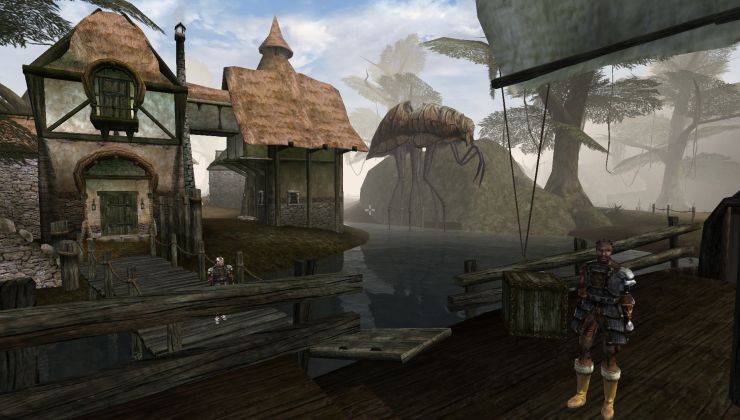 How to setup OpenMW for modern Morrowind on Linux / SteamOS and Steam Deck
 How to install Hollow Knight: Silksong mods on Linux, SteamOS and Steam Deck
Recently Updated
- New Desktop Screenshot Thread
- PlayingOnLinuxphone - The Great Android lockdown of 2026.
- PlayingOnLinuxphone - Feedback needed - future website updates
- Liam Dawe - Steam Deck desktop mode localization
- on_en_a_gros - Why most people are approaching the xz-attack wrong.
- LoudTechie - See more posts