Latest Comments by appetrosyan
Windows 10 S might alarm Valve into boosting SteamOS again
12 Feb 2018 at 5:54 pm UTC
What games?
12 Feb 2018 at 5:54 pm UTC
Quoting: SamsaiFair.Quoting: appetrosyan3D applications that use system SDL already have access to native Wayland and I've also built some games from source so that they utilize system SDL and thus shouldn't be running through XWayland. In both cases I have seen no noticeable performance benefits. X.org just isn't the bottleneck with game performance, sub-optimal OpenGL is.Quoting: SamsaiSecondly, Wayland's improved performance stems from a few factors. Most of the applications and games still use X.org, which means that you couldn't detect a performance increase, mostly because you were running it through the same graphical pipeline. If you don't have Wayland running in the background, you will see the difference. Also, Wayland decouples some of the hardware from the software, which (if the developers listen to reason) will allow us to do Windows level customisation to Gaming peripherals. Right now, the only way of creating keyboard macros is bound to x.org. Once we have enough people running wayland full time, we will be able to convince them to let us do some of those things: pass keypresses to specific applications (in gamer world terms 'tis a must).Quoting: appetrosyanSDL doesn't really "make use of Vulkan" (unless you use just SDL's built-in graphics routines and even then I think it might just use OpenGL). What you do with SDL is make a window, load up Vulkan and create a Vulkan context/surface/whatever onto that window and start pushing data and commands to the GPU to do things with that surface. The support for doing this was released in last September.Quoting: tuubiLast I checked Vulkan was supported by Croteam (who are doing a great job an away) and Bethesda, (who make great games, and don't support Linux). When we get native support that circumvents the issues of X.org and the common ways of porting games (e.g. SDL) start making use of Vulkan, we're in business.Quoting: appetrosyanRight now the biggest one I face, is the fact that in a complex scene, the rendering speed drops. this all due to the way in which frames are buffered in X.org, and is one of the main reasons why the switch is being made.OpenGL and Vulkan drivers on Linux make use of direct rendering, communicating directly with the hardware. Frames are not presented through an X.org buffer. What you said is mostly true, but it doesn't affect gaming that much.
Vulkan and Wayland are quite probably not going to be some kind of silver bullets that will solve the performance issues. Vulkan will allow devs to possibly tweak their games more and parallelize their rendering more than OpenGL allows but that'll largely depend on the devs' ability to make efficient code. As for Wayland, it's not really much of a performance boost. I've used it for a couple of months now and the only real difference between X.org and Wayland is that window movement is a bit smoother, 3D performance is more or less equal between the two.
What games?
Windows 10 S might alarm Valve into boosting SteamOS again
11 Feb 2018 at 6:10 pm UTC
First of all, when game development shifts towards Vulkan in lieu of DirectX we will not have a distinct disadvantage, as porting a game will no longer involve porting the most difficult part of the rendering pipeline. It will bring Linux and Windows onto the same footing in terms of graphical optimisations. It's not a silver bullet, but it's sure going to help us make a good case for linux gaming. It will definitely help out with the emulation: wine gives you Windows level performance on Doom and Wolfenstein using Vulkan, meaning that we can shrug off - "But you don't have as many games" by saying "Yeah we do. You can run everything you could on windows".
Secondly, Wayland's improved performance stems from a few factors. Most of the applications and games still use X.org, which means that you couldn't detect a performance increase, mostly because you were running it through the same graphical pipeline. If you don't have Wayland running in the background, you will see the difference. Also, Wayland decouples some of the hardware from the software, which (if the developers listen to reason) will allow us to do Windows level customisation to Gaming peripherals. Right now, the only way of creating keyboard macros is bound to x.org. Once we have enough people running wayland full time, we will be able to convince them to let us do some of those things: pass keypresses to specific applications (in gamer world terms 'tis a must).
11 Feb 2018 at 6:10 pm UTC
Quoting: SamsaiI would suggest you read my comment a bit more carefully. You are completely right, but I feel that I need to point out a few things.Quoting: appetrosyanSDL doesn't really "make use of Vulkan" (unless you use just SDL's built-in graphics routines and even then I think it might just use OpenGL). What you do with SDL is make a window, load up Vulkan and create a Vulkan context/surface/whatever onto that window and start pushing data and commands to the GPU to do things with that surface. The support for doing this was released in last September.Quoting: tuubiLast I checked Vulkan was supported by Croteam (who are doing a great job an away) and Bethesda, (who make great games, and don't support Linux). When we get native support that circumvents the issues of X.org and the common ways of porting games (e.g. SDL) start making use of Vulkan, we're in business.Quoting: appetrosyanRight now the biggest one I face, is the fact that in a complex scene, the rendering speed drops. this all due to the way in which frames are buffered in X.org, and is one of the main reasons why the switch is being made.OpenGL and Vulkan drivers on Linux make use of direct rendering, communicating directly with the hardware. Frames are not presented through an X.org buffer. What you said is mostly true, but it doesn't affect gaming that much.
Vulkan and Wayland are quite probably not going to be some kind of silver bullets that will solve the performance issues. Vulkan will allow devs to possibly tweak their games more and parallelize their rendering more than OpenGL allows but that'll largely depend on the devs' ability to make efficient code. As for Wayland, it's not really much of a performance boost. I've used it for a couple of months now and the only real difference between X.org and Wayland is that window movement is a bit smoother, 3D performance is more or less equal between the two.
First of all, when game development shifts towards Vulkan in lieu of DirectX we will not have a distinct disadvantage, as porting a game will no longer involve porting the most difficult part of the rendering pipeline. It will bring Linux and Windows onto the same footing in terms of graphical optimisations. It's not a silver bullet, but it's sure going to help us make a good case for linux gaming. It will definitely help out with the emulation: wine gives you Windows level performance on Doom and Wolfenstein using Vulkan, meaning that we can shrug off - "But you don't have as many games" by saying "Yeah we do. You can run everything you could on windows".
Secondly, Wayland's improved performance stems from a few factors. Most of the applications and games still use X.org, which means that you couldn't detect a performance increase, mostly because you were running it through the same graphical pipeline. If you don't have Wayland running in the background, you will see the difference. Also, Wayland decouples some of the hardware from the software, which (if the developers listen to reason) will allow us to do Windows level customisation to Gaming peripherals. Right now, the only way of creating keyboard macros is bound to x.org. Once we have enough people running wayland full time, we will be able to convince them to let us do some of those things: pass keypresses to specific applications (in gamer world terms 'tis a must).
Windows 10 S might alarm Valve into boosting SteamOS again
11 Feb 2018 at 12:21 pm UTC
11 Feb 2018 at 12:21 pm UTC
Quoting: tuubiLast I checked Vulkan was supported by Croteam (who are doing a great job an away) and Bethesda, (who make great games, and don't support Linux). When we get native support that circumvents the issues of X.org and the common ways of porting games (e.g. SDL) start making use of Vulkan, we're in business.Quoting: appetrosyanRight now the biggest one I face, is the fact that in a complex scene, the rendering speed drops. this all due to the way in which frames are buffered in X.org, and is one of the main reasons why the switch is being made.OpenGL and Vulkan drivers on Linux make use of direct rendering, communicating directly with the hardware. Frames are not presented through an X.org buffer. What you said is mostly true, but it doesn't affect gaming that much.
Windows 10 S might alarm Valve into boosting SteamOS again
10 Feb 2018 at 9:42 pm UTC Likes: 1
I don't mind the dropped frames, and the extra work to make things run on Linux, but that doesn't mean that there aren't objective disadvantages to gaming on it. Right now the biggest one I face, is the fact that in a complex scene, the rendering speed drops. this all due to the way in which frames are buffered in X.org, and is one of the main reasons why the switch is being made.
10 Feb 2018 at 9:42 pm UTC Likes: 1
Quoting: qptain NemoWhen Wayland works. In my own experience, while it's way less versatile than x.org, where it works, it gives you a massive performance advantage. You will agree that the frame-rate is important for gaming, so it makes sense to advertise this gaming-specific OS when you actually can produce at your best.Quoting: appetrosyanI understand what you mean by overpreparing, but in out particular case this isn't really a risk. Right now, Linux in the minds of the 75% of the Desktop market share is this obscure, hacker only OS, with little to accommodate anything beyond software development. Not advertising just leads to status quo, nothing lost nothing gained.I see your point and I appreciate the fact that there are times when you have to patiently prepare but at the same time I don't agree with the current state being quite so hopelessly unappealing and rough. You actually can do everything you can on other platforms and have a pretty good time doing it. But oh well. I do wonder at which point would you start advertising it heavily? Like what marks that moment when the dust settles in your opinion? Flawless adoption of Wayland in mainstream distros like Ubuntu?
On the other hand, advertising it right now would be difficult: the average consumer would want to be able to do what they can do on pretty much any other device and right now all of those things are getting a facelift (getting, not got). Advertising now is like inviting people to a recital when you've just started playing an instrument.
We are just transitioning to Wayland: it's not feature complete, only one mainstream DE has workable support, almost no applications work under it and to top it all off, nVidia refuses to support it. And wayland would be huge for gaming. Making mainstream audiences switch now would create a bunch of myths about Linux that we can't easily shake off. It makes sense for Valve to wait until some of the dust has settled, and lay the groundwork in other areas.
I don't mind the dropped frames, and the extra work to make things run on Linux, but that doesn't mean that there aren't objective disadvantages to gaming on it. Right now the biggest one I face, is the fact that in a complex scene, the rendering speed drops. this all due to the way in which frames are buffered in X.org, and is one of the main reasons why the switch is being made.
Windows 10 S might alarm Valve into boosting SteamOS again
9 Feb 2018 at 11:12 pm UTC
On the other hand, advertising it right now would be difficult: the average consumer would want to be able to do what they can do on pretty much any other device and right now all of those things are getting a facelift (getting, not got). Advertising now is like inviting people to a recital when you've just started playing an instrument.
We are just transitioning to Wayland: it's not feature complete, only one mainstream DE has workable support, almost no applications work under it and to top it all off, nVidia refuses to support it. And wayland would be huge for gaming. Making mainstream audiences switch now would create a bunch of myths about Linux that we can't easily shake off. It makes sense for Valve to wait until some of the dust has settled, and lay the groundwork in other areas.
9 Feb 2018 at 11:12 pm UTC
Quoting: qptain NemoI understand what you mean by overpreparing, but in out particular case this isn't really a risk. Right now, Linux in the minds of the 75% of the Desktop market share is this obscure, hacker only OS, with little to accommodate anything beyond software development. Not advertising just leads to status quo, nothing lost nothing gained.Quoting: appetrosyanWayland is not complete, we still need to do plenty of under-the-hood improvements, before the aggressive marketing will even have a chance. Right now, we'd only make the task even harder.On one hand I certainly understand the risks you're talking about. I mean, look at Steam Machines. On the other hand, there is the risk of overpreparing and betting too much on one big reveal that is supposed to be perfect and coming way too late or not coming at all. I mean, look at Steam Machines, I bet Valve learned a lot of really useful things from their first attempt that would help them tremendously if they eventually follow up. The whole "release early" philosophy exists for goods reasons. But yeah, Wayland is even conceptually incomplete if you ask me (I consider the "you can't have a DE-agnostic screenshot / screen recording tool because security" approach a serious mistake). So I'd say it's a delicate question and I wouldn't insist on any one answer to it at the moment.
On the other hand, advertising it right now would be difficult: the average consumer would want to be able to do what they can do on pretty much any other device and right now all of those things are getting a facelift (getting, not got). Advertising now is like inviting people to a recital when you've just started playing an instrument.
We are just transitioning to Wayland: it's not feature complete, only one mainstream DE has workable support, almost no applications work under it and to top it all off, nVidia refuses to support it. And wayland would be huge for gaming. Making mainstream audiences switch now would create a bunch of myths about Linux that we can't easily shake off. It makes sense for Valve to wait until some of the dust has settled, and lay the groundwork in other areas.
Windows 10 S might alarm Valve into boosting SteamOS again
9 Feb 2018 at 10:49 pm UTC Likes: 1
9 Feb 2018 at 10:49 pm UTC Likes: 1
Quoting: julespetrikovSpoken like someone who knows business. Seriously though, they won't go that route, as they'd be shooting themselves in the foot. And Valve are still not pushing Steam OS, as they're likely waiting for the Wayland Conundrum to finally wear down and get to work.Quoting: webcreatureI disagree! When the propriator of the one OS that is pre-installed on almost every sold gaming ready PC, decides to pre configure this OS to a default that makes Steam incompatible, and when the user has to change that configuration against warnings that tell him this step might be dangerous, then a big percentage of mostly new users will not do that. And that will shrink the user-base potential for Steam, not actual numbers of course."pre-installed on almost every sold gaming ready PC"
OR.. people decide to use an alternate OS instead, which I'd like very much of course.. Do you believe in it?
That's the case, they can't do that. That's bad business. That's exactly why Windows 10 S is not the choice for gaming or production, because it's not intended to run all the games and it's not commercialised as one. Same goes for ChromeOS, Android etc. It's much like how people were asking "How the hell SteamOS will replace Windows" in the early days and got the most obvious answer: It's not intended to do that. S Mode itself is not a profitable way of selling gaming ready PCs, since consumer is not always the idiot, but it's a good way of ripping off people.
There's absolutely no possible future in which Microsoft won the gaming industry by such a move. It's just plain dumb. You can't just force an incompatible OS in a market that demands a compatible OS. That won't force people to buy things from their Stores, it will force consumer away from Microsoft and Windows. To Mac and Linux, mainly.
I'm not trying to justify their point here. Just telling people: SteamOS and Windows 10 S or Windows 10 S Mode or whatever stupid thing they could put forward has no relevance at all.
Windows 10 S might alarm Valve into boosting SteamOS again
6 Feb 2018 at 3:54 am UTC Likes: 4
Intel Microsoft Nvidia and the like adore perpetuating myths about their competitors. Like we all know that AMD cards run hot, except they don't, or that their Linux drivers are horrible, except they provide an OpenSource Wayland compliant kernel module while Nvidia is still considering KMS.
Linux has come a long way. As a recent Mac user and a long time Windows user I must say that UI/UX wise they're doing a lot better than both. Drivers aren't an issue anymore and save from Linus Sebastian giving advice that will brick most systems, the systems are by far the most reliable.
Problem is, we don't have as many people doing the good work. We need more forums like this one, we need more youtube channels like Linux gamer, more companies like Dell, to give us prebuilt PCs with Linux as an option not a gimmick. People are lazy, and unless we expose them to Linux in a good way, nothing's gonna change.
On that note, We still need to iron a few things out: Wayland is not complete, we still need to do plenty of under-the-hood improvements, before the aggressive marketing will even have a chance. Right now, we'd only make the task even harder.
6 Feb 2018 at 3:54 am UTC Likes: 4
Quoting: WJMazepasTwo things, very effective at keeping Linux away. Cargo culture and decentralisation.Quoting: MintedGamerI dont know about that mate. I mean, if people see a PC with Elementary OS or Deepin i'm pretty sure they will be interested.Quoting: julespetrikovPeople do buy closed ecosystems, iOS and Android are proof of that. Even in the case you describe with a Windows laptop for $549 and exactly the same laptop with Linux for $500, people will buy the $549 laptop because they will see the Windows and Office badges and buy it because that's what they are familiar with. Most standard non-technical users would rather pay the $49 than learn a new OS (that they have no interest in) and buy and swap all their familiar programs to Linux versions. In that regard Microsoft has lock in.Quoting: webcreatureThat's why S will not be a version anymore, but a mode built into any version. Ok, no one really knows what MS does, and if they will really pull that off, but it is well known they use every leverage they can find. That way they did bad buisiness as long as I can remember. Also I can remember they have a history of wanting too much at once, then row back a bit, just to try it again later."Ok, no one really knows what MS does, and if they will really pull that off, but it is well known they use every leverage they can find."
This time they could sell S mode as a chance for end users to have more security, while leaving the possibility for "sideloading" open. Who will argue against that except for those who think this alone can cut into the future Steam marketshare. I think most of the Windows gamers will flip the switch to turn S mode off, and be happy about it. New users however won't do that so easyly. At the same time MS could argue Win32 was insecure, legacy, the old ways, while everyone is "invited" to embrace the new ways. The MS Store would be open for everyone and so forth, all in the name of security and progress. And it would be so interoperable with XBox. Maybe they present some exclusive games for Windows and XBox.. I don't know.
What I do not understand clearly: Do you think that what MS is apparently up to do is irrelevant for gaming, do you think it is not and will drive gamers away, or do you think it will just not happen?
No, you misunderstood what I'm saying. I'm just telling you that such an act would be a very stupid business decision due to consumer factor. Unless they're hardcore Microsoft fans people would not pay for closed ecosystems. For instances, instead of paying 500 + 49$ (I don't know about the prices in US, sorry) for a fully functional lower-medium range notebook from the Vendor X, they would just buy a similar notebook from Vendor Y with FreeDOS or Windows 10 Pro for 500 total. Since majority of the third party vendors are aware that people are looking for functionality than "convenience of Microsoft Store" they will sell regular windows or not sell at all with their rigs.
The problem we're having here is that the above scenario is already a reality. Windows 10 S is not a popular choice and it will not be a popular choice in the future. That's simple as that. The only issue with this whole thing is that Microsoft is trying to rip people off by possibly making S-Mode enabled versions to be the default for "Windows as a service" in cheap rigs of notebooks, all-in-ones and especially netbooks/tablets. These devices either are not meant for gaming or are not powerful enough to game; either way they're not cost effective under many circumstances when considering the fact that there's the purpose of gaming and such devices are meant to be cheap, accessible and multi-purpose. -- Your average gamer will not buy a "PC" that doesn't support older/current titles, software and/or platforms
For the question you asked, yes such act would drive people away from Microsoft to different ecosystems or to piracy. It's quite foreseeable. Those people at Microsoft have to be a special kind of dumb to expect locking people down only to Microsoft Store, because that would be quitting the game.
-- and for that matter, I would happily not to build my stuff for Windows because they don't support my stuff to begin with. Let's see how that logic would help Microsoft in any industry. Nope.
All they need to do (and are in the process of doing) is:
- Upgrade as much of the userbase as possible to Windows 10
- Force updates upon users and get them used to it
- Add S mode as the default, include a free switch to the "legacy" version, put in big warning signs to scare users not to switch - if they include an emulator in S mode most users won't even notice
- Wait as long as it takes for a critical mass of UWP apps. MS has deep pockets they can move at snails pace if needed
- Charge for the "legacy" version, keep S version as free
- Job done, UWP is now the standard.
- End the free period for the S version.
They can invite Valve to create a UWP app, even go as far as saying they won't double-dip developers into having to make both a Store and a Steam payment. They then charge developers less and undercut Valve (they do this to competitors all the time). Eventually raise prices.
Microsoft have been trying to shift their users to UWP since before 2010, there are no indications they are about to stop. In fact the opposite.
I believe that if people saw a nice laptop with a nice linux distro store, they would be interested. Specially if you say stuff like dont get viruses so easily and etc.
Chrome OS has pretty good slling numbers even not doing a lot of things other OSes do. Maybe Linux has a big potencial but doesnt have a marketing campaign good enough to achieve that potencial
Intel Microsoft Nvidia and the like adore perpetuating myths about their competitors. Like we all know that AMD cards run hot, except they don't, or that their Linux drivers are horrible, except they provide an OpenSource Wayland compliant kernel module while Nvidia is still considering KMS.
Linux has come a long way. As a recent Mac user and a long time Windows user I must say that UI/UX wise they're doing a lot better than both. Drivers aren't an issue anymore and save from Linus Sebastian giving advice that will brick most systems, the systems are by far the most reliable.
Problem is, we don't have as many people doing the good work. We need more forums like this one, we need more youtube channels like Linux gamer, more companies like Dell, to give us prebuilt PCs with Linux as an option not a gimmick. People are lazy, and unless we expose them to Linux in a good way, nothing's gonna change.
On that note, We still need to iron a few things out: Wayland is not complete, we still need to do plenty of under-the-hood improvements, before the aggressive marketing will even have a chance. Right now, we'd only make the task even harder.
Windows 10 S might alarm Valve into boosting SteamOS again
6 Feb 2018 at 3:30 am UTC
6 Feb 2018 at 3:30 am UTC
Quoting: t3gI'd love if Valve updated the bundled libraries for the Steam client to Ububtu 18.04 in April.Those libraries caused me nothing but woe. Use snaps and Flatpaks, and let us choose whether or not we even want an outdated and barely functioning runtime at all.
Kinda pathetic it still ships with 12.04 libraries from 2012...
Windows 10 S might alarm Valve into boosting SteamOS again
5 Feb 2018 at 4:27 pm UTC Likes: 6
5 Feb 2018 at 4:27 pm UTC Likes: 6
Quoting: webcreatureHere's the problem. Microsoft holds supermajority because everyone used to use Microsoft and because it comes with almost all prebuilt systems. If they shift away from win32, this is only going to leave them the latter advantage. If valve are clever, they will team up with CrossOver guys and make sure that the older win32 apps are compatible with SteamOS and can break the myth that Linux is hard to game on and develop for. This can potentially quadruple the Linux Market share, and combined with Steam Consoles, they might even match Windows at some point.Quoting: julespetrikovI disagree! When the propriator of the one OS that is pre-installed on almost every sold gaming ready PC, decides to pre configure this OS to a default that makes Steam incompatible, and when the user has to change that configuration against warnings that tell him this step might be dangerous, then a big percentage of mostly new users will not do that. And that will shrink the user-base potential for Steam, not actual numbers of course.Quoting: webcreatureS modes purpose is (at least in part) to shrink future market for third party stores like Steam and GOG. New users, who just purchased a machine with a preinstalled Windows S mode, won't change that default, because the system will tell them it's dangerous. Most of them will never even try Steam or GOG.That intention itself is highly fantastic as you can't push a market to shrink by selling incompatible operating systems. Microsoft's intention and the purpose of S Mode is clearly rigging prices and forcing the consumer to pay an additional fee to both vendors and Microsoft so that they could have their favourite platforms and software installed on those machines. Which will eventually force consumer not to consume such devices and Microsoft will only be selling portable and/or specialist devices which is what Windows 10 S was intended for and is widely being used for as of today. Their Surface book whatever editions are competitors to Chromebooks (and Macbooks as they're too closed environments). Microsoft is making money from cloud-based services and hardware around those services.
There's no way in coming years that Microsoft can, in anyway, compete with Steam or GOG on PC. That's out of question. There's no such future unless Microsoft buys Valve. That's also a laughably distant possibility.
OR.. people decide to use an alternate OS instead, which I'd like very much of course.. Do you believe in it?
Microsoft is rumoured to be looking to buy Valve, EA and others
31 Jan 2018 at 12:17 pm UTC Likes: 2
For one they have the maximum market share on Desktop, and virtually all of it is habitual. I'm not only talking about Windows, they acquired Skype, and support their OS X and Linux clients reasonably well. Why? Because most people have synonimised Skype with free internet video calls, much like Copiers are synonimised with Xerox, or google with searching. It makes no sense to shoot themselves in the foot and cut their own profits.
Secondly I should quote that Microsoft is primarily interested in controlling the market. The reason why they support ubuntu on windows, is because that gives them extra leverage in a market they can't access conventionally. The entire point of this exercise is to proliferate everywhere they can, and compete wherever they can. They rarely ever have the best tool for the job, but they have always been ubiquitous. What would they gain from reabsorbing the Linux and Mac OS market share that they couldn't have gained without? Now that they're contributing to Linux kernel they get to pressure the foundation to do what they need.
Even if they acquired Valve, they wouldn't change much: the Linux ports we used to have will still be available and be stably made. Except everything that went into funding their competitors, now pays them a cut. Get the same effect, both venturing minimum effort and bearing none of the risks. They'd be insane to change anything, right now.
31 Jan 2018 at 12:17 pm UTC Likes: 2
Quoting: ShmerlI think that is an oversimplification. The reason why Microsoft is playing nice with competing platforms is twofold.Quoting: tmtvlMicrosoft have proven themselves to be rather decent towards Linux as of late.Not towards Vulkan though, which reflects the sick lock-in mindset of their gaming branch.
Quoting: tmtvlThey also haven't blocked Minecraft from opposing platforms, so I don't think there's much to worry about no matter who they decide to buy out.The only reason Minecraft wasn't borked is the fact that it already worked for Linux, so they didn't want to make their reputation even worse than it is now by axing it.
For one they have the maximum market share on Desktop, and virtually all of it is habitual. I'm not only talking about Windows, they acquired Skype, and support their OS X and Linux clients reasonably well. Why? Because most people have synonimised Skype with free internet video calls, much like Copiers are synonimised with Xerox, or google with searching. It makes no sense to shoot themselves in the foot and cut their own profits.
Secondly I should quote that Microsoft is primarily interested in controlling the market. The reason why they support ubuntu on windows, is because that gives them extra leverage in a market they can't access conventionally. The entire point of this exercise is to proliferate everywhere they can, and compete wherever they can. They rarely ever have the best tool for the job, but they have always been ubiquitous. What would they gain from reabsorbing the Linux and Mac OS market share that they couldn't have gained without? Now that they're contributing to Linux kernel they get to pressure the foundation to do what they need.
Even if they acquired Valve, they wouldn't change much: the Linux ports we used to have will still be available and be stably made. Except everything that went into funding their competitors, now pays them a cut. Get the same effect, both venturing minimum effort and bearing none of the risks. They'd be insane to change anything, right now.
- Bazzite Linux 44 lands for desktop gamers and it's a big release
- Denuvo DRM reportedly fully cracked open, 2K apparently fights back with online checks
- CachyOS April 2026 release brings a new package manager and even more optimizations
- Canonical developer lays out some AI plans for Ubuntu Linux
- Framework Laptop 13 Pro is selling out with the Linux version beating Windows
- > See more over 30 days here
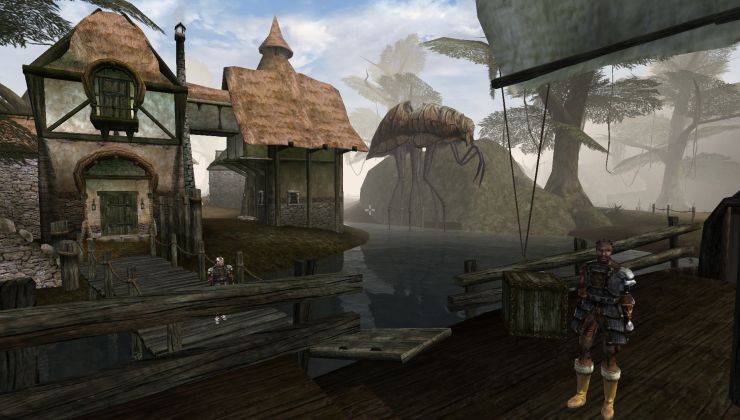 How to setup OpenMW for modern Morrowind on Linux / SteamOS and Steam Deck
 How to install Hollow Knight: Silksong mods on Linux, SteamOS and Steam Deck
- Steam Deck desktop mode localization
- Buffoon - Why most people are approaching the xz-attack wrong.
- LoudTechie - Lutris alternatives
- sourpuz - Welcome back to the GamingOnLinux Forum
- sourpuz - Shop Crush - Psychological Horror Thrift Sim with Literal Illusio…
- hollowlimb - See more posts